Table of Contents >> Show >> Hide
- Why the NYC move mattered (and why the set had to change with it)
- A set that looks like a recording studio’s cooler, comfier cousin
- The audience is bigger, but the vibe is more intimate
- “Kellyoke” needed more than one spotso the set delivers options
- The band doesn’t disappear anymoreand that changes everything
- 30 Rock energy: when the building itself becomes part of the brand
- Designing for camera, comfort, and Clarkson’s personality
- What the music-inspired set teaches us about great spaces
- Experiences: What it feels like inside Kelly Clarkson’s music-inspired NYC set
Some talk shows feel like a polite living room where everyone whispers and nobody dares to scuff the rug. Kelly Clarkson’s new New York City set is not that.
This one feels like the kind of place where a guitar is always within reach, the band is basically family, and the room practically dares you to sing the high note.
It’s cozy, textured, and unmistakably music-forwardlike a daytime hangout that accidentally wandered into a recording studio and decided to stay.
When The Kelly Clarkson Show shifted production from Los Angeles to New York, it didn’t just change the zip code. It changed the energy.
The show’s new home inside 30 Rockefeller Plaza (Studio 6A) comes with a built-in creative buzzplus a legacy of iconic TV that’s hard not to feel the second you walk in.
The set redesign leans into that history while keeping the vibe unmistakably “Kelly”: warm, welcoming, and ready for a surprise Kellyoke at any moment.
Why the NYC move mattered (and why the set had to change with it)
Moving a daytime show across the country is the TV equivalent of changing your hair at 2 a.m. and deciding, “Yes, this is my new personality now.”
But in this case, the move to New York came with practical advantages and creative opportunities. The series began filming out of NBC Studios at 30 Rock,
placing it near other major productions and in the middle of a city that runs on ambition, theater lights, and very determined pedestrians with coffee.
New York also offered a fresh narrative for a show entering its next chapter: a new studio, a new audience flow, and a new visual identity.
The show’s fifth season kicked off from Studio 6A, and the production invested in a refreshed, state-of-the-art setup designed to re-energize the formatwithout losing the heart that made it a daytime standout.
In other words: same Kelly, new playground.
A set that looks like a recording studio’s cooler, comfier cousin
The guiding idea behind the redesign is simple: music isn’t a segment on this showit’s part of the DNA. Clarkson opens with songs, the band is a constant presence,
and performances aren’t treated like occasional “special moments.” They’re the rhythm of the whole hour. So the set needed to feel like music lives there.
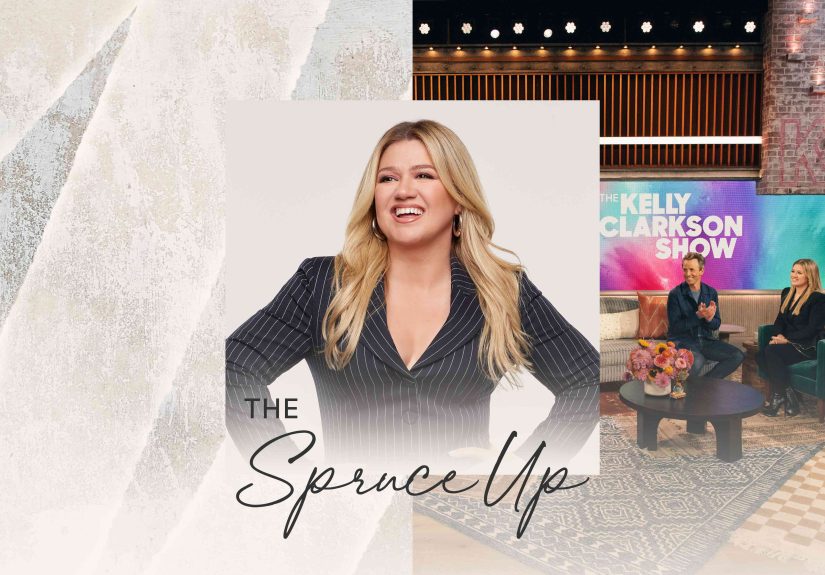
Designed with Clarkson’s input and the show’s established style in mind, the NYC space blends “recording studio” cues with the comfort of a lived-in lounge.
Think dark, warm wood tones; layered textiles; and decor that nods to vinyl, instruments, and studio craftsmanship. The result feels less like a shiny TV stage and more like a place where creative people would actually want to hang out.
Clarkson herself has described the vibe as intimate and musician-friendlymore “hang” than “set.”
Signature design details that sell the music vibe
- Texture everywhere: rugs, soft fabrics, and layered finishes that make the space feel warm on camera and welcoming in-person.
- Vinyl and music nods: visual cues that quietly say “this is a music show,” even when no one is singing.
- Dark wood grounding: rich tones that read as classic, cozy, and slightly rock-and-rollwithout turning the room into a haunted library.
- Studio-style architecture: design coverage has highlighted elements like slatted wood walls and loft-style touches that feel Soho-adjacent and recording-studio inspired.
The smartest part? These choices aren’t just decorative. They’re functional. Soft materials help visually “warm up” a studio space, reduce harsh reflections, and support audio in a room that needs to handle both talk and live music.
You’re not just looking at a pretty corneryou’re looking at a solution to daytime TV’s toughest problem: making conversations feel intimate in a room full of cameras, lights, and an audience ready to clap on cue.
The audience is bigger, but the vibe is more intimate
One of the most impressive flexes of the NYC redesign is how it makes a larger crowd feel closer. The studio can seat about 200 audience members,
and the layout is engineered to keep energy high without turning the show into a stadium situation. The set includes audience configurations designed to bring people nearer to the action,
including custom seating solutions and an elevated area that improves sightlines while keeping the room engaged.
That matters because Clarkson’s style is conversational and reactive. She thrives on feedback from the roomlaughs, gasps, spontaneous “YES, GIRL!” energy
and the set is built to support that. You don’t want an audience that feels like it’s watching from a distant balcony; you want an audience that feels like it’s in the scene.
The new setup leans into that closeness, giving the show a “live” feeling even when it’s not broadcasting live.
“Kellyoke” needed more than one spotso the set delivers options
On many talk shows, musical performances feel like a field trip: “And now we walk over here to the performance stage.”
On The Kelly Clarkson Show, music is the opener, the emotional punctuation, and sometimes the thing that makes a guest tear up before the first question is even asked.
So the NYC set was designed with multiple performance-friendly zonesbecause one stage corner simply doesn’t cut it when your host is basically a jukebox with better hair.
A standout feature is the way the set can shift between talk, performance, and hybrid moments without breaking the flow.
There’s a dedicated sense of “music space” baked into the environmentdown to performance nooks that can support a stripped-down piano moment or a fuller band-backed number.
That flexibility keeps the show visually fresh and lets Clarkson choose the tone: big and belty, or quiet and intimate.
The piano corner: small setup, big emotional payoff
Clarkson has long leaned into the power of a simple vocal-and-piano performance, and the NYC set includes space for that kind of “nothing to hide behind” moment.
A piano-focused area makes it easy to deliver performances that feel personallike you’re in the room, not watching from across the internet while someone scrolls comments.
It’s a design choice that reinforces the show’s core promise: music with heart, not just music as spectacle.
The band doesn’t disappear anymoreand that changes everything
A major difference in the NYC studio is how the house band, Y’All (led by music director Jason Halbert), is integrated into the space.
Instead of feeling like a separate unit that pops in for songs, the band has a more permanent on-set presencebecoming part of the show’s ongoing conversation and momentum.
That’s not a small tweak. It shifts the entire feel of the hour.
When a band is visually “in the room,” the show reads differently. The host can riff more naturally. Transitions feel smoother. Jokes land like you’re at a live taping (because you are).
And musically, it signals confidence: this show is comfortable being a little bit concert, a little bit hangout, and a little bit group chat with celebrities.
30 Rock energy: when the building itself becomes part of the brand
There’s something about filming at 30 Rockefeller Plaza that feels like plugging your show into a creative power strip.
The building has decades of TV history, and Studio 6A carries its own legendary associations with late-night eras and iconic hosts.
The redesign doesn’t try to cosplay late-night, but it does tap into the building’s “live” spiritusing the audience placement, performance lighting, and stage options to boost energy.
That energy shows up onscreen as a kind of urgencyin a good way. Conversations move. Applause feels immediate. Music doesn’t feel bolted on.
It’s the difference between “We filmed this in a studio” and “This is happening right now, and you should probably tune in.”
Designing for camera, comfort, and Clarkson’s personality
Great talk show set design is a balancing act: it has to look good from multiple angles, support movement, hide production realities, and still feel authentic.
With Clarkson, authenticity is non-negotiable. The set can’t look like a museum of trendy furniture; it has to feel like a space she’d actually enjoy.
That’s why the design leans toward a “musician’s lounge” aestheticwarm tones, relaxed seating zones, and details that feel collected rather than staged.
Even the way the set uses color and contrast reflects Clarkson’s evolved taste: boldness in the right places, breathing room everywhere else.
It’s the visual version of her performance philosophy: don’t riff too muchsave it for the moments that matter.
What the music-inspired set teaches us about great spaces
Even if you’re not building a daytime studio at 30 Rock (but if you are, congrats on your budget), there are real design lessons here.
The set works because it understands the emotional job of a room. This room needs to make people feel comfortable fast, support big feelings,
and create a backdrop that amplifies music without screaming for attention.
Steal these ideas for your own “music-forward” room
- Layer your lighting: use soft ambient light plus a few focused “performance” accents (like a lamp aimed at a reading chair or keyboard).
- Mix textures, not clutter: rugs, throws, and curtains add warmth without turning the room into a storage unit for blankets.
- Display music like art: records, framed setlists, or a favorite instrument on a stand can feel personal and stylish.
- Create a “one-song corner”: a chair, a small table, and a speaker setup can become your mini stage for morning playlists or late-night decompression.
The magic isn’t in copying every detail. It’s in copying the intention: build a space that invites connection, gives music a home, and makes people want to stay awhile.
That’s exactly what Clarkson’s new NYC set achievesone layered rug and one perfectly timed high note at a time.
Experiences: What it feels like inside Kelly Clarkson’s music-inspired NYC set
Watching the show at home is one thing. Being in the room is another. And the NYC set is built for that differencebecause the audience experience isn’t a side dish; it’s part of the main course.
The moment you step into 30 Rock for a taping, you’re not just arriving at a studio. You’re entering a building that feels like TV history is still echoing down the hallways.
There’s a certain electricity in the airthe kind that makes people talk faster, smile more, and check their outfit in every reflective surface like they’re about to cameo on camera (purely for “background authenticity,” of course).
The process of getting to the studio has its own mini-adventure rhythm. People cluster in lines with the unmistakable energy of fans who are trying to act casual while absolutely not acting casual.
You overhear guesses about guests, debates about the best Kellyoke covers, and the occasional whispered “I can’t believe this is real” like the building might revoke their ticket for excessive enthusiasm.
Once you’re seated, the studio reads surprisingly intimatedespite fitting a large crowdbecause the layout keeps everyone oriented toward the action instead of feeling like they’re parked in a faraway row.
Then the music kicks in, and the room instantly changes temperature. Not literally (although, with studio lights, who knows), but emotionally.
When Clarkson starts a Kellyoke, it doesn’t feel like the polite opening of a talk show; it feels like the start of a concert where the person next to you is suddenly your best friend.
People clap on instinct. Heads bob. You realize you’re grinning without meaning to. And because the set is designed with music in mindperformance-friendly zones, visible band presence, warm materials that make everything feel less “broadcast” and more “in the room”the sound and sightlines work together to make the moment feel immediate.
The band being integrated into the space adds to that “we’re all in this together” vibe. It’s like having the world’s most talented hype crew sitting just off to the side, ready to turn any transition into a vibe.
Between segments, you can feel how the room is built to keep momentum alive: lighting that flatters without blinding, cozy textures that soften the studio feel, and audience placement that makes reactions land fast.
Even the talk portions feel more animated because the space encourages connectionClarkson can play to the room, react to laughs, and lean into spontaneity without the energy getting lost in a cavernous studio.
For guests, the environment does something subtle but powerful: it lowers the pressure. A music-inspired set signals “this will be fun” before anyone says a word.
It’s easier to tell a story in a room that looks like it has hosted a thousand good conversations. It’s easier to laugh when the space is designed to feel like a hangout, not a corporate lobby.
And for viewers at home, that translates onscreen as comfort you can actually sense. The set doesn’t distract; it supports. It’s like a great backing track: you notice it most when it’s missing.
The best part is the emotional whiplash the room can handle. One minute, you’re dancing in your seat during a big pop cover; the next, the show pivots into something heartfelt, and the same cozy design that made the room feel fun suddenly makes it feel safe.
That’s the real genius of a music-inspired talk show set in New York: it’s built to hold big energy and real feelings at the same timewithout ever losing its sense of warmth.
You leave feeling like you didn’t just watch a show. You spent time in a place that was designed, from the ground up, to make music and connection feel effortless.