Table of Contents >> Show >> Hide
- What Is Medicine the Musical?
- Why the Title Alone Works So Well
- The Opening Number as Emotional Blueprint
- What the Song Represents in the World of Medicine
- Why Medical Humanities Make This Song More Important
- What Works Best About “Letter in the Mail”
- Where the Larger Show Faces Challenges
- The Experience Behind “Letter in the Mail”: on Why This Song Feels So Personal
- Final Thoughts
Some songs announce themselves with fireworks. Others arrive more quietly, like a life-changing envelope sliding through a mailbox slot. “Letter in the Mail” from Medicine the Musical belongs to the second category, but do not mistake “quiet” for “small.” This song matters because it sits at the exact emotional intersection where hope, identity, ambition, family pressure, and pure unfiltered panic all collide. In other words, it sounds a lot like the beginning of medical school.
Written as part of Michael Ehrenreich’s rock musical about first-year medical students, “Letter in the Mail” is more than just an opening song title with good dramatic instincts. It is the doorway into the show’s larger world: young people chasing one of the most demanding professional callings in America while also trying to remain, inconveniently enough, human. That setup alone gives the number plenty of emotional voltage. Add the theatrical energy of an ensemble opener, and suddenly a simple piece of mail becomes destiny in paper form.
If that sounds dramatic, well, yes. But drama is exactly the point. Medical training has always carried mythic weight in American culture. We admire doctors, expect impossible things from them, and rarely pause to think about what it feels like to become one. “Letter in the Mail” taps that neglected part of the story. It turns the threshold moment into music: the instant a person stops saying, “Maybe someday,” and starts hearing the much scarier phrase, “This is real now.”
What Is Medicine the Musical?
Medicine the Musical is a rock musical by physician Michael Ehrenreich that follows a group of first-year medical students as they navigate the grind, pressure, relationships, and emotional upheaval of medical training. Rather than focusing on a hospital full of seasoned doctors who stride through hallways looking impossibly photogenic, the show stays with learners in the crucible phase. That choice matters. It shifts the spotlight from medical authority to medical formation.
That also helps explain why “Letter in the Mail” is such a smart place to begin. Before anatomy labs, before sleepless studying, before the hidden curriculum starts shaping who belongs and who breaks, there is the invitation. The letter. The acceptance. The dream made official in the least glamorous way possible: stationery. It is wonderfully theatrical because the object is ordinary while the emotional consequence is enormous.
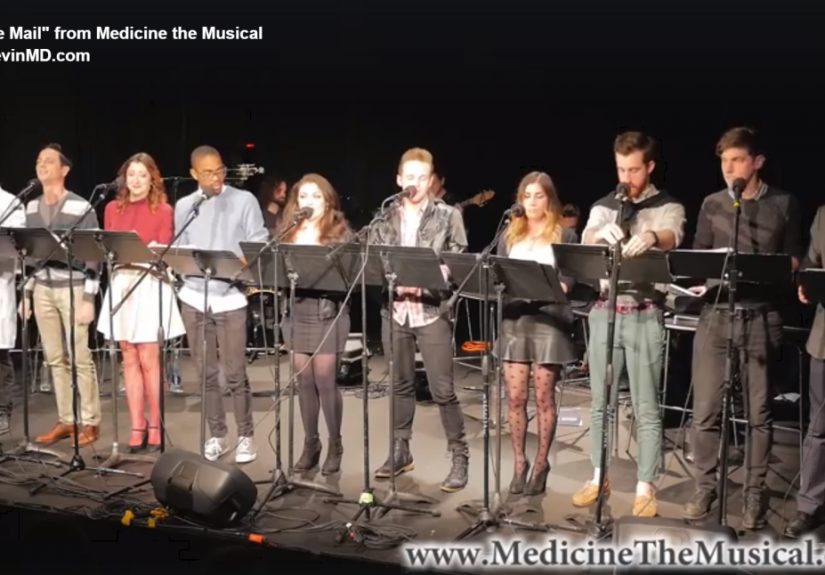
Reviews of the show were mixed overall, but even critics who wanted stronger writing pointed to the score’s vocal energy and praised moments where the cast’s harmonies lifted the material. “Letter in the Mail,” specifically identified as the opening number, was singled out for that ensemble sparkle. That is a useful clue. It suggests the song works not because it overexplains the plot, but because it launches the feeling of the story: momentum, excitement, nerves, and the sense that many lives are changing at once.
Why the Title Alone Works So Well
Good musical-theater titles often do two jobs at once. They tell you what is happening, and they hint at what the event means emotionally. “Letter in the Mail” does exactly that. On the surface, it sounds almost quaint, even old-fashioned. In the age of portals, dashboards, and notification pings, a letter feels tactile and serious. It carries weight. You can hold it. You can hesitate before opening it. You can leave it on the table for ten minutes while your heart tap-dances in your rib cage.
That physicality makes the title memorable. A letter is never just paper in stories like this. It is judgment, invitation, validation, possibility, and sometimes the beginning of an identity crisis wearing a nice envelope. For aspiring doctors, the letter does not simply announce entry into school. It can feel like a verdict on years of sacrifice. It can sound like proof that the sleepless studying, volunteering, shadowing, interviews, and self-doubt meant something. It can also, rather rudely, signal the start of a much harder chapter.
So the song title works because it captures a universal experience in a sharply specific image. That is strong songwriting territory. You do not need a whole lecture on professional identity formation when you can start with one piece of mail and let the audience fill in the emotional blast radius.
The Opening Number as Emotional Blueprint
Opening numbers in musicals have a hard job. They must introduce tone, rhythm, world, and stakes without sounding like a textbook that learned jazz hands. “Letter in the Mail” appears to understand this assignment. As an opener, it is not just scene-setting. It is identity-setting. It tells us this show is about the before-and-after moment, the hinge where ordinary life tips into something larger and far more demanding.
That is why the song likely lands with such immediacy for audiences connected to medicine, education, or any high-stakes career path. Nearly everyone has had some version of the envelope moment. Maybe it was a college letter, a residency match, a scholarship, a job offer, or a thinly disguised rejection that somehow weighed eight pounds. The details change, but the body remembers the suspense. “Letter in the Mail” turns that universal suspense into a theatrical ignition point.
And because it is an ensemble-style opening, the song can do something even richer: make individual ambition communal. One person getting news is interesting. A whole group stepping into a shared ordeal is musical theater catnip. It lets the audience see the beginning not as a solitary triumph, but as the creation of a cohort. That matters in medical education, where community can save you from isolation, or at least keep you from dramatically whispering pharmacology mnemonics to a vending machine at 2 a.m.
What the Song Represents in the World of Medicine
The most compelling thing about “Letter in the Mail” is not that it sounds hopeful. It is that the hope carries consequences. The song stands at the threshold of a profession famous for discipline, prestige, sacrifice, and emotional complexity. In real life, medical students often enter training full of purpose, only to discover that the path is intellectually punishing and psychologically demanding. That contrast gives the song its resonance. The letter says, “You made it.” Life then adds, “Wonderful. Now hold onto yourself.”
This is where Medicine the Musical becomes more than a novelty concept. A musical about medical school could easily turn into parody, melodrama, or anatomy-lab karaoke. Instead, the best idea behind it is that medicine is already theatrical in the deepest human sense. It is full of hierarchy, rituals, costumes, language, performance under pressure, and moral stakes. A student’s transformation into a doctor is not merely academic. It is emotional and cultural. “Letter in the Mail” captures the first beat of that transformation.
The song also resonates because medicine still carries enormous symbolic power in the American imagination. Families celebrate an acceptance letter like a championship trophy. Communities attach hope to it. Parents frame it. Grandparents call every relative they have ever met. The future student smiles, thanks everyone, and quietly wonders what exactly they have just agreed to. That blend of pride and dread is not a bug in the experience. It is the experience.
Why Medical Humanities Make This Song More Important
If “Letter in the Mail” were only a catchy opener, it would still have value. But it becomes more interesting when placed in the context of medical humanities. Over the past several years, leading voices in medical education have argued that the arts and humanities are not decorative extras in physician training. They are tools for building empathy, reflection, communication, resilience, and tolerance for ambiguity. That sounds academic, but the translation is simple: they help future doctors remain recognizably human.
That lens makes “Letter in the Mail” feel especially relevant. The song dramatizes a formative emotional moment, and that matters because professional identity starts long before a student sees a patient. It begins with expectations, dreams, fear, and the stories people tell themselves about what kind of doctor they will become. A musical number can hold those tensions in a way a lecture slide never will. Music can compress excitement, vulnerability, vanity, insecurity, and hope into the same breath. That is not fluff. That is insight.
Medical-education literature has repeatedly emphasized that students face heavy workloads, stress, burnout risk, and pressure to perform. At the same time, humanities exposure has been associated with empathy, reflection, and reduced burnout. In that context, a song like “Letter in the Mail” is not just entertainment about medicine. It is a reminder that becoming a physician is a narrative experience as much as a technical one. Students are not merely learning facts. They are learning what kind of selves the system rewards, reshapes, and sometimes erodes.
What Works Best About “Letter in the Mail”
1. It starts with a relatable object
The letter is concrete, immediate, and emotionally loaded. That gives the song an instantly legible dramatic center.
2. It turns private emotion into group energy
As an opening number, it can gather multiple students into one shared burst of possibility, which is exactly how a cohort begins.
3. It frames medicine as aspiration before ordeal
That timing matters. The song catches the dream before the grind fully takes over, which makes everything that follows more poignant.
4. It fits the show’s larger mission
Medicine the Musical aims to make the world of medicine accessible to the public while humanizing the people inside it. A song about the beginning of the journey serves that mission beautifully.
Where the Larger Show Faces Challenges
A fair reading of the musical also means acknowledging its limitations. Some critics felt the show leaned on familiar character types and did not fully engage the complexities of modern medicine. That critique matters because audiences today are sharp. They want stories about doctors and trainees that move beyond clichés, and they are right to ask for nuance. Medicine in America is not just noble calling meets impossible workload. It is also bureaucracy, inequity, power, burnout, and systems that can dehumanize both patients and clinicians.
Still, the existence of those critiques does not diminish the appeal of “Letter in the Mail.” In fact, it may highlight why the song stands out. An opening number can sometimes do what an entire book struggles to sustain: create a clean emotional truth. The truth here is simple and powerful. Before the profession becomes complicated, it begins with longing. Before medicine becomes system, it begins as dream.
The Experience Behind “Letter in the Mail”: on Why This Song Feels So Personal
What makes “Letter in the Mail” linger is that it mirrors a real emotional pattern many future physicians know well. Long before the title “doctor” feels earned, it feels imagined. The imagination starts early: a child with a toy stethoscope, a teenager obsessed with biology, a college student learning how to answer the impossible question, “Why medicine?” Then one day, after all the applications and waiting and stomach-churning uncertainty, there is finally a message that changes the temperature of the room. Sometimes it is an email. Sometimes a portal update. Sometimes, gloriously, old-school and cinematic, it is a letter in the mail.
That moment has its own strange physics. Time slows down. You become hyperaware of tiny details: the thickness of the envelope, your name on the front, the way your hand suddenly forgets how to open paper like a normal human being. Even before you read a word, your body understands that something important is happening. The future is no longer abstract. It has postage.
Then the emotional flood begins. Relief is usually first. Not because the journey is over, but because the uncertainty has cracked open. After that comes joy, pride, disbelief, gratitude, and sometimes a small, scrappy voice in the back of your head asking, “Wait, am I actually ready for this?” That voice is not a sign that you do not belong. It is proof that the dream means something. Nobody panics over a path they do not care about.
Families experience this moment too. Parents often hear validation. Siblings hear bragging rights. Grandparents hear legacy. Friends hear proof that relentless effort can pay off. The student at the center of it all hears something more complicated: expectation. It is a beautiful burden, but still a burden. One letter can carry years of hope from other people. That is part of why a song about this moment works so well. It is never just one person opening mail. It is an entire social world holding its breath.
And then comes the second phase, which people do not always talk about at the celebration dinner. Once the glow settles, the accepted student starts imagining what the letter truly means. New city. New classmates. Debt. Workload. Pressure. Cadavers. Exams. Possible failure. Reinvention. The dream gets heavier, but not necessarily sadder. Just realer. That emotional shift is one of the most honest parts of the medical-school experience. Excitement and fear are not opposites here. They are roommates.
This is where “Letter in the Mail” becomes more than a title. It becomes a memory machine. It reminds listeners what it feels like to stand on the edge of transformation before the system starts sanding off your rough edges. It holds onto the original spark. For students, that spark can become a survival tool. When training turns exhausting, people often need help remembering who they were before the grind became normal. Art can do that. Music can do that. A song can hand back a forgotten version of yourself and say, “Here. This is why you came.”
That is also why the song belongs in a larger conversation about medicine and humanity. The profession needs technical excellence, obviously. Nobody wants a surgeon who says, “Good news, I’m emotionally insightful,” right before forgetting the anatomy. But technical excellence alone is incomplete. Doctors also need memory, empathy, reflection, and a way to metabolize the emotional force of the work. Songs like “Letter in the Mail” do not replace training. They enrich the inner life that training can flatten.
So yes, the title sounds simple. But the experience it points to is anything but simple. It is excitement with shaking hands. Pride with a side of terror. A beginning disguised as an envelope. And that, frankly, is excellent musical-theater material.
Final Thoughts
“Letter in the Mail” from Medicine the Musical deserves attention because it captures the exact second when aspiration becomes obligation. It is about entry, but also identity. It is about celebration, but also foreshadowing. It reminds audiences that medicine does not begin with clinical mastery. It begins with a dream, a message, a yes, and a heart rate that suddenly feels illegal.
Even if the broader musical sparked debate about execution, this song’s concept is strong enough to stand on its own. It crystallizes something that both theater and medicine understand well: the moments that shape us are rarely loud at first. Sometimes they arrive folded, stamped, and sitting in the mailbox like a plot twist with your name on it.