Table of Contents >> Show >> Hide
- The Morning a Bear Cub Tried to Say Hello
- Why This Mama Bear Video Went Viral
- Bear Parenting 101: What Mama Was Really Doing
- Cute, But Not a Cartoon: Remember This Is Still a Wild Animal
- Why Bears Wander Into Our Neighborhoods
- What to Do If a Bear Shows Up at Your Window
- What This Viral Clip Teaches Us About Living With Wildlife
- Viral Animal Videos: Delight With a Side of Responsibility
- 500 Extra Words: Real-Life Experiences and Takeaways From Bear Country
- Conclusion
If you’ve ever been caught snooping where you shouldn’t be, you’ll probably relate to one very embarrassed
bear cub from North Carolina. One minute he was standing on his tiptoes, peeking into a stranger’s window like
a fuzzy little nosy neighbor. The next minute, Mom showed up… and let’s just say, even wild animals are not
exempt from the “What do you think you’re doing, young man?” speech.
A short clip of this mama bear scolding her curious cub has bounced around social media, landed on Bored Panda,
and melted the internet’s collective heart. But behind the adorable drama is a surprisingly serious lesson about
wildlife, boundaries, and what happens when humans and bears start sharing the same neighborhood.
The Morning a Bear Cub Tried to Say Hello
A strange clanging at the bedroom window
It all started early one morning when North Carolina resident Sumer Walser Williams and her husband woke up to
a mysterious metallic clanging outside their bedroom window, which faces the front deck. Half-asleep and mildly
confused, they flipped on the deck light, expecting maybe a loose chair, a raccoon, or the world’s rudest
squirrel.
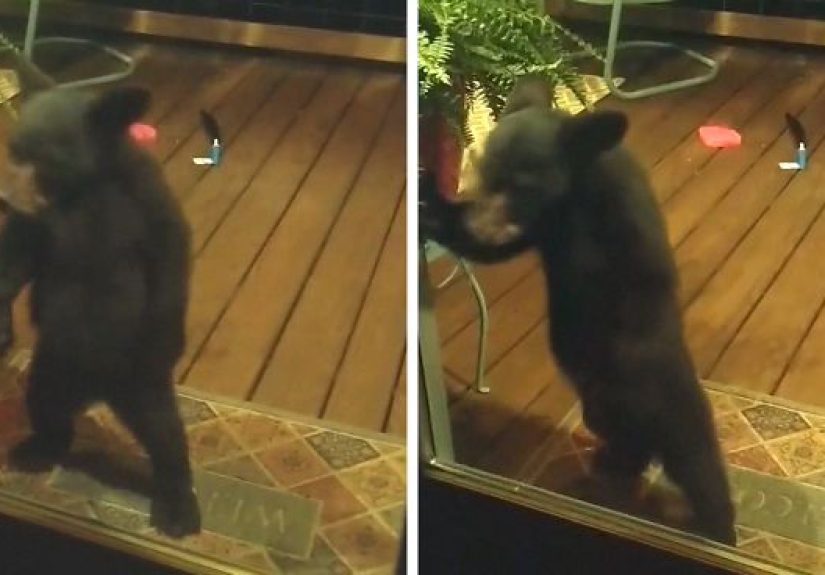
Instead, they saw a small black bear cub at the front door, up on his hind legs, stretching as far as he could
to peer into their window. He looked like a kid standing on a step stool trying to sneak a look at the cookie
jar. Startled but enchanted, the couple grabbed their phonesbecause of course they didand started recording.
Mama appears… and the mood changes
For a few seconds the video feels like a Disney moment: a tiny bear, blinking curiously, nose practically
pressed against the glass, trying to figure out these strange indoor creatures. But then the camera swings and
there she isMama Beartrotting onto the deck like a parent walking into a room that has suddenly gone too
quiet.
She pauses, sizes up the situation, and then heads straight for her cub. In a flash, the tone shifts from
“adorable nature moment” to “you’re grounded.” She nudges him, swats lightly, and her body language screams,
We do not spy on humans through their windows, absolutely not, let’s go. The chastened cub drops down
and follows her off the deck, lesson learned.
The whole thing lasts just a few secondsbut it was more than enough to go viral.
Why This Mama Bear Video Went Viral
The perfect mix of cute, funny, and relatable
There are millions of animal videos online (we’ve all lost an afternoon to them), but this one hit a special
nerve. It combined:
- Cuteness: A tiny bear cub peeking into a window like a furry little spy.
- Comedy: The instant, dramatic entrance of mom delivering a very obvious scolding.
- Relatability: Anyone who has ever been dragged away from something by a parent instantly
recognizes that “Okay, okay, I’m coming!” energy.
It also flips a common script. We’re used to hearing about scary bear encounters, property damage, or dramatic
wildlife warnings. This clip, by contrast, shows a mother bear doing exactly what good parents do: setting
boundaries and keeping her kid safeeven if it means interrupting his little adventure.
A gentle reminder that animals have personalities, too
Part of the charm is how recognizable the family dynamic feels. The cub isn’t attacking, growling, or doing
anything aggressivehe’s just curious. And Mom isn’t rampaging; she looks exasperated, protective, and very
done with this nonsense.
The internet loves to project human feelings onto animals, and this video practically invites it. You can
almost hear the captions writing themselves:
“Stop embarrassing me in front of the humans!”
Bear Parenting 101: What Mama Was Really Doing
While it’s fun to imagine this mama bear as a sitcom character, she was doing some very real bear parenting.
Wildlife experts have long noted that black bear mothers are attentive teachers. They show their cubs where to
find food, how to navigate steep terrain, what smells to followand what danger looks like.
When cubs get too bold or ignore cues, mom doesn’t sit them down for a calm family meeting. She uses body
language: grunts, huffs, and well-timed swats to tell them, “Nope, that’s not okay.” In the wild, that might
mean correcting a cub that’s wandering too far, playing too rough, or poking around where predators might be
lurking.
On that North Carolina deck, the “predator” was more like potential troublehumans, homes, and unknown risks.
By rushing in and physically redirecting her cub, Mama Bear was enforcing a boundary: stay away from human
spaces. In her world, that’s not just about manners; it’s survival training.
Cute, But Not a Cartoon: Remember This Is Still a Wild Animal
It’s tempting to view the video as pure entertainmenta wholesome, hilarious nature clip. But it’s also a
reminder that bears, even tiny ones, are still wild animals with teeth, claws, and a strong instinct to defend
themselves and their families.
Wildlife agencies consistently stress that people should never try to approach or interact with bears, even if
they look relaxed, playful, or “friendly.” A cub on your deck might look like a living plush toy, but if mom is
anywhere nearby, she is monitoring the situation and ready to intervene. And unlike the clip’s gentle swat, her
reaction to a perceived threat can be much more forceful.
The Williams family did the right thing in this situation: they stayed indoors, kept a safe barrier between
themselves and the animals, and simply observed and recorded. No open doors, no tossed snacks, no “Hey, come
closer!” moment. Just safe, respectful distance.
Why Bears Wander Into Our Neighborhoods
This wasn’t exactly a deep-forest cabin in the middle of nowhere. Many bear sightings like this one happen in
edge-of-town neighborhoods where human homes back onto wooded hills, valleys, or national forest land. In these
“border zones,” bears learn pretty quickly that human spaces often come with easy caloriesgarbage cans, bird
feeders, pet food, compost, or even fruit trees.
For a curious cub, a deck or front porch can feel like a playground. For a hungry adult bear, it can smell like
an all-you-can-eat buffet. Once a bear discovers that human areas mean easy food, it’s much more likely to
return, and that’s when cute encounters can turn into serious conflicts.
That’s why wildlife departments constantly repeat the same advice: secure your trash, clean your grill, bring
pet food and bird seed inside, and close doors and windows when you’re not using them. A bear that never finds
food around people is a bear that’s more likely to stay wild, wary, and safefor both humans and bears.
What to Do If a Bear Shows Up at Your Window
1. Stay inside and stay calm
First rule: don’t panic, and don’t rush outside “to get a better look.” Your walls and windows are your best
protective barrier. Observe from indoors, keep doors closed, and resist the urge to stick your phoneor your
faceout the window.
2. Don’t feed or entice the bear
Tossing food toward a bear might seem like a way to “reward” a cute moment, but it’s actually one of the worst
things you can do. Feeding bears teaches them that human homes are food sources, which can lead to more visits,
bolder behavior, and ultimately, bears that have to be relocated or euthanized for public safety.
3. Make noise if the bear lingers
If a bear sticks around your home or porch, wildlife specialists often recommend using loud noisesshouting,
banging pots, clapping, or using an air hornfrom a safe distance to encourage it to leave. The goal is to
remind bears that humans are something to avoid, not something to cozy up to.
4. Remove attractants after the bear leaves
Once the bear has moved on, do a quick audit around your house: unsecured trash, bird feeders, pet bowls, food
scraps on the deck, or even uncleaned grills can all act like neon “open late” signs to wildlife. Cleaning up
those temptations is the best way to prevent repeat visits.
What This Viral Clip Teaches Us About Living With Wildlife
The “mama bear scolds her cub” video is the internet at its best: funny, heartwarming, and oddly educational.
It quietly reinforces a few big ideas:
- We share space with wildlife now more than ever. As towns and suburbs expand, bears and
other animals adaptand sometimes that means they end up on our decks. - Good wildlife neighbors set boundaries. Securing trash and never feeding bears helps keep
them wild and wary of humans. - Animal parents are doing their job. Mama Bear wasn’t being “mean”; she was teaching her cub
to avoid risky situationslike pressing his nose against a strange window.
Maybe the reason so many people love this clip is that it lets us see a wild family moment that feels oddly
familiar. The setting is unusuala wooded deck instead of a living roombut the dynamic is universal. A curious
kid pushes a boundary. A tired parent steps in. Lesson learned. Day continues.
Viral Animal Videos: Delight With a Side of Responsibility
Social media is overflowing with clips of foxes napping on porches, moose wading through sprinklers, raccoons
“washing” stolen food in birdbaths, and yes, bears knocking on doors. These videos can help people feel more
connected to nature and more protective of the animals we share the planet with.
But there’s a flip side: sometimes animals end up in risky situations because people encouraged them for the
sake of a video. That’s why this particular clip is such a good exampleit captures a spontaneous moment,
without baiting the animals or putting anyone in danger.
If you ever find yourself in the middle of a “this would go viral” wildlife moment, it’s worth asking:
Is everyone safe? Am I encouraging this animal to get closer or come back? If the answer isn’t a clear
yes to safety and a clear no to feeding or baiting, it’s time to put the camera down and back away.
500 Extra Words: Real-Life Experiences and Takeaways From Bear Country
Story 1: The surprise visitor on the porch
Imagine sitting on your couch late at night, scrolling on your phone, when you hear a quiet thump outside.
Maybe it’s the wind. Maybe it’s a delivery package. You peek through the blindsand lock eyes with a black bear
standing calmly on your porch, sniffing around your recycling bin like it’s a snack bar.
The first instinct for many people is pure panic. But for folks who live in bear country, this is almost a
seasonal routine. One homeowner described how they eventually learned to treat these visits like surprise
inspections of their own habits: if the bear was on the porch, something was attracting it. Maybe the bird
feeder was still up. Maybe the kids left a pizza box in the outside trash. Over time, they discovered that the
less “interesting” their yard smelled, the fewer furry visitors they got.
Their takeaway was simple: if a bear shows up near your house, assume you’ve accidentally advertised food. Fix
the ad, and the “customers” stop coming.
Story 2: A camping trip, a cooler, and a lesson
Another common experience comes from camping. Picture a family at a lakeside campground, roasting marshmallows,
telling ghost stories, and lazily tossing snack wrappers into a grocery bag tied to the side of a picnic table.
It’s late, everyone’s tired, and the cooler stays out for “just one night.”
Sometime after midnight, there’s the sound of something heavy bumping against the table. A flashlight sweeps
across the campsite, catching the back half of a bear as it rummages through the cooler and snack bag. The bear
doesn’t care about the tent, the stories, or the camping memories. It cares about chips, hot dogs, and anything
else that smells like calories.
In the morning, the campsite is a mess, and the family gets a stern talk from the ranger. Not because anyone
was hurt, but because a bear just had a highly rewarding experience at that site. If it happens too often, that
bear becomes a problem bearand problem bears often don’t get happy endings. It’s a harsh but important lesson:
convenience for humans can be dangerous for wildlife.
Story 3: Teaching kids to be “bear-smart”
Parents in bear country sometimes joke that their kids learn “bear etiquette” alongside please and thank you.
They practice things like making noise on hiking trails, never running if they see a bear in the distance, and
letting adults handle anything that involves wildlife.
One family turned it into a game: before going outside in the evening, the kids did a “bear check,” looking for
things that might attract curious nosesopen trash lids, leftover dog food, fallen fruit under trees. If they
caught something, they got a point. At the end of the week, if the yard stayed “bear-safe,” they earned a
reward.
This kind of playful approach helps children see bears not as monsters or pets, but as powerful neighbors that
deserve respect and distance. It also reframes safety stepslike taking down the bird feeder for the summeras
part of caring for wildlife, not just following rules.
How the viral “mama bear” clip fits in
The North Carolina video slots perfectly into all of these real-world experiences. It shows a bear family
wandering close to human homes, a curious cub pushing boundaries, and a mother stepping in before things go too
far. It’s sweet, funny, and highly shareable, but it’s also a visual reminder of messages wildlife educators
repeat constantly:
- Don’t make your home or campsite attractive to bears.
- Enjoy wildlife from a safe distance.
- Remember that animal parents are working hard to keep their young safe.
So the next time you see a viral clip of a bear doing something “human,” laugh, share, and enjoy itbut also
ask what choices kept that moment safe. In the case of the “Mama Bear scolds her cub” video, the humans stayed
inside, the bears moved on, and the only thing left behind was a great story and a worldwide reminder: good
boundaries can be adorable.
Conclusion
The story of the curious cub, the no-nonsense mama bear, and the North Carolina family who caught it all on
camera is more than just a feel-good viral moment. It’s a snapshot of modern life in bear country, where
wildness meets Wi-Fi and front decks sometimes double as nature stages.
This viral Bored Panda favorite gives us a lot in under a minute: comedy, cuteness, and a clear example of why
respecting wildlife matters. The best part? Nobody got hurt, nobody tried to turn a wild family into pets, and
a whole lot of people walked away with a better sense of how to coexist with bearsstarting with staying on our
side of the glass and letting Mama handle the parenting.