Table of Contents >> Show >> Hide
- The Joke Landed Because It Felt Half True
- Who Were the “New” Cast Members He Meant?
- Why Michael Che Is the Perfect Person to Say It
- What the Remark Says About SNL Culture
- Season 50 Was a Celebration, but It Was Also a Transition
- Was He Serious? Probably Not Completely. Was He Revealing Something Real? Absolutely.
- Why Fans Keep Caring About This Stuff
- The 500-Word Experience Angle: Why This Story Feels Familiar Far Beyond SNL
- Final Take
There are two kinds of funny in the Saturday Night Live universe. There is the obvious kind, where someone walks onstage in a terrible wig and starts yelling like a senator who just discovered oat milk. And then there is the other kind of funny: the dry, backstage, “this is a joke but also maybe a tiny cry for help” kind. Michael Che’s reported remark that he still had not met the new SNL cast members from the previous season belongs firmly in that second category.
On paper, the line sounds ridiculous. SNL is not a multinational shipping company with 90,000 employees and an onboarding portal no one can find. It is one of the most famous comedy institutions in America, and Che is one of its most visible veterans. If anyone should know who is in the building, you would think it would be the guy sitting behind the “Weekend Update” desk every week. But that is exactly why the comment hit a nerve. It sounded absurd, sure, yet it also sounded believable.
And that is what makes this story interesting. Che’s quip was not just another celebrity one-liner floating through the entertainment news cycle. It opened a small but revealing window into how Saturday Night Live actually works: fast, hierarchical, chaotic, and sometimes so relentlessly busy that even the people on the same show can feel like they are working in parallel universes.
The Joke Landed Because It Felt Half True
When Che made the remark in the lead-up to Season 51, he was referring to the Season 50 newcomers: Ashley Padilla, Emil Wakim, and Jane Wickline. Those three joined the show as featured players for the landmark 50th season, the kind of casting news that gets comedy fans excited and longtime viewers immediately drafting very confident opinions from their couches. Featured players are the fresh faces, the newcomers trying to turn seven seconds of screen time into a career.
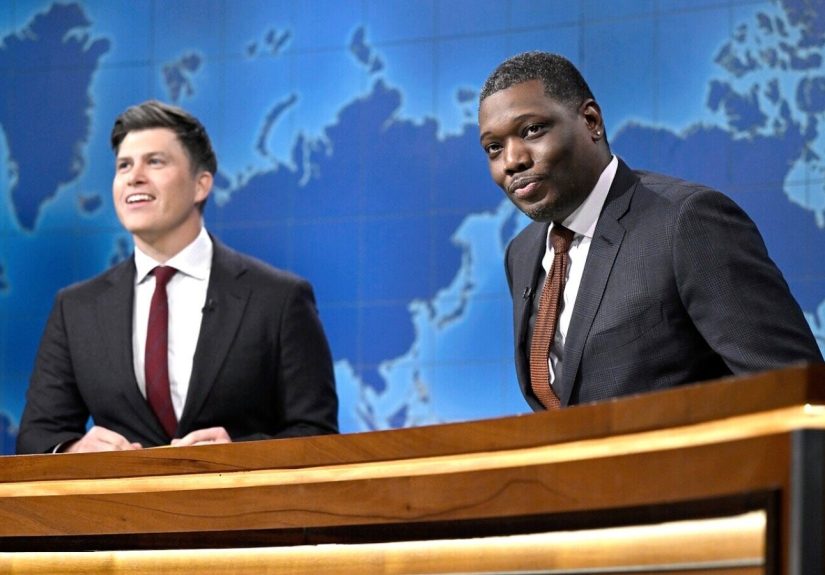
Che, meanwhile, was operating from a very different zip code inside the same institution. He has been part of SNL since 2014 and has co-anchored “Weekend Update” with Colin Jost since that same year. In television time, that is approximately 400 years. He is not a nervous rookie waiting to see if a sketch makes it past dress rehearsal. He is part of the furniture now, except the furniture tells edgy jokes and occasionally looks like it would rather be anywhere else.
So when a veteran like Che jokes that he still has not met newer cast members, the line works because it captures something viewers already suspect about SNL: the show is less like a cozy comedy family and more like an elite live-TV machine where people overlap, collide, vanish, and reappear under fluorescent lights at 30 Rockefeller Plaza.
Who Were the “New” Cast Members He Meant?
To understand why the comment landed the way it did, it helps to remember what Season 50 looked like. NBC added Ashley Padilla, Emil Wakim, and Jane Wickline as featured players ahead of the anniversary season. Padilla arrived with Groundlings credentials and strong character energy. Wakim brought a stand-up background and quickly stood out as the first Lebanese American cast member in the show’s history. Wickline entered with a digital-native sensibility that felt tuned to internet comedy as much as live sketch performance.
That trio represented exactly what SNL has always needed from new hires: fresh rhythms, different comic instincts, and the possibility of surprise. But the reality of the show is that promising newcomers do not automatically become central players. They have to earn space inside a format where airtime is scarce, veterans already know the system, and each week functions like a stress test disguised as entertainment.
By the time the show pivoted toward Season 51, the cast had shifted again. Emil Wakim exited after one season, calling the news a “gut punch,” while Padilla and Wickline remained in the mix. Then SNL added another wave of featured players, including Ben Marshall, Tommy Brennan, Jeremy Culhane, Kam Patterson, and Veronika Slowikowska. In other words, the cast carousel did not slow down. It sped up.
That context makes Che’s joke sting a little more than it otherwise might. One of the people in that “new from last season” category was already gone. Suddenly the line was not just funny because it sounded aloof. It was funny because it highlighted how brutally fast the show moves. At SNL, you can apparently be new, overlooked, and out the door before a veteran learns your coffee order.
Why Michael Che Is the Perfect Person to Say It
Not every cast member could deliver that remark and have it land the same way. Che could, because his public persona has long mixed honesty, detachment, and a comedian’s instinct to poke at uncomfortable truths until they become punchlines. For years, he has sounded like someone who deeply understands the value of SNL while also sounding mildly allergic to the emotional theater surrounding it.
That tension is part of his appeal. Che has repeatedly talked, in interviews and onstage, about the grind of the show and the difficulty of figuring out when to leave. He has also made it clear that SNL can be exhausting in a way outsiders often romanticize. The audience sees a polished live sketch show. The people inside it see deadlines, rewrites, cut sketches, and an unblinking weekly schedule that does not care whether anyone slept.
He and Colin Jost have even discussed why the idea of running the show after Lorne Michaels is so unappealing. The point was not just that the job is big. It was that the ecosystem is bigger than most viewers realize. Michaels is not simply a producer; he is the air traffic controller, institutional memory, political diplomat, therapist, historian, talent scout, and occasional weather system. Che’s attitude toward the whole enterprise has often suggested a man who knows exactly how much emotional energy that machine requires and has no interest in pretending otherwise.
That is why his comment did not read like a formal insult. It read like Michael Che being Michael Che: dry, dismissive, slightly chaotic, maybe kidding, maybe not, and definitely aware that the line was funnier because people could imagine it being true.
What the Remark Says About SNL Culture
A veteran and a featured player do not live the same workweek
This is the part casual viewers sometimes miss. Being on SNL does not mean everyone experiences the show the same way. A featured player spends the week hustling for relevance. They pitch ideas, fight for moments, hope a line survives rewrites, and pray their sketch is not cut after dress. A veteran “Weekend Update” anchor like Che has a different center of gravity. He is absolutely part of the same production, but his lane is more defined, his value is proven, and his place in the show is secure in a way a newcomer’s is not.
That difference matters. In a high-pressure environment, people do not automatically mingle just because they share a call sheet. The newer cast may spend enormous energy trying to break through in sketches, while Che may be focused on “Update,” stand-up, and simply surviving another week in the building. The result is a comedy version of office life everywhere: same company, same Slack, wildly different planets.
The joke also exposed the privilege of longevity
Let’s be honest. Part of what made the comment feel sharp is that it hinted at something slightly unfair. A veteran has the luxury to be detached. A newcomer does not. The rookie absolutely knows who Michael Che is. Michael Che, apparently, can joke about not knowing the rookie. That imbalance is the whole social architecture of legacy television shows in miniature.
It also helps explain why viewers reacted strongly. People love SNL, but they also project onto it. They want it to be a magical comedy clubhouse where legends mentor rising stars and everyone high-fives after dress rehearsal. In reality, it is a workplace. A glamorous, historically important, wildly influential workplace, sure, but still a workplace. And workplaces can be messy, stratified, and occasionally weirdly impersonal.
Season 50 Was a Celebration, but It Was Also a Transition
The timing of Che’s remark mattered too. Season 50 was not just another year for SNL. It was a milestone season loaded with anniversary energy, nostalgia, and the usual speculation about what the show should become next. Milestone seasons tend to do two contradictory things at once: they celebrate the institution, and they expose how hard it is to refresh the institution without losing its identity.
That is exactly what happened here. On one hand, the show leaned into legacy. On the other, it brought in new cast members and kept reshaping the roster. After Season 50, Lorne Michaels signaled more change, and the shake-up arrived. Departures piled up. New names came in. Reports of returning veterans shared space with stories about who had been cut loose. In a strange way, Che’s line worked as accidental commentary on the whole period. It summed up the awkward overlap between old SNL and next SNL.
The show has always depended on that overlap. It needs established names to anchor the audience’s trust, but it also needs unproven talent to create the next era. The problem is that transition is rarely graceful from the inside. Viewers watch “the future of comedy.” Cast members experience a very live version of musical chairs.
Was He Serious? Probably Not Completely. Was He Revealing Something Real? Absolutely.
The smartest way to read Che’s comment is not as a literal declaration of indifference, but as a joke that revealed a truth about distance. He may not have meant, “I do not care about these people.” He may have meant, “This place moves so fast, and roles are so segmented, that even a long-serving cast member can feel disconnected from the newest layer of the ensemble.”
That interpretation fits the Michael Che brand much better anyway. He is not a sentimental public figure. He does not wrap his commentary in warm syrup and inspirational branding. He is more likely to say the uncomfortable thing in a deadpan voice and let everyone else argue about whether he meant it. That does not always make him cuddly, but it does make him useful as a barometer. His jokes often reveal the pressure points beneath the polished NBC surface.
And viewers responded because the line felt like a tiny backstage truth bomb. The glamorous mythology of SNL says every season is a fresh chapter. Che’s line reminded everyone that for some veterans, new eras may feel less like a grand reinvention and more like, “Wait, they changed the cast again?”
Why Fans Keep Caring About This Stuff
Part of the fascination comes from how SNL occupies two identities at once. It is a TV show, but it is also a public institution with fan cultures, rankings, alumni mythology, and endless debates about whether the current cast is secretly better than the one you watched in college. So when a veteran like Che casually says something that sounds dismissive, fans do not hear one joke. They hear a referendum on the show’s culture, priorities, and future.
That may be unfair, but it is inevitable. Every cast transition at SNL carries symbolic weight. When a new featured player struggles, viewers start writing think pieces about whether the show still knows how to develop talent. When a veteran hints at leaving, people panic about the end of an era. When Michael Che says he has not met the newer cast members, it instantly becomes larger than one comment because it feeds a bigger anxiety: is SNL still a creative community, or has it become a machine too large for its own mythology?
The honest answer is probably both. It is still one of the few places in American entertainment where new comedians can become household names. It is also an institution big enough to swallow people whole if the timing, fit, or opportunity is wrong. That contradiction has always been part of the show’s DNA. Che just managed to sum it up in a line sharp enough to travel.
The 500-Word Experience Angle: Why This Story Feels Familiar Far Beyond SNL
What makes this whole Michael Che moment especially relatable is that it does not actually feel limited to television. Strip away the NBC logo, the famous studio, and the legendary “Live from New York,” and the story starts to resemble something people experience in ordinary professional life all the time.
Anyone who has joined a fast-moving company, a newsroom, a hospital, a startup, a creative agency, or even a large school department knows the feeling. New people arrive with a mixture of excitement and terror. The organization announces them with cheerful language. Somebody says they are “thrilled to welcome” the newcomers. Then reality shows up wearing noise-canceling headphones. Deadlines pile up. Meetings overlap. Veterans are too busy solving this week’s disaster to properly greet the person whose name they just saw in an email.
That does not always mean the veterans are arrogant. Sometimes they are. Sometimes they are just cooked. Institutions with intense schedules create strange social distortions. The newer people assume everyone important knows who they are. The established people assume there will be time to connect later. Then later never really arrives. Suddenly months have passed, and two people technically work together without ever having a normal conversation that did not involve a hallway nod or a panicked “great job” after a meeting.
Creative workplaces make this even more extreme. In those environments, attention is often distributed according to urgency, seniority, and visible output. The person fighting to prove themselves feels every missed introduction. The veteran with ten years of credibility may barely notice the absence of small talk because their survival depends on a completely different set of pressures. Neither side is imagining the gap. They are simply living in different emotional versions of the same building.
That is why Che’s line resonated. It translated a weird workplace truth into celebrity comedy language. It reminded people that prestige does not erase hierarchy. In fact, prestige often sharpens it. The shinier the institution, the easier it is for outsiders to imagine constant camaraderie and the harder it is to admit that famous workplaces can be just as fragmented, cliquish, rushed, and awkward as ordinary ones.
There is also a more human layer to it. Newcomers usually remember exactly who made them feel seen. They remember the veteran who learned their name, invited them into the room, or gave them a confidence-saving laugh after a rough first week. And they remember who did not. That is true on SNL, and it is true in everyday life. Big organizations often talk about talent, but people stay attached to places because of recognition.
So even if Michael Che intended the comment as a quick joke, it accidentally touched a universal nerve. Most people have been one of the “new cast members from last season” somewhere. Most people have also worked with a veteran who seemed to exist on a different floor of reality. That is why the remark traveled. It was celebrity gossip on the surface, but underneath it was a very ordinary story about status, distance, and the weird social math of high-pressure workplaces.
Final Take
Michael Che’s reported joke about still not having met the newer SNL cast members was funny because it was blunt, but it lingered because it revealed something real. It captured the odd geometry of Saturday Night Live at a moment of transition: veteran stars still steering core parts of the show, featured players scrambling to establish themselves, and Lorne Michaels continuing to refresh the machine without slowing it down.
If the line sounded dismissive, that is partly because hierarchy at SNL can be dismissive. If it sounded believable, that is because the show is too busy, too layered, and too competitive to operate like a tidy sitcom version of itself. And if it sounded funny, well, this is still Michael Che we are talking about. He has built a career out of delivering the kind of line that makes people laugh first and then wonder whether they should be a little concerned.
In that sense, the joke was very SNL: messy, revealing, slightly mean, highly discussable, and impossible to separate from the machinery that produced it. Not bad for one throwaway remark about coworkers he may or may not have actually met.