Table of Contents >> Show >> Hide
- What “Naughty or Nice” Really Means (and Why It Sticks)
- Where the Idea Came From: A Holiday Tradition Built on Judgment (and Joy)
- The Rise of the List: From Old Poems to Modern Pop Culture
- The Psychology Behind “Naughty or Nice”
- Naughty or Nice for Grown-Ups: The Adult Version of the List
- Make Your Own “Naughty or Nice” Tradition (Without the Shame)
- So… Are You Naughty or Nice?
- Experiences Related to “Naughty or Nice?” (Real-Life Moments People Remember)
- Conclusion
Every December, the world turns into one big, sparkly performance review. Your neighbor’s inflatable Santa is basically an HR manager in a red suit,
your aunt is handing out “good behavior” side-eye across the dining table, and somewhere in the distance a child is whispering,
“Does Santa accept apologies and a handwritten essay?”
“Naughty or nice?” sounds like a simple questiontwo neat columns, zero ambiguity, and a convenient imaginary auditor who allegedly “knows when you’ve
been bad or good.” But the longer you sit with it, the more you realize it’s less like a checklist and more like a cultural mirror: it reflects what we
reward, what we punish, and what we consider “good” when the year is winding down and the wrapping paper is running out.
What “Naughty or Nice” Really Means (and Why It Sticks)
At face value, “naughty or nice” is a playful moral sorting hat: behave well, get gifts; behave badly, get coal (or, in modern times, socksarguably
worse depending on the sock). The power of the phrase is its simplicity. It turns complicated human behavior into a story you can tell in a single breath.
The problemand the comedyis that humans are not single-breath creatures. Most of us are a mix of “held the door for a stranger” and “didn’t respond to
that text for four days.” Even kids, who are often treated like tiny saints-in-training, bounce between kindness and chaos depending on hunger levels and
the presence of a glitter glue stick.
The hidden appeal of a two-column world
- It feels fair. A list implies rules, structure, and consequences.
- It’s easy to explain. “Be nice” is faster than a graduate seminar on moral development.
- It’s emotionally satisfying. We like the idea that goodness gets noticed.
- It’s funny. Adults pretend they don’t care, then immediately ask which list they’re on after their third cookie.
Where the Idea Came From: A Holiday Tradition Built on Judgment (and Joy)
The modern Santa story is a patchwork quilt sewn from European folklore, Christian traditions around St. Nicholas, and American pop culture. Across many
cultures, winter holiday figures have historically done two jobs: reward good behavior and discourage bad behavior. Some versions are warm and generous;
others are… let’s say “motivational,” in the way a pop quiz is motivational.
In parts of Europe, St. Nicholas traditions included gifts for well-behaved children around early December. In Alpine regions, darker companion figures
(like Krampus) entered the folklore as a cautionary counterpartone figure brings treats, the other brings consequences. Over time, these themes blended
into the Santa we know today: cheerful gift-giver with a side hobby in moral accounting.
The Rise of the List: From Old Poems to Modern Pop Culture
“Santa keeps a list” didn’t drop from the sky fully formed like a perfectly frosted sugar cookie. The story evolved through poems, illustrations,
newspapers, and the irresistible human urge to add lore to anything that sells.
The poem era: Santa gets a brand identity
The famous Christmas poem commonly known as “’Twas the Night Before Christmas” (originally titled “A Visit from St. Nicholas”) helped
shape a distinctly American Santa image. It popularized key detailshis sleigh, his reindeer, and the stealthy nighttime visitthat later storytellers
expanded into full mythology.
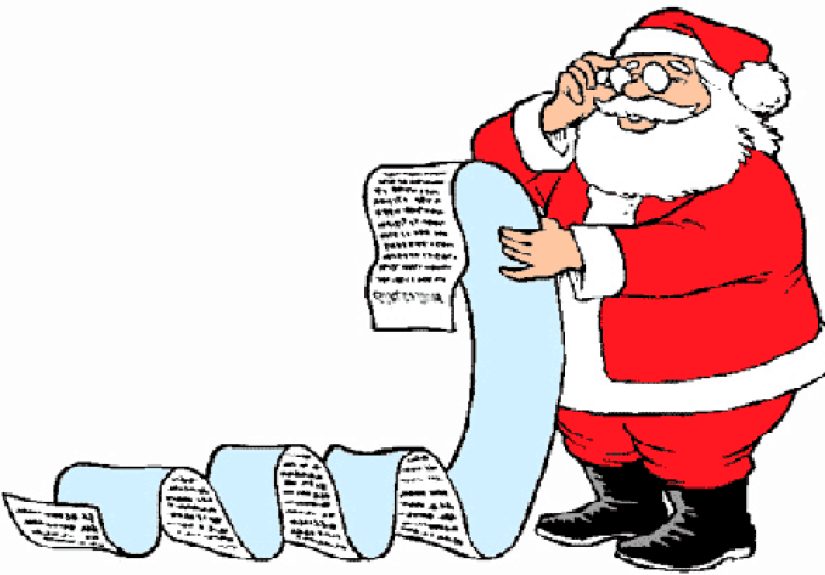
The illustration era: Santa gets paperwork
In the 1800s, illustrators and writers kept filling in the blanks: a North Pole home base, a toy workshop, helpers, and yeslists. By the late 19th
century and into the 20th, images of Santa surrounded by letters and “naughty and nice” themes helped cement the idea that behavior mattered, and Santa
was keeping receipts.
The song era: the list becomes a catchphrase
If you want to know why “naughty or nice” lives rent-free in everyone’s head, look to music. The 1934 song
“Santa Claus Is Comin’ to Town” turned the concept into a singable warning: he’s watching, he’s checking, and your reputation is one chorus away
from trouble. Once a moral idea has a melody, it’s basically immortal.
The Psychology Behind “Naughty or Nice”
Here’s where it gets real (but still festive). The “naughty or nice” story works because it’s a simple incentive system: a promised reward, a threatened
punishment, and an authority figure who “knows.” That’s powerfulespecially for young kids who are still learning how consequences connect to choices.
But real-world parenting and behavior science are more nuanced than “be good for a toy.” Many child-development experts recommend strategies that focus on
consistency, clear expectations, and consequences that happen close to the behaviorrather than huge, distant threats that may or may not be enforced
weeks later.
Why “Santa as discipline” can backfire
In practice, plenty of parents admit they’ve used Santa-related threats or bribes during stressful moments (especially in public, where the pressure is
high and the snack supply is low). Polling and expert commentary often point out a common issue: if threats aren’t followed throughor if gifts arrive
anywaykids quickly learn the “list” is more theater than law.
That doesn’t mean Santa is “bad.” It means Santa is a story, and stories work best when they support the values you actually want to teach:
responsibility, empathy, repair after mistakes, and kindness that isn’t purely transactional.
A healthier reframe: kindness over compliance
If you like the fun of the tradition but don’t love the “holiday surveillance state” vibe, try shifting the emphasis:
- From “nice = obedient” to “nice = thoughtful.” Sharing, helping, apologizing, including others.
- From “naughty = bad kid” to “naughty = poor choice.” Behavior can change; identity doesn’t need a permanent label.
- From “avoid coal” to “make it right.” Repair and learning are more useful than shame.
Naughty or Nice for Grown-Ups: The Adult Version of the List
Adults pretend we’re above the “naughty or nice” questionthen we invent it again in new packaging. We call it “karma,” “energy,” “boundaries,” “being
the bigger person,” or “group chat accountability.” Same concept, fewer cookies.
How the list shows up in everyday adult life
- At work: “Nice list” is the coworker who covers your shift. “Naughty list” is the person who replies “Per my last email” in bold.
- Online: “Nice list” is thoughtful comments. “Naughty list” is rage-baiting strangers at 2 a.m.
- In friendships: “Nice list” is remembering birthdays. “Naughty list” is canceling plans with “lol sorry” as your entire apology.
The takeaway? We’re all still negotiating the same question: what does “good” look like when life is messy? The best holiday traditions don’t just judge
people; they guide people.
Make Your Own “Naughty or Nice” Tradition (Without the Shame)
Want the fun of the concept without turning it into a pressure cooker? Try a version that focuses on growth and generositysomething that feels good
even after the ornaments go back into storage.
Ideas that keep it playful and positive
-
The “Nice Notice” Jar: Everyone writes down a kind thing they saw someone else do. Read them on Christmas Eve. Prepare for happy tears
and dramatic “WHO WROTE THIS ABOUT ME?!” energy. -
The “Mischief & Make-It-Right” List: Not “naughty,” but “oops.” If someone snaps, forgets, or melts down, they add one repair step:
apologize, help, clean up, or do a kind action. - Kindness Bingo: Squares like “helped without being asked,” “included someone new,” “said thank you,” “put away your phone during dinner.”
- Santa’s Values Letter: Instead of “be good,” write a short family note: “This year we’re practicing patience, honesty, and helping.”
- The “Secret Nice” Challenge: Everyone does one anonymous nice thing for someone else each week in December. No bragging. (Okay, minimal bragging.)
So… Are You Naughty or Nice?
Here’s the honest answer: most people are both, sometimes within the same hour. You can donate to charity and still cut someone off in traffic. You can
be a sweet kid who also screams because their banana broke in half (a tragedy that deserves its own documentary).
The healthiest version of “naughty or nice” isn’t a verdictit’s a prompt. It asks:
Who do I want to be, and what can I practice more of? If the story nudges you toward kindness, repair, and generosity, then it’s doing
its jobeven if you occasionally belong on the “needs a nap” list.
Experiences Related to “Naughty or Nice?” (Real-Life Moments People Remember)
Ask people what they remember about “naughty or nice,” and you’ll rarely get a philosophical speech. You’ll get storiesfunny ones, tender ones, and the
occasional “I can’t believe my parents did that” confession that is now family legend.
A classic experience: the December behavior makeover. Many families describe a sudden transformation the moment the Santa conversation
begins. Kids who have been negotiating bedtime like tiny lawyers abruptly become generous and helpfulat least for a week. Parents often laugh about how
the “Santa season” creates a temporary burst of polite manners, extra hugs, and suspiciously enthusiastic tooth-brushing. Then January arrives, and the
household returns to its regular programming.
Another common memory is the “nice list audition” in public. In grocery store lines, kids have been known to straighten up like they’re
in a movie montage: standing still, using inside voices, and trying to look angelic while their parent whispers, “Santa is watching.” Some parents later
admit that the phrase wasn’t meant to scareit was meant to save everyone’s sanity in aisle seven. The experience is often a mix of humor and relief:
behavior improves, tension drops, and nobody has to leave the cart behind like a dramatic soap opera exit.
Then there’s the unforgettable holiday party “naughty list” joke. In offices and friend groups, people love playful lists: “naughty” for
stealing someone’s lunch from the fridge, “nice” for bringing snacks, “naughty” for replying-all, “nice” for fixing the printer without making it
everyone’s problem. The best versions are silly and affectionate, more roast than punishment. The worst versions (and yes, people remember these too)
cross into real shamingproof that labels can sting even when wrapped in tinsel.
Teachers and caregivers often share a different kind of experience: the kid who worries deeply. Some children don’t treat “naughty or
nice” as a joke; they treat it like a courtroom. They may ask anxious questions“What if I was mean once?” “What if I forgot to share?”because they
interpret the list as permanent judgment. In those moments, adults frequently shift the story toward reassurance: you can make mistakes, you can repair,
and one rough day doesn’t define you. Families who reframe it this way often say it becomes a sweet tradition again, not a stressful one.
A heartwarming experience many people mention is the “be a Santa” milestone. When kids start questioning whether Santa is real, some
families invite them into a new role: keep the magic alive for younger siblings, donate toys, or do secret acts of kindness. People who grew up with
this transition often remember it as the moment the story became theirsnot something done to them, but something they could do for
others. It’s still “nice list” energy, just with more agency.
Finally, there’s the universal experience of realizing that most adults secretly keep their own “lists,” too. Not literal spreadsheets (usually), but
mental tallies: who showed up, who apologized, who made life easier, who made it harder. Around the holidays, those tallies become louder. And that’s
why the best “naughty or nice” memories are rarely about judgmentthey’re about kindness that felt specific and real. A sibling saving you the last cookie.
A friend checking in when you’re stressed. A parent saying, “Let’s try again tomorrow.” That’s the kind of “nice” people carry long after the lights come down.
Conclusion
“Naughty or nice?” survives because it’s catchy, funny, and oddly comforting: it suggests that kindness matters and gets noticed. But the most useful
version isn’t a strict moral scoreboard. It’s a seasonal reminder that people are complicated, growth is real, and generosity hits harder when it’s not
tied to fear. Keep the tradition if it brings joyjust make sure your “list” leaves room for learning, repair, and a little harmless mischief.