Table of Contents >> Show >> Hide
- What Is a “Herring Basket,” Exactly?
- Why the Herring Basket Looks the Way It Does
- From Dock Tool to Design Darling: Why Crafters Fell for It
- How to Shop for a Herring Basket Without Getting Fooled (or Grossed Out)
- Crafts Edition: Projects Inspired by the Classic Herring Basket
- The Sustainability Angle: Baskets, Trees, and Why Material Matters
- Wrap-Up: What the Classic Herring Basket Teaches Us
- of Real-World “Craft Life” Experiences With the Classic Herring Basket
Some objects don’t just do a jobthey carry an entire coastline’s worth of stories in their ribs and weave.
The classic herring basket is one of those. It was born to hustle: wet docks, slippery fish, fast hands, and the
eternal math problem of the working waterfronthow much did we catch? Today, it has a second life far from
the wharf, showing up in studios, mudrooms, and craft corners as the most handsome “container with a résumé” you can own.
This is the crafts edition of the herring basket lesson: what it is, why it looks the way it does, and how to use
it at home without turning it into a dusty prop. We’ll also take a quick detour to Maine, where Passamaquoddy-made
fish-scale baskets fueled a coastal industryand where the same practical genius still inspires modern makers.
What Is a “Herring Basket,” Exactly?
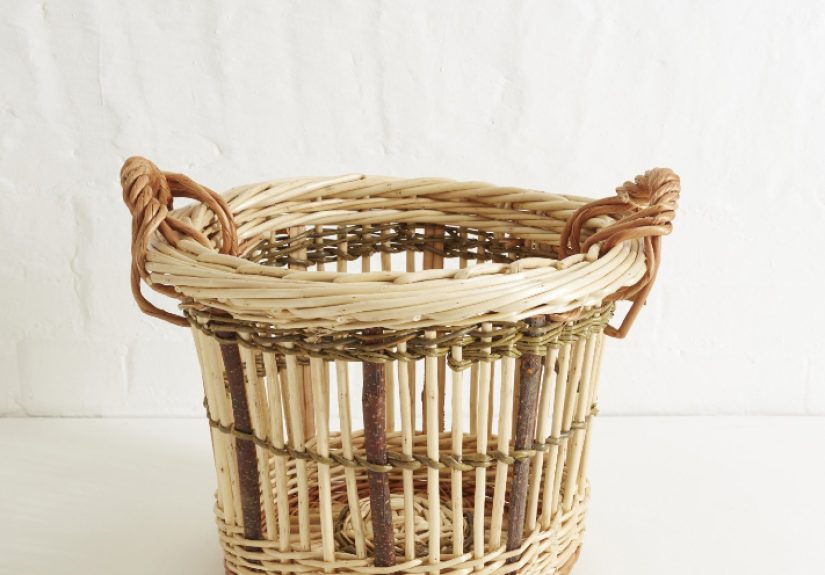
“Herring basket” is a big umbrella term for a family of purpose-built baskets made for handling herringcatching,
carrying, sorting, and, in some places, measuring them. Herring is small, abundant, and historically
harvested in serious volume, which means the tools had to be tough, quick to grab, and easy to dump. A good herring
basket is basically a wearable work ethic: strong enough for repetitive hauling, open enough to drain, and shaped to
pour out a slippery load without a wrestling match.
The “Quarter-Cran” Basket: The Measuring Basket With a Shape You Can Spot From Across a Room
In parts of the British herring industry, herring baskets weren’t only about carryingthey doubled as a standardized
volume measure. One famous form is the quarter-cran basket: wide, sturdy, and built to a regulated
capacity. You can see the logic in its silhouette: a stable belly for volume, a confident flare for easy dumping,
and a reinforced structure meant for wet, heavy, repetitive work. Even if you’ve never been near a fishing harbor,
you’ve likely seen this style in design circles because it has that rare mix of beautiful and unbothered.
The Maine Connection: Passamaquoddy Herring Scale Baskets and the Working Coast
Over in Maine’s maritime world, another “herring basket” story takes a different (and deeply American) turn.
Along the northeastern coastespecially during the era when herring supported sardine canneries and related trades
Passamaquoddy basketmakers produced sturdy ash baskets used in herring-related industries. These
weren’t decorative novelties; they were work tools, made in quantity, woven with skill, and integrated into the
industrial rhythm of coastal towns.
When you admire one today, you’re seeing layered practicality: materials chosen for strength, a weave that can take
abuse, and handles made for real carrying. It’s a reminder that “craft” isn’t always a hobbyit’s often a job, a
livelihood, and a community’s way of solving problems with their hands.
Why the Herring Basket Looks the Way It Does
The herring basket’s design is the result of relentless real-world feedback. Fish don’t politely sit still. Docks are
wet. Time is money. So the basket evolved a set of features thatsurprisealso happen to be perfect for modern home use.
1) Open Weave = Drainage and Airflow
Fishing baskets needed to shed water and not turn into floating science experiments. An open weave drains quickly and
allows airflow. In your house, that same feature is a cheat code for anything that hates trapped moisturedish towels,
gardening gloves, dog toys that “mysteriously” return damp, or produce on the counter.
2) A Wide Mouth = Fast Loading and Easy Dumping
The flared top isn’t a fashion choice. It’s a workflow choice. A wide opening lets you toss in fish (or yarn) without
perfect aim, and it lets you pour out contents without turning the basket upside down like a cartoon character shaking
out change.
3) Reinforcement for Heavy Loads
Many classic herring baskets use thicker structural elementsribs, hoops, slats, or sturdier weaversbecause herring
baskets weren’t meant for holding three artisanal lemons. They were meant for weight. That’s why they excel as:
laundry baskets, firewood haulers, paper recyclers, farmers’ market carriers, and “I’m moving everything off this table
in one trip” solutions.
4) Natural Materials That Age Like a Good Leather Jacket
Whether it’s willow, ash, or other regional materials, many herring-basket traditions rely on plant fibers and wood that
develop a rich patina. Scuffs and darkening aren’t defectsthey’re evidence. And in a world of plastic bins that look
tired on day three, a basket that looks better with time feels almost rebellious.
From Dock Tool to Design Darling: Why Crafters Fell for It
The craft world loves tools that are honest, durable, and good-looking without trying. The classic herring basket
checks every box. But the real reason it’s become a studio staple is simpler:
it solves chaos without hiding it.
In a craft space, you often want visibilitywhat colors do I have, where are the scissors, how many half-finished
projects am I currently “emotionally invested” in? A herring basket holds a lot, keeps things breathable, and lets
you see what’s inside so you don’t buy your fifth spool of the same “almost-but-not-quite teal.”
Smart Ways to Use a Classic Herring Basket at Home
- Yarn corral: Big skeins, works-in-progress, and that one ball of yarn your cat has claimed as a legal resident.
- Fabric and notions: Folded yardage, muslin, batting, patternsstore upright for easy browsing.
- Knitting needles and rulers: Add a tall jar inside for long tools; the basket becomes the stable base.
- Entryway catch-all: Gloves, hats, scarves. (Bonus: airflow helps wet items dry.)
- Plant basket: Drop in a pot with a saucer. The basket hides the plastic nursery pot without suffocating the plant vibe.
- Blanket hauler: Keep throws where people actually use themon the couchwithout looking messy.
- Recycling station: Paper or cardboard; the structure stands up to daily use.
How to Shop for a Herring Basket Without Getting Fooled (or Grossed Out)
Because these baskets were working tools, you’ll see everything from pristine reproductions to antiques with a whiff of
“historic seafood.” Here’s how to shop smart.
Ask These Questions
- Is it meant for real carrying? Decorative baskets often have thin handles or weak joins. A true work-style basket feels confident.
- What’s the material? Willow and ash age differently. Ash splint work often shows flatter strips and crisp patterning.
- Is there structural damage? A few broken weavers can be repaired, but a collapsed rim or cracked handle may be a project (not a bargain).
- Does it smell strongly? A mild “barn/attic” scent is normal in antiques. A strong fish odor means extra cleaningor a polite goodbye.
Quick Cleaning and Care (Keep It Gentle)
Treat old basketry like you’d treat an old book: you want it clean, not “factory new.” Start with dry brushing and
vacuuming using a brush attachment. If needed, wipe with a barely damp cloth and mild soapnever soak. Let it dry
completely in a breezy spot out of harsh sun. If you plan to use it for textiles, consider adding a washable liner.
Crafts Edition: Projects Inspired by the Classic Herring Basket
Let’s be clear: you don’t need to “craftify” a basket to make it useful. The basket is already doing the most.
But if you want to personalize itespecially a newer basketthese ideas keep the spirit intact.
1) Make a Removable Liner (No Commitment, No Regrets)
Sew a simple fabric liner with ties or snaps that attach around the rim. Pick canvas, denim, or ticking stripe if you
want that practical coastal look. A liner keeps snag-prone yarn and delicate fabric from catching on rough spots and
makes it easy to wash out dust.
2) Add an Inner Organizer
Drop in a sturdy divided insert (think: a fabric caddy, a wooden crate, or a set of jars) to separate tools. Suddenly
your basket becomes a mobile craft station: scissors in one section, markers in another, tape and glue corralled like
they’re finally paying rent.
3) Label It Like a Pro (But Make It Cute)
Use a leather tag, a canvas label, or a simple tied-on chalkboard tag. Labeling is not boringit’s future-you
saying, “I respect my own time.” Plus, labels keep family members from putting receipts into your embroidery floss.
4) Try “Functional Styling” Instead of Paint
Painting antique baskets can reduce their character (and sometimes their value). A better move is styling with
functional add-ons: a folded linen towel over the rim, a removable cloth cover, or a matching set of smaller baskets
nested inside.
The Sustainability Angle: Baskets, Trees, and Why Material Matters
Natural-fiber basketry is often celebrated as “eco-friendly,” but the real story is more specificand more urgent.
In the Northeast, ash basket traditions are closely tied to the health of ash trees, which have been threatened by the
spread of invasive pests like the emerald ash borer. That’s not just an environmental issue; it’s a cultural and
economic one, especially for Indigenous basketmakers whose knowledge and livelihoods are bound to those materials.
If you love baskets, the most meaningful “sustainable” choice is to support living makers and responsible material
stewardshipnot just buy another thing. Look for reputable craft schools, Native art markets, and regional makers who
can tell you what the basket is made of and how it was sourced. A basket with a clear story is always the better buy.
Wrap-Up: What the Classic Herring Basket Teaches Us
The classic herring basket is proof that good design doesn’t need a marketing team. It needs a problem, a place, and
people who can’t afford nonsense. Its shape was built by necessity, then adopted by the craft world because necessity
happens to look great on a shelf.
Whether you’re drawn to the iconic quarter-cran silhouette or the powerful history of Maine’s Passamaquoddy-made
fish-scale baskets, the lesson is the same: craft is not separate from life. It’s how life gets handled,
carried, measured, and made a little more beautifulone honest object at a time.
of Real-World “Craft Life” Experiences With the Classic Herring Basket
If you spend any time around makers, you’ll notice a pattern: everyone has at least one container that’s doing
emotional labor. For some people it’s a tote bag. For others it’s a mystery drawer. And for the lucky ones, it’s a
classic herring basket parked in the corner like a calm, capable friend who never judges your half-finished quilt top.
One common experience is the “project migration.” You start knitting on the couch, move to the kitchen table to chase
better light, then end up in a bedroom chair because the living room has been taken over by family, pets, or the
universal urge to watch something “just for background noise.” A herring basket makes that migration painless. Drop
in the yarn, the needles, the pattern, and the little notions pouchthen pick it up and go. No more leaving a trail
of stitch markers like breadcrumbs for a future archaeologist.
Another very real moment: the day you realize your “organized” craft supplies are actually an advanced form of
camouflage. You have three tape measures, but none can be found. Your scissors have multiplied, but the good pair has
vanished into a parallel dimension. A basket with an open weave and wide mouth fixes the daily scavenger hunt because
you can see what’s inside. It’s not magicit’s just visibility. But it feels like magic when you stop buying
replacements for things you already own.
Then there’s the “company is coming” panic. The doorbell rings in ten minutes, and your kitchen island is covered in
fabric scraps, packaging, and a glue gun you swear you put away last week. The classic herring basket shines here as
the fastest tidy-up tool on the planet: everything goes in, basket goes under a console or into a closet, and you look
like a person who definitely has it together. (You don’t have to tell anyone the basket is basically a stylish
emergency exit.)
In homes with kids, the basket often becomes a “soft boundary.” Not a rigid rule, just a friendly container that says:
these blocks live here, these art supplies live here, this pile of stuffed animals is now a curated collection. The
basket’s toughness matters because it’s meant to be grabbed, dragged, and used daily. And because it’s not plastic,
it doesn’t feel like a toy binit feels like part of the room.
Finally, there’s the most satisfying experience of all: watching the basket develop its own patina as it works for you.
Maybe it lives by the fireplace half the year, then moves to the porch in summer holding garden gloves and clippers.
Maybe it starts in the studio, then “graduates” to the entryway because it’s too useful to keep hidden. Over time,
it becomes less like decor and more like a household tool with a quiet, capable presence. And that’s the best kind of
craft object: the one that earns its place by being genuinely helpfulwhile still looking ridiculously good doing it.