Table of Contents >> Show >> Hide
- The Story Behind the Matching Tattoos
- What Counts as a Birthmark (And Why Some Draw Attention)
- Why “Feeling Different” Can Hurt
- Matching Tattoos: A Powerful Symbol With Real Tradeoffs
- If You Love the Message but Not the Needle: Practical Ways to Build Confidence
- Tattoo Safety 101 (Because Love Shouldn’t Come With an Infection)
- Conclusion: The Mark Isn’t the ProblemThe Reaction Is
- Experiences From Families Living With Visible Birthmarks
Some parenting moves are quietlike keeping spare snacks in every pocket you own. Others come with needles, ink, and a message that basically shouts: “You’re not alone.”
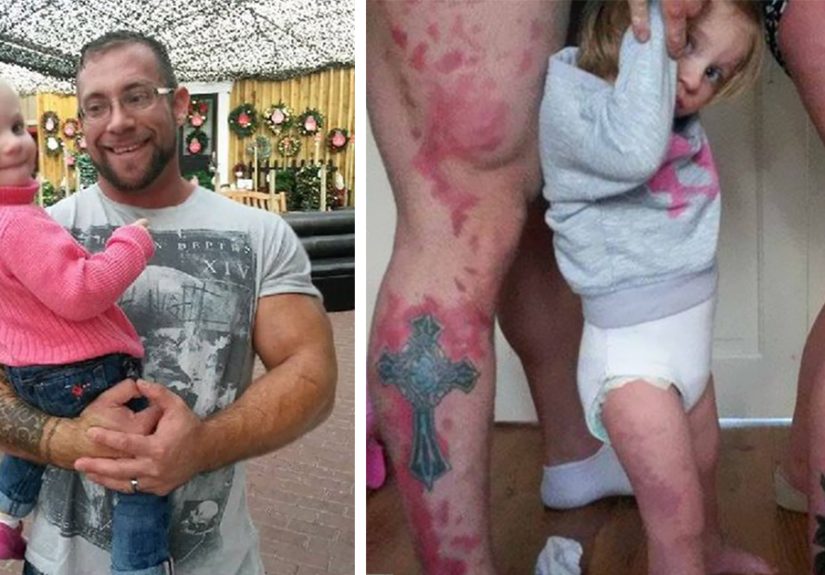
A widely shared story (covered by several U.S. news outlets) features a couple who tattooed their legs to match their toddler daughter’s large, bright red birthmark. Their goal wasn’t to erase anything. It was to change the emotional math: if strangers stare, the child doesn’t have to carry that moment by herself.
Let’s walk through what happened, what birthmarks like this may be medically, why visible differences can affect kids’ confidence, and what parents can dotattoos or notto raise a child who feels secure in their own skin. (This is educational info, not medical advice. For diagnosis or treatment, talk with a pediatrician or dermatologist.)
The Story Behind the Matching Tattoos
U.S. coverage described parents Tanya and Adam Phillips and their daughter Honey-Rae, who was born with a vivid red birthmark along the lower right side of her body. Reports said the mark stretched from her toes up toward her lower back. In at least one account, Tanya also shared that Honey-Rae had breathing trouble at birth and was taken to special carean already scary start that made the birthmark feel even more emotionally intense.
Later came a moment many parents dread: adults staring and whispering in public. The parents couldn’t control strangers’ manners, but they could control the story their family told about the mark. So they chose a bold symbollarge tattoos on their own legs that mirrored the birthmark’s shape and placement. One U.S. report cited the tattoo session as taking roughly two-and-a-half hours and costing about $124, underscoring that this was a real, tangible sacrifice, not just a social-media gesture.
When their daughter noticed the “match” and pointed between her mark and theirs, the parents felt reassured they’d made the right choice. Predictably, the internet had Opinions: some people called it beautiful, others called it extreme, and a few asked why anyone can’t just let children exist without turning them into a headline. All three reactions can coexist.
What Counts as a Birthmark (And Why Some Draw Attention)
“Birthmark” is an umbrella term, not a single condition. Birthmarks can be flat or raised, tiny or large, temporary or lifelong. Dermatologists often group them into two broad categories:
- Vascular birthmarks (blood-vessel related): red, pink, or purple marks such as infantile hemangiomas and capillary malformations (“port-wine stains”).
- Pigmented birthmarks (melanin related): brown, tan, gray, or blue-toned marks.
The Phillips family’s mark was described as bright “strawberry” reda phrase often associated with vascular birthmarks. Without a clinician’s diagnosis, it’s best to talk in possibilities. Two that frequently come up in medical explainers are infantile hemangiomas and port-wine stains.
Infantile hemangiomas (“strawberry marks”)
Infantile hemangiomas are common. Dermatology guidance estimates that about 3% to 10% of babies develop a hemangioma. They often grow quickly early on (typically in the first months), then stop and slowly shrink over years. Dermatology guidance also notes that most are gone by around age 10. Pediatric resources describe different typessuperficial (“strawberry”), deep, or mixedand explain why some need closer medical follow-up (for example, if they ulcerate, bleed, become painful, or interfere with vision, breathing, eating, hearing, or other functions).
When treatment is needed, it’s usually because the hemangioma is causing or threatening problems (painful ulceration, rapid growth, or interference with vision, breathing, eating, hearing, or other functions). Pediatric guidance notes that oral propranolola beta blocker long used for other conditionsis now commonly used as an effective treatment for problematic infantile hemangiomas, with close medical supervision for side effects. Some cases may use topical medicines, laser therapy, or (rarely) surgery depending on size, location, and complications.
That clinical context matters for parents: you can support your child emotionally and still talk with a doctor about medical options without turning the conversation into “we’re fixing you.”
Translation: many hemangiomas are a “watch and wait” situation, but a professional evaluation helps you know which ones deserve faster action.
Port-wine stains (capillary malformations)
Port-wine stains are typically flat pink-to-purple patches present at birth. Medical sources describe them as permanent without treatment and note they can darken or thicken over time. Specialist centers describe pulsed dye laser therapy as the standard method to lighten them; it can reduce color, but doesn’t always erase the mark completely. Most port-wine stains are primarily cosmetic, but clinicians may evaluate certain patterns (especially on the face) for rare associated conditions.
Why “Feeling Different” Can Hurt
A child doesn’t randomly decide to be insecure. Insecurity is often learnedthrough repeated stares, awkward questions, and teasing that turns a body feature into a social label.
Public health resources on bullying note that kids who are bullied can experience long-term effects on mental health and school functioning, including higher risks of anxiety and depression symptoms, changes in sleep and eating patterns, and school avoidance. A visible difference can make a child stand out, but the real damage comes from how peers (and adults) respond.
That’s the heart of the tattoo story: the parents weren’t battling a birthmark. They were trying to reduce the loneliness that can follow a child who’s repeatedly singled out.
Matching Tattoos: A Powerful Symbol With Real Tradeoffs
Matching tattoos can be meaningful, and they can also be complicated. Here’s a balanced view.
What it can do well
- Signals unconditional belonging: A child sees “my parents are on my team” without needing a speech.
- Reframes attention: If someone comments, parents can redirect: “We match,” shifting the spotlight away from the child being “the only one.”
- Models body acceptance: It’s a visible way of saying, “This feature isn’t a defect. It’s part of our story.”
What it can get wrong (if framed badly)
- Autonomy and privacy: The child didn’t consent to a permanent public narrative about their bodyespecially if it goes viral.
- Accidental “rescue” messaging: If the tattoo is presented as “we had to fix this,” a child may hear that the birthmark is shameful.
- Permanence: Bodies change. The “match” may look different over time, and parents should be comfortable with that.
The healthiest framing sounds like: “You were always okay. We’re just being loud about it.”
One more modern wrinkle: the internet never forgets. If a family shares a child’s medical details or photos widely, it can follow the child into adolescence and adulthood. If you’re posting a “solidarity gesture,” consider keeping names, close-ups, and identifying details minimalor ask yourself a simpler question: “Would my kid thank me for this at 16?” If the answer is “maybe not,” you can still do the supportive thing without turning it into content.
If You Love the Message but Not the Needle: Practical Ways to Build Confidence
You can create the same sense of belonging without permanent ink. The key is consistent support and language.
Give your child a script
- Child-friendly: “It’s my birthmark. I was born with it.”
- For curious kids: “Bodies come in lots of patternsfreckles, scars, birthmarks.”
- For adults who overstep: “Please don’t comment on children’s bodies.”
Offer choices, not rules
Some days your child may want the mark visible; other days they may want coverage. Let that flexibility be normal. Agency is confidence’s best friend.
Partner with school early
Ask teachers how they handle appearance-based teasing and what they do when students are singled out. A quick, consistent adult response can stop a lot of “small” comments from becoming a pattern.
Use medical care as information, not shame
Having a clinician examine a birthmark can be about health, comfort, and understandingnot cosmetics. The tone matters. Kids hear it.
Tattoo Safety 101 (Because Love Shouldn’t Come With an Infection)
If you do decide on a tattoomatching or otherwisedo it safely. Federal health information warns that infections can come from unsterile practices and that even sealed inks can sometimes contain microorganisms. Allergic reactions can also occur and may persist because the pigment stays in the skin. Public health guidance also notes that bloodborne infections like hepatitis C can spread when tattoos are done in unregulated settings or with non-sterile instruments.
- Choose a licensed, reputable studio that uses sterile equipment and follows hygiene protocols.
- Ask about ink sourcing and aftercare instructions.
- Avoid DIY kits and informal “home tattoo” setups.
- Seek medical care for fever, worsening pain, spreading redness, or drainage.
Conclusion: The Mark Isn’t the ProblemThe Reaction Is
The matching-tattoo story resonates because it aims at the real threat: not a patch of skin, but the social pressure that makes a child feel like a mistake. Whether your family’s symbol is matching ink, matching socks, or simply matching confidence, the goal is the sameteach your child they are not a before photo.
If your child has a large or changing birthmark, consider a professional evaluation so you understand what it is and what options exist. Then invest in the long game: language, community, and the kind of love that doesn’t require blending in.
Experiences From Families Living With Visible Birthmarks
Parents who raise kids with noticeable birthmarks often describe a weird emotional split: at home, the mark is just skin. Outside the house, it can feel like a microphone handed to strangers. One parent describes the first time someone asked, “What happened to her leg?” in a checkout line. They went home furiousnot at their child’s body, but at how casually adults felt entitled to comment on it. Over time, many parents say they stopped aiming for the perfect comeback and started using a simple boundary line. Something like, “It’s a birthmarkshe was born with it,” said calmly, then followed by a question that changes the energy: “How’s your day going?” That pivot does two things: it protects the child from becoming a spectacle and it refuses to reward the stranger’s curiosity with a performance.
School is where families become strategic. A common experience is the “first week plan”: emailing a teacher, explaining the birthmark in one sentence, and asking for quick normalization if classmates ask. Several parents say this small step prevents the mark from becoming the day’s main event. When a teacher responds with a calm, age-appropriate line“Bodies can look different; we don’t tease”the novelty fades faster. It doesn’t guarantee kindness, but it reduces the chance that curiosity turns into a nickname, and it signals to the class that adults are paying attention. Parents also describe practicing “what to say” at home the way you’d practice a fire drill: not because you expect disaster, but because it feels better to be prepared.
Kids’ feelings also change with context. Some children love their mark until the first pool party. Others are proud at school and shy at family gatherings. Parents often say the most helpful approach is treating those shifts as normal: offer choices (shorts or leggings, rash guard or swimsuit), avoid judgment, and keep reinforcing that comfort is allowed. Confidence doesn’t mean “always show it.” Confidence means “I get to decide.” And when a child chooses coverage, many parents stress the importance of staying neutralno “Are you ashamed?” conversations in the car. Just support: “Cool, that’s what you want today.” The fewer emotions parents attach to the mark, the less the child learns to attach fear to it.
Finally, families share creative “matching” moments that don’t involve permanent ink: temporary tattoos before a beach day, body-safe makeup on a parent’s leg, a sibling drawing a red patch with washable marker, or a whole family wearing red socks on the first day of kindergarten. These gestures don’t stop stares, but they build something sturdierbelonging. Across stories, the message that sticks is simple: when parents treat the birthmark as normal, kids learn it’s normal. Not invisible. Not a secret. Just another featurelike dimples, curly hair, or that one eyebrow that refuses to cooperate. And whether a family reinforces that lesson with matching tattoos, matching socks, or simply matching confidence, the child receives the message that matters most: “I’m not alone.”