Table of Contents >> Show >> Hide
- What “Words With Friends” Is (and Why It’s So Addictive)
- Quick-Start Tutorial: How to Play Your First Game
- Scoring 101: How Points (and Plot Twists) Happen
- Strategy That Actually Works (and Doesn’t Require Sorcery)
- Small Words, Big Wins: The Two-Letter Superpower
- Built-In Helpers: Word Strength, Dictionary, Word of the Day, and Power-Ups
- Modes You Should Try (Because Classic Isn’t the Only Game in Town)
- Tips & Tricks That Separate “Casual” From “Dangerous”
- Etiquette & Fair Play (Because You’re Still Friends… Probably)
- Extra: Real-World Experiences That Make Words With Friends More Fun (500+ Words)
- Conclusion
Words With Friends is the rare mobile game that can make you feel both brilliant and personally attacked by the letter rack. One minute you’re casually dropping a cozy little “RAIN.” The next, your friend plays a triple-word monster and your screen might as well say: “Congratulations, you’ve been humbled.”
This guide walks you through how to play Words With Friends (the tutorial part) and how to start winning more often (the tips & tricks part) without turning into “that player” who mysteriously finds a 78-point word every turn. We’ll cover the board, scoring, strategy, built-in tools, and the newer puzzle-style modesplus real-world style “experiences” at the end so it feels less like homework and more like bragging rights.
What “Words With Friends” Is (and Why It’s So Addictive)
At its core, Words With Friends is a turn-based crossword-style word game. You and an opponent place letter tiles on a board to form connected words, aiming for the highest score. It’s a familiar concept, but the app adds a social layer (friends, chat, clubs), multiple game modes (solo and competitive), and optional helpers that can nudge you toward better plays.
It’s also sneakily educational: the game encourages vocabulary growth, pattern recognition, and strategic thinkinglike chess, but with more vowels and fewer existential crises (unless you draw Q, Q, and a dream).
Quick-Start Tutorial: How to Play Your First Game
Step 1: Download, Sign In, and Set Up
Install the game from your phone’s app store, open it, and follow the sign-in prompts. You’ll typically be able to play using an account login and connect with friends. Take 30 seconds to set your display name and profile picturebecause if you’re going to lose, you might as well lose with confidence.
Step 2: Start a Match
You can usually start a game in a few common ways:
- Challenge a friend (contacts, username search, or social connections depending on settings).
- Get matched with a new opponent through the app’s matchmaking.
- Play solo content like practice-style challenges and daily puzzles when you want “me time” without the trash talk.
Step 3: Learn the Board Rules in 60 Seconds
The first word must be placed so that one tile covers the center star. After that, every move must connect to existing tiles, sharing at least one tile with a word already on the board. On your turn, tiles must be placed in a straight linehorizontal or verticaland every new word formed must be valid.
Pro tip: You’re not just making one word; you’re making a tiny ecosystem. If placing a word creates a weird accidental two-letter side word, the whole move can be rejected.
Step 4: Make a Move (Without Regrets)
- Drag tiles from your rack onto the board.
- Preview your placement and make sure every word formed is valid.
- Submit the move to score points and pass the turn.
If you’re unsure, the game’s built-in tools (like word evaluation features and power-ups) can helpmore on those later. Just remember: tools are training wheels, not jet engines.
Step 5: Swap, Pass, or Resign (Yes, Really)
Sometimes your rack looks like it was generated by a cat walking across a keyboard. You have options:
- Swap tiles: Use your turn to exchange some tiles for new ones from the tile bag. You typically don’t place a word that turn.
- Pass: Skip your turn (also usually means no word placed).
- Resign: End the game early. It counts as a loss, but it also preserves your sanity.
Step 6: How the Game Ends
The game ends when a player uses all tiles and there are no tiles left to draw, or if there are multiple consecutive turns without scoring (for example, repeated passes). At the end, tiles left on a rack can reduce that player’s score, and the opponent may receive those points as a bonus.
Scoring 101: How Points (and Plot Twists) Happen
Bonus Squares: DL, TL, DW, TW
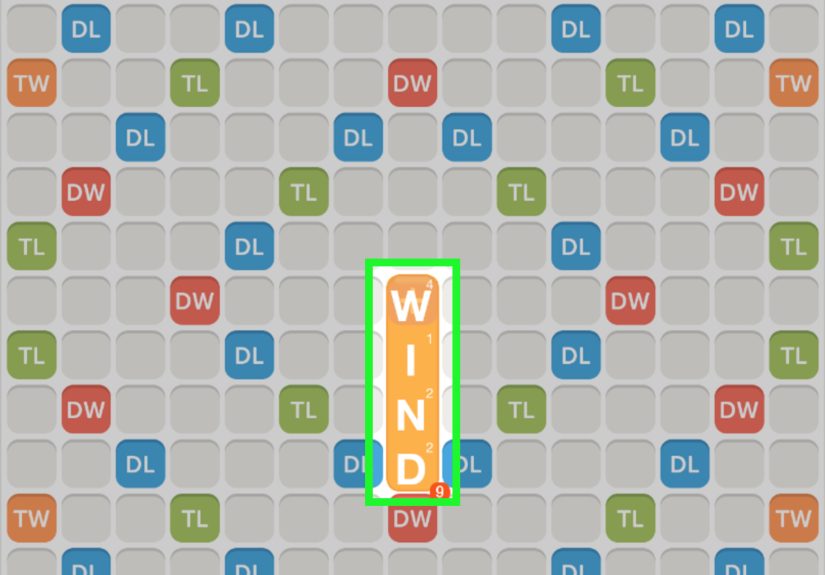
You’ll see colored bonus squares on the board:
- DL: Double Letter (doubles the value of a newly placed tile on that square)
- TL: Triple Letter
- DW: Double Word (multiplies the whole word score if a newly placed tile lands on it)
- TW: Triple Word
Important detail: letter and word bonuses apply to tiles placed that turn. If a tile has been sitting on a bonus square since 2019, it doesn’t keep paying rent.
Multiple Words in One Move = Multiple Scores
If your move creates more than one new word (like when you play parallel to an existing word), you score each new word separately, including its bonuses, and add them together. That’s how “small” moves can suddenly become “why are you like this” moves.
The 35-Point “Use All 7 Tiles” Bonus
If you play all seven tiles in a single turn, you get a 35-point bonus. That’s a huge swingoften the difference between a close win and a dramatic victory dance in your kitchen.
Strategy That Actually Works (and Doesn’t Require Sorcery)
1) Think “Lanes,” Not Just “Words”
Newer players hunt for any legal word. Better players hunt for high-value lanespaths that let them hit double/triple word zones and create multi-word overlaps. One official tip: look for ways to take advantage of double-word bonuses near the edges, especially when two of them are positioned close enough to set up a big follow-up.
2) Play Defense Like a Polite Villain
Defense isn’t boringit’s strategic kindness to your future self. If you see a triple-word square wide open, sometimes it’s smarter to place a small “blocking” word that covers the premium spot. Yes, it feels like eating plain oatmeal. But it also prevents your opponent from serving you a 90-point defeat smoothie.
3) Rack Management: Balance Is Everything
A strong rack usually has a mix of vowels and consonants. A commonly recommended approach is to keep a “healthy” balance (often around 3 vowels and 4 consonants) so you don’t get stuck with seven consonants and one lonely vowel praying for a miracle.
4) Use Hooks and Extensions
Hooks are how you turn the board into your personal scoring buffet. Examples:
- Prefix hook: Add “PRE” to make PACK → PREPACK
- Suffix hook: Add “OUT” to make JUMPS → OUTJUMPS
- Plural hook: Adding an “S” can open new connections (when valid)
Hooks are powerful because they create new words while stealing board control.
5) Stop Worshiping Long Words
Long words look impressive. High scores come from smart placement. A short word on a triple-word square that also creates two side words can outscore a seven-letter word played in the middle of nowhere like it’s afraid of commitment.
Small Words, Big Wins: The Two-Letter Superpower
If you want the single easiest way to improve fast: learn two-letter words.
Why? Because they let you:
- Fit into tight spaces
- Connect to premium squares
- Create multiple words in one play
- Dump awkward tiles without wasting your whole turn
The game’s own help content notes there are lots of two-letter words availableand (fun fact) it also warns that there are no two-letter words with the letter “C”. That one detail alone prevents a shocking amount of heartbreak.
Practical way to learn them: Pick 10 per day and use the in-app dictionary or word list features to confirm legality. Don’t memorize like a robot; memorize like a competitive snack enthusiast: consistently and with mild obsession.
Built-In Helpers: Word Strength, Dictionary, Word of the Day, and Power-Ups
Word Strength: Your “How Bad Is This Move?” Button
Word Strength evaluates your tentative placement and shows how strong it is compared to other possible moves. It’s especially useful early on because it teaches board awareness and scoring potential. Use it to learn patterns, not to outsource your brain forever.
The In-App Dictionary and Word of the Day
The game includes dictionary-style support so you can check whether a word is acceptable and see definitions. There’s also a Word of the Day feature that can send you a daily unusual word suggestionoften something rare or high-scoringso you can expand your vocabulary without doing “studying,” which is just school wearing a trench coat.
Power-Ups: Helpful Tools (If You Use Them Strategically)
Power-ups are optional boosts you can use during play. The app’s support documentation describes several, including:
- Tile Swap Plus (Swap+): Swap tiles without losing your turn (the swapped tiles are random).
- Word Radar / Word Radar+: Highlights areas where you can place words, including high-scoring lanes.
- Word Clue: Highlights an area and the tiles you could play.
- Hindsight: Shows the best possible word after a move (great for learning).
- Solo Challenge Tile Boost / Tile Freeze: Mode-specific tools to increase tile values or lock tiles during solo play.
Smart use rule: Spend power-ups to learn, not to panic. For example, use Hindsight after a “normal” move to understand how experts would have used the board. That turns a loss into free coaching.
Modes You Should Try (Because Classic Isn’t the Only Game in Town)
Solo Challenge
Solo Challenge lets you play against fictional opponents and sharpen your strategy without waiting for a friend to finish dinner, do laundry, and age an entire decade before taking their turn.
Daily Word Play
Daily Word Play is a personal daily puzzle where you play one word on a series of pre-populated boards and earn rewards as you rack up points. It’s a great warm-up before multiplayer games.
GuessWord
GuessWord is a daily word-guessing puzzle (club-based in the app’s ecosystem). You get color feedback:
- Green: right letter, right spot
- Yellow: right letter, wrong spot
- Gray: letter not in the word
There’s also a “Foresight” helper that can remove unused letters from the keyboard to narrow your options. The faster you solve, the better the rewards.
Daily Word Wheel (and Other Daily Puzzles)
Daily Word Wheel is a daily puzzle format where you form words from a wheel of 5–7 letters to fill a small crossword-like grid. There’s typically a shuffle feature to rearrange letters when your brain refuses to cooperate.
In recent years, Words With Friends has leaned further into daily puzzle modesthings like word search, mini crossword-style content, and letter-connection challengesso you can play solo or with friends depending on your mood.
Tips & Tricks That Separate “Casual” From “Dangerous”
Use “Weird” Valid Words as Tools
The help content highlights that some vowel-less words are valid (yes, really), and it calls out examples like PFFT, BRRR, and PSST. These aren’t just party tricksthey’re emergency exits when your rack is chaotic and the board is tight.
Don’t Finish With Tiles on Your Rack
Tiles left on your rack can count against you at the end. So if the game is nearing the finish, prioritize shedding points-heavy letterseven if it’s not your flashiest move.
Know When to Swap (and When to Just Play Something)
Swapping can be smart when your rack has no synergy (like five consonants that don’t like each other). But swapping too often costs momentum and board control. Sometimes it’s better to play a small, low-scoring “setup” word that opens premium squares for you next turn instead of handing the initiative away.
Build “Two-Way” Moves
Look for plays that score now and set up future scoring lanes. Example idea (not a specific board): you play a word that touches a double-word tile while also leaving a safe hook for yourself next turnwithout dangling a triple-word opening for your opponent like a welcome mat.
Etiquette & Fair Play (Because You’re Still Friends… Probably)
Words With Friends is social. Even when you’re competitive, a little etiquette goes a long way:
- Don’t stall forever unless you’re genuinely busy (and if you are, that’s finejust don’t do it every turn).
- If you’re using tools, try to rely on in-game learning features rather than external solvers. Winning is sweeter when it’s actually yours.
- Keep chat friendly. Trash talk should be playful, not personal.
Extra: Real-World Experiences That Make Words With Friends More Fun (500+ Words)
1) The “Long-Distance Friendship Thread”
A lot of players treat Words With Friends like a slow-motion group chatexcept the messages are spelled with tiles and occasionally weaponized with a triple word score. One common experience: keeping a game going with a friend you don’t talk to every day. You take a turn in the morning, they answer at lunch, and the match becomes a tiny ritual that says, “Hey, I’m still here,” without anyone having to schedule a call. The best part is the built-in pace: there’s no pressure to respond instantly, but there’s still a gentle nudge to stay connected. Over time, you start recognizing each other’s patterns: who always blocks premium squares, who hoards blanks, who plays suspiciously calm words that are definitely setting up something evil.
2) The “Family League” That Gets Weirdly Serious
Families love Words With Friends for the same reason they love board games: it’s wholesome right up until someone starts winning. In many households, it turns into a casual league where grandparents play daily puzzles, siblings rematch endlessly, and someone inevitably becomes the “two-letter word wizard.” The funny thing is how quickly everyone develops a style. One person plays safe and steady; another goes all-in for big swings; someone else plays defense like it’s their job. It’s also where new players learn the fastest, because family members don’t mind explaining why “that move opened a triple word lane” the same way they’d explain how to properly load a dishwasher: with passion and mild disappointment.
3) The “Work Break Brain Reset”
Another common experience is using Words With Friends as a quick mental reset between tasks. You’re staring at emails all day, your brain feels like a tab that won’t load, and thenboomyour rack gives you a simple play that wakes up your pattern recognition again. Many players notice they start thinking in “micro-strategy” during downtime: “If I play this now, I can hook an S next turn,” or “If I block that lane, they can’t reach the triple word.” It’s a small, satisfying kind of control. And because the game is turn-based, you can take a move, put your phone down, and return later without losing the flowunlike faster games that demand your full attention when your schedule absolutely does not consent.
4) The “Glow-Up Moment” When You Finally Start Seeing the Board
Most players have a turning point. At first, you’re just trying to make any legal word. Then one day you realize the board is basically a map of opportunities: bonus squares, parallel lanes, hooks, and defensive blocks. You stop asking “What word can I make?” and start asking “Where should I play?” That shift is huge. Suddenly you’re creating two words in one move on purpose. You’re keeping a balanced rack. You’re using Word Strength to learn, not to panic. And the best part? Your wins start feeling repeatable. It’s not luck anymore; it’s skill. (Okay, it’s mostly skill. The tile bag still has a sense of humor.)
Conclusion
Words With Friends is simple to start and surprisingly deep to master. Learn the board rules, understand scoring, practice rack management, and focus on placement over “impressive” long words. Add in two-letter words, smart defense, and occasional power-up learning, and you’ll improve fastwithout sucking the fun out of it.
If you want one takeaway: play the board, not just your rack. The rack gives you letters. The board gives you leverage.