Table of Contents >> Show >> Hide
- Why This Pressure Cooker Beef Stew Works
- The Best Cut of Beef for Pressure Cooker Beef Stew
- Pressure Cooker Beef Stew Ingredients
- How to Make Pressure Cooker Beef Stew
- What This Beef Stew Tastes Like
- Common Mistakes to Avoid
- Easy Variations
- What to Serve with Pressure Cooker Beef Stew
- How to Store and Reheat It
- Why This Is a Great Weeknight Dinner
- Final Thoughts
- Real-Life Experience with Pressure Cooker Beef Stew
- SEO Tags
If comfort food had a varsity team, beef stew would be captain, mascot, and halftime entertainment. It is warm, rich, deeply savory, and exactly the kind of dinner that makes a Tuesday feel less rude. The only usual downside is time. Traditional beef stew takes hours to become spoon-tender, and on a busy night, that can feel like asking your dinner to file paperwork before showing up. That is where the pressure cooker earns its cape.
This pressure cooker beef stew recipe delivers the cozy, slow-cooked flavor people love, but in a fraction of the time. The beef turns tender, the broth tastes layered instead of flat, and the vegetables stay hearty rather than dissolving into beige surrender. Better yet, the whole thing happens in one pot, which means less cleanup and more time to enjoy your dinner like the kitchen hero you absolutely are.
Below, you will find not just a recipe, but the why behind it: the best cut of beef, how to build flavor fast, how to avoid mushy vegetables, and how to make the stew taste like it spent all day simmering even though your pressure cooker did most of the heavy lifting. It is practical, flavorful, and designed for real home cooks with real schedules and a healthy fear of washing extra pans.
Why This Pressure Cooker Beef Stew Works
The magic of pressure cooker beef stew is not magic at all. It is science wearing an apron. Pressure cooking raises the boiling point of water, which helps collagen-rich cuts like beef chuck break down faster. That means you get tender meat and a rich broth without spending half the day hovering over the stove pretending you love “the process.”
But speed alone is not enough. A fast stew can still taste flat if you skip the flavor-building steps. That is why this recipe starts by browning the beef, sautéing aromatics, and giving tomato paste a minute to darken and caramelize. Those little moves build a deeper, more savory base. Add broth, herbs, a splash of Worcestershire, and sturdy vegetables, and suddenly this is no longer just “weeknight stew.” It becomes the kind of dinner that makes people ask whether you cooked all afternoon. You may smile mysteriously and let them believe in miracles.
The Best Cut of Beef for Pressure Cooker Beef Stew
If you want truly great pressure cooker beef stew, start with beef chuck roast. It has the marbling, connective tissue, and beefy flavor needed to turn into tender, juicy bites under pressure. In other words, it starts out a little tough and ends up absolutely glorious. That is character development.
Pre-cut “stew meat” can work in a pinch, but it is often a mixed bag of random cuts, which means uneven texture and unpredictable cooking. Buying a chuck roast and cutting it into 1 1/2-inch chunks gives you better control and better results. Keep the pieces fairly large, because tiny cubes can overcook faster and lose their juicy texture.
Pressure Cooker Beef Stew Ingredients
This recipe serves 6 generous portions.
- 2 1/2 pounds beef chuck roast, trimmed and cut into 1 1/2-inch pieces
- 1 1/2 teaspoons kosher salt, plus more to taste
- 1 teaspoon black pepper
- 2 tablespoons all-purpose flour
- 2 tablespoons neutral oil or olive oil
- 1 large yellow onion, diced
- 3 garlic cloves, minced
- 2 tablespoons tomato paste
- 1 tablespoon Worcestershire sauce
- 1/3 cup dry red wine, optional but recommended
- 3 cups low-sodium beef broth
- 4 medium carrots, cut into thick pieces
- 3 celery ribs, cut into thick slices
- 1 pound Yukon Gold potatoes, cut into chunks
- 1 bay leaf
- 1 teaspoon dried thyme
- 1 teaspoon paprika
- 1 cup frozen peas
- 2 teaspoons cornstarch mixed with 2 tablespoons cold water, if you want a thicker stew
- Chopped parsley, for finishing
How to Make Pressure Cooker Beef Stew
1. Season and brown the beef
Pat the beef dry with paper towels. Season it with the salt and pepper, then toss with the flour. Set your pressure cooker to sauté and heat the oil. Brown the beef in batches so it gets a real sear instead of steaming in a crowded pot. This step takes a few extra minutes, but it is the difference between “pretty good” and “why is this so ridiculously good?” Transfer the browned beef to a plate.
2. Build the flavor base
Add the onion to the pot and cook until softened, about 3 to 4 minutes. Stir in the garlic and tomato paste, then cook for 1 minute more. The tomato paste should darken slightly and smell sweeter and richer. Add the Worcestershire sauce and red wine, if using, and scrape up the browned bits from the bottom of the pot. Those bits are flavor gold. Do not leave them behind like forgotten treasure.
3. Add the stew ingredients
Return the beef to the pot. Add the broth, carrots, celery, potatoes, bay leaf, thyme, and paprika. Stir well. Make sure everything is mostly nestled into the liquid, but do not fill the pot past the pressure cooker’s max line. If you have ever wondered whether soup can become an engineering problem, overfilling is how you find out.
4. Pressure cook
Lock the lid and cook on high pressure for 30 minutes. Once the cooking time ends, let the pressure release naturally for 10 minutes, then carefully quick-release any remaining pressure. That short natural release helps the meat stay tender and keeps the broth from getting too wild and foamy.
5. Finish the stew
Open the lid, remove the bay leaf, and check the texture. The beef should be fork-tender, and the vegetables should be soft but not collapsed. Stir in the peas. If you want a thicker stew, turn on sauté and stir in the cornstarch slurry. Simmer for 2 to 3 minutes until the broth thickens slightly. Taste and adjust the seasoning. Finish with chopped parsley for a little brightness and a little visual proof that vegetables were invited.
What This Beef Stew Tastes Like
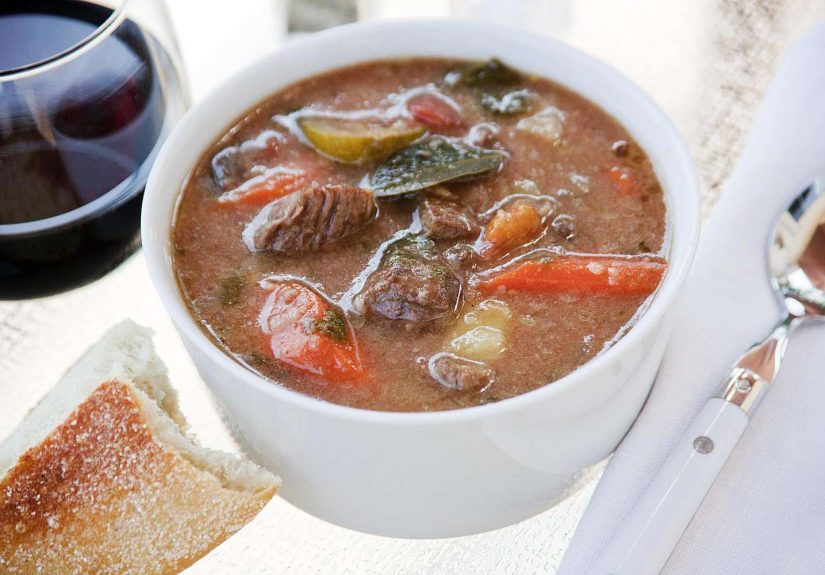
This pressure cooker beef stew has everything you want in a classic bowl: rich beef flavor, tender meat, sweet carrots, creamy potatoes, and a savory broth that sits somewhere between soup and gravy. The tomato paste and Worcestershire add depth without making the stew taste overly tomato-forward, while the wine gives the broth a rounder, more developed flavor. If you skip the wine, the stew will still be excellent. It just loses a little of that “I definitely know what I’m doing” edge.
Common Mistakes to Avoid
Do not skip browning
Yes, technically you can dump everything into the pot and pressure cook it. You can also wear socks with sandals. Some shortcuts exist, but that does not make them wise. Browning creates the savory depth that makes the stew taste slow-cooked instead of rushed.
Do not use lean beef
Lean cuts can dry out and turn chewy. Chuck is better because the fat and connective tissue melt into the stew and create a better texture.
Do not cut the vegetables too small
Pressure cooking is efficient, but it can be ruthless. If your potatoes and carrots are tiny, they may collapse into the broth. Keep them chunky and sturdy.
Do not overfill the pot
Pressure cookers need room to build pressure properly. Stay under the max fill line, and be especially careful with foods that foam or expand. Your dinner should be hearty, not dramatic.
Do not blast everything with a fast release immediately
A full natural release is not always necessary, but a short one improves texture and keeps the liquid calmer. Think of it as letting the stew gather itself before making an entrance.
Easy Variations
One of the best things about a pressure cooker beef stew recipe is how flexible it is. Once you know the core method, you can tweak the flavor without losing the soul of the dish.
- Mushroom version: Add 8 ounces of mushrooms for a deeper, earthier flavor.
- Beer version: Swap the wine for a dark beer for a more robust, pub-style stew.
- Herbier version: Add rosemary along with thyme for a woodsy note.
- Peasant-style version: Toss in pearl onions near the end for a more classic look and sweetness.
- Spicy version: Add a pinch of red pepper flakes or smoked paprika for extra warmth.
What to Serve with Pressure Cooker Beef Stew
This stew is a full meal on its own, but it becomes even better with something to catch the broth. Crusty bread is the obvious favorite, because it does the noble work of cleaning the bowl with style. Biscuits, buttered noodles, or even mashed potatoes also work beautifully if you want to lean hard into comfort. A simple green salad on the side is helpful if you would like the meal to appear balanced in photographs and in life.
How to Store and Reheat It
Let the stew cool slightly, then refrigerate it in an airtight container. It reheats well on the stovetop or in the microwave, and the flavor often gets even better the next day. If the broth thickens too much in the fridge, add a splash of broth or water when reheating. This recipe also freezes very well, making it an excellent make-ahead dinner for nights when cooking sounds deeply offensive.
Why This Is a Great Weeknight Dinner
Classic beef stew feels like weekend food, but the pressure cooker changes the math. You still get layered flavor and tender meat, but the timeline becomes realistic for an ordinary evening. It is hearty enough for cold weather, practical enough for meal prep, and reliable enough to keep in your regular rotation. That is the sweet spot: a recipe with enough comfort to feel special and enough efficiency to feel doable.
Final Thoughts
A great pressure cooker beef stew recipe should taste like patience, even when it was made by a person who had very little patience to spare. This version does exactly that. It is deeply savory, rich without being heavy, and packed with tender beef and vegetables that still have some dignity left. It is the kind of meal that makes the kitchen smell like somebody competent lives there.
If you want a hearty dinner that feels classic but fits real life, this is the recipe to keep. Brown the beef, respect the pressure release, keep the vegetables chunky, and do not skimp on seasoning. The result is a bowl of comfort that tastes like it took all day, even though your pressure cooker did most of the heavy lifting while you went about your business like the domestic genius you are.
Real-Life Experience with Pressure Cooker Beef Stew
The first time I made pressure cooker beef stew, I expected it to be good in a practical way, not great in a “why am I hovering over the pot with a spoon?” way. I was wrong. Very wrong. The kitchen smelled like a Sunday dinner, the beef turned tender enough to cut with a fork, and the broth had that rich, cozy flavor that usually takes a long afternoon and a little emotional commitment. Instead, dinner happened on a weeknight, while the laundry was still unfinished and life remained gloriously unglamorous.
One thing I learned quickly is that this recipe rewards small acts of patience. Browning the meat in batches is not the flashy part, but it changes everything. On nights when I rush and crowd the pot, the stew is still fine, but when I actually let the beef brown properly, the flavor becomes fuller and more savory. The same goes for tomato paste. Give it a minute to darken and it tastes richer. Skip that minute and the broth loses a little personality. Pressure cookers are fast, but they still appreciate good manners.
I have also learned that vegetable size matters more than people think. If I chop the potatoes too small because I am feeling efficient, they quietly dissolve and turn the stew into something closer to a thick beef soup. That is not a disaster, but it is a different dinner. Bigger chunks hold their shape better, especially when the stew sits overnight and gets reheated the next day. And yes, this stew is almost always better the next day. It is one of those recipes that seems to spend the night organizing its thoughts.
Another real-world truth: this recipe is wildly adaptable. I have made it with mushrooms when I wanted more depth, with peas when I wanted color, and with a splash of red wine when I wanted the stew to feel just a little more grown-up. I have skipped the wine entirely and still had a delicious result. I have served it with bread, biscuits, rice, and once over mashed potatoes when the weather was cold and subtlety was not welcome. Every version felt comforting, filling, and worth repeating.
Perhaps the biggest reason I keep coming back to pressure cooker beef stew is that it makes me feel more organized than I actually am. It is the sort of meal that suggests planning, stability, and maybe a handwritten grocery list, even if the truth involves a frantic 5 p.m. refrigerator inspection. It freezes well, reheats beautifully, and solves the eternal problem of wanting homemade food without having the energy for a long cooking project. In that sense, this stew is more than a recipe. It is a backup plan, a cold-weather favorite, and the culinary equivalent of a reliable friend who shows up on time with snacks.