Table of Contents >> Show >> Hide
- Why This Painting Trick Works So Well
- The Trick, Explained in Plain English
- What Pros Do Differently From Most DIY Painters
- The Best Setup for Faster Interior Painting
- How to Paint a Room Faster Without Making It Look Rushed
- Common Mistakes That Make Painting Much Slower
- When This Trick Helps Most
- One Important Safety Note Before You Start
- Real-World Painting Experiences: What Actually Happens When You Use This Trick
- Final Takeaway
- SEO Tags
If you have ever painted a room the slow way, you know the routine: climb ladder, dip roller, slosh tray, climb down, move ladder, realize you missed a spot, mutter something unprintable, repeat. By the end, the wall is painted, your back is filing a complaint, and the tray somehow has paint in places paint should never be.
So what is the trick that pro painters swear by? It is not a gimmicky gadget from a late-night infomercial. It is much simpler, much smarter, and much less dramatic. The real time-saver is using an extension-pole roller setupideally paired with a bucket grid and a wet-edge workflowinstead of painting from a tray-and-ladder routine.
That may not sound sexy. It also may be the most useful painting advice you will hear all year.
Professional painters move fast because they reduce wasted motion. They do not spend the whole day climbing up and down, crouching over a tray, or making tiny, cautious roller strokes like they are frosting a wedding cake. They set up their tools so they can paint from ceiling to floor in long, smooth passes, reload quickly, and keep moving. That is what makes a room feel as if it got painted at warp speed.
In other words, the trick is not painting harder. It is painting smarter.
Why This Painting Trick Works So Well
The extension-pole method speeds up painting because it cuts out the three biggest time-wasters in a typical DIY paint job: unnecessary ladder trips, constant bending, and uneven rolling. A roller attached to an extension pole lets you reach high and low sections of a wall while standing in one spot, which means fewer stops, fewer awkward body angles, and fewer moments where you wonder whether a chiropractor gives volume discounts.
It also helps you make longer, more consistent strokes. That matters because fast painting is not just about moving quickly. It is about maintaining a rhythm. When you can roll from near the ceiling down toward the baseboard in one smooth motion, you cover more area with less fuss. The finish often looks better too, because you are less likely to create lap marks, patchy spots, or roller lines from overworking one area.
The bucket-grid part of the system matters just as much. A small paint tray is fine for a tiny touch-up, but for painting full walls, it becomes the annoying middleman nobody asked for. A bucket with a grid holds more paint, reduces spills, and makes it easier to load the roller evenly. Translation: fewer refills, less splatter, and a steadier pace.
When pros say a job goes dramatically faster with the right setup, this is what they mean. The “10 times faster” part is headline language, sure, but the difference can honestly feel that dramatic when you switch from the old tray-and-ladder shuffle to a pole-and-bucket system.
The Trick, Explained in Plain English
Here it is: attach your roller to an extension pole, load from a bucket grid instead of a shallow tray, cut in one section at a time, and roll while the edge is still wet.
That is the whole system. Simple, but wildly effective.
Step 1: Cut in strategically
Use an angled brush to paint a narrow band along the ceiling line, corners, trim, and baseboards. Do not cut in the entire room and then wander off for lunch. For standard interior paint, the faster move is to cut in one wall or one workable section, then roll it immediately while the brushed edges are still wet.
Step 2: Roll with the pole
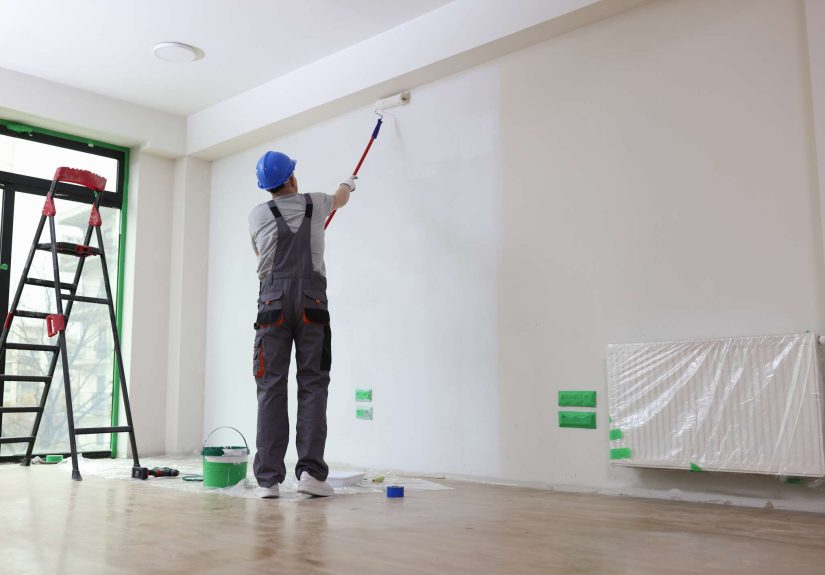
Once the edges are cut, switch to the roller on the extension pole. Start a few inches away from the cut-in area and roll back toward it, overlapping slightly so the brushwork and roller texture blend together. Use long, controlled passes, not frantic scribbles. This is painting, not interpretive dance.
Step 3: Work top to bottom
Painting from the top down helps you catch drips while they are still fixable and keeps the finish more uniform. It also fits the natural movement of an extension-pole roller, which is one reason pros like it so much.
Step 4: Keep a wet edge
A wet edge means each new pass slightly overlaps the last one before it dries. That helps prevent lap marks and uneven sheen. It is one of those pro habits that sounds fancy but really just means, “Do not let one section dry before you connect it to the next.”
What Pros Do Differently From Most DIY Painters
Professional painters are not necessarily blessed with superhero wrists or mystical brush powers. They are usually just better at workflow. Here is what they consistently do that speeds everything up:
They stage the room before opening the paint
Pros remove switch plates, move furniture, cover floors, gather tools, and patch obvious flaws before the first roller even touches paint. That may not look fast at the start, but it prevents dozens of little interruptions later. Sloppy prep is one of the biggest reasons a “quick weekend project” turns into a three-day saga.
They choose the right roller nap
A smooth wall usually calls for a smaller nap, while textured walls need a thicker one. Using the wrong nap slows you down because it causes poor coverage, extra splatter, or a finish that needs too much correcting. Pros match the roller to the surface first, then get to work.
They use better tools
Cheap brushes shed. Flimsy frames wobble. Bad rollers create lint, drag, and streaks. Professionals do not use higher-quality tools because they enjoy spending money for sport. They use them because good tools hold more paint, glide more smoothly, and help them finish faster with fewer do-overs.
They paint one wall at a time
This keeps the process organized and helps maintain a wet edge. It also prevents that weird half-finished-room energy where every wall looks equally neglected.
They do not overwork the paint
One of the biggest amateur mistakes is repeatedly rolling the same area after the paint has started to set. That does not make the wall look more professional. It usually makes it look fussed over and slightly offended.
The Best Setup for Faster Interior Painting
If you want to steal the pro system for yourself, this is the practical setup to aim for:
- A sturdy extension pole sized for your room
- A quality roller frame
- A roller cover matched to your wall texture
- A 5-gallon bucket with a roller grid for large areas
- A 2- to 2.5-inch angled sash brush for cutting in
- Canvas drop cloths or other secure floor protection
- Painter’s tape only where it actually helps
- A damp rag for quick cleanup
Notice what is not on that list: ten specialty gadgets that promise miracles. The fastest painters usually rely on fewer tools, not more. They just use the right ones.
How to Paint a Room Faster Without Making It Look Rushed
Speed is great. Repainting a bad paint job is not. Here is how to move faster without sacrificing the finish.
Start with the ceiling
Paint ceilings first, then walls, then trim. That order keeps drips and splatter from ruining finished surfaces and creates a cleaner workflow from top to bottom.
Use a larger brush where appropriate
Many people assume a tiny brush gives better control. Sometimes it just gives slower progress. For broader cut-in work and trim, a quality 2-inch to 2.5-inch angled brush often provides a nice balance of control and speed.
Load the roller correctly
Do not dunk the roller like you are breading chicken. Lightly load it, roll it against the grid, and distribute the paint evenly. An overloaded roller splatters. An underloaded roller drags. Both are annoying. Neither is fast.
Work in manageable sections
Many pros work in sections around 3 to 4 feet wide. That size is large enough for efficiency but small enough to maintain a wet edge. It is the painting equivalent of taking bites you can actually chew.
Reload before the roller runs dry
When the roller starts sounding sticky or looking patchy, reload it. Trying to squeeze out “just one more pass” usually wastes time and leaves uneven texture behind.
Common Mistakes That Make Painting Much Slower
If you want to paint faster, it helps to know what slows people down in the first place.
Using a ladder for routine wall rolling
Ladders have their place. Rolling standard walls and ceilings from a ladder every few minutes is usually not it. An extension pole dramatically reduces that stop-start rhythm.
Painting around outlet covers and hardware
Removing covers takes a couple of minutes. Trying to paint around them carefully for the next hour takes much longer, and usually looks worse.
Ignoring surface prep
Dirty walls, dusty patches, loose caulk, and unfilled holes create extra work later. Prep is not glamorous, but it keeps the actual painting stage from turning into a rescue mission.
Choosing the wrong roller cover
Too much nap on a smooth wall can leave excess texture. Too little nap on a textured wall can force multiple extra passes. Either way, wrong tool equals slower job.
Over-taping everything in sight
Painter’s tape is helpful, not magical. Pros often use it selectively rather than wrapping the room like a crime scene. Excess taping adds time before painting and more time after painting.
When This Trick Helps Most
The extension-pole painting method is especially effective for:
- Standard interior walls
- Ceilings
- Large open rooms
- Hallways
- Rooms with tall walls
- Projects where you want more speed with less back strain
It is less useful for tiny detail work, intricate trim, cabinet painting, or very tight spaces where a mini roller or brush makes more sense. The trick is not to use one tool for everything. The trick is to use the right system for the biggest surfaces first.
One Important Safety Note Before You Start
If your home was built before 1978, do not treat sanding, scraping, or disturbing old paint like a casual side quest. Older paint may contain lead, and that changes the safety rules. In those cases, proper containment, protective gear, and lead-safe practices matter a lot. Fast painting is great, but not if you create hazardous dust in the process.
Even in newer homes, basic safety still counts: protect floors, ventilate the room as recommended for the product you are using, follow the label instructions, and wear the right gear for prep and cleanup.
Real-World Painting Experiences: What Actually Happens When You Use This Trick
Here is the funny thing about the extension-pole method: the first few minutes can feel a little awkward, especially if you are used to painting one cautious square foot at a time. The roller suddenly feels longer, your reach changes, and you may have a brief moment where you think, “Excellent, I have become a human crane.” Then it clicks.
Once people settle into the rhythm, the biggest surprise is usually how much less tiring the job feels. Painting the old way often turns into a full-body scavenger hunt. You bend to load the tray, climb the ladder, stretch to reach the top, step down, move everything over six inches, and repeat until your knees start negotiating with management. With an extension pole, those little energy leaks shrink. You stand more naturally, move more smoothly, and finish a wall before your body starts filing emotional paperwork.
Another common experience is realizing that the wall looks better when you stop babying it. Many first-time painters assume a professional finish comes from tiny, delicate motions and endless touch-ups. In reality, the opposite is often true. Long, even passes with a properly loaded roller usually create a more uniform finish than a bunch of hesitant mini-strokes. That is one reason people often say the job looked more “pro” after they switched methods, even though they were moving faster.
There is also a mental benefit. A room feels less overwhelming when you work one wall at a time with a repeatable system. Cut in. Roll. Move on. Instead of staring at four blank walls and wondering where your weekend went, you begin to see real progress quickly. That momentum matters. Painting becomes a sequence, not a slog.
DIY painters also tend to notice fewer messes when they stop relying on a shallow tray for large jobs. Buckets with grids are steadier, harder to tip, and easier to keep loaded consistently. That means less splatter, fewer pan refills, and less of that heart-stopping moment when the tray gets nudged by a shoe and suddenly the floor has “character.”
And then there is the ladder issue. Most people do not realize how much time ladders steal until they stop using them for every high spot. Moving a ladder five feet does not sound like a big deal. Moving it twenty times in one afternoon absolutely is. The extension pole cuts that nonsense way down. It also helps many painters feel more confident because they are not twisting themselves into strange positions just to reach the top corner near the ceiling.
Perhaps the most relatable experience of all is this: people finish the first wall, step back, and immediately wonder why they did not start painting this way years ago. That is usually the moment the trick proves itself. Not because it is flashy, but because it solves the boring problems that eat up the most time.
So yes, the “faster painting” secret is almost hilariously practical. No gimmick. No miracle brush. No dramatic reveal from a home improvement wizard in a cloud of primer mist. Just a better setup, a better workflow, and a better way to move paint onto a wall.
Final Takeaway
If you want to paint like a pro, stop thinking of speed as rushing. Pros do not rush. They remove friction. The trick that makes painting dramatically faster is using an extension-pole roller setup with a bucket grid and a wet-edge workflow. That combination helps you cover more surface area, reduce ladder trips, keep your roller properly loaded, and maintain a smoother finish with less strain.
It is one of those rare home-improvement tips that is both wonderfully unglamorous and incredibly effective. Which, honestly, is the best kind. You do not need a revolutionary new product. You need a smarter system.
So the next time you paint a room, ditch the tray ballet, stop climbing like you are training for a mountain expedition, and let the extension pole do the heavy lifting. Your walls will get done faster, your back will send a thank-you note, and your weekend might survive the project after all.