Table of Contents >> Show >> Hide
- Is Converting a Small Bedroom into a Bathroom a Good Idea?
- Step 1: Permits, Codes, and Planning
- Step 2: Plumbing Strategy – Follow the Pipes
- Step 3: Layouts That Work in a Small Former Bedroom
- Step 4: Waterproofing, Ventilation, and Electrical Safety
- Step 5: Storage, Style, and the Fun Stuff
- Budgeting, Timing, and Hiring Pros
- 500-Word Real-Life Style Experiences: What It’s Really Like to Remodel a Small Bedroom into a Bathroom
Turning a barely used small bedroom into a shiny new bathroom is one of those remodels that sounds wild at first… and then suddenly feels like the smartest idea you’ve ever had. An extra full bath can boost daily comfort, cut down on morning traffic jams, and even increase your home’s resale valueif you plan it correctly. In a tight space, though, every inch, pipe, and tile line matters.
This guide walks you through the major decisions of converting a bedroom into a bathroom: permits and planning, plumbing and layout, waterproofing and ventilation, plus storage and style tricks that make a tiny bath feel spa-level big. Think of it as your Remodelaholic-style roadmappractical, budget-aware, and just a little bit obsessed with pretty tile.
Is Converting a Small Bedroom into a Bathroom a Good Idea?
Before you start swinging a sledgehammer, zoom out and look at the big picture: how will this conversion affect the way you live inand eventually sellyour home?
Check Your Bedroom and Bathroom Counts
Appraisers and buyers pay close attention to the number of legal bedrooms and bathrooms a home has. Removing a bedroom to add a bathroom can be a fantastic upgrade if you already have several bedrooms and only one cramped bath. But if the home will go from, say, three bedrooms to two, you might hurt resale value even if the new bath is gorgeous.
Real estate and renovation sources generally agree that an extra full bathroom often improves value, especially when it creates a true primary suite or relieves an overworked hall bath. However, reducing the total bedroom count can be a negative in family-friendly neighborhoods where extra sleeping space matters. The sweet spot: converting an awkward, very small, or windowless “bedroom” that buyers may not see as a true bedroom anyway.
Understand the Cost Range
Adding a bathroom is more complex than repainting walls or replacing carpet. You’re adding plumbing, waterproofing, new electrical runs, and lots of fixtures. National remodeling guides estimate that converting an existing bedroom into a bathroom frequently lands in the $10,000 to $25,000 range, depending on size, materials, and whether you’re moving major plumbing lines.
In high-cost areas or if you lean into luxury finishes, heated floors, and custom cabinetry, costs can climb well beyond thatsimilar to primary-bed-and-bath additions that often run $150 to $400+ per square foot.
Pros and Cons at a Glance
- Pros: extra bathroom, better daily function, potential resale boost, chance to correct old plumbing or electrical issues, and the fun of designing your dream shower.
- Cons: loss of a bedroom on paper, high cost compared with cosmetic updates, permit and inspection requirements, and the challenge of fitting everything into a small footprint.
Step 1: Permits, Codes, and Planning
Do You Need a Permit?
Short answer: almost always. When you move plumbing, add drains, run new electrical lines, or change structural elements, most U.S. building departments require permits and inspections. Home improvement and renovation experts emphasize that bathroom remodels that involve plumbing or electrical upgrades should go through the permitting process for safety and insurance reasons.
Expect to need some combination of:
- Building permit (for framing, structural changes, windows, doors)
- Plumbing permit (new supply and drain lines)
- Electrical permit (new circuits, GFCI outlets, lighting, fan)
- Sometimes mechanical permit (for venting or duct changes)
Because you’re changing the official use of the room from bedroom to bathroom, some municipalities also review sewer or septic capacity and update your property records to reflect the new bathroom count. Check with your local building office earlybefore you’ve picked out that dramatic freestanding tub.
Know the Minimum Space and Code Requirements
Even in a small former bedroom, you must respect basic bathroom-layout clearances. While specifics vary by jurisdiction, common U.S. guidelines include:
- At least 15 inches from the toilet centerline to a side wall or fixture, and 30 inches of total width for the toilet space
- At least 21 inches of clear floor space in front of the toilet and sink
- A shower interior at least 30 by 30 inches, with 24 inches of clear space in front of the shower door
- Ventilation via an operable window or a mechanical exhaust fan ducted outside
If your “small bedroom” is closer to a walk-in closet, you may end up creating a powder room (toilet and sink only) rather than a full bath, or you’ll need clever layout tricks.
Step 2: Plumbing Strategy – Follow the Pipes
Plumbing is the biggest technical hurdle. The easiest and most budget-friendly conversions are those that back the new bathroom against an existing bathroom, kitchen, or laundry wall. That lets you tap into existing water and waste lines instead of carving new paths through the house.
Locate the Waste Stack and Main Drain
Bathrooms rely on gravity: drain lines need consistent slope to carry waste away. Experienced remodelers recommend identifying your home’s main soil stack and drain path before you lock in a layout. The closer your new toilet and shower are to that stack, the fewer walls and floors you’ll open and the lower your plumbing bills will be.
In a wood-framed floor, plumbers can often notch or drill joists within code limits to run pipes. In homes with concrete slabs, you may need to saw-cut the slab, trench for new pipes, and then patchmore labor, more cost, more dust, but still very doable.
Water Supply, Shutoffs, and Hot-Water Capacity
While drain lines get all the attention, don’t forget supply. You’ll need properly sized hot and cold water lines, shutoff valves, and, in many cases, a check that your water heater can handle one more shower in the morning rush. If your new bath is far from the heater, a recirculating line or point-of-use water heater can shorten the awkward “waiting for hot water” phase.
Step 3: Layouts That Work in a Small Former Bedroom
Once you know what the plumbing can do, you can sketch layouts. Small bathrooms benefit from simple, linear arrangements and as few doors, jogs, and bump-outs as possible.
Popular Small-Bath Layouts
- Single-wall layout: Toilet, vanity, and shower lined up across one wall. This keeps plumbing concentrated and leaves a clear walkway.
- Wet-room style: Shower and floor share a continuous waterproof surface with a single drain, often separated from the rest of the room by a glass panel. Great in very narrow spaces.
- Shower + pocket door combo: Replacing a traditional swing door with a pocket or barn door frees up precious floor area so your layout meets code clearances.
Designers advise deciding early whether you want a tub, a shower, or both. In very small rooms, a walk-in shower with glass doors or a glass panel usually makes the space feel larger and more comfortable than trying to cram in a full tub.
Make the Room Feel Bigger Than It Is
Small-bath design pros recommend a few go-to tricks:
- Use larger floor and wall tiles with minimal grout lines to visually stretch the room.
- Choose a floating vanity and wall-hung toilet to reveal more floor.
- Swap a shower curtain for clear glass doors to keep sight lines open.
- Keep the color palette light and cohesive, with just a few darker or patterned accents.
Step 4: Waterproofing, Ventilation, and Electrical Safety
Waterproof Like You Mean It
A bedroom’s old drywall and subfloor aren’t ready for daily showers. Modern bathrooms depend on waterproof membranes behind tile, sloped shower pans, and careful detailing around niches and benches. Curbless and low-curb showers are increasingly popular because they make the room feel larger and more accessible, but they demand precise waterproofing and drainage to avoid leaks.
Key moves include:
- Using cement board or other water-resistant backer board in wet areas
- Installing a continuous waterproof membrane on shower walls and floors
- Sloping the floor toward the drain, especially in any “wet-room” layout
- Sealing corners, niches, and transitions carefully
Ventilation Is Non-Negotiable
Bedrooms love cozy, still air. Bathrooms do not. To prevent mold, peeling paint, and fogged mirrors, you’ll need an exhaust fan ducted to the exterior. Many building codes specify a minimum cubic-feet-per-minute (CFM) rating for bath fans, especially when there’s no operable window.
Choose a quiet fan that you’ll actually use, and consider a humidity-sensing model that comes on automatically during showers. Proper ventilation is especially important in small baths where steam and moisture concentrate quickly.
Electrical: Bright, Safe, and Code-Compliant
You’ll need dedicated circuits for the bathroom’s outlets and possibly for radiant floor heat or a whirlpool tub. Codes generally require GFCI-protected receptacles near the vanity and specify clearances between outlets, lights, switches, and wet areas. Layer your lighting: overhead fixtures, vanity lighting at face level, and possibly a small recessed light over the shower all make the room safer and easier to use.
Step 5: Storage, Style, and the Fun Stuff
Built-In Storage for a Former Bedroom
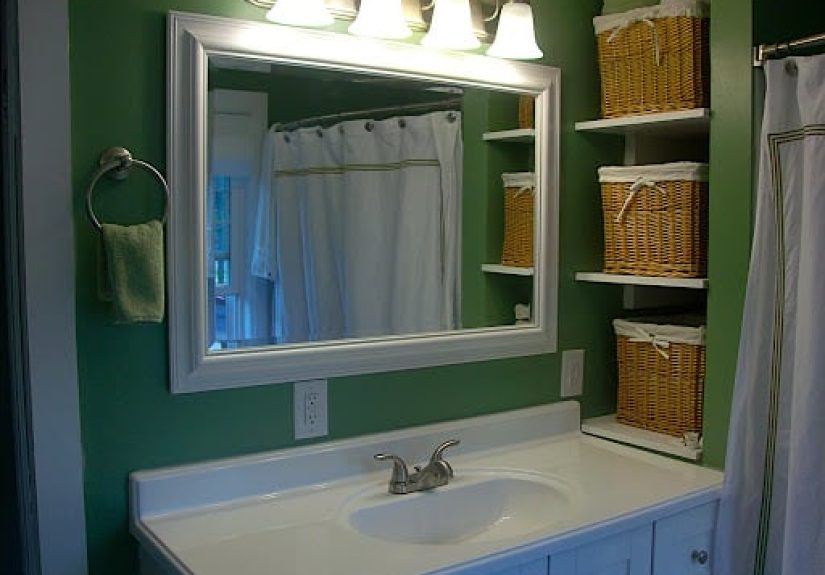
One perk of starting with a bedroom: you may inherit a closet. That space can become a linen cabinet, shallow shelving niche, or a perfect spot for a stacked washer and dryer next to your new bath. Where closets are awkward or too deep, designers often split themhalf for the bathroom, half for the adjacent bedroom as a reach-in wardrobe.
Inside the bathroom itself, work vertical:
- Recessed medicine cabinets with mirrored fronts above the sink
- Built-in wall niches in the shower for shampoos and soap
- Tower cabinets or shelves above the toilet
- Hooks and rods on the back of the door for towels
Design Tricks that Make a Small Bathroom Shine
Professional stylists and organizers who specialize in tiny spaces recommend editing ruthlessly. That means decanting products into matching bottles, minimizing countertop clutter, and relocating huge hampers and bulk items outside the bathroom so the floor feels open.
Then add personality in smart, compact ways:
- Statement mirror over the vanityoversized, round, or with a chic frame
- A strip of patterned tile in the shower or behind the vanity as a feature wall
- Warm metal finishes (brass, black, or brushed nickel) on hardware and fixtures
- Soft textilescozy towels, a bath mat, and maybe one small piece of art
Budgeting, Timing, and Hiring Pros
Because so many systems are involved, bedroom-to-bathroom conversions are rarely true DIY projects from start to finish. Many homeowners act as their own general contractor, hiring licensed plumbers, electricians, and sometimes tile installers while tackling painting or trim work themselves.
To avoid budget creep, create a line-item estimate that covers:
- Design and permitting fees
- Demolition and disposal
- Framing, insulation, and drywall
- Plumbing rough-in and fixtures
- Electrical rough-in, fixtures, and fan
- Tile, flooring, and waterproofing
- Cabinetry, vanity, countertop, and storage
- Paint, trim, mirrors, accessories, and contingencies (10–20%)
Real-world discussions from homeowners show how widely costs can vary: some report tiny bathrooms costing $20,000 or more after a full gut, especially in older homes where surprises lurk behind walls. Build a contingency fund into your budget so those surprises are annoying but not catastrophic.
500-Word Real-Life Style Experiences: What It’s Really Like to Remodel a Small Bedroom into a Bathroom
On paper, remodeling a small bedroom into a bathroom looks like a clean, logical process: get permits, move some pipes, hang some tile, done. In real life, it’s a little messierand that’s where the most helpful lessons live. Here are the kinds of experiences homeowners and remodelers share once the dust has settled (literally).
1. The “It Looked Bigger Empty” Moment
Almost everyone has the same shock point: framing day. Once the plumber marks out the shower, the wall-hung vanity, and the toilet clearances, that formerly roomy bedroom suddenly feels tiny. Homeowners often realize that the full-size tub they pinned on Pinterest is going to eat the entire space, or that the swinging door will smack right into the vanity.
The fix is usually a layout pivotswitching from a tub to a generous walk-in shower, swapping a hinged door for a pocket door, or nudging the wall a few inches into an adjacent closet. People who stay flexible here end up much happier than those who cling to an early sketch that doesn’t fit the actual room.
2. Plumbing Reality vs. Pinterest Dreams
Another common experience: the plumber walks in, takes one look at the plan that features a toilet on the far wall and a floating vanity under the only window, and gently says, “We need to talk.” When you’re converting a bedroom, the existing joists, beams, and structural elements dictate where drains can realistically go.
Homeowners who accept that “plumbing-friendly” layouts are often cheaper and more reliable save thousands of dollars. One frequently shared strategy is backing the new shower and toilet against the wall that already shares plumbing with another bathroom. That move can eliminate the need to trench new lines across the entire floor and keeps future maintenance simpler.
3. The Noise Factor Nobody Mentioned
Bedrooms are usually buffered spaces; bathrooms are not exactly quiet. After a conversion, some people notice sounds they didn’t anticipate: the shower running on the other side of what used to be a bedroom wall, a toilet flushing right behind a headboard in the next room, or the exhaust fan humming late at night.
The veterans’ advice: invest in soundproofing while the walls are open. That might mean mineral wool insulation in interior walls, solid-core doors, and ultra-quiet fans. It’s a relatively small upfront cost for a big upgrade in long-term comfortespecially if your new bath shares a wall with a nursery, home office, or the neighbor’s unit in a duplex.
4. Living Through the Construction Zone
Converting a bedroom into a bathroom means dust, tools, and cardboard pathways marching right through the heart of your home. People who look back on the experience positively usually did a few things well:
- They set up a clear alternate route to existing bathrooms so family life could continue without too many “someone’s in the shower again!” meltdowns.
- They sealed off the construction area with plastic sheeting and used air purifiers to keep dust from coating the entire house.
- They communicated start and stop times with contractors to protect sleep schedules and work-from-home calls.
One underrated tip: pack up the old bedroom as if you’re moving out, even if everything is staying in the house. Boxed, labeled items are far easier to store temporarily than random piles on the dining room table.
5. The “Worth It” Moment
Despite the noise, budget surprises, and the 47th trip to the home center because you bought the wrong valve, almost everyone has a moment when they realize the remodel was absolutely worth it. It might be the first time you step onto warm tiles on a cold morning, the first time overnight guests use “their” bathroom instead of lining up in the hall, or the first time you close the door behind you and enjoy a quiet shower without sharing shelf space with a teenager’s entire hair-care collection.
Homeowners also talk about the subtle lifestyle upgrades: better storage that keeps clutter out of sight, good lighting that makes getting ready easier, and the simple joy of a space that feels designed instead of improvised. When you convert an underused bedroom into a bathroom that truly fits your routines, you’re not just adding plumbingyou’re reshaping how your home works for you.
In the end, a bedroom-to-bathroom remodel is part math, part puzzle, and part personal style story. With realistic expectations, solid planning, and a willingness to adapt as you go, that small spare room can become one of the hardest-working (and best-looking) spaces in your home.