Table of Contents >> Show >> Hide
- The Sighting: A Wall of Marine Motifs (and One Plate You’ll Google Immediately)
- Why Sea-Inspired Plates Work (Even if You Live Nowhere Near the Ocean)
- What “Hand-Painted” Really Means (and How to Spot the Real Thing)
- The Ocean in a Kiln: How Marine Motifs Get Onto a Plate
- Pick Your Base: Porcelain, Stoneware, Earthenware, Bone China, Melamine
- Care & Feeding: Keeping Your Sea Plates Beautiful (and Food-Safe)
- Styling a “Coastal, Not Kitsch” Table
- Shopping Smarter: Where to Look and What to Ask
- Quick Menu Pairings: Foods That Love a Sea Plate
- Sea-Plate Field Notes: of Real-Life Plate Experiences
- Conclusion: Bring the Shore to the Table (Without Turning Your Home Into a Nautical Souvenir Shop)
Some people buy a beach house. The rest of us buy one very convincing plate and call it “manifesting.” If you’ve ever looked down at your dinner and thought, “This salmon deserves better than my boring Tuesday plate,” welcome to the club. Sea-evoking, hand-painted ceramics are a tiny, daily luxury: equal parts functional dinnerware, wearable art for your table, and proof that you can be the kind of person who owns “a collection.”
This post is a deep dive (in a snorkel, not a wetsuit) into what makes marine-motif plates so irresistible, how they’re made, how to spot the good stuff, and how to style them so your dining room says “coastal calm” instead of “gift shop at the pier.” We’ll also get practical about durability, food safety, and carebecause a plate that looks like the sea should not end its life by meeting your dishwasher’s most aggressive cycle setting.
The Sighting: A Wall of Marine Motifs (and One Plate You’ll Google Immediately)
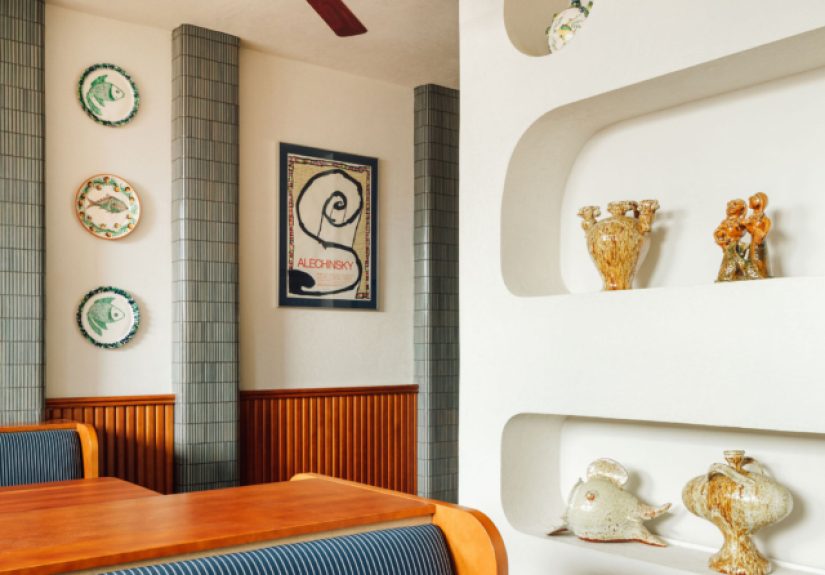
In true Remodelista Reconnaissance fashion, the inspiration starts with a real-life “wait, what is that?” moment: a restaurant wall lined with sea-themed ceramicsplates painted with marine motifs that feel nostalgic, playful, and a little cinematic. The vibe is old seaside postcards, but in clay.
Remodelista’s “source something similar” points to a showstopper: a fish-themed platter from Malaika, handcrafted in the Egyptian village of Tunis by master potter Mohamed Mahmoud. That detail matters because it explains why these pieces hit differently than mass-printed dinnerware: they’re made by hands that know clay, kilns, and brushwork the way a sailor knows knots. Even when you’re just serving chips, a fish platter quietly insists it’s an occasion.
Why Sea-Inspired Plates Work (Even if You Live Nowhere Near the Ocean)
1) They’re a “mood board” you can eat off of
Sea palettesinky blues, stormy grays, sea-glass greens, sandy neutralsread as calm, clean, and timeless. They also flatter food. Lemon looks brighter. Herbs pop. Anything roasted turns into a restaurant plate-up with suspiciously little effort on your part. It’s like giving dinner a good camera filter, but in ceramic form.
2) They balance nostalgia with freshness
The best marine motifs aren’t cartoonish. They feel like a memory: a fish sketched in one confident line, a cobalt rim that looks dipped in tidewater, brushstrokes that move like waves. You get the romance of seaside dining without committing your home to anchors, ship wheels, and that one pillow that says “Ahoy.”
3) They’re quietly social
Plates with personality start conversations. People pick them up, turn them over, ask who made them, and suddenly you’re talking about craft instead of work emails. It’s hosting with a cheat code: the table does some of the entertaining for you.
What “Hand-Painted” Really Means (and How to Spot the Real Thing)
“Hand-painted” should mean more than “a human once stood near a paintbrush.” Here’s what separates true handwork from factory-perfect printing that’s just pretending to be artisanal.
- Look for variation: Brush lines should have tiny inconsistenciesthicker here, lighter therelike handwriting. Identical fish on every plate can be charming, but perfectly cloned fish can be a red flag.
- Check the edges and corners: On hand-painted rims, pigment may gather slightly or fade in places. That’s not a flaw; that’s the “human signature.”
- Feel the surface: Some designs sit under a clear glaze and feel smooth; others have gentle texture. Either can be legitimatewhat you want is intentionality, not sloppiness.
- Ask about the process: Makers who paint by hand can usually tell you: underglaze on bisque, then clear glaze; or painted details over a base glaze; or layered techniques. If the story is vague, proceed with polite skepticism.
The Ocean in a Kiln: How Marine Motifs Get Onto a Plate
Underglaze painting: watercolor’s practical cousin
A lot of painterly dinnerware relies on underglazespigmented materials applied to clay (often at the bisque-fired stage), then sealed under a clear glaze. Ceramic artists often compare painting with underglaze to watercolor because it rewards layering, mapping out shapes, and building depth gradually rather than trying to “one-coat” your way to greatness. Translation: those soft, oceanic gradients you love? They’re usually built with multiple passes and a lot of patience.
For dinnerware, underglaze work is commonly intensified and protected with a clear glazeespecially on surfaces that touch food. That clear top layer is like a raincoat for your artwork (a gorgeous raincoat, fired in a kiln).
Glazes that look like sea foam, tide pools, and storm clouds
Sea-evoking plates don’t always need literal fish. Sometimes the “ocean” is a glaze effect: swirls of blue, a speckled surface like wet sand, or a reactive finish that breaks at the rim like foam. These effects come from how glaze chemistry and firing interactone reason handmade ceramics are so hard to replicate convincingly at scale.
Pick Your Base: Porcelain, Stoneware, Earthenware, Bone China, Melamine
The design is what seduces you. The material is what determines whether you’ll still love the plates after the honeymoon phase (a.k.a. the first time someone cuts steak on them with a little too much enthusiasm).
Stoneware
Stoneware is a go-to for everyday artisanal dinnerware because it tends to feel substantial and durable. Many modern makers produce stoneware designed to handle real life: weeknight use, repeat washing, and the occasional “oops” moment. It’s also a great canvas for ocean-inspired glazesspeckles, gradients, and moody blues look especially good on stoneware forms.
Porcelain
Porcelain often looks refined and crispperfect for minimalist sea themes, like a single blue fish on a bright white field. It can be surprisingly strong, but it may chip if you treat it like camping gear. If your style is “coastal but tailored,” porcelain is a solid bet.
Earthenware
Earthenware can have gorgeous warmth and charm, but it’s often more porous and can be less rugged than stoneware or porcelain. If you’re buying earthenware for daily use, pay attention to how it’s glazed and whether the maker recommends handwashing. It’s wonderful for the “old seaside village” vibejust don’t assume it’s indestructible.
Bone china
Bone china is known for being lightweight yet strong, and many contemporary options are designed for modern convenience. It’s a classic “upgrade your life” material if you want something elegant but not precious.
Melamine
Melamine is the outdoorsy cousingreat for patios, pool days, and kidsbecause it’s famously break-resistant. But it’s typically not microwave-safe, and it doesn’t have the same soulful “brush met clay” romance as ceramics. If your goal is a beach picnic that survives gravity, melamine is your friend. If your goal is art you can plate pasta on, go ceramic.
Care & Feeding: Keeping Your Sea Plates Beautiful (and Food-Safe)
The two big enemies of gorgeous dinnerware are (1) harsh treatment and (2) mystery glazes with questionable food safety. Here’s how to avoid both without turning into the person who says, “Don’t touch that, it’s decorative” about a plate.
1) Avoid thermal shock (yes, plates have feelings)
Sudden temperature changes can crack ceramicsthink: hot plate, cold countertop; or straight from the fridge into a blazing oven. Many makers recommend gradual heating and cooling. Treat your plates like you treat yourself: no abrupt transitions before coffee.
2) Dishwasher-safe doesn’t mean “invincible”
Some high-quality ceramics are dishwasher-friendly, but the risk of chipping rises when pieces clank together. If you use the dishwasher, load thoughtfully, avoid overcrowding, and consider gentler detergents to reduce wear on glazes. For special hand-painted pieces, handwashing is often the easiest way to keep colors looking fresh for years.
3) Food safety: don’t be casual about lead-glazed pottery
Most modern reputable makers take food safety seriously. Still, it’s smart to ask questionsespecially if you’re buying older pottery, imported traditional ware, or anything with unclear labeling. Health authorities warn against using pottery that leaches lead for cooking, serving, or storing food and drink. If you’re thrifting or collecting vintage, be extra cautious.
Styling a “Coastal, Not Kitsch” Table
Use a color story, not a costume
The easiest way to keep sea-inspired plates from going full-theme-park is to lean on color and texture. Blues, creams, warm whites, sandy linens, natural wood, and woven accents feel coastal without shouting. If you want a literal motif (fish! shells! waves!), let the plates do that job and keep everything else calm.
Mix-and-match like you mean it (but give it one rule)
A playful table often comes from mixing patternsstriped napkins, solid plates, a few painted accentsbut it helps to unify the look with a shared palette. If you’re combining different plate designs, keep the colors in the same family (ocean blues, sea-glass greens, neutrals), and the whole table reads intentional instead of accidental.
Let plates live on the wall when they’re off duty
Sea plates are natural wall art: they’re graphic, circular, and already framed by their own shape. A plate wall can look collected and personalespecially when you mix sizes, motifs, and a few “we found this on a trip” pieces. Bonus: it frees up cabinet space and makes your kitchen feel like a place where people actually cook and host (even if you mostly host delivery).
Shopping Smarter: Where to Look and What to Ask
You can find sea-evoking plates across the spectrumfrom small studio makers to editor-approved brands with restaurant credibility. When you’re deciding where to invest, ask questions that protect both your budget and your sanity.
- Is it handmade, hand-painted, or “hand-finished”? Those are different things, and the price should reflect the truth.
- What’s the clay body and firing range? This hints at durability and intended use.
- Is the glaze food-safe? Especially important for painted surfaces that touch food.
- Can it go in the dishwasher/microwave? If yes, ask for any caveats (gentle detergent, avoid thermal shock, etc.).
- How much variation should I expect? Handmade means no two pieces are identicalideally in a charming way.
- Can I replace a single plate later? If you’re building a set, this matters more than you think.
For those who want “heirloom vibes, real-life durability,” design editors often highlight brands known for dependable forms and glaze options you can mix and match. That matters for a sea palette: you can build a collection the way nature builds a coastline gradually, with variation, and with a few dramatic moments.
Quick Menu Pairings: Foods That Love a Sea Plate
If you’re going to buy plates that evoke the ocean, it’s only polite to feed them accordingly. Here are some specific pairings that look especially good on marine motifs:
- Grilled fish + citrus: Blue-and-white plates make lemon wedges look like a design choice.
- Pasta alle vongole or seafood linguine: A fish platter or ocean-glaze coupe bowl makes the whole thing feel coastal-restaurant legit.
- Oysters, shrimp, or a chilled seafood tower: Serve on a large painted platter with crushed ice for maximum “vacation energy.”
- Tomato salad: The red/green contrast against ocean tones is basically edible color theory.
- Olives, anchovies, tinned fish boards: Sea plates + salty snacks = harmony. Add crusty bread and pretend you’re seaside.
Sea-Plate Field Notes: of Real-Life Plate Experiences
The first time I fell for sea-themed ceramics, it wasn’t in a fancy showroom. It was at a friend’s dinner, the kind where the “centerpiece” is a loaf of bread that somehow looks editorial. She served a simple saladcucumbers, dill, feta, a little lemon on a hand-painted plate with a single fish sketched in blue. That was it. No elaborate tablescape, no themed napkins, no nautical rope tied around the silverware (thank goodness). But the plate changed the whole mood: suddenly the salad felt like it came from a breezy café near a harbor where someone is definitely named Luca.
Later, I tried to “be responsible” and bought just one piecea plattertelling myself it was for entertaining. Which is a lie we tell ourselves so we can buy beautiful things. The truth is I used it constantly. Chips and salsa on a fish platter? Surprisingly charming. Sliced oranges on a sea-glaze plate? Looks like a vacation postcard. Even takeout dumplings got upgraded, which felt slightly unfair to the dumplings’ original paper container.
The real lesson came during cleanup. I loaded the platter into the dishwasher with the confidence of someone who has never been emotionally attached to ceramics. It survived, but I noticed tiny scuffs over timenothing dramatic, but enough to teach me that “dishwasher safe” isn’t the same as “dishwasher-proof.” Now, anything truly hand-painted gets the gentler treatment: a quick handwash, a soft sponge, and the kind of respectful handling usually reserved for borrowed clothing.
My favorite move, though, is using sea plates as decor when they’re not in use. A small cluster on the kitchen wall turns into instant personalitylike you’re the kind of person who travels, collects, and knows the difference between “blue” and “sea-glass teal.” (You don’t need to know the difference. The plates do. Just nod.)
And when friends come over, sea plates do something lovely: they lower the pressure. They’re playful enough to make a casual meal feel special, but not so formal that everyone sits up straight like it’s an etiquette exam. If a little glaze swirl reminds you of waves, you relax. If a painted fish makes someone laugh, even better. In a world where we’re all overscheduled and under-rested, a plate that feels like the ocean is a tiny act of everyday escapeno airfare required, no sunscreen necessary, and absolutely no sand in your shoes.
Conclusion: Bring the Shore to the Table (Without Turning Your Home Into a Nautical Souvenir Shop)
Hand-painted plates that evoke the sea are more than pretty objectsthey’re mood, craft, and function in one place. Start with one “hero” piece (a fish platter, a wave-glazed plate, a cobalt-rim set). Choose a material that fits your real life. Ask smart questions about food safety and care. Style with restraintcolor and texture over gimmicks. Then use them often, because the whole point of a great plate is that it makes everyday meals feel a little more alive.