Table of Contents >> Show >> Hide
- Why Remodelista Called It “Required Reading”
- A Quick, Useful Snapshot of Chez Panisse
- What the Book Actually Is (and Why It’s Not “Just” a Cookbook)
- The Power of Gathering: What That Phrase Really Means
- How Chez Panisse Helped Change the Way America Eats
- From Restaurant Table to School Table: The Edible Schoolyard Connection
- What You Can Steal for Your Own Table (Without Copying Anyone’s Life)
- Why This Still Matters Now
- Extra: of “Gathering” Experiences You Can Actually Live Through
- Conclusion
Some cookbooks teach you how to roast a chicken. This one teaches you how to build a world.
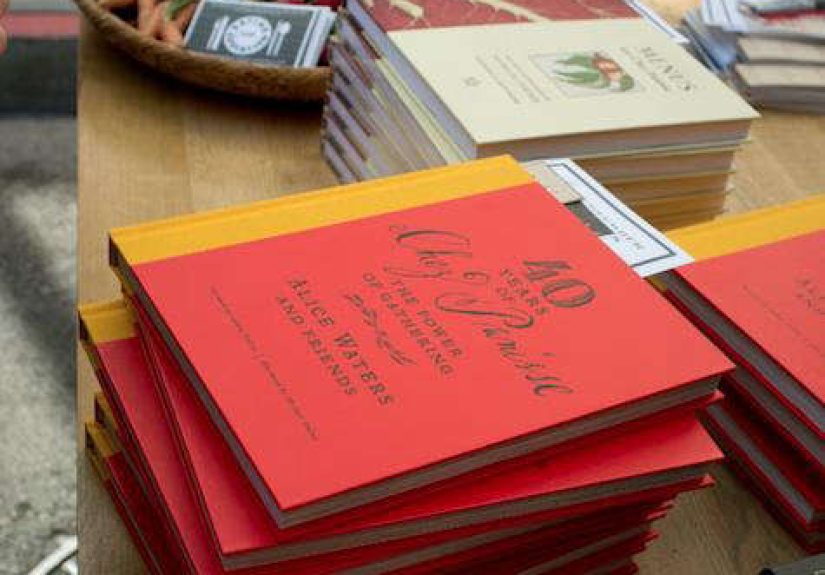
40 Years of Chez Panisse: The Power of Gathering isn’t just a glossy anniversary bookit’s a scrapbook of American food culture getting a hard reset, decade by decade, through one Berkeley dining room.
Remodelista tagged it as “Required Reading” back in 2011, and the pick still holds up because the central idea hasn’t aged a day:
the table is where values stop being opinions and start being habits.
If you’ve ever hosted a dinner and realized halfway through that the real “main course” was the conversation (and the fact that everyone put their phones down for eight whole minutes),
you already understand the “power of gathering.” Chez Panisse just built an entire philosophy around itand then somehow kept that philosophy alive for decades without turning it into a hollow slogan on a tote bag.
(Okay, there are tote bags. But the point stands.)
Why Remodelista Called It “Required Reading”
Remodelista’s short write-up frames the book as a celebration of four decades of Chez Panisse’s influence and a reminder of just how closely the Bay Area food scene has been connected to Alice Waters’ kitchen.
It also situates the book in a moment of real-world community-building: a string of anniversary festivities that funneled support toward the Edible Schoolyard Project.
That pairingcelebration plus missionis basically Chez Panisse in a nutshell: pleasure, but with a purpose.
Remodelista also highlights what makes the book so addictive to flip through: it’s organized by decade, filled with archival menus, invitations, photographs, and voices from chefs and purveyors.
Translation: it’s not “a book about a restaurant,” it’s “a time machine with gorgeous paper.”
A Quick, Useful Snapshot of Chez Panisse
Chez Panisse opened in Berkeley in 1971, founded by Alice Waters, and became famous for making local, seasonal ingredients the starlong before “farm-to-table” was a phrase people said without irony.
The restaurant’s identity has always been tied to relationships: not only among diners, but between the kitchen and the farmers, ranchers, fishers, and artisans supplying it.
The model is deceptively simple: cook what’s best now, honor the people who grew it, and serve it in a way that feels like homejust sharpened into focus.
Even today, the structure reinforces that idea. The restaurant is known for a set menu designed around the season, while the upstairs café offers an à la carte menu that changes frequently.
Whether you’re eating a four-course dinner or a simpler café meal, the experience is built around the moment: what’s available, what’s at its peak, and what will taste like it was meant to be on the plate.
What the Book Actually Is (and Why It’s Not “Just” a Cookbook)
40 Years of Chez Panisse: The Power of Gathering was published to mark the restaurant’s milestone anniversary and functions like an annotated family albumif your family happened to include the modern American food movement.
Remodelista notes that the book includes a foreword by Calvin Trillin and an afterword by Michael Pollan, which hints at its tone: witty, reflective, and quietly persuasive, rather than preachy.
The structure matters. Organized by decade, the book lets you see how a restaurant grows the way a community grows:
through experiments, failures, friendships, new voices joining, and traditions that get passed down.
Archival menus and invitations show how the “story” wasn’t just written in essaysit was written in what people ate on a random Tuesday.
There’s also a practical takeaway hiding inside all that nostalgia: values don’t stay alive because we admire them.
They stay alive because we repeat themdaily menu changes, seasonal decisions, paying attention, setting the table, showing up.
Chez Panisse’s genius is that it made repetition feel like discovery.
The Power of Gathering: What That Phrase Really Means
“Gathering” sounds soft, like a word you’d embroider on a pillow. But in the Chez Panisse context, it’s surprisingly muscular.
Gathering is a design principle, a business choice, and a cultural act.
1) Gathering is design (and not the fussy kind)
Remodelista’s images and captions lean into the aesthetic that quietly shaped a million dinner parties:
picnic tables dressed with simple canvas, kitchen jars wrapped in humble materials holding garden blooms.
It’s not “effortless” (nothing is), but it reads as effortless because it’s grounded in function and sincerity.
The table looks inviting, not intimidating.
The lesson for home cooks is freeing: you don’t need perfectionyou need intention.
A table is successful when people relax at it, not when it photographs like a museum exhibit.
2) Gathering is economics (who gets supported)
One of the most influential ideas behind Chez Panisse wasn’t a recipe. It was the decision to build a supply network based on direct relationships
and to pay for qualitysupporting farmers and makers whose work is usually invisible.
In a restaurant industry that often squeezes everyone except the person writing the check, the philosophy insisted on fairness as part of “good taste.”
This is where the concept becomes powerful: the menu isn’t just describing dinner. It’s describing the world you’re funding.
3) Gathering is culture (how people learn what matters)
Food culture spreads in ordinary ways: a young cook learns how to taste a peach and refuses to accept cardboard fruit ever again.
A diner experiences a simple salad that’s somehow unforgettable and realizes that the “secret” is timing and care, not a magic powder.
A restaurant becomes a training ground, and the graduates carry the values outward.
That ripple effect is one reason Chez Panisse is frequently described as deeply influential:
not because it created a single signature dish everyone copied, but because it taught a way of thinking that people reproduced in new places.
How Chez Panisse Helped Change the Way America Eats
If you’re looking for a single headline, it’s this: Chez Panisse helped normalize the idea that local, seasonal, sustainably sourced food belongs at the center of “serious” dining.
Today, the buzzwords are everywhere. In the early 1970s, they weren’t.
That shift happened through choices that were both romantic and relentlessly practical:
changing menus based on what was available, treating ingredients like the main event, and cooking simply enough that the quality could actually be tasted.
It also happened through the people who passed through the kitchenchefs, bakers, writers, and future leaders who carried the philosophy into their own work.
There’s a second, underrated influence too: Chez Panisse helped uncouple “fine dining” from “fanciness.”
Eater famously captures this tension by describing the downstairs experience as something that looks like what you’d serve at home.
That’s not an insult. It’s the whole point: the best meals should feel human.
From Restaurant Table to School Table: The Edible Schoolyard Connection
The “power of gathering” doesn’t end at a restaurant reservation.
Alice Waters founded the Edible Schoolyard Project in 1995 with a mission to transform public education through gardens, kitchens, and cafeteriasteaching nourishment, stewardship, and community.
In other words, she took the Chez Panisse idea and asked: what if every kid got to experience food as something worth paying attention to?
Remodelista’s 2011 note about anniversary festivities benefiting the Edible Schoolyard Project is telling.
The Chez Panisse story is not only about what happens at dinnerit’s about what dinner can change outside the dining room.
What You Can Steal for Your Own Table (Without Copying Anyone’s Life)
You don’t need a legendary restaurant to practice the Chez Panisse approach. You need a few habits that turn “hosting” into “gathering.”
Here are practical, non-precious ways to do it.
Start with the season, not the spreadsheet
Instead of asking, “What do I want to cook?” ask, “What looks incredible right now?”
Build your menu around one peak ingredienttomatoes in late summer, citrus in winter, asparagus in spring.
Your food will instantly taste more “special,” because nature did the hard part.
Make one thing excellent, keep the rest simple
The Chez Panisse ethos is not about showing off. It’s about clarity.
Pick one dish to focus on (a roast chicken, a pot of beans, a pasta with seasonal greens),
then support it with easy wins: a crunchy salad, good bread, fruit with cream.
Set the table like you want people to stay
Light matters. Water glasses matter. A bowl of oranges matters more than a centerpiece that blocks eye contact.
The goal is comfort with a little ceremonythe kind that makes people feel cared for, not evaluated.
Invite help on purpose
Gathering gets stronger when people participate. Ask someone to tear herbs, toss salad, open wine, or slice dessert.
It turns “dinner party” into “shared evening,” which is where the magic lives.
Leave room for the conversation
The most common hosting mistake is overscheduling your own table.
If you’re sprinting between stove and sink, you’re not gatheringyou’re running a one-person catering company with bad benefits.
Choose food you can mostly finish before guests arrive so you can sit down while it’s still warm and you still recognize your friends.
Why This Still Matters Now
The world has gotten louder, faster, and more optimizedand people are, frankly, tired.
That’s why a book celebrating a restaurant’s decades-long commitment to seasonality and community still feels urgent.
Gathering is not nostalgia; it’s maintenance. It maintains relationships. It maintains attention. It maintains standards.
Chez Panisse’s story also reminds us that “good food” is never just about taste.
It’s about who gets paid fairly, what land practices get rewarded, what kids learn to value, and whether a meal becomes a moment of connection or a transaction.
The power of gathering is that it makes those choices visibleand then makes them feel normal.
Extra: of “Gathering” Experiences You Can Actually Live Through
Picture this: it’s late afternoon, and you’re not trying to impress anyoneyou’re trying to feed them. You walk into the kitchen with a small plan and a flexible attitude.
There’s a bowl of produce on the counter that looks like it came with its own theme music: greens that still smell like the field, citrus that feels heavy in your hand, a loaf of bread that’s unapologetically crusty.
You’re not thinking “Pinterest.” You’re thinking, “What will make people exhale when they take the first bite?”
You set out a few glasses before anyone arrives. Not matching, not perfectjust ready. You put water in a pitcher. You add lemon if you feel fancy, but you don’t make it your personality.
A simple bouquet shows up because you clipped herbs and flowers from whatever was available: rosemary, fennel fronds, maybe a couple of scrappy blooms.
It looks better than store-bought because it looks real.
Then the first guest comes in, and something changes immediately: the kitchen stops being a work zone and starts being a meeting place.
Someone asks what’s for dinner. You tell them the truth: “Seasonal-ish food and good intentions.”
They laugh, and suddenly you’re not performingyou’re hosting.
A Chez Panisse–inspired gathering works best when the menu feels inevitable. A roast chicken (or a tray of roasted vegetables if that’s your lane) becomes the anchor.
A big salad shows up with a bright vinaigrette. Beans simmer with olive oil and garlic until they taste like the most comforting thing on earth.
Dessert is fruitmaybe roasted, maybe sliced, maybe just placed in the middle of the table like, “Here, nature did a great job.”
The real experience, though, is what happens in the gaps. People lean in. Someone tells a story that starts as a complaint and ends as a comedy routine.
A kid tries something green and decides it’s not poison after all. A friend asks where the carrots came from, and you realize you actually know.
That’s the subtle shift the book celebrates: food becomes a connector, not a performance.
By the time you sit down, you notice how the table “works.” The serving bowls are easy to pass. Nothing blocks anyone’s face.
There’s enough light to see each other, but not so much that it feels like an interrogation.
People stay longer than they planned because the room feels safe and warm and human.
And when the night ends, nobody remembers whether the napkins matched.
They remember that they felt welcomedand that the meal tasted like it belonged to the moment you were all in together.
Conclusion
Remodelista’s recommendation of 40 Years of Chez Panisse: The Power of Gathering lands because the book isn’t asking you to worship a restaurant.
It’s asking you to notice what happens when food is treated as a relationship: with the land, with the people who grow it, with the cooks who handle it, and with the friends who show up.
The “power of gathering” is that it makes those relationships visibleand then makes them feel worth protecting.