Table of Contents >> Show >> Hide
- Who Is Billy Cotton, and Why Does His Work Matter?
- Why Interior and Design Work Feels Like Required Reading
- The Billy Cotton Signature: What You Notice First, and What You Notice Later
- Beyond the Book: Projects That Show His Range
- What Designers and Homeowners Can Learn from Billy Cotton
- Final Verdict: Why Billy Cotton Belongs on the Shelf and in the Conversation
- Extended Reflection: The Experience of Living with Billy Cotton’s Ideas
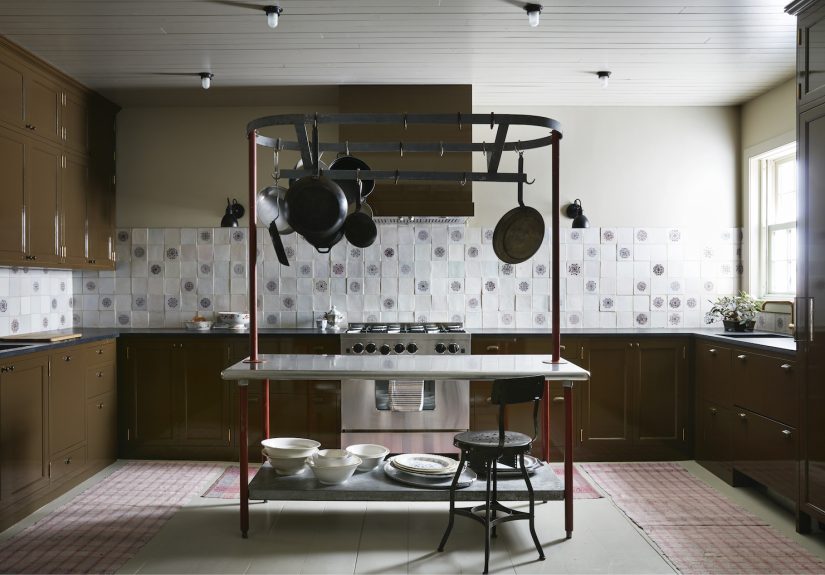
If interior design had a category called “quiet flex,” Billy Cotton would already have the trophy on a lacquered pedestal with a very good lamp next to it. His rooms do not scream for attention. They do something trickier. They pull you in with poise, then keep you there with tension, intelligence, and just enough oddness to make the whole thing feel alive. That is why Billy Cotton: Interior and Design Work deserves the phrase “required reading.” It is not simply a glossy design book about handsome rooms. It is a field guide to a designer who understands that the best interiors are never just pretty. They are atmospheric, emotionally precise, and slyly memorable.
Cotton has built a reputation as one of the most compelling American decorators of his generation by refusing the false choice between old and new. His work blends historical references with contemporary clarity, custom furniture with collected objects, fine art with functional design, and elegance with the kind of livability that suggests actual human beings might dare to sit down. Imagine a room with excellent posture that still knows how to laugh. That is the neighborhood Billy Cotton lives in, creatively speaking.
Who Is Billy Cotton, and Why Does His Work Matter?
Billy Cotton is a New York–based interior and industrial designer whose studio has become known for weaving together contemporary and historical sensibilities in a way that feels highly personal rather than formulaic. His practice began in 2011, and he has been recognized by the Architectural Digest AD100 and the ELLE Decor A-List, which is design-world shorthand for “people are paying attention, and with good reason.”
But credentials alone do not explain the fascination. Plenty of designers have nice resumes. Cotton’s distinction is that his interiors feel authored. Not overworked. Not mannered. Authored. There is usually a clean architectural armature underneath, then a layering of color, texture, art, lighting, and objects that makes the room feel simultaneously composed and a little unpredictable. He does not decorate as if he is checking items off a luxury bingo card. He designs as though every room needs a point of view.
That point of view has made him especially resonant with art-world clients. Cotton has designed for figures including Cindy Sherman, Lisa Yuskavage, Matvey Levenstein, Carol Bove, and Gordon Terry, and that clientele tells you something important. Artists tend to have a high tolerance for visual tension and a very low tolerance for boring. Cotton’s work meets them there.
Why Interior and Design Work Feels Like Required Reading
Design books often fall into one of two traps. They either become a parade of expensive rooms with all the emotional temperature of a luxury hotel lobby, or they lean so hard into theory that you need a glossary and a restorative snack. Billy Cotton’s monograph avoids both. It works because the rooms are visually rich, but the ideas behind them are just as strong.
The book presents Cotton’s interiors as more than finished products. It reveals a design mind deeply interested in history, proportion, craftsmanship, and mood. His spaces are polished, yes, but never sterile. He has a knack for making refinement feel lived in rather than sealed behind velvet rope. That balance is not accidental. It is the result of a designer who understands that glamour without comfort becomes theater, and comfort without character becomes beige surrender.
What makes the monograph especially useful is that it shows Cotton operating across scales. He is not only arranging furniture. He is thinking about architecture, materials, decorative arts, product design, and the role of art in domestic life. That breadth is one reason the title lands so well. This is interior design work, certainly, but it is also an argument for design as a complete ecosystem.
The Billy Cotton Signature: What You Notice First, and What You Notice Later
Cinematic rooms with emotional weather
ELLE Decor has described Cotton’s interiors as cinematic and delightfully off-kilter, which feels exactly right. His rooms often carry an immediate mood, as if you have walked into a scene that began before you arrived. There may be a moody paint color, an unexpectedly sculptural light fixture, a stripe that sharpens the architecture, or an antique that changes the rhythm of the room. Nothing is random. But nothing feels too explained, either. The mystery remains intact.
This cinematic quality matters because it separates Cotton from designers who treat interiors as static compositions. His spaces do not feel frozen for the camera. They feel as though they could continue unfolding over time. There is a sense of life already in progress, which gives the work warmth without sacrificing polish.
History without costume drama
Many designers say they mix historical and modern influences. Cotton actually does it. He understands how to borrow from the past without turning a room into a reenactment. That means an antique form may sit beside a crisp modern silhouette. A traditional motif might appear in a room that otherwise feels architecturally spare. A richly colored textile may soften a disciplined, modern envelope.
The result is tension in the best sense: patina against polish, old against new, precision against ease. Cotton seems especially good at letting different periods talk to one another without forcing them into a fake friendship. In his work, history is not a costume trunk. It is active vocabulary.
Art is not garnish
One of the clearest lessons in Cotton’s work is that art should not be treated as a decorative afterthought. In many of his interiors, art is central to the room’s structure and energy. It changes the scale, establishes the emotional pitch, and often sharpens the dialogue between furniture and architecture. That makes sense for a designer who works with serious collectors and artists. He knows art can carry a room, challenge a room, or rescue a room from being too well behaved.
And thank goodness for that. Sometimes a room needs a little friction. Otherwise it risks looking like it was assembled by an algorithm trained exclusively on beige oatmeal and expensive candles.
Beyond the Book: Projects That Show His Range
Residential work that feels tailored, not templated
Cotton’s residential interiors are often described as tailored, and that word is useful, but incomplete. Tailoring suggests fit. Cotton also delivers attitude. His homes do not read like copy-and-paste variations on a branded signature. Instead, they feel calibrated to the architecture, the collection, and the personalities of the people living there. A Manhattan apartment may feel urbane and compressed in all the right ways, while a beach or country property opens into a lighter, more relaxed register without losing discipline.
That flexibility is one reason his projects remain interesting. You can see the designer’s hand, but you do not feel trapped inside the same trick repeated forever. He can work with white walls and modern art, or with richer surfaces and more historic references, without flattening either into sameness.
Product design that translates his ideas into objects
Cotton’s product work proves that his interiors are not powered by mood alone. They are grounded in object design. His studio has produced furniture, lighting, wallpaper, tableware, and planters, and those categories matter because they show how thoroughly he thinks through a room. When he designs a lamp or a chair, it is not just merchandise orbiting the brand. It is part of a larger language about use, silhouette, and character.
His collaboration with West Elm is especially revealing. Instead of making the collection loud for the sake of visibility, Cotton leaned into simplicity, timelessness, and easy livability. The pieces explored streamlined forms, neutral tones, subtle quirks, and references to American modernism. That decision says a lot about his discipline. He did not treat accessibility as an excuse to go generic. He treated it as an opportunity to make durable design feel natural in everyday life.
Hospitality with atmosphere: Bridges in Manhattan
One of the most interesting expansions of Cotton’s work is Bridges, his first restaurant project in Manhattan. The space reportedly mixes Art Deco and Futurist notes with green stucco, antique Chinese tea paper, glass block, rich cherry wood, leather banquettes, and red marble-embedded concrete floors. That material mix sounds bold on paper, and in Cotton’s hands it becomes a moody, downtown composition rather than a visual traffic jam.
This project matters because hospitality design punishes hesitation. A restaurant has to create identity quickly. Cotton’s answer was not gimmick but atmosphere. He built a room with memory in it. The foyer, surfaces, and lighting all contribute to an experience that feels specific enough to remember and polished enough to return to. That is a serious design skill.
Architecture and preservation: a broader design horizon
Cotton’s evolution into a broader architectural conversation also matters. His involvement in CTK, a sustainability-driven architecture and project-management practice, suggests that he is thinking not only about rooms and objects but also about how buildings are adapted, preserved, and made meaningful over time. That move feels consistent with the work itself. His interiors have always shown respect for what already exists, whether that is architectural character, historical reference, or the patina of older forms.
In other words, this is not a decorator suddenly pretending to care about architecture because the market likes bigger titles. It reads as a natural extension of a designer who has long been interested in the conversation between structure and atmosphere.
What Designers and Homeowners Can Learn from Billy Cotton
1. A room needs contrast to feel alive
Cotton’s work demonstrates that harmony is not sameness. The best rooms often contain productive contradictions: sleek beside rough, antique beside modern, serious beside playful. Contrast creates depth. It gives the eye places to travel and the mind something to decode. A room with no tension is like a joke with no setup. Technically complete, maybe. Memorable, not so much.
2. Livability is not the enemy of sophistication
There is a lazy assumption in some corners of design culture that comfortable means compromised. Cotton’s rooms argue the opposite. He consistently shows that softness, usability, and emotional ease can coexist with elegance. The point is not to make a room precious enough that everyone is afraid to exhale. The point is to make it beautiful enough to notice and welcoming enough to inhabit.
3. Collections should feel like a world, not a shopping spree
Because Cotton works across interiors and products, his projects often feel complete without becoming over-designed. That is an important distinction. The strongest rooms are not those with the most expensive ingredients. They are the ones in which scale, shape, material, and mood all belong to the same universe. Cotton is very good at building that universe.
4. Personality ages better than trends
Trends can be useful, but they are rarely enough. Cotton’s rooms feel current without being enslaved to the news cycle of décor. That is partly because he favors forms and references with staying power, and partly because he lets personality lead. A room can survive the end of a trend if it has conviction. It cannot survive being forgettable.
Final Verdict: Why Billy Cotton Belongs on the Shelf and in the Conversation
Required Reading: Billy Cotton Interior & Design Work is not just a catchy title. It is an accurate one. Cotton’s interiors reward close looking because they are smart without being cold, lush without being clumsy, and refined without becoming self-important. He understands that a room can be beautiful and still have a sense of humor, that history can be used without becoming heavy-handed, and that art, furniture, and architecture are strongest when they are in active conversation.
That is why his monograph and broader body of work matter right now. In a design culture crowded with fast trends, copycat minimalism, and photogenic emptiness, Billy Cotton offers something better: interiors with intelligence, atmosphere, and staying power. His rooms do not beg for approval. They earn your attention. Then they keep it.
And really, that may be the most stylish move of all.
Extended Reflection: The Experience of Living with Billy Cotton’s Ideas
There is a particular pleasure in spending time with Billy Cotton’s work, and it has less to do with obvious luxury than with the feeling of discovery. At first glance, a Cotton interior may read as disciplined and polished. Look again, and it starts revealing its sly side. A room might be anchored by classical proportions but animated by an unexpected color note. A serious modern sofa may sit near a lamp with just enough curve or wit to prevent the space from becoming doctrinaire. An antique object may appear not as a museum relic but as a live participant in the room’s mood. The experience is a little like talking to someone impeccably dressed who also happens to be the funniest person at dinner. The polish gets your attention. The personality keeps you around.
That is one reason his monograph has such lasting appeal. It does not merely showcase completed rooms; it teaches readers how to look at interiors with greater sensitivity. You begin to notice how scale affects emotion. You start paying attention to the weight of materials, the spacing between objects, the way art can sharpen the energy of a room or soften it. You realize that “good taste” is not a single formula involving linen, oak, and a tragic quantity of boucle. Good taste is judgment. It is knowing when to introduce friction, when to let a quiet moment breathe, and when to stop before the room turns into a showroom with delusions of grandeur.
There is also something reassuring about Cotton’s work for readers who love design but do not live inside a sprawling townhouse with a museum-grade collection. His projects may be luxurious, but the underlying lessons are accessible. You can learn from the way he balances strong forms with softer ones. You can borrow his respect for history without copying period rooms wholesale. You can think more carefully about lighting, about the emotional role of color, about the difference between filling a room and shaping one. That educational quality is what makes the phrase “required reading” feel earned rather than inflated.
Most of all, Billy Cotton’s interiors remind us that design is not just about visual order. It is about atmosphere, memory, and self-knowledge. The best rooms say something about how people want to live, not just how they want to be photographed. Cotton understands that a room can be elegant and still slightly mischievous, composed and still personal, historical and still alive. In an era of interiors that often feel either painfully content-ready or aggressively trend-chasing, that sensibility lands with unusual force. His work invites you to look longer, think harder, and edit better. Not bad for a book that also happens to look excellent on a coffee table.