Table of Contents >> Show >> Hide
- Why Wild Zillow Homes Have Become Their Own Internet Genre
- The Main Types Of Zillow Homes That Make People Say, “Absolutely Not… Show Me More”
- What Makes These Homes So Addictive To Browse?
- Do Viral Listings Actually Help Sell These Homes?
- Why “Keep An Open Mind” Is Basically The Perfect Listing Warning Label
- The Real Lesson Behind These Unhinged Homes
- What It Feels Like To Fall Down A Zillow Rabbit Hole
- Conclusion
If you have ever opened Zillow to look at a perfectly normal three-bedroom ranch and somehow ended up staring at a castle with a moat, a living room aquarium, or a kitchen arranged around a literal tree, congratulations: you have experienced the internet’s favorite real-estate side quest. Somewhere along the way, house hunting stopped being just a practical exercise and became a full-blown form of entertainment. And honestly? Fair enough. When the market is stuffed with gray floors, white walls, and staging so generic it looks like a hotel lobby designed by oatmeal, a gloriously unhinged house feels like a gift.
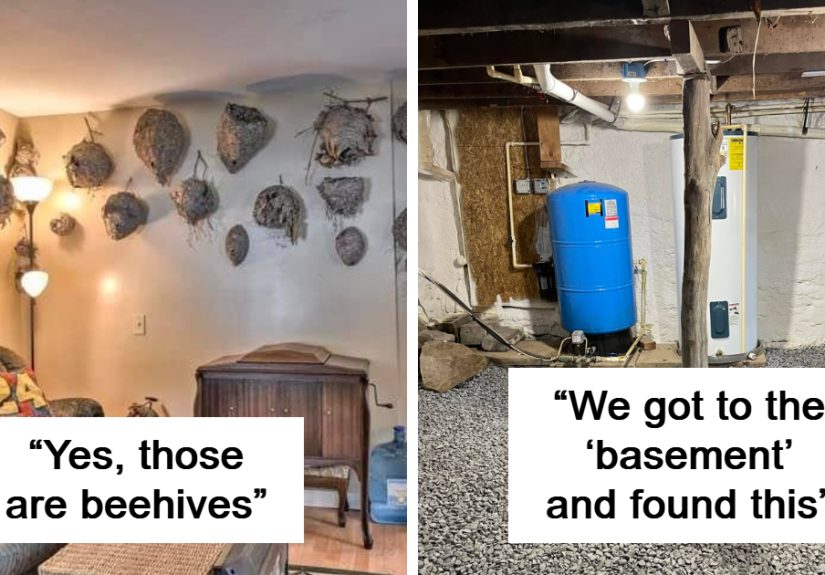
That is exactly why bizarre Zillow homes keep going viral. They are weird, memorable, occasionally horrifying, and impossible to scroll past. Some are beautiful in an eccentric, “the owner clearly had a vision and maybe too much free time” kind of way. Others look like a normal suburban home until photo number 27 reveals a pirate cave, a dungeon-like basement, or a bathroom that appears to have lost a fight with a carnival. Either way, they do what bland listings rarely can: they make people feel something.
This is the secret sauce behind the whole “keep an open mind” genre of home listings. Buyers may arrive expecting granite countertops and a sensible laundry room, but what they get is a property with a bowling alley, a church conversion, a missile-silo backstory, or decor choices that whisper, scream, and occasionally yodel. These homes are not just places to live. They are characters. Chaotic, fabulous characters.
Why Wild Zillow Homes Have Become Their Own Internet Genre
Unusual homes have always existed, but social media gave them a spotlight bright enough to be seen from space. Once weird listings started circulating widely, the public discovered a truth real-estate professionals have known forever: people are drawn to properties with personality. A one-of-a-kind home can stop the scroll in a way a perfectly respectable beige colonial simply cannot.
There is also a delicious tension at work. Real estate is usually sold with words like “timeless,” “elegant,” “updated,” and “move-in ready.” Viral Zillow homes throw all of that out the window, sometimes literally. Instead, they offer giant themed rooms, theatrical architecture, strange floor plans, maximalist decorating, and questionable life choices preserved in high-resolution photography. The result is a kind of accidental performance art. You are not just looking at a listing. You are reading a visual autobiography written in tile, drywall, and deeply committed wallpaper.
That sense of authenticity matters. In an era when so many homes are renovated to look interchangeable, buyers and browsers alike respond to places that feel specific. Maybe not everyone wants to own a boot-shaped house, a dome home, or a gothic townhouse that looks like it was decorated by a very stylish vampire. But plenty of people love that such homes exist. And a smaller, passionate audience may love them enough to buy them.
The Main Types Of Zillow Homes That Make People Say, “Absolutely Not… Show Me More”
1. The Theme-Park House
These are the homes that commit to a concept with the confidence of a Broadway musical. Think castles, Wild West compounds, storybook cottages, shoe-shaped houses, or homes that look like they were designed by someone who asked, “What if I lived inside a prop?” These properties go viral because they are visually irresistible. You do not need to be in the market for one to appreciate the audacity.
2. The Surprise-Inside House
From the street, everything looks calm. Then you click through the photos and realize the property contains a jail cell, a full indoor pool in a subterranean chamber, a dinosaur statue, a nightclub basement, or a room dedicated entirely to mannequins. This is the internet’s favorite trick ending. It is the real-estate version of a plot twist.
3. The Maximalist Fever Dream
Some homes are not structurally unusual at all. They are simply decorated with fearless enthusiasm. Every surface is painted, patterned, mirrored, tufted, gilded, or zebra-striped. Murals climb the walls. Color palettes ignore polite society. This category thrives online because it reminds viewers that taste is personal and “too much” is sometimes exactly the point.
4. The Architectural Oddball
Dome houses, earth-sheltered homes, brutalist experiments, converted silos, former churches, former schools, and geometric structures that look imported from another planet all live here. These homes attract attention because they challenge the cookie-cutter idea of what a home should look like. They might be impractical. They might be genius. They are rarely boring.
5. The “Who Thought This Was A Good Idea?” Listing
This is the category that powers late-night group chats. Weird bathroom placement, maze-like layouts, carpeting where carpeting should never be, kitchens that seem hostile to cooking, and design choices so specific they feel like dares. These homes may not inspire buyer envy, but they absolutely inspire commentary. And commentary is fuel for virality.
What Makes These Homes So Addictive To Browse?
Part of the appeal is pure curiosity. A strange listing promises narrative. Why is there a moat? Why is there a medieval banquet hall in Arizona? Why does the basement look ready to host a 1987 roller rink fundraiser? Every unusual feature hints at a backstory, and the human brain adores a mystery wrapped in real estate taxes.
Another reason is fantasy. Wild Zillow homes invite people to imagine alternate versions of themselves. You may never buy a converted chapel, but for thirty glorious seconds you can picture yourself drinking coffee under stained glass. You may not actually want a home that resembles a spaceship, but you do enjoy imagining the level of confidence required to invite people over and casually say, “The guest room is in the third dome.”
And then there is the comedy. House-hunting content is funny because it mixes serious money with unserious choices. A listing can ask seven figures for a home whose aesthetic direction seems to be “haunted Olive Garden.” That contrast makes people laugh, gasp, and share. In other words, it makes a perfect internet object.
Do Viral Listings Actually Help Sell These Homes?
Sometimes yes. Sometimes not even a little. That is what makes the phenomenon so fascinating.
For highly unusual homes, visibility matters. The ideal buyer may not be local or even actively searching in that market. Viral exposure can help the right eccentric property find the right eccentric person. A midcentury enthusiast, a short-term-rental investor, an architecture nerd, or somebody with impeccable taste for glorious nonsense might never have seen the listing otherwise.
But virality is not magic. A listing can rack up thousands of gawking viewers and still fail to attract serious offers. Curiosity does not equal conversion. In fact, it can backfire if the home becomes a meme for the wrong reasons. Sellers may get attention, but not necessarily the kind that leads to a clean close. Real estate agents increasingly understand that social-media fame is a double-edged sword: great for exposure, less great when strangers start treating an occupied property like a tourist attraction.
Still, for a certain class of home, going viral can be a strategic advantage. It helps a property stand apart in a crowded feed and reach buyers who value uniqueness over neutrality. And in a visual marketplace, standing out is half the battle.
Why “Keep An Open Mind” Is Basically The Perfect Listing Warning Label
No phrase sets the stage for chaos quite like “keep an open mind.” It is the listing equivalent of “I can explain,” which, historically, has never introduced anything normal. In real-estate language, it tells buyers three things at once.
First, the home is memorable. Second, it may require a leap of imagination. Third, the seller knows exactly what is happening here. That self-awareness is part of the charm. It signals that the house is not trying to pretend it is broad-market vanilla. It knows it is a niche experience. It is offering itself honestly, if somewhat dramatically.
And that honesty is refreshing. Plenty of listings try to camouflage weirdness behind euphemisms. “Cozy” means small. “Full of potential” means bring a contractor and emotional support snacks. “Unique” can mean anything from delightful craftsmanship to “the shower is in the kitchen.” But “keep an open mind” is deliciously blunt. It prepares you for impact.
The Real Lesson Behind These Unhinged Homes
Under all the jokes, there is a real shift happening in how people think about homes. Buyers are increasingly drawn to character, individuality, and memorable design. Even when a strange home is too strange, people still respond to evidence of personality. That is why murals, bold color, whimsical details, unusual amenities, and standout architecture generate so much attention online. Not every buyer wants a replica castle. But many are tired of homes that feel stripped of identity.
That does not mean every seller should install a drawbridge and hope for the best. It does mean the era of purely generic presentation may be losing some ground. In a market ruled by photos, thumbnails, and social sharing, emotional impact matters. A home that sparks delight, shock, curiosity, or laughter has a better chance of being remembered. And remembered homes get revisited.
So yes, the internet loves wild Zillow homes because they are ridiculous. But it also loves them because they reveal something true: people crave spaces that feel human, specific, and alive. Sometimes that means a sunlit reading nook. Sometimes it means a former jail attached to a Victorian mansion. The spectrum is broad.
What It Feels Like To Fall Down A Zillow Rabbit Hole
There is a very particular experience that comes with browsing outrageous home listings, and if you know, you know. It usually starts innocently. You tell yourself you are just checking local prices, maybe peeking at a neighborhood you like, maybe judging whether that one acquaintance from high school really did buy a house that nice. Then the algorithm senses weakness. It slides an unusual listing into view. A dome house. A church conversion. A living room with a pirate ship in it for reasons unknown. Suddenly your evening is gone.
The first emotion is disbelief. The second is respect. Even when a home is objectively absurd, there is something admirable about the sheer nerve of it all. Somebody chose this. Somebody defended this. Somebody said, “Yes, let us put a full saloon in the basement,” and then followed through. You are no longer just looking at square footage and lot size. You are face-to-face with a stranger’s unfiltered imagination.
Then comes the group-chat phase. Wild Zillow homes are almost never enjoyed alone for long. You send screenshots to friends with messages like, “Please explain the taxidermy room,” or “Why are there seven sinks in this hallway?” Everyone becomes an instant real-estate critic. Amateur appraisals are made. Marriages are tested over whether the bizarre feature is iconic or grounds for immediate demolition. It is communal entertainment with backsplash.
There is also a weird tenderness to it. For all the laughing, many of these homes feel more alive than the polished, aggressively neutral listings that dominate the market. They contain evidence of hobbies, obsessions, nostalgia, ambition, and occasionally chaos. They feel lived in by actual people instead of optimized by a committee. Even the homes that make you gasp often linger in your memory longer than the tasteful ones.
And maybe that is the deeper reason this content works. It gives people permission to react emotionally to design. To be delighted. To be confused. To have opinions. To admit that houses are never just assets; they are theaters for identity. Some are calm little indie films. Others are full-scale fantasy epics with poor resale strategy. Both are interesting, but only one is likely to make you cancel your plans and keep scrolling.
So the next time a seller asks you to keep an open mind, do it. Maybe you are about to see a disaster. Maybe you are about to discover a hidden gem. Maybe you are about to witness a bathroom decision that cannot be defended in any legal jurisdiction. Whatever happens, you probably will not be bored. And in the vast, beige universe of online listings, that alone is worth a lot.
Conclusion
Wild Zillow homes are more than internet punch lines. They are proof that real estate still has the power to surprise people. Some go viral because they are stunning, some because they are baffling, and some because they look like a designer, a theater kid, and a fever dream all split the mortgage. But the best of them share one quality: they refuse to be forgettable.
That is why audiences cannot resist them, why social feeds keep circulating them, and why certain buyers actually fall in love with them. These listings remind us that homes do not have to be perfect to be compelling. Sometimes all it takes is bold personality, a little madness, and a seller brave enough to say, “Please keep an open mind.”