Table of Contents >> Show >> Hide
- What Makes a Table “Shaker,” Anyway?
- A Short (Useful) History: From Communal Villages to Modern Homes
- Common Shaker Dining Table Styles (And What They’re Good At)
- How to Choose the Right Size (Without Playing Dining Room Tetris)
- Materials and Construction: Why Shaker Tables Age So Well
- Style Pairings: Making Shaker Feel at Home in Your Space
- Buying Checklist: How to Spot a Great Shaker Dining Table
- Care and Keeping It Looking Good (Not Museum-Precious)
- Real-World Experiences: Living With a Shaker Dining Table (The Extra You Asked For)
- Conclusion
If dining tables had personality tests, Shaker dining tables would come back as:
“calm, dependable, slightly obsessed with good joinery.” They don’t scream for attention.
They don’t arrive with six kinds of scrollwork and a dramatic backstory. They just… work.
And somehow they look better every year you own themlike a good leather jacket, or that friend who drinks water on purpose.
In a world where furniture trends come and go faster than your streaming subscriptions, Shaker style keeps hanging around because
it’s built on a simple idea: make something useful, make it well, and don’t gild the lily (the lily didn’t ask for that).
A Shaker dining table is the kind of piece that fits a Saturday pancake breakfast, a Tuesday laptop marathon,
and a holiday dinner where someone inevitably brings a “surprise” casserole.
What Makes a Table “Shaker,” Anyway?
The Shaker mindset: simple, useful, honest
Shaker design grew out of communities that valued simplicity, utility, and honest craftsmanship.
That mindset shows up in the furniture: clean lines, no fussy ornament, and details that earn their keep.
If a curve exists, it’s probably there because it improves comfort or strengthnot because the table wanted to show off.
Signature traits you can spot across a room
- Clean, straight lines that read modern even when the design is centuries old.
- Tapered legs (often) that look lighter and give the piece an airy stance.
- Minimal hardware and straightforward silhouettesfunction first, always.
- Solid joinery that prioritizes strength: mortise-and-tenon, dovetails, and smart wood movement strategies.
- Practical surfacesoften solid hardwoodmeant for daily life, not just “formal dining” that never happens.
The result is a dining table that feels understated but intentional. It’s not plain. It’s disciplined.
Like a capsule wardrobe… but for your dinner.
A Short (Useful) History: From Communal Villages to Modern Homes
The Shakersformally known as the United Society of Believers in Christ’s Second Appearingbuilt communities in the United States
beginning in the late 18th century. Their work ethic and communal structure shaped a craft tradition where quality mattered,
waste was frowned upon, and furniture needed to do multiple jobs. The best Shaker pieces were designed for real rooms
with real constraints: space, durability, ease of cleaning, and daily use.
Today’s Shaker dining tables aren’t museum replicas (though museums absolutely have stunning originals).
They’re modern descendants of the same principlesrefined proportions, sturdy construction, and a look that plays well with
both farmhouse floors and city apartments.
Common Shaker Dining Table Styles (And What They’re Good At)
1) The classic rectangular tapered-leg table
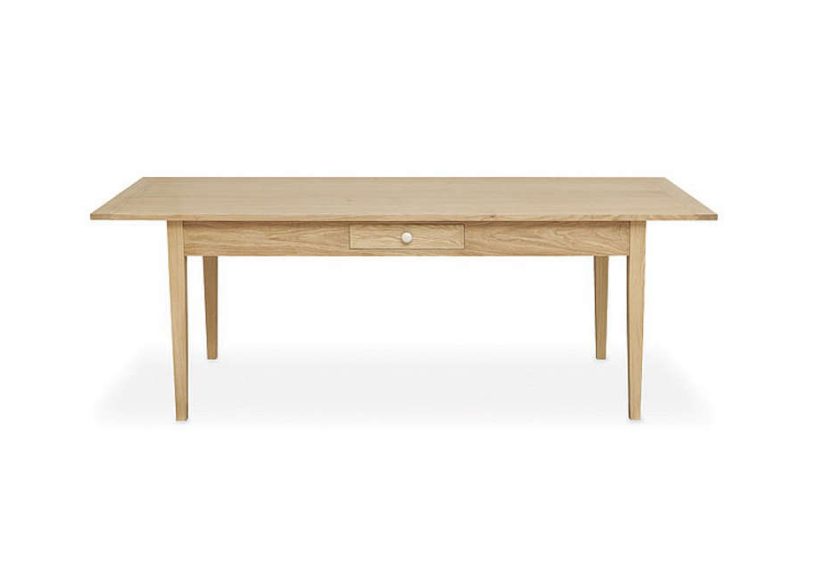
This is the “default setting” for many Shaker dining tables: four legs, a straightforward apron,
and a top that’s either solid (no leaves) or built to expand.
It’s the easiest shape to place in a room, the easiest to seat a crowd at,
and the easiest to dress up with a runner when your in-laws visit.
Best for: everyday dining, multipurpose rooms, people who want timeless without trying too hard.
2) Drop-leaf and double drop-leaf tables
If you live in a small space, drop-leaf tables are basically a cheat code.
Leaves fold down when you don’t need them, then pop up when you do. Historically, Shaker communities favored adaptable tables
that could shift roles quicklykitchen work, dining, sewing, you name it.
Best for: apartments, breakfast nooks, “we host occasionally” households, and anyone who hates furniture that hogs the room.
3) Extension tables with leaves
The modern Shaker extension table is the social butterfly of the dining world: calm most days, ready to expand for holidays.
Leaves may be stored separately or self-storing depending on the design.
Look closely at how the extension mechanism is builtsmooth action and sturdy alignment are where quality shows up fast.
Best for: families, frequent hosts, people who don’t want a “special occasion” table that sits unused.
4) Boat-top and gently shaped tops
Some Shaker-inspired tables use subtle curvesoften called boat-topwhere the long edges bow slightly.
It’s a small move that softens the look, improves traffic flow around the corners, and can feel surprisingly welcoming.
Best for: open-plan spaces, modern interiors, anyone who wants a “not-too-boxy” rectangle.
5) Harvest-style tops and breadboard ends (the practical flex)
Many Shaker-adjacent “harvest” tables include breadboard endsnarrow pieces running across the tabletop ends.
Done correctly, breadboard ends help keep a wide solid-wood top flatter while still allowing seasonal expansion and contraction.
(Wood moves. It’s not being dramatic. It’s just… wood.)
Best for: people who love traditional woodworking details, farmhouse-Shaker hybrids, and anyone who appreciates “boring” engineering that prevents problems later.
How to Choose the Right Size (Without Playing Dining Room Tetris)
Shaker dining tables are famously politethey don’t demand much. But your room does.
A great table size is less about the number of chairs you own and more about the number of people you want seated
comfortably with enough clearance to move.
Baseline sizing guidelines
- Table height: Most standard dining tables land around 28–30 inches.
- Seating width: Plan roughly 18–24 inches per person along the table edge, depending on chair width and elbow-room expectations.
- Clearance around the table: Aim for at least 36 inches between table edge and walls/furniture; more is better in high-traffic paths.
- Rug size: If you use a rug, choose one that extends about 24 inches beyond the table on all sides so chairs stay on the rug when pulled out.
A quick real-world example
Let’s say your dining area is about 10′ x 12′. If you want 36″ of clearance on all sides,
your “comfortable table zone” shrinks by 6 feet in each direction. That leaves about 4′ x 6′ for the table footprint.
Translation: a table around 36–40 inches wide and 60–72 inches long can work,
depending on how doors swing and where people actually walk.
And remember: leg placement matters. A table can be the right size on paper and still be annoying if your favorite chair
keeps fighting a table leg like it has a personal grudge.
Materials and Construction: Why Shaker Tables Age So Well
Solid wood is the point
Shaker dining tables are commonly made from hardwoods like cherry, maple, oak, and walnut,
and sometimes pine in more traditional or painted pieces. Solid wood brings warmth, repairability,
and a surface that can be refreshed over decades rather than replaced when life happens.
Joinery that earns respect
Well-made Shaker tables often rely on joinery methods that prioritize strength and longevity:
mortise-and-tenon joints for the base, careful apron connections, and thoughtful reinforcement
where stress lives (like where legs meet rails). In extension tables, alignment and rigidity
matter even morebecause moving parts are where “cheap” reveals itself.
Wood movement: the uninvited guest at every dinner
Solid-wood tabletops expand and contract across the grain as humidity changes. Quality table construction accounts for this
with attachment methods and details designed to allow movement without cracking or warping.
Breadboard ends, when used correctly, are one classic solution: they can help keep tops flatter while still allowing seasonal shifts.
If you’ve ever seen a tabletop split like a cartoon lightning bolt, that’s usually not “bad luck.”
It’s wood movement meeting a design that tried to pretend seasons don’t exist.
Style Pairings: Making Shaker Feel at Home in Your Space
The secret superpower of a Shaker dining table is that it doesn’t overcommit.
It can lean farmhouse, modern, Scandinavian, transitionalwhatever your room is serving.
Here are some easy pairings:
- Modern mix: Shaker table + simple upholstered chairs + a sculptural pendant light.
- Warm farmhouse: Shaker harvest table + Windsor or ladder-back chairs + textured rug.
- Small-space smart: Drop-leaf table + slim chairs that tuck fully under + wall-mounted storage.
- Color-forward: Natural wood table + bold art + one “surprise” color in chairs or textiles.
If you want the table to blend in, keep chairs simple. If you want the table to anchor the room,
choose chairs with a little more personality. Shaker design won’t competeit’ll just quietly win.
Buying Checklist: How to Spot a Great Shaker Dining Table
- Is it solid wood or veneer? Veneer can be fine in some contexts, but Shaker buyers often want the longevity and refinishability of solid hardwood.
- How is the base joined? Look for sturdy joinery and a base that doesn’t rack when gently pushed.
- What’s the top thickness? Many quality tables feel substantialthin tops can work, but they should still feel rigid and well-supported.
- How do leaves work? Test the extension action if possible: smooth glide, strong alignment, minimal wobble.
- Edge profile matters: Eased and beveled edges are classic Shaker-friendly details that feel good on the hands and resist chipping.
- Leg placement and chair clearance: Make sure real chairs fit real legs in real life.
- Finish durability: Ask about the finish type and careespecially if you have kids, pets, or friends who believe coasters are optional.
- Build origin and sustainability: Many shoppers value American craftsmanship and responsibly sourced wood when choosing a long-term piece.
Care and Keeping It Looking Good (Not Museum-Precious)
A Shaker dining table is meant to be used, not worshippedthough if you do whisper “thank you” after a particularly stable holiday dinner,
it won’t judge you.
Simple habits that prevent most problems
- Wipe spills quickly (especially acidic foods and red wineaka “tabletop drama”).
- Use trivets and coasters for hot dishes and sweating glasses.
- Keep humidity reasonable to reduce seasonal movement stress on solid wood.
- Clean gently with a soft cloth; avoid harsh cleaners that can cloud finishes.
The upside of solid wood is that it can often be refreshed. Small scratches can be softened,
and a worn finish can be renewed, meaning your table can look great long after trendier furniture has entered its “regret purchase” era.
Real-World Experiences: Living With a Shaker Dining Table (The Extra You Asked For)
People don’t fall in love with Shaker dining tables because they saw one in a dramatic slow-motion montage.
They fall in love because the table quietly improves daily life. One common experience is the way a Shaker table
makes a room feel calmer. Clean lines and a simple base don’t visually “clutter” the space, so even a modest dining area
feels more open. That’s why small households often choose a drop-leaf or a compact tapered-leg table: it behaves like a
considerate roommatepresent when needed, out of the way when not.
Another recurring story: the “accidental heirloom.” Someone buys a solid wood Shaker-style dining table thinking,
“This will get us through a few years,” and then life happens on top of itbirthday candles, science fair projects,
awkward first dates, a thousand weeknight meals, and at least one moment when a cardboard box becomes a “castle.”
The table holds up because it was built to. Over time, the surface develops a soft patina: tiny signs of use that don’t
ruin the table so much as prove it’s doing its job. Many owners describe this as strangely comforting, like the table
is keeping score in a friendly way.
Hosting is where Shaker extension tables earn their keep. People often mention the relief of having a table that can
expand without turning the whole room into a logistical crisis. A well-made extension mechanism feels smooth and steady,
so adding leaves doesn’t feel like a two-person wrestling match with your furniture. There’s also a particular joy in
how “un-fussy” the table looks even when expandedno ornate pedestals stealing knee space, no decorative flourishes that
make you nervous about serving spaghetti. It stays quietly elegant, like it’s saying, “Yes, we can seat eight.
No, we don’t need to brag about it.”
Families with kids often describe Shaker tables as “forgiving.” Not because they’re indestructible, but because they’re
straightforward to maintain. A durable finish, a solid top, and honest construction mean the table is less likely to
wobble, loosen, or complain under real use. When scratches happenand they willowners tend to treat them as manageable.
The table doesn’t feel disposable, so maintenance feels worth it. Some people even report becoming “coaster converts”
after buying a nice solid-wood table, which is arguably the most miraculous lifestyle change furniture can inspire.
Finally, there’s the long-term satisfaction factor. Many people say Shaker dining tables age better than trend-driven
pieces because they don’t rely on gimmicks. The style plays well with changing décor: swap chairs, change paint colors,
move to a new home, and the table still makes sense. In other words, owners often experience Shaker dining tables as
steady companionsquietly attractive, structurally sound, and always ready for whatever the day brings, from a quick
coffee to a full house holiday meal.
Conclusion
A Shaker dining table is a practical investment in everyday comfort. It’s built around proportions that feel right,
joinery that lasts, and a design language that doesn’t get tired of itself. Whether you choose a compact drop-leaf,
a classic tapered-leg rectangle, or a full extension table for hosting, Shaker style rewards you the same way:
by making daily life easier and your home feel more groundedwithout needing constant attention.