Table of Contents >> Show >> Hide
- Why the Wicked Before-and-After Photos Blew Up So Fast
- What People Were Really Reacting To
- Are These “Health Concerns” Real, or Is the Internet Performing Concern?
- Why the Wicked Cast Became a Perfect Case Study in Modern Fame
- The Smarter Take on the Viral Photos
- Extended Perspective: What This Kind of Viral Story Feels Like in Real Life
- Conclusion
One minute, the internet was busy singing “Defying Gravity” into hairbrushes and arguing over whether pink or green is the superior personality type. The next, social feeds were flooded with before-and-after photos of the Wicked cast, complete with zoom-ins, hot takes, and the classic online phrase that always arrives wearing a fake mustache: “I’m just concerned.”
That reaction says a lot about where celebrity culture is right now. When a movie becomes a full-scale pop culture event, every red carpet appearance, promo stop, and candid photo gets examined like it’s part of a federal investigation. And because Wicked became one of the biggest movie stories in recent memory, the cast did not just get applause. They got the internet microscope, the side-by-side treatment, and the usual swarm of amateur body detectives who somehow believe a screenshot qualifies as a medical degree.
The viral before-and-after chatter around the Wicked cast tapped into several things at once: the movie’s massive popularity, the constant churn of social media comparison culture, and the public’s tendency to confuse visual change with confirmed health information. That last part is where the conversation gets slippery. Fast.
Why the Wicked Before-and-After Photos Blew Up So Fast
A blockbuster movie created blockbuster scrutiny
Wicked was never going to arrive quietly. The film adaptation carried years of hype, Broadway nostalgia, and huge expectations for stars Ariana Grande and Cynthia Erivo. Once the movie hit theaters and performed like a commercial powerhouse, the cast went from “high-profile” to “inescapable.” When celebrities are suddenly everywhere, people start treating normal visual differences between years, lighting setups, makeup styles, hairstyles, and camera angles as if they are hard evidence from a courtroom drama.
That is exactly the kind of environment where before-and-after photos thrive. Social media loves a comparison collage because it offers the illusion of instant expertise. Put two images side by side, add a dramatic caption, and suddenly everyone acts like they are conducting a serious cultural investigation rather than staring at photos while eating chips in sweatpants.
The algorithm rewards shock, not nuance
Let’s be honest: “These actors look different because they’re older, styled differently, tired, professionally lit in one photo, and casually photographed in another” is not exactly viral-catnip. “What happened to them?” on the other hand, travels fast. It is clicky. It is dramatic. It makes concern feel entertaining, which is a very online trick.
That pattern turns celebrity appearance into a content machine. A single red carpet image becomes a thousand reposts. A fan account makes a collage. A gossip page slaps on ominous language. Comment sections fill up with people insisting they are “only worried,” even while treating someone else’s body like a group project. The result is less public empathy than public spectacle dressed in concern-core clothing.
What People Were Really Reacting To
Ariana Grande and the impossible standards of celebrity visibility
Ariana Grande has addressed public commentary about her body more than once, and her message has been remarkably consistent: people do not know what is happening in someone else’s life, and commenting on their appearance can be harmful even when it is framed as concern. That matters here. The viral discussion around her Wicked era appearance did not happen in a vacuum. It landed in a context where she had already spoken publicly about how exhausting and invasive this kind of scrutiny can be.
One reason the conversation became so intense is that people tend to compare current celebrity photos to a past version they personally preferred. That sounds harmless until you remember that the “preferred” version may not reflect that person’s healthiest or happiest period. Grande herself has pushed back on exactly that idea, reminding audiences that health does not have one look and that visual assumptions can be wildly wrong. In other words, the internet often treats appearance like a truth serum when it is really more like a funhouse mirror.
And because Grande has lived in public view since her teens, viewers feel oddly entitled to track every fluctuation in her face, body, and styling choices. It becomes less “watching an actor promote a movie” and more “subscribing to a decades-long surveillance feed.” That is not fandom. That is paparazzi energy in pajamas.
Cynthia Erivo’s transformation was also aesthetic, intentional, and role-driven
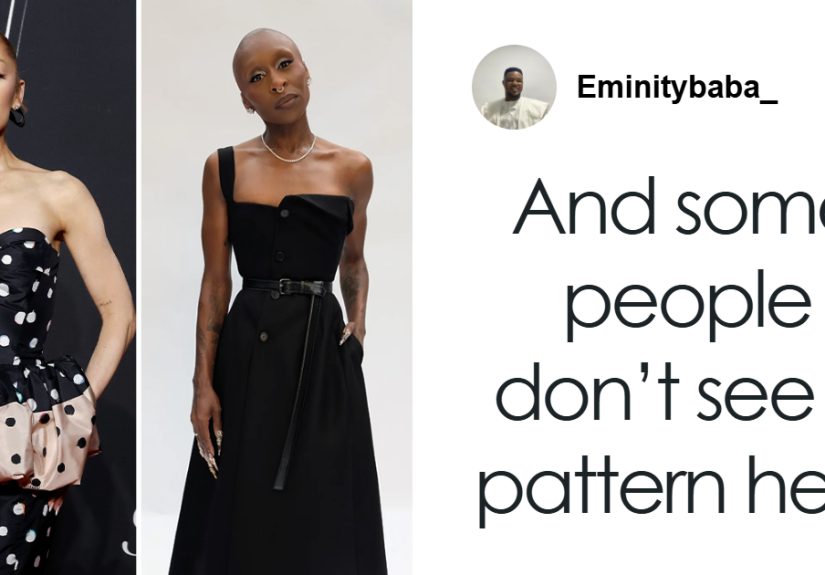
Cynthia Erivo’s appearance became part of the viral chatter too, but in a different way. Some viewers folded her into the same before-and-after conversation without recognizing how much of her look during the Wicked period was tied to artistic choices, character work, and her own evolving style. Erivo’s shaved head and often minimal-brow look were not evidence of some mysterious collapse. They were part role practicality, part beauty signature, and part personal expression.
That distinction matters because celebrity audiences often flatten all change into the same narrative. Hair is gone? Must be a crisis. Face looks different? Must be a problem. But Erivo has spoken openly about embracing a bald look and liking the freedom of it. For Wicked, the visual demands of becoming Elphaba also shaped how she presented herself. When people ignore that context, they turn deliberate styling into rumor bait.
It is a good reminder that not every before-and-after image is actually telling a health story. Sometimes it is telling a movie story. Sometimes it is telling a fashion story. Sometimes it is telling a “this person changed their glam routine and the lighting is weird” story. The internet, naturally, prefers the least boring option.
Are These “Health Concerns” Real, or Is the Internet Performing Concern?
There is a difference between compassion and body-policing
This is where the conversation gets uncomfortable but necessary. Public concern for someone’s health can be sincere. It can also become a socially acceptable way to obsess over someone’s size, face, weight, or perceived thinness without admitting that is what is happening. “I’m worried” can function as a moral permission slip for invasive commentary.
Health organizations have been clear for years that negative body image, appearance pressure, and weight stigma can harm mental well-being. Social media magnifies those effects because it encourages constant comparison and turns appearance into a scoreboard. The more people normalize commenting on bodies, the more they reinforce a culture where value gets tied to visible change. That is true for ordinary people, and it becomes an industrial-strength problem when the subject is a celebrity with millions of strangers watching.
So yes, concern can be real. But concern that turns into speculation, pile-ons, meme-making, and endless replay is no longer just concern. It is participation in the same machine that claims to care while making the harm louder.
Photos do not tell the whole story
Before-and-after photos are especially unreliable because they make different moments look like one clean narrative. But bodies are not PowerPoint slides. Styling changes. Cameras distort. Makeup shifts features. Stress shows up differently. Touring, filming, travel, and awards-season chaos can make anyone look more tired or more polished depending on the day. One frame can be glamorous, another can be brutal, and neither may represent a person’s actual condition.
This is why treating photos as proof is such a bad habit. The internet wants instant answers, but real life is annoyingly more complicated. A side-by-side image can suggest a difference. It cannot explain it. And when people rush to fill in that gap with assumptions, they are usually telling us more about online culture than about the person in the photo.
Why the Wicked Cast Became a Perfect Case Study in Modern Fame
Big fandoms create big projections
Wicked has always inspired passionate fans, and passionate fans are wonderful right up until they decide they know a performer’s body better than the performer does. The movie’s enormous fan base helped turn every interview, premiere, and promotional image into a larger conversation about friendship, performance, fashion, vulnerability, and, unfortunately, appearance surveillance.
There is also something uniquely emotional about Wicked as a story. It is about misunderstanding, public judgment, image management, and the gap between what people see and what is actually true. Ironically, that made the online reaction to the cast even more revealing. A film about how public narratives distort people ended up fueling a real-life example of public narrative distortion. That is not just ironic. That is practically the plot showing off.
Hollywood still worships transformation
Another reason these photos sparked so much conversation is that Hollywood has trained audiences to notice physical transformation as if it is a separate awards category. We are conditioned to applaud actors for becoming “unrecognizable,” then panic when they look “too different,” then praise them again if the change seems glamorous enough. It is a deeply inconsistent system, and celebrities are stuck living inside it.
In that environment, any visible shift can be over-interpreted. If the change fits a beauty ideal, it gets praised. If it feels unsettling or unfamiliar, it gets pathologized. That says less about the actor than it does about the audience’s comfort level with bodies that do not stay visually stable for public consumption. Hollywood may sell fantasy, but it also trains viewers to treat faces and bodies like branded assets. No wonder the discourse gets weird.
The Smarter Take on the Viral Photos
The real story is not just “they look different”
The smarter and more responsible takeaway is that the Wicked cast became the center of a familiar but increasingly ugly cycle: major fame leads to oversharing, oversharing leads to comparison culture, and comparison culture quickly turns into body commentary masquerading as concern. The photos were the spark, but the fuel was already there.
That does not mean the public has to pretend visual change never exists. People notice things. Of course they do. But there is a massive difference between noticing and narrating. Noticing is human. Narrating someone else’s health story from a red carpet image is a hobby the internet should retire immediately and perhaps launch into the sun.
Listening beats speculating
If audiences genuinely care about the well-being of public figures, the better move is to listen to what those figures have actually said. Grande has repeatedly argued for more gentleness around body talk. Erivo has been open about the intentionality behind her look and her comfort in it. Those direct statements carry more weight than a thousand reposted screenshots with dramatic captions and detective-board energy.
The internet may never stop turning celebrity photos into debate bait, but readers do have a choice. They can reward speculation, or they can reward context. They can keep clicking on shock language, or they can ask whether the story is reporting something real or simply monetizing discomfort. That difference matters, especially when the people in the frame are not fictional characters from Oz but real human beings trying to do their jobs while everyone else plays body analyst in the comments.
Extended Perspective: What This Kind of Viral Story Feels Like in Real Life
What makes stories like this hit so hard is that they do not stay in celebrity culture. They spill into ordinary life almost immediately. A person opens social media to check a trailer reaction, a red carpet clip, or maybe just to see a pink dress and a green manicure, and suddenly they are staring at a comparison post with hundreds of comments dissecting someone’s face and body. Even if the post is about a famous actor, the message travels outward: your appearance is public business, and everybody thinks they are entitled to weigh in.
That experience is familiar to a lot of people, especially young fans and heavy social media users. They see strangers zooming into cheekbones, shoulders, waistlines, and “before” photos from years ago, and they absorb the lesson even when nobody says it directly. The lesson is that any visible change can become a public referendum. The lesson is that beauty is never just beauty online; it becomes evidence, gossip, or concern. The lesson is that your body can be turned into a discussion topic before you even finish your morning coffee.
There is also something emotionally strange about the way this kind of discourse pretends to be caring while sounding so cold. A comment section might be full of phrases like “I hope she’s okay” or “this is worrying,” but stacked together under a giant side-by-side photo, those comments often feel less like support and more like spectatorship. It becomes a public performance of empathy where the main event is still somebody else’s appearance. The human being at the center of it starts disappearing, replaced by a viral talking point.
For fans, that can create a weird double bind. They may truly admire an actor, feel protective of them, and still get pulled into algorithm-driven conversations that are invasive by design. The same person who loves the music, the performance, or the film can end up contributing to a cycle that treats the star like a visual object instead of a person. That is part of why the Wicked discussion struck such a nerve. It exposed how easy it is for fandom to slide into fixation, and for fixation to get rebranded as care.
And in everyday life, people carry those habits with them. They compare old photos of classmates, coworkers, friends, exes, and even themselves. They learn to scan for differences before they learn to ask better questions. That is why the Wicked story matters beyond celebrity gossip. It is really about the social reflex to treat bodies like public text that must be interpreted, graded, and discussed. Once you see that pattern, the viral before-and-after collage stops looking like harmless entertainment and starts looking like a mirror reflecting a much bigger cultural problem.
Conclusion
The viral before-and-after photos of the Wicked cast did what viral photos usually do: they turned a real set of people into a giant internet Rorschach test. Some viewers saw glamour. Some saw stress. Some saw artistic transformation. Others saw a reason to speculate. But the most useful takeaway is not that the cast “looked shocking.” It is that public appetite for appearance-based commentary remains wildly out of control, especially when fame, fandom, and social media all collide.
Wicked may be a story about how easy it is to misunderstand someone from a distance, and the online reaction to its cast proved that lesson still applies offscreen. If readers want a better conversation, the fix is not complicated. Less diagnosing from photos. Less body commentary disguised as kindness. More context. More restraint. More listening. And maybe, just maybe, a little less pretending that a side-by-side collage on the internet is the same thing as insight.