Table of Contents >> Show >> Hide
- The First Question: What Problem Are You Trying to Solve?
- Does Misting Actually Raise Humidity?
- When Misting Is Useful (If You Use It Like a Tool)
- When Misting Backfires (Yes, Even on “Humidity Lovers”)
- So… Which Plants Actually Like Misting?
- What to Do Instead (Because Your Wrist Deserves Peace)
- If You Still Want to Mist, Here’s the Lowest-Risk Way
- FAQ: The Questions Plant People Ask at 2 A.M.
- Conclusion: Should You Mist Your Plants?
- Extra: Real-World Plant-Parent Experiences (What People Learn the Hard Way)
Somewhere in the great houseplant timelinebetween “I named my pothos” and “I own a tiny watering can for emotional support”
misting became the go-to move. A quick spritz. A little rainforest cosplay. A satisfying psssht that makes you feel like a responsible plant parent.
But here’s the twist: experts generally agree that misting is often more vibe than science… unless you’re doing it for the right reasons,
on the right plants, in the right conditions. In other words, misting can be helpfuljust not in the magical “instantly fixes humidity” way
social media sometimes suggests.
This guide breaks down what plant pros say about misting: when it’s useful, when it backfires, which plants actually like it,
and what to do instead if your home feels drier than a comedy club with a two-drink minimum.
The First Question: What Problem Are You Trying to Solve?
Misting is often prescribed as a cure-all, but plants have different needs that get mixed together:
- Humidity: Moisture in the air (what tropical plants crave).
- Watering: Moisture in the soil (what roots actually drink).
- Leaf hygiene: Dust and grime that block light (yes, plants can get “gross”).
- Pest pressure: Tiny freeloaders like spider mites and aphids.
- Propagation/seed starting: Keeping delicate cuttings or seedlings evenly moist.
Misting can help with some of those. It’s just not the one-button solution people hope it is.
Does Misting Actually Raise Humidity?
The short-lived “humidity boost” problem
In most typical homes, misting raises humidity for about as long as it takes for water to evaporatewhich is often just minutes.
That means a once-a-day spritz usually doesn’t move the needle in a meaningful way for your plants.
To keep humidity elevated through misting alone, you’d have to mist repeatedly throughout the day (and most of us have school, work,
and a life beyond becoming a full-time cloud machine).
When misting can matter more
Misting becomes more relevant when evaporation stays “local,” like in:
- Terrariums, cloches, and propagation boxes (semi-enclosed spaces hold moisture).
- Greenhouses (humidity lingers longer than in a drafty living room).
- Very tight plant groupings in a sheltered corner, away from vents.
If your plant setup is basically open-air and your HVAC is blasting, misting is usually a temporary surface wettingnot a true humidity solution.
When Misting Is Useful (If You Use It Like a Tool)
1) Cleaning leaves (aka “let your plant breathe”)
Dusty leaves don’t just look sadthey can reduce how much light a plant can use. A light mist can help loosen dust,
especially on plants with lots of leaf surface area (hello, rubber plants and fiddle-leaf figs).
That said, a damp microfiber cloth or a gentle shower is often more effective than repeated spritzing.
2) Pest managementsometimes
A light mist can annoy certain pests, but it’s not a reliable extermination plan.
Still, water-based “washing” is a legit strategy: many common houseplant pests can be reduced by rinsing foliage
with water, especially when paired with good follow-up care (quarantine, repeat treatments, and checking undersides of leaves).
Think of misting as the weak espresso shot of pest control; a rinse or shower is the full café latte.
3) Propagation and seedlings
Misting shines when you’re trying to keep delicate surfaces evenly moistlike newly planted seeds or fresh cuttingswithout blasting them
with a heavy pour of water that knocks everything over. Even then, the goal is consistent moisture, not constant wet leaves.
Many propagators focus misting on the surrounding environment or medium, and rely on covers (domes, bags, boxes) to hold humidity.
4) Air plants and certain epiphytes
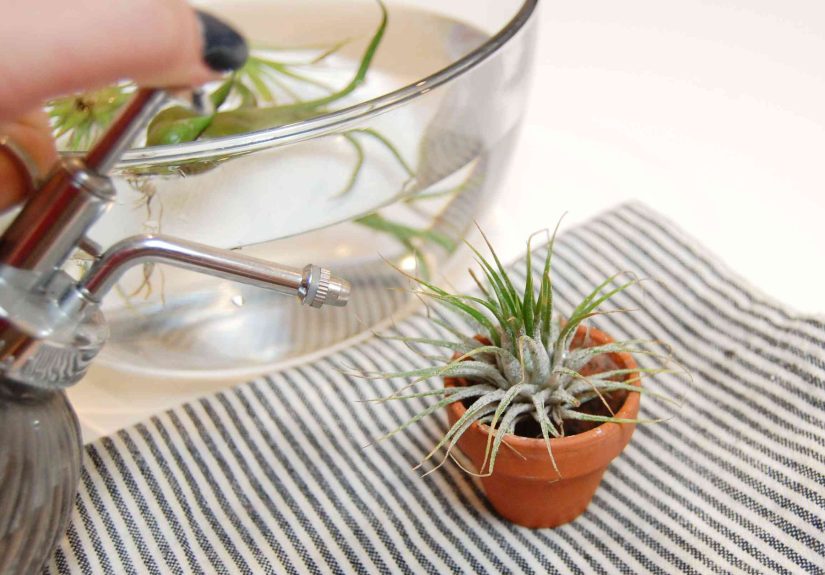
If you keep air plants (Tillandsia), misting can be part of the routineespecially in low humidity homes.
Some growers mist thoroughly and also rinse/soak periodically, since quick spritzes may not be enough on their own.
The key is letting them dry well afterward so they don’t stay wet for too long.
When Misting Backfires (Yes, Even on “Humidity Lovers”)
1) Leaf spot and other disease issues
Many fungal and bacterial problems love two things: wet leaves and stagnant air.
If your plant already has spotting, suspicious blotches, or a history of mildew, misting can make things worse by extending leaf wetness time.
That’s why many plant care resources recommend avoiding misting when foliar disease is present and focusing instead on air circulation,
spacing, and watering timing.
2) “Fuzzy leaf” plants: please don’t
Plants with fuzzy leaveslike African violetsare famous for hating wet foliage. Water can cling to tiny leaf hairs,
increasing the risk of spotting and damage. These plants can appreciate humidity, but they generally prefer it delivered through the air
(and smart placement) rather than droplets sitting on their leaves.
3) Crown rot hazards (especially orchids and rosettes)
Some plants have growth structures that trap waterlike the crown of a Phalaenopsis orchid or tightly layered rosettes.
Water sitting in those spots can raise the risk of rot. If you mist these plants, you must avoid spraying into the crown and ensure quick drying.
Many orchid experts emphasize humidity management and air movement over routine misting.
4) Mineral spots and “mystery residue”
If your tap water is hard, misting can leave white mineral specks that make leaves look like they walked through a flour fight.
In that case, using distilled or filtered water can helpor skipping misting and cleaning leaves occasionally instead.
5) The sneaky downside: it can distract from real watering needs
Misting feels productive, so it’s easy to confuse “I sprayed it” with “I watered it.”
But most houseplants take up water primarily through roots. If a plant is drooping because the soil is dry (or conversely, because roots are rotting),
misting the leaves won’t fix the cause.
So… Which Plants Actually Like Misting?
Let’s replace the one-size-fits-all advice with something more honest: some plants tolerate misting, some benefit from it in limited ways,
and some would like you to stop immediately.
Plants that may tolerate occasional misting (with good airflow)
- Ferns (Boston fern, maidenhairthough consistent humidity is better than droplets)
- Prayer plants (Maranta) and some Calathea/Goeppertia types
- Some palms (often more for comfort/cleaning than true humidity increase)
- Fittonia and other terrarium-friendly plants (best in semi-enclosed setups)
Plants that usually should NOT be misted
- Cacti and succulents (they’re built for dry air; wet leaves can invite rot/disease)
- African violets and other fuzzy-leaf plants
- Plants with active leaf spot or mildew issues
- Some orchids (risk of water pooling; humidity + air movement is typically preferred)
A quick “Mist or Skip” cheat table
| Plant Type | Misting Verdict | Better Move |
|---|---|---|
| Ferns | Sometimes | Humidifier / bathroom placement / group plants |
| Calathea / Maranta | Sometimes | Stable humidity + consistent watering routine |
| Succulents / Cacti | Skip | Bright light + deep, infrequent soil watering |
| African violets | Skip | Pebble tray / humidifier + bottom watering |
| Orchids (Phalaenopsis) | Usually skip routine misting | Humidity control + airflow; avoid water in crown |
| Air plants (Tillandsia) | Often yes | Mist thoroughly + periodic soak/rinse + dry well |
What to Do Instead (Because Your Wrist Deserves Peace)
If your goal is better humidity, the most reliable strategy is to measure firstthen adjust.
A simple hygrometer tells you what you’re working with (and prevents you from guessing wildly based on vibes alone).
1) Use a humidifier (the “grown-up answer”)
A room humidifier is usually the most effective option for humidity-loving houseplants. It creates sustained moisture in the air,
not just a brief burst. Bonus: many humans also feel better when indoor humidity isn’t desert-level.
(Just don’t crank it so high that your windows start sweatingtoo much humidity can invite mold.)
2) Group plants together
Plants release moisture through transpiration. Grouping them can create a slightly more humid microclimate,
especially if the group is away from drafts. It’s not rainforest-level, but it’s realand it costs $0.
3) Pebble trays (helpful, but modest)
Pebble trays can add a little local moisture as water evaporates. They tend to work best for smaller plants in calmer indoor areas.
The key is to keep the pot above the waterline so roots don’t sit in water (root rot is not a personality trait).
4) Choose naturally humid rooms
Bathrooms and kitchens often run more humid than bedrooms or living roomsespecially after showers or cooking.
If you have a bright bathroom, some tropical plants will act like you just upgraded them to a spa membership.
5) Keep plants away from vents
Heating and AC vents can dry plants out fast. Moving humidity-sensitive plants a few feet away from airflow can reduce leaf crisping
without changing anything else.
If You Still Want to Mist, Here’s the Lowest-Risk Way
If misting makes you happyand your plant is a good candidatedo it like a pro:
- Mist in the morning so leaves dry well before nighttime.
- Use tepid (room-temp) water, not icy “surprise!” water.
- Go for a fine mist, not big droplets that sit and linger.
- Don’t mist diseased plants or plants with existing leaf spot/mildew issues.
- Avoid fuzzy leaves (African violets) and avoid spraying into crowns/rosettes.
- Improve airflow (gentle circulation helps leaves dry faster).
- Keep the bottle clean (stagnant water + dirty sprayer = questionable science experiment).
- Use filtered/distilled water if hard water leaves spots on foliage.
And consider reframing misting as an occasional “leaf care” practice, not your main humidity plan.
FAQ: The Questions Plant People Ask at 2 A.M.
Will misting prevent spider mites?
Not reliably. Spider mites often thrive in hot, dry conditions, so better humidity can help a bit,
but misting alone usually isn’t enough. Washing foliage (especially undersides) and repeating treatments
tends to be more effective.
What humidity is “good” indoors?
Many houseplants do well around 40–50% humidity, and many indoor air quality guidelines
suggest keeping homes around 30–50% for comfort and to limit mold risk.
If your home is far below that in winter, a humidifier can help both plants and people.
Can plants absorb water through their leaves?
Some plants can take up moisture or nutrients through foliage in certain conditions (foliar feeding is a real practice),
but for most common houseplants, roots remain the main water pipeline.
That’s why misting doesn’t replace proper watering.
Conclusion: Should You Mist Your Plants?
If misting is your entire humidity strategy, experts would like to gently take the spray bottle out of your hand
and replace it with a hygrometer and a humidifier.
But misting isn’t “always wrong.” It can be useful for leaf cleaning, propagation, and certain plants (like air plants),
and it can be fine as an occasional practice for tropical foliageas long as leaves dry quickly and you’re not feeding
a fungus party.
The real win is matching the method to the goal: mist for surface-level benefits, and use sustained solutions for sustained humidity.
Your plants don’t need constant spritzing. They need smart, consistent careplus maybe a little pep talk now and then.
Extra: Real-World Plant-Parent Experiences (What People Learn the Hard Way)
If you’ve ever bought a mister and instantly felt like you graduated from “plant owner” to “plant conservator,” you’re not alone.
A lot of people start misting for the same reason: the air feels dry, leaf tips look crispy, and the internet says “humidity!”
So you spritz every morning like it’s part of your skincare routineexcept your fern didn’t ask for a facial.
The first common experience is the Winter Misting Sprint. Your heater kicks on, humidity drops, and suddenly your calathea
looks personally offended by your thermostat. You mist daily, but the leaves still curl. When you finally buy a $10 hygrometer,
you discover the air is sitting at 18% humidity. The mist helped… for a few minutes. The humidifier helped all day.
The lesson: misting can feel productive while doing almost nothing for the problem you’re actually trying to solve.
Then there’s the Spotty Leaf Surprise. You mist a plant that already has a few suspicious marksmaybe from old damage, maybe not.
A week later the spots spread, and now you’re Googling “leaf spot vs. sunburn” like it’s a final exam. This is where people learn that
wet leaves plus still air can be an open invitation for fungal or bacterial issues. After that, many plant owners switch tactics:
water earlier in the day, keep foliage dry, space plants out a bit, and add gentle air movement. Misting becomes occasional, not automatic.
Another classic is the Hard Water Confetti moment. You mist, the droplets dry, and your glossy green leaves suddenly look
like they’ve been sprinkled with powdered sugar. It’s not festiveit’s mineral residue. People often solve this by swapping to filtered
or distilled water for leaf care (or skipping misting and wiping leaves instead). Once you notice it, you can’t unsee it.
Some experiences are more positive. Propagation fans often have a “wait, this actually works” phase when misting is used correctly.
In a covered propagation box, a light mist keeps the environment evenly humid without drenching the medium. Cuttings stay perky,
new roots show up, and suddenly you’re the proud parent of 17 baby plants you did not plan for. In these setups, misting supports
humidity because the space is enclosed enough to hold itso the spritz isn’t instantly stolen by your HVAC system.
Air plant owners have their own storyline. Many try casual misting and wonder why their Tillandsia looks like a crunchy tumbleweed.
Then they learn the difference between a cute spritz and a thorough hydration routine: mist to runoff or soak/rinse on schedule,
followed by good drying. The “aha” moment is realizing misting isn’t inherently good or badit’s about whether the method matches
how that plant actually lives in nature.
Finally, there’s the Dusty Leaf Wake-Up Call. You rotate your plant for better light and realize the leaves are dull,
dusty, and not reflecting light the way they should. A gentle rinse or wipe makes the whole plant look healthier in five minutes.
People often keep misting afterwardbut now it’s for leaf maintenance, not as a pretend rainforest generator.
Put all these experiences together and the big takeaway becomes clear: the spray bottle isn’t the villain.
The villain is using misting as a default habit instead of a deliberate tool. When you know why you’re mistingcleaning, propagation,
air plants, or occasional comfortyou’ll get benefits without the mildew drama. And your plants? They’ll reward you with fewer crisp edges,
fewer mystery spots, and a general vibe of “fine, human, you may stay.”