Table of Contents >> Show >> Hide
- How Most Fans And Critics Rank The Seasons
- #1 – Season 3: The Victory Lap The Next Generation Deserved
- #2 – Season 1: Melancholy, Mystery, And Broken Heroes
- #3 – Season 2: Bold Ideas, Messy Execution
- Best Star Trek: Picard Episodes To Rewatch
- Biggest Fandom Debates Around Picard
- Where Star Trek: Picard Fits In Franchise History
- Experiences And Takeaways: Watching Picard As A Fan
Star Trek: Picard was never just “one more Trek show.” It was billed as a late-career encore
for one of sci-fi’s most beloved captains, a streaming-era epilogue to
The Next Generation, and a giant nostalgia torpedo aimed squarely at our hearts.
Over three seasons, the series delivered big emotions, Borg drama, time-travel chaos,
and more “engage!” moments than our warp cores could handle.
But now that the dust has settled and the Enterprise-D has (once again) ridden off into the
starfield, how do those three seasons stack up? Which episodes truly shine, and which arcs
feel like they came from the darkest timeline? Let’s dive into the
Star Trek: Picard rankings and opinions and sort through the legacy of
Jean-Luc’s final adventure.
How Most Fans And Critics Rank The Seasons
Before we argue in the comments like a room full of Klingon lawyers, it helps to look at
the broad consensus. Aggregator and fan-vote sites like Episode Ninja consistently put
Season 3 at the top, followed by Season 1, and finally Season 2 as the
weakest overall season based on thousands of viewer ratings.
Critical outlets that rank the seasons usually agree that Season 3 is the high point, but
they shuffle Seasons 1 and 2 differently depending on how much weight they give to theme,
structure, and character work. Some critics prefer the messy but ambitious character
study of Season 1 over the time-travel romp of Season 2, while others swap those two but
still keep Season 3 firmly in the winner’s circle.
So the simple version of our Star Trek: Picard season rankings looks like this:
- Season 3 – Emotional, nostalgic, and surprisingly cohesive.
- Season 1 – A bold, melancholic character study that doesn’t always land.
- Season 2 – Great ideas, standout moments, but very uneven overall.
Of course, that’s just the skeleton. Let’s flesh it out with some opinions, context, and
a healthy dose of nerdy nitpicking.
#1 – Season 3: The Victory Lap The Next Generation Deserved
Why Season 3 Sits On The Throne
Even if you bailed during earlier seasons, there’s a good chance you came back for
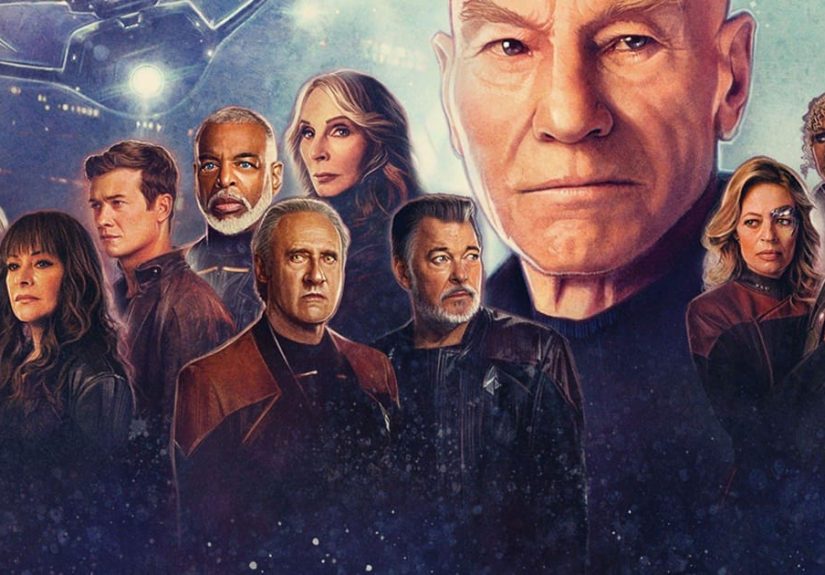
Star Trek: Picard Season 3. This final run reunited the core
TNG cast, rolled out the Enterprise-D like a classic car at a convention,
and wrapped its story with an unapologetically crowd-pleasing finale.
Critics responded accordingly. Season 3 earned a sky-high approval rating and strong
average scores on major review aggregators, with summaries praising it as a
“getting the band back together” victory lap that finally captured the feeling of
classic Star Trek while embracing modern storytelling.
Fans seem to agree: fan-vote rankings typically place Season 3 at the top, with the final
episode “The Last Generation” and penultimate “Võx” routinely ranking among the
highest-rated episodes of the series.
What Season 3 Does Right
-
Clear emotional arc: Picard’s journey with his son Jack, his
complicated feelings about legacy, and his reconnection with his old crew give the
season a strong emotional backbone. -
A real sense of stakes: The Borg plot and the threat to Starfleet
feel big and cinematic without losing sight of the characters at the center. -
Character payoffs: Data’s resolution, Worf’s evolution into a
dryly hilarious pacifist-warrior, and Beverly Crusher finally getting the spotlight
all give long-time fans real closure. -
Production values: The show leans into movie-level visuals, tense
starship set pieces, and a musical score that intentionally echoes classic
Next Generation and film cues.
Where Season 3 Stumbles
Season 3 is not perfect, even if our nostalgia-soaked hearts want it to be. Common
criticisms include:
-
Heavy nostalgia dependence: The season leans hard on familiar faces,
ships, and musical stings. Some critics argue it turns into a greatest-hits reel
rather than a truly new story. -
Dark visuals and fan-service overload: The moody lighting and
constant references can feel like they’re designed more for reaction videos than
for casual viewers. -
Villain logic: As with many modern franchise finales, if you stare
too closely at the Big Bad’s plan, you may begin to hear the faint sound of a
writer’s room yelling “don’t worry about it, it’s cool.”
Still, even the harsher critics often admit that Season 3 delivers a satisfying,
emotionally resonant farewell. If you want to feel like a kid again watching
new TNG stories, this is the season you cue up first.
#2 – Season 1: Melancholy, Mystery, And Broken Heroes
The Bold, Sad Reintroduction Of Jean-Luc
Star Trek: Picard Season 1 surprised a lot of people by refusing to
give us flawless Admiral Picard striding heroically onto the bridge. Instead, we meet
an older, guilt-ridden man who has stepped away from Starfleet after a moral stand
gone wrong. The vineyard is gorgeous; his interior life is a dumpster fire.
Thematically, Season 1 is about failure, regret, and the cost of living up to your
own ideals in a galaxy that doesn’t always cooperate. Critics noted how the season
leans into the question of what happens when Starfleet itself feels compromised,
and how a once infallible captain copes when his best wasn’t good enough.
At the same time, the Soji/Data storyline gave the show a mystery hook, tying the
new synth characters back to one of Picard’s most meaningful relationships:
his friendship with Data and the big questions about artificial life that
defined many of his best TNG episodes.
Season 1’s Strengths
-
Character study of a legend: We see Picard frail, angry, and
unsure, which can be jarring but makes his decision to get back in the game feel
earned. -
New crew with chemistry: Raffi, Rios, Jurati, and Elnor may not
have the instant iconic status of the TNG crew, but they add texture and
modern messiness to Picard’s world. -
Strong individual episodes: Episodes like “Nepenthe,” which
reunites Picard with Riker and Troi, are frequently singled out as emotional
highlights by fans and critics alike.
Where Season 1 Loses Viewers
For some long-time Trekkies, Season 1 felt like too sharp a tonal shift: darker,
more cynical, and more serialized than they expected from a show with “Picard” in the title.
The plot also leans on mystery box structure and late-game exposition dumps. The finale,
while emotional, doesn’t fully escape the feeling that the series tried to juggle too
many ideas at once.
Still, if you enjoy character-driven sci-fi that’s willing to let its heroes be
damaged and wrong sometimes, Season 1 has a lot to recommend it. In our rankings,
it nabs second place because its emotional riskswhile unevenfeel ambitious and
memorable.
#3 – Season 2: Bold Ideas, Messy Execution
The Season Everyone Loves To Argue About
On paper, Star Trek: Picard Season 2 sounds like a slam dunk:
Q returns for one last trial, we get an alternate timeline, a time-travel mission
to 21st-century Earth, and a deeper dive into Picard’s childhood trauma. Early
episodes like “The Star Gazer” and “Penance” were highly rated by fans and raised
expectations for a tight, twisty season arc.
Then the middle stretch happened.
Many viewers felt the story stalled out in contemporary Los Angeles, wandering
between subplots (ICE detentions, gala infiltrations, Soong drama, Borg politics)
without enough narrative propulsion. The finale tries to tie together Picard’s
psyche, Q’s final gift, and the Borg’s new status quo, but the landing doesn’t
fully stick for a lot of fans. User reviews and forum discussions frequently label
Season 2 as the weakest of the three, citing bloated plotting and tonal whiplash.
What Season 2 Gets Right
-
Q and Picard’s goodbye: Their final scenes together hit hard,
reminding us why this relationship is one of Trek’s best god-vs-mortal dynamics. -
Agnes and the Borg Queen: Their weird, uneasy alliance gives us
one of the most original Borg storylines in franchise history. -
Ambition: Season 2 genuinely reaches for big themes:
destiny vs. choice, breaking generational trauma, and the idea that the future
isn’t just about tech, but about compassion.
Why It Still Ranks Last
The main problem is pacing and focus. Season 2 wants to be a time-travel romp,
a psychological character study, a social commentary about immigration and climate,
and a Borg reinventionall in ten episodes. Some plot threads simply vanish or resolve
too neatly, making the season feel like a patchwork of great scenes rather than a
satisfying whole.
In short: Season 2 is the kid in class with brilliant ideas who turns in the essay
at 3 a.m. with typos and a missing conclusion page. You can see what it was trying
to be, but it’s hard to give it top marks.
Best Star Trek: Picard Episodes To Rewatch
Rankings aren’t just about seasonsepisodes matter, too. Fan-vote lists and media
rankings tend to push a familiar group of standouts to the top:
-
“The Last Generation” (Season 3) – The finale is widely rated as
the best episode of the series, delivering an emotional, action-heavy farewell
to the TNG crew that still makes grown nerds cry into their Earl Grey. -
“Võx” (Season 3) – The huge twist around Jack Crusher and the
Borg, plus a full-scale Starfleet nightmare, makes this the dramatic high point
of the show’s final arc. -
“No Win Scenario” (Season 3) – A tense bottle episode wrapped in
a character study, often cited by fans as one of the best modern Trek hours period. -
“Nepenthe” (Season 1) – A quiet, heartfelt reunion with Riker
and Troi that explores aging, grief, and found family on a rustic planet with
really good pizza. -
“The Star Gazer” (Season 2) – A punchy, confident season opener
that convinced many viewers Season 2 was going to be a masterpiece, even if the
rest of the season didn’t fully follow through.
If you don’t have time to rewatch all 30 episodes, cherry-picking these entries
gives you a solid sampler platter of what Picard does best.
Biggest Fandom Debates Around Picard
“Is It Really Star Trek?”
One of the loudest debates is whether Picard “feels like Star Trek.” Some
fans argue that the swearing, darker tone, and serialized, mystery-box plotting
push the series too far from the optimistic, episodic structure of earlier shows.
Others counter that Trek has always evolved with its era, and that grappling with
trauma, institutional failure, and the scars of the past is exactly what modern
Trek should be doing.
Nostalgia vs. New Stories
Season 3 turned up the nostalgia dial so high it almost broke off. For some viewers,
this was pure joy: familiar faces, classic ships, and a chance to say goodbye
properly. For others, it felt like fan-service overload, crowding out new characters
and ideas. The sweet spot, many argue, lies somewhere between the rawness of Season 1
and the comfort food of Season 3.
Which Season Is Actually The Worst?
While our ranking puts Season 2 at the bottom, there are fans who insist Season 1
is weaker due to its uneven pacing and sometimes bleak tone, while others feel
Season 2’s structural issues overshadow its strong character beats. Polls and forum
threads reflect this divide, but the one thing almost everyone agrees on is that
Season 3 sits at the top. The fight is mostly about who gets second place and who
has to take the metaphorical redshirt.
Where Star Trek: Picard Fits In Franchise History
Picard occupies a unique place in the
Star Trek timeline. It’s both a sequel to
The Next Generation and the TNG films, and a bridge to the new wave of
streaming-era Trek like Discovery and Strange New Worlds. It
explores the late-life consequences of earlier adventures, the political fallout
of big galactic events, and the emotional cost of being a legend.
In many ways, it feels less like a traditional Starfleet ensemble show and more
like a prestige character drama that just happens to involve Borg cubes and warp
drives. Whether that approach works for you depends on what you come to Trek for:
the philosophy and optimism, the character arcs, the space battlesor ideally,
a messy but heartfelt mix of all three.
Experiences And Takeaways: Watching Picard As A Fan
Beyond rankings and hot takes, Star Trek: Picard is also an
experienceespecially if you grew up with Jean-Luc as your captain. The show
asks you to sit with the uncomfortable idea that your childhood hero didn’t
walk off into a perfect sunset. Instead, he made mistakes, lost people,
grew bitter, and then had to choose whether to risk his heart one more time.
Watching Season 1 in real time, week by week, felt almost like catching up
with an old friend you hadn’t seen in decades. At first, it’s disorienting:
he’s older, more fragile, and a little lost. But as the season goes on, you
recognize the classic Picard underneaththe moral backbone, the compassion,
the stubborn refusal to abandon those in need. When he delivers a speech,
the room still goes quiet. The voice might be raspier, but the core is intact.
Season 2, for all its issues, was the kind of viewing experience where you
could feel the possibilities in every teaser and trailer. Q’s return teased
philosophical fireworks. The time-travel setup promised a blend of social
commentary and character introspection. Many of the early episodes worked
beautifully in isolation: tense, weird, and playful in a way only Trek can be.
The frustration came later, as you realized the season wasn’t going to tie
all of its big swings into a clean, satisfying whole. It’s like watching a
brilliant musician improvise a solo and then forget how to end the song.
Then Season 3 arrived and, for many fans, turned Thursday nights (or whatever
your release day was) into a ritual again. Social feeds lit up with screenshots
of starships, all-caps reactions to plot twists, and debates about whether the
Enterprise-D’s bridge lighting should count as a character in its own right.
The season became an event, not just a show. It felt like sitting in a packed
theater of fellow Trekkies, even if you were actually watching alone on a laptop.
The final episodes, especially “Võx” and “The Last Generation,” land with a weight
that only decades of storytelling can create. When Picard steps back onto the
Enterprise-D bridge, or when the core crew plays poker one last time, it’s not just
fan serviceit’s closure. You can almost feel the show giving you permission to
let go, to say, “We had a good run. It’s okay to move on.”
That might be Picard’s most important contribution to the franchise.
It doesn’t just revisit the past; it models how to honor it without getting
trapped there. Picard learns to make peace with his regrets, reconnect with
his chosen family, and accept that his legacy is bigger than any single mission.
For fans, the message is similar: your love for the old shows is real and valid,
but there’s still room in your heart (and your streaming queue) for new stories,
new crews, and new ways of boldly going.
In the end, whether you rank the seasons 3–1–2 or 3–2–1, most viewers tend to land
on the same conclusion: Star Trek: Picard is uneven, emotional,
sometimes frustrating, often beautiful, and absolutely worth the journey
especially if you’ve ever whispered “make it so” to an automatic door.