Table of Contents >> Show >> Hide
- Quick context: What is ‘Happy Gilmore 2’ and why is everyone watching?
- The scene that launched a thousand theories
- Why Swifties thought Taylor Swift was the bear
- Reality check: credits exist for a reason
- So… did Taylor Swift deny it?
- Why the theory was irresistible anyway
- If you want to spot a real cameo (without spiraling)
- What this says about Swifties, Taylor Swift, and pop culture right now
- Conclusion
- Extra: of Swiftie “Experience” Around the Happy Gilmore 2 Bear Theory
If you’ve ever wondered what would happen if the internet combined (1) a beloved Adam Sandler comedy sequel, (2) a very specific bear costume, and (3) the
world’s most detail-oriented fandom… congratulations, you’re living in it.
When Happy Gilmore 2 landed on Netflix, a certain scene featuring Travis Kelce and an unexpectedly intense bear moment set off a chain reaction:
Swifties began theorizing that Taylor Swift herself was inside the suitplaying the last character anyone would expect: “the bear.”
The theory is funny, chaotic, and oddly on-brand for modern fan culture. It’s also a useful case study in how celebrity cameos, social media breadcrumbs,
and fandom pattern-recognition can turn a few seconds of screen time into a full-blown pop-culture investigationcomplete with “evidence,” counter-evidence,
and (of course) a final word from Swift herself.
Quick context: What is ‘Happy Gilmore 2’ and why is everyone watching?
Happy Gilmore 2 is Netflix’s long-awaited sequel to the 1996 golf-comedy classic, bringing Adam Sandler back as the hockey-player-turned-golfer.
The follow-up leans into nostalgia, big comedic swings, and a cameo-heavy “spot-the-famous-person” energy that practically begs viewers to rewatch scenes
like they’re studying for finals.
Netflix’s own coverage highlights a stacked lineup of returning favorites and new faces, including celebrity cameos, athletes, and musiciansmaking it
totally reasonable that viewers would assume there’s always another surprise hiding in the background.
The scene that launched a thousand theories
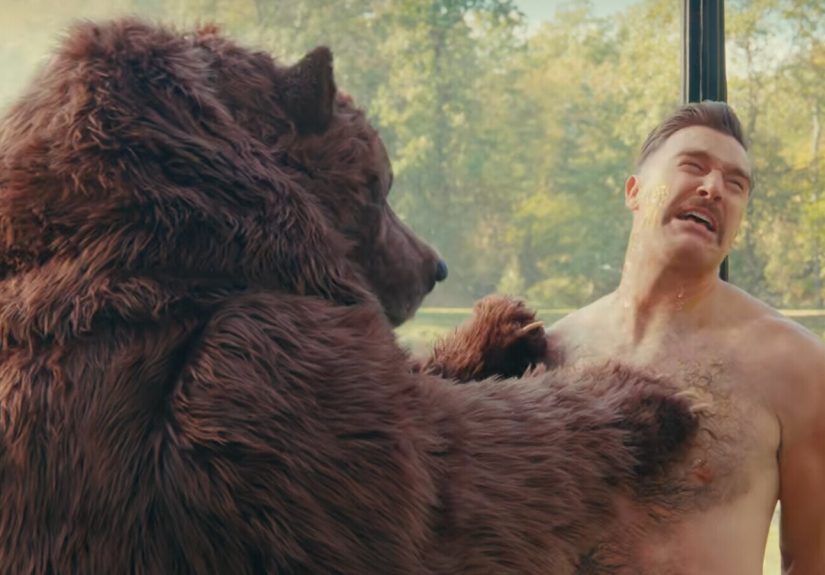
The Swiftie theory centers on a memorable sequence featuring Travis Kelcewho appears in the film as part of its cameo parade. In the moment that got the
internet buzzing, Kelce’s character ends up in a ridiculous situation involving honey and a bear suit. People laughed, rewound, laughed again… and then
someone asked the question that turned a gag into a conspiracy board:
“Wait. Is that Taylor?”
If you’re thinking, “That sounds unhinged,” you’re not wrong. But it’s also exactly how modern celebrity chatter works: a strange, specific visual + a famous
couple + a movie designed for replay value = instant speculation fuel.
Why Swifties thought Taylor Swift was the bear
Swifties didn’t just throw a dart at a list of celebrities and hope it stuck. The theory grew legs (and, apparently, paws) because it fit a familiar pop-culture
template: a secret cameo that’s technically possible, delightfully absurd, and just hidden enough to feel like an “Easter egg.”
1) The “it’s hidden on purpose” cameo mindset
Happy Gilmore 2 is packed with cameos, which trains viewers to look for more. When a movie openly winks at the audience, people start scanning for
bonus surprisesespecially when the cameo in question would be a headline-maker.
2) The Travis Kelce connection
Kelce being in the movie is already a real-world crossover. So fans reasoned: if Travis is on-screen, Taylor is at least adjacent to the production
in some waywhether through set visits, friendly drop-bys, or a quick “blink-and-you’ll-miss-it” appearance that keeps everything playful.
3) The “body language” and costume logic
A suit hides the face, which turns the internet into the world’s most overconfident posture analyst. Fans debated height, movement, and the general vibe of
the performerbecause if you can’t identify the person, you can at least argue about their knees.
4) Social media hype amplified the story
Coverage of the rumor spread fast across entertainment sites and social platforms, because it’s the kind of pop-culture plot twist that reads like a jokeuntil
people start treating it like a puzzle. Once mainstream outlets summarize the theory, it gains “maybe this is real?” momentum.
Reality check: credits exist for a reason
Here’s where the mystery runs into something less glamorous but far more powerful than any fandom theory: film credits.
Entertainment reporting pointed to the credited “bear performer” on IMDb: stuntman Brandon Alan Smith. In other words, there’s a named,
credited professional attached to the rolemaking the “Taylor in a bear suit” scenario much less likely.
And there’s also the boring-but-important scheduling reality. Reporting noted that the movie’s late-2024 filming timeline didn’t line up neatly with the idea of
Swift secretly being on set for a concealed gag cameo (especially one that would require wardrobe, rehearsal, and coordination).
So… did Taylor Swift deny it?
Yes. After the rumor made the rounds, Swift addressed the speculation and denied being the bear. The “honored but nope” vibe is pretty consistent with how
celebrities handle viral theories: acknowledge the compliment, confirm reality, and let the internet find its next hobby.
Why the theory was irresistible anyway
Even debunked, the rumor makes sense as a cultural momentbecause it taps into three big trends that define entertainment in the streaming era:
-
Cameo culture as marketing: Streaming comedies increasingly rely on surprise appearances that create shareable clips and headline-friendly
lists (the “Waitwas that…?” effect). -
Fandom as detective work: Swifties are famous for pattern recognitionlyrics, outfits, dates, emojis, you name it. That energy doesn’t turn off
just because the setting is a golf comedy. -
Couple mythology: When two major celebrity ecosystems overlap, fans naturally imagine “crossovers” everywherefrom sports to movies to
surprise skits.
If you want to spot a real cameo (without spiraling)
The internet will always internet, but if you want a quick framework for separating a fun theory from likely reality, try this:
Look for these “more likely true” signals
- Credible trade reporting (e.g., major entertainment outlets or official Netflix materials).
- Clear production evidence: set photos, call sheets, or consistent reporting across outlets.
- Credits that match the claim (or at least don’t contradict it).
Watch out for these “probably wishcasting” signals
- “I can tell by the walk” argumentsfun, but rarely definitive.
- Overinterpreting a single emoji or vague social post.
- Claims that require a major secret with zero leaksespecially on a high-profile production.
What this says about Swifties, Taylor Swift, and pop culture right now
The best part of this whole saga is that it isn’t really about whether Taylor Swift wore a bear suit. It’s about how modern audiences participate in
entertainment.
Twenty years ago, a weird cameo rumor might have stayed a throwaway message-board post. Today, it becomes a mini news cycle: a clip circulates, fans build a
theory, entertainment sites summarize it, a few outlets investigate credits, and then the celebrity respondsturning one comedic beat into a community event.
And Happy Gilmore 2 is basically designed for that. Between its nostalgia hooks and its cameo-friendly structure, it invites “pause and zoom” behavior.
Swifties just brought their usual level of dedicationand applied it to an extremely unserious bear.
Conclusion
Swifties theorizing that Taylor Swift played a surprise character in Happy Gilmore 2 was peak 2020s pop culture: funny, fast-moving, and powered by
fandom creativity. The bear theory had just enough plausibility to be entertainingespecially with Travis Kelce in the mix and a film built on cameos.
But the most grounded reporting points to a credited bear performer (and Swift herself ultimately denying it), making this one a lovable internet moment
rather than a hidden blockbuster reveal.
Still, if a rumor can make thousands of people rewatch a single scene, argue about costume physics, and collectively scream “IT’S HER” at their TVs… that’s not
nothing. That’s modern fandom doing what it does best: turning entertainment into a shared sportsometimes with more intensity than the actual golf.
Extra: of Swiftie “Experience” Around the Happy Gilmore 2 Bear Theory
One of the most recognizable “Swiftie experiences” is the moment a totally ordinary piece of pop culture becomes a collaborative investigation. It usually starts
the same way: someone posts a clip with a caption like “Tell me I’m not crazy,” and within minutes the comment section turns into a rapid-fire workshop of
frame-by-frame analysis. In the Happy Gilmore 2 bear theory, that experience looked like fans replaying the same seconds over and overpausing on the
bear’s entrance, debating posture, timing, and the performer’s physicality, and then escalating to the classic Swiftie question: “What if it’s a secret on purpose?”
Another part of the experience is the social choreography of “evidence collecting.” One person references a headline, another pulls up a cast list, another
connects the moment to a broader pattern (like surprise appearances or inside jokes), and suddenly the theory gains structure. It stops being a random guess and
becomes a story: why it could happen, how it could be hidden, and why it would be funny. Even skeptics get involvednot necessarily to shut it down, but to
sharpen the debate. In the best versions of this dynamic, it’s less “argument” and more “group puzzle,” where everybody gets to contribute a piece.
There’s also the emotional experience of “the crossover.” Fans of Taylor Swift and fans of comedy cameos don’t always overlap perfectly, but a rumor like this
creates a temporary shared universe: sports fans talking about a Netflix comedy, comedy fans learning Swiftie terminology, and Swifties comparing the situation to
other moments where identity felt hidden or coded. It’s part excitement, part comedy, and part community-buildingbecause it gives people something light to rally
around that isn’t a serious headline or a heavy debate.
And then comes the final Swiftie ritual: the “okay, but…” phase. Even after debunks appearcredits get checked, timelines don’t match, the celebrity denies it
the conversation doesn’t instantly vanish. It morphs. Fans pivot to appreciating the absurdity, meme the moment, and keep the clip alive as a fandom inside joke.
The bear stops being “proof of a cameo” and becomes a symbol of the fandom’s creativity: a reminder that Swifties can turn anything into a storyline,
even a golf-movie gag that was never meant to be anything more than a ridiculous laugh.
In that sense, the most authentic “experience” isn’t whether Taylor Swift wore the suitit’s the way the theory created a shared moment of joy. People bonded over
rewatches, laughed at the sheer weirdness of the idea, and participated in a kind of playful collective storytelling. The internet will move on, as it always does,
but the bear theory will live on in the exact way pop culture lives now: as a clip, a meme, and a memory of the week everyone briefly became an expert in bear
performer identification.