Table of Contents >> Show >> Hide
- Why This Story Hit So Many People
- The Psychology Behind Creative Coping
- What Self-Harm Can Signal (And What It Doesn’t)
- The “Safer Alternatives” Toolkit (That Doesn’t Feel Like a Lecture)
- When Coping Skills Aren’t Enough (And That’s Okay)
- How to Help a Teen Without Accidentally Making It Worse
- Social Media: A Double-Edged Paintbrush
- Why Van Gogh Is the Perfect Symbol Here (Yes, Really)
- Conclusion: Choose Creation, Then Choose Support
- Extra: of Real-World “I Tried This” Experiences (Art as a Safer Outlet)
Content note: This article discusses teen mental health and self-harm in a non-graphic, informational way. If you or someone you know feels unsafe or needs immediate support in the U.S., you can call or text 988 (the Suicide & Crisis Lifeline). If you’re outside the U.S., contact your local emergency number or a trusted crisis line in your country.
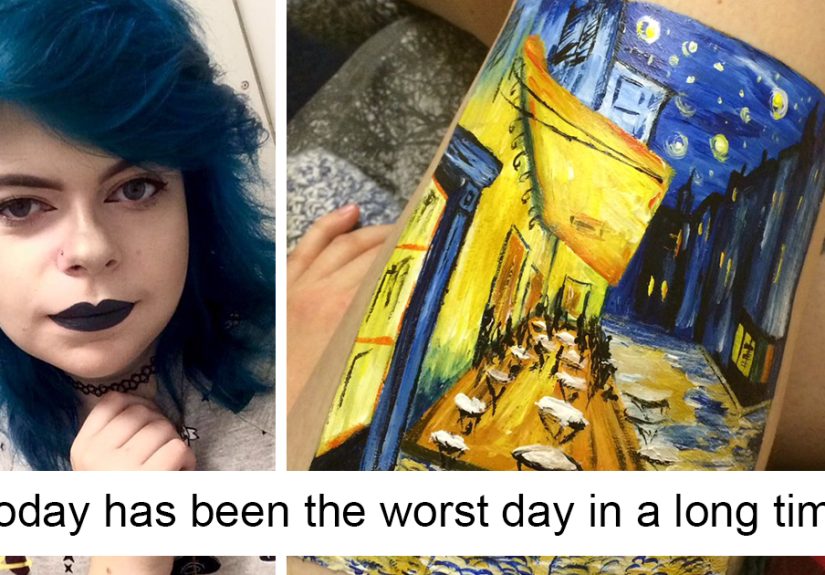
There are moments when the world feels like a loud room and your brain is the one holding the megaphone. In one widely shared story, a young artist faced a tough wave of emotion and chose a surprising detour: she recreated a Van Gogh painting on her leg using paintturning her body into a temporary canvas, not a battleground.
That single choicemaking something instead of breaking somethinglanded like a tiny flare in the fog for thousands of people. And while no viral post can replace real support, it can spotlight something deeply true: creative coping isn’t “cute.” It can be powerful, practical, and sometimes life-saving.
Why This Story Hit So Many People
When people hear “teen” and “Van Gogh,” they might expect an art class assignment or a bedroom poster. Instead, they got a message: “I’m struggling, and I’m trying.” That honesty feels rare online, where everyone’s allegedly thriving, exfoliating, and achieving inner peace before breakfast.
What made the moment memorable wasn’t perfection. It was the intention. The teen didn’t pretend everything was fineshe redirected the energy into a safer outlet. That matters because self-harm (sometimes called nonsuicidal self-injury, or NSSI) is often about coping with overwhelming feelings, not about “attention” or “drama.” People may use it to manage intense emotions, numbness, stress, or self-criticism. The feelings are real, even when the coping strategy is harmful.
So when someone swaps harm for artespecially in a way that’s visible and relatableit gives others a new idea to hold onto: “Maybe I can try something different, too.”
The Psychology Behind Creative Coping
Let’s translate the “painted Van Gogh on her leg” idea into plain human terms. Creative coping works because it can change what’s happening in your brain and body in the momentand build skills that help long-term.
1) It creates a pause (and pauses are underrated superheroes)
Urges come in waves. A healthy coping move doesn’t have to solve your whole life; it just has to help you ride the wave without getting hurt. A creative taskmixing colors, sketching shapes, tracing outlinesbuys time. That time can be the difference between a choice you regret and a choice you’re proud of later.
2) It shifts your nervous system
When you’re emotionally flooded, your body often acts like it’s in danger: fast thoughts, tight chest, restless hands, “I need relief now” energy. Creative activities can help regulate that stress response by engaging attention, breathing, and sensory focus. Even simple art-making can encourage a calmer rhythmlike giving your brain a softer playlist to follow.
3) It turns feelings into something you can see
Big emotions can feel like a messy drawer you’re scared to open. Art lets you dump the drawer out onto the table in a safer way. A storm becomes a swirl of paint. A heavy mood becomes a charcoal shadow. You’re not “being dramatic”you’re translating.
4) It builds mastery (aka “I can do hard things” evidence)
Finishing a drawing, coloring a section, or copying a famous painting (even imperfectly) creates a small win. And small wins are not small when your brain is telling you nothing will ever get better. Creative coping says: “I can make something. I can steer.”
What Self-Harm Can Signal (And What It Doesn’t)
Self-harm is a serious sign that someone is struggling and needs support. It can be connected to stress, anxiety, depression, trauma, bullying, perfectionism, identity stress, or feeling numb or overwhelmed. Importantly, self-harm and suicidal intent are not the same thingbut ongoing self-harm is still a risk factor for more severe crises and deserves real attention and care.
Let’s retire a few myths while we’re here:
- Myth: “It’s just a phase.”
Reality: It’s a coping strategy that can become a habit. Habits can change, but they need support. - Myth: “They’re doing it for attention.”
Reality: Even if someone wants attention, that usually means they need care, safety, and connectionnot shame. - Myth: “If they can stop once, they can stop anytime.”
Reality: Urges can be intense. Recovery is a process, not a switch.
If you’re a teen reading this: you’re not “broken.” If you’re a parent or friend: don’t panic, but don’t ignore it either. Calm support is the move.
The “Safer Alternatives” Toolkit (That Doesn’t Feel Like a Lecture)
Creative coping doesn’t have to be museum-worthy. The goal isn’t to become Van Gogh overnight. The goal is to get through the moment safely and build healthier coping skills over time.
Art-based alternatives (inspired by the Van Gogh leg painting moment)
- Body-safe drawing: Use skin-safe markers or body paint to draw patterns, symbols, or tiny scenes. Keep it temporary and gentlethink “art project,” not “test of toughness.”
- Recreate a masterpiece (your way): Pick a small section of a famous painting (stars, windows, flowers) and copy it on paper, canvas, or a sketchbook page.
- Color mapping: Choose a color for each feeling (blue = heavy, yellow = hopeful, red = angry). Fill shapes with your “emotion palette” and watch what emerges.
- Texture therapy: Try clay, kinetic sand, or collage. Cutting out magazine shapes (safely, with supervision if needed) can be oddly satisfying in a “my brain can breathe again” way.
- Mini art sprints: Set a timer for 5–10 minutes: draw only spirals, only dots, only clouds, only lines. Your brain loves simple rules when everything feels chaotic.
Fast, non-art coping skills (because not every crisis arrives with supplies)
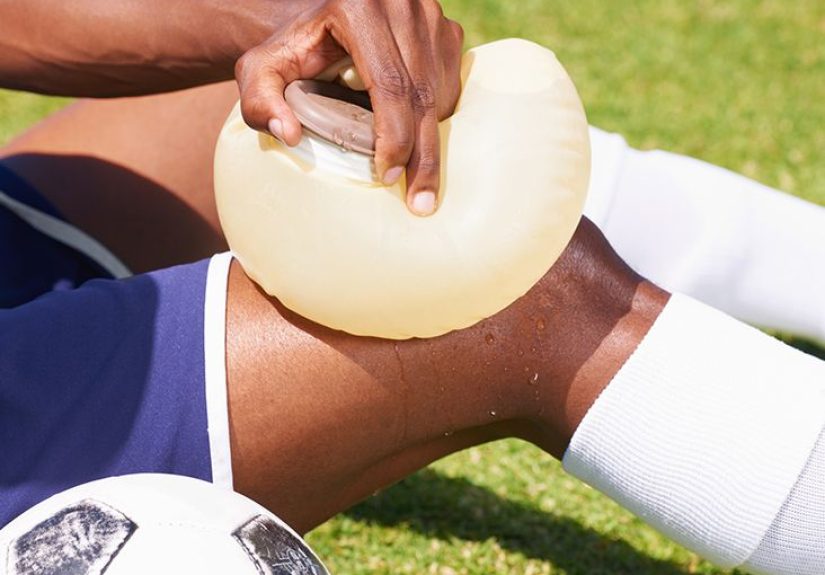
- Cold reset: Hold a cold pack or splash cool water on your face to help interrupt spiraling stress.
- Grounding: Name 5 things you see, 4 you feel, 3 you hear, 2 you smell, 1 you taste.
- Move the energy: Wall push-ups, a brisk walk, stretching, or dancing like nobody’s watching (and if they are watching, make it weirder to assert dominance).
- Write the messy draft: Journal the unfiltered version for 3 minutes. No grammar. No censorship. Then write one sentence you’d say to a friend in the same situation.
- Connection check: Text someone you trust: “Hey, can you talk for a minute?” You don’t have to explain everything to deserve support.
When Coping Skills Aren’t Enough (And That’s Okay)
Creative coping is a helpful bridge, but it’s not the whole road. If self-harm urges show up repeatedly, getting professional support can make a huge difference. Therapies that build emotion regulation and distress-tolerance skillslike DBT (Dialectical Behavior Therapy)are commonly recommended. Counseling can also help identify triggers, treat underlying anxiety or depression, and replace harmful coping patterns with healthier ones.
Support can look like:
- A therapist who understands teen mental health and self-harm recovery
- A pediatrician or primary care clinician who can screen and connect you to services
- School counselors or mental health staff who can help build a safety plan
- Family support focused on listening and problem-solving (not punishment)
When to get urgent help
If someone feels unsafe, can’t commit to staying safe, or is in immediate danger, it’s time to involve emergency support. In the U.S., you can call or text 988. If there’s immediate danger, call emergency services right away.
How to Help a Teen Without Accidentally Making It Worse
If you’re a parent, caregiver, teacher, or friend, here are approaches that tend to help:
Do: stay calm and curious
Try: “I’m really glad you told me. I’m here. Can you help me understand what you’ve been feeling?”
Do: focus on safety, not punishment
Threats and shame usually increase secrecy. Support and structure reduce it.
Do: make the environment easier
That might mean reducing stressors, setting up check-ins, supporting sleep routines, and encouraging healthier coping tools (including creative outlets).
Don’t: demand a promise that fixes everything
Instead of “Never do that again,” try “When you feel overwhelmed, let’s find a plan that helps you get through it safely.”
Social Media: A Double-Edged Paintbrush
Online support can be genuinely encouragingpositive comments, “me too” solidarity, and people sharing coping ideas. But social media can also amplify stress, comparison, and intense content. Healthy coping sometimes includes taking breaks from scrolling and focusing on real-life support and routines.
Here’s a good rule: if content leaves you feeling heavier, anxious, or trapped in a loop, step away and do something groundingwalk, stretch, message a trusted person, or make something with your hands.
Why Van Gogh Is the Perfect Symbol Here (Yes, Really)
Van Gogh’s work is full of movementswirling skies, glowing windows, bold color choices that feel like emotions with a paintbrush. Even people who “don’t know art” can feel it. Recreating a Van Gogh painting as a coping move is meaningful because it’s not just decoration. It’s a visual language for intensity.
And there’s something beautifully rebellious about taking a moment of pain and responding with creation. Like saying: “I’m not here to disappear. I’m here to make markstemporary, colorful, safe ones.”
Conclusion: Choose Creation, Then Choose Support
The headline might sound like an internet curiosity, but the takeaway is real: creative coping can be a powerful alternative when emotions feel too big. Painting, drawing, journaling, collage, claythese are not “distractions” in a dismissive way. They’re tools for regulation, expression, and survival.
If you’re struggling, you deserve support beyond willpower. If you’re supporting someone else, your calm presence matters more than perfect words. And if you just need one small next step? Pick something safe, pick something temporary, and pick something that helps you make it to the next hour. Then reach out for real helpbecause you shouldn’t have to white-knuckle this alone.
Extra: of Real-World “I Tried This” Experiences (Art as a Safer Outlet)
Note: The experiences below are anonymized, composite-style examples based on common patterns shared by teens, families, and clinicians. They’re meant to spark ideas, not replace professional care.
Experience 1: “My hands needed to do something”
One teen described urges as “too much electricity in my body.” When the feeling hit, sitting still made it worse. What helped wasn’t a deep talk at firstit was motion. They kept a small “hands kit” in their backpack: a sketchbook, a pencil, and a stress ball. The rule was simple: hands busy for 10 minutes. Sometimes they drew messy spirals. Sometimes they shaded a single square until it turned almost black. The drawing wasn’t the point. The point was that the urge didn’t get to be the only thing happening.
Experience 2: “I couldn’t explain it, so I painted it”
Another teen said conversations felt impossible: “If I start talking, I’ll cry, and then everyone panics.” Art gave them a third option. They used color to label feelings they couldn’t name out loudgray for numb, neon for anxious, deep blue for heavy. When they finally showed a parent a page, it wasn’t a dramatic confession. It was a quiet bridge: “This is what it’s like inside.” That page became a starting point for getting therapy, because it gave adults something concrete to understand without forcing the teen into a spotlight.
Experience 3: “I turned urges into a ritual”
Inspired by the Van Gogh body painting story, one teen created a safer ritual: when they felt overwhelmed, they did temporary body arttiny stars, flowers, or a pattern on their arm using skin-safe markers. They called it “my pause button.” The ritual had a beginning (wash hands, pick colors), a middle (draw slowly, breathe), and an end (take a photo or wash it off). The structure mattered. It made the moment feel containedlike the emotion had edges.
Experience 4: “My friend didn’t try to fix meshe sat with me”
A teen who struggled with urges said the most helpful thing a friend did was shockingly simple: she sent a message that read, “I’m here. Want me to stay on the phone while you draw?” No lectures. No pressure. Just companionship while the teen copied a small section of a favorite painting. Over time, that support expanded into more helptalking to a school counselor, building a plan for rough days, and learning coping skills in therapy. The art was the first step, not the last.
If any of these experiences sound like you, consider this your permission slip: you’re allowed to use tools. You’re allowed to ask for help. You’re allowed to stay.