Table of Contents >> Show >> Hide
- Meet Garfield: A Cat Practically Engineered for Merch
- The Toy That Was Supposed to Ruin Your Curtains
- Why Suction Cups Beat Velcro (and Basically Invented Analog “Viral”)
- When the Trend Got So Big It Turned Into a Crime Story
- The Real Lesson: “Accidents” Only Work When the Machine Is Ready
- Conclusion: The Cat That StuckLiterallyBecause Somebody Misread the Instructions
- Extra : What the '80s Garfield Window-Cling Era Felt Like
- SEO Tags
Main idea: One tiny manufacturing mix-up turned a lazy cartoon cat into a rolling, suction-cupped billboardand helped define what “going viral” looked like before the internet.
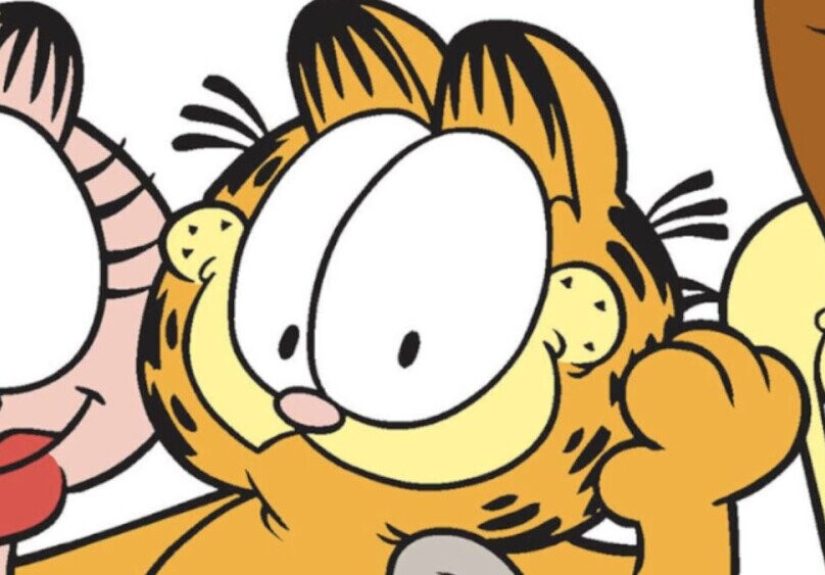
If you weren’t alive in the 1980s, it’s hard to explain just how aggressively Garfield showed up in everyday life.
He wasn’t merely a comic-strip character. He was a lifestyle choice. He was on lunchboxes, calendars, mugs,
and (most memorably) staring at the driver behind you from the inside of somebody’s car window.
And that last partthe car window thingwasn’t the result of a brilliant boardroom strategy or some
Indiana-based prophecy involving lasagna. It happened because a toy prototype came back wrong.
Not “the shade of orange is off” wrong. More like “this will accidentally become a national phenomenon” wrong.
The short version: Garfield’s creator, Jim Davis, wanted a plush Garfield that could cling to fabric with Velcro,
like a cat “caught in the act” of climbing curtains. The factory misunderstood and sent back a version with suction cups.
Davis approved it anyway. America, already in a mood to decorate cars with basically anything that could survive
a summer parking lot, took it from there.
Meet Garfield: A Cat Practically Engineered for Merch
Garfield wasn’t an accidenthe was a plan
Garfield’s humor is simple on purpose. He’s grumpy. He’s food-motivated. He hates Mondays.
He’s basically every adult before their first cup of coffee, distilled into an orange tabby with confidence.
That “simple on purpose” part mattered, because it made him instantly readable in a single glanceideal for
licensing, where subtlety goes to die and a recognizable face pays the rent.
Davis has been candid for decades that he designed Garfield to be broadly marketable, especially in a world
where comic-strip characters could become retail gold. He studied what sold, what characters translated well
onto products, and why certain mascots (hello, Snoopy) turned into merchandising superheroes.
Paws, Inc.: the quiet engine behind the loud orange cat
By the early 1980s, Garfield wasn’t just getting laughshe was getting licensing deals. Davis formed Paws, Inc.
to handle and develop merchandise opportunities, which let Garfield expand beyond newspapers into an
unusually coordinated consumer empire. This wasn’t random fan stuff. It was a system: approvals, product
pipelines, manufacturing partners, and distribution that could put Garfield’s face in front of you whether you
asked for it or not.
When people talk about “the ’80s Garfield craze,” they’re often talking about the moment a comic strip became
a full-blown brandone that could sit beside major entertainment properties on store shelves and still feel
oddly… normal. Like: “Of course there’s a Garfield toaster cover. Why wouldn’t there be?”
The Toy That Was Supposed to Ruin Your Curtains
The original pitch: Velcro paws and curtain chaos
The idea Davis had was pretty clever in a very domestic, very 1980s way. Cats scratch curtains. Cats climb curtains.
Cats treat your home like a vertical obstacle course designed exclusively to embarrass you in front of guests.
So Davis imagined a plush Garfield with Velcro on the pawssomething you could stick to drapes so it looked
like Garfield was mid-climb.
It’s a joke you can “install” in your own home, the way the ’80s loved to do with novelty: make the gag physical,
make it visible, and make it easy enough that an impulse buy can turn into a conversation piece.
The mistake: suction cupsbecause factories are also tired
The prototype came back with suction cups instead of Velcro. Not exactly the same vibe.
Velcro says “curtains.” Suction cups say “glass,” which says “windows,” which (if you squint) can say “cars.”
Davis has described the switch as a misunderstandingan error in interpreting directions. But the cups worked.
The toy stuck. So he greenlit it. He assumed people would put it on household windows. What didn’t occur to him
was that Americans would immediately slap it onto car windows and turn traffic into a traveling Garfield parade.
Why Suction Cups Beat Velcro (and Basically Invented Analog “Viral”)
It turned fandom into a moving billboard
Curtain-clinging Garfield is a private joke. Car-window Garfield is public performance.
The moment the toy moved from inside the home to the street, it stopped being just a plush and became a signal:
“I’m a Garfield person.” And because it rode around with you, it broadcast that signal everywhereschool pickup lines,
mall parking lots, freeway traffic jams, and every red light where boredom meets eye contact.
It was perfectly sized for impulse and gifting
The “Stuck on You” Garfield was small, relatively simple, and easy to justify as a quick buy.
It didn’t require batteries. It didn’t require learning rules. It required only one skill:
press paws to glass.
That’s a recipe for rapid adoption, especially when the character already had massive recognition.
Timing: America was already decorating cars like mobile living rooms
The mid-to-late ’80s were peak “car personality.” Bumper stickers, fuzzy dice, and novelty signs were everywhere.
A suction-cup plush fit that cultural moment like it had been focus-grouped by the universe.
When the Garfield window toy hit, it didn’t have to convince people to decorate carsit just had to give them
the next funny thing to decorate with.
When the Trend Got So Big It Turned Into a Crime Story
Yes, people smashed windows to steal plush cats
Here’s where the story graduates from “cute mistake” to “what were we doing as a society?”
In late 1987, police in the Los Angeles area dealt with a string of car break-ins where valuables were left behind.
The target wasn’t the stereo. It wasn’t cash. It was the Garfield plush hanging in the window.
The toy retailed around $20 in some places, while a replacement car window could cost far morean unhinged
exchange rate that only makes sense if you remember that teen logic sometimes runs on vibes alone.
The craze became so visible that it inspired copycats: other characters got suction-cup limbs, and suddenly
your commute looked like a plush toy casting call.
Even the plush industry noticedand then the bubble popped
The “Stuck on You” success was big enough to be described as a historic hit for the manufacturer. Estimates put
sales for the Garfield stick-on line in the tens of millions of dollars. But trends this loud rarely stay forever.
By the end of the decade, the broader plush market saw a steep slowdown, and the industry moved on to the next
wave of must-have softness.
In other words: Garfield didn’t disappear, but the suction-cup window phase did what most ’80s fads doit
burned bright, got weird, and then quietly left behind a mountain of nostalgia.
The Real Lesson: “Accidents” Only Work When the Machine Is Ready
The mistake didn’t create Garfieldit unlocked a new stage for him
The suction cups didn’t magically make Garfield famous. Garfield was already famous.
The mistake mattered because it created a new way to display the branda form factor that made Garfield
unavoidable in public space. It’s the same logic that powers modern virality: the easiest thing to share wins.
In the ’80s, “share” didn’t mean reposting. It meant sticking a cat to your window so the world could see it.
Why it worked: low friction + high visibility + a character people already trusted
- Low friction: No setup. No learning curve. No maintenance beyond occasionally re-sticking a paw.
- High visibility: Every car became a billboard and every traffic jam became an audience.
- Built-in fanbase: Garfield was already in newspapers, books, and TV specialshe had cultural momentum.
- Giftability: Small, funny, affordable enough to become an easy “I saw this and thought of you” item.
Put differently: the factory’s mistake supplied the spark, but the licensing engine supplied the oxygen.
Without the established Garfield machinerecognition, distribution, and merchandising infrastructuresuction cups
would have been just suction cups. With Garfield attached, they became a national mood.
Conclusion: The Cat That StuckLiterallyBecause Somebody Misread the Instructions
The funniest part of the “dumb toy mistake” isn’t that a factory used suction cups instead of Velcro.
It’s that the error accidentally solved a marketing problem: it moved Garfield into the world where people
could see him while doing nothing at all. Which, honestly, is very on-brand.
The “Stuck on You” plush became a perfect storm of timing, visibility, and cultural readinessa pre-internet
example of how quickly a simple, repeatable, public-facing idea can spread. If you ever wondered what “going viral”
looked like in an era without Wi-Fi, imagine a freeway full of orange cats staring back at you through glass.
Extra : What the ’80s Garfield Window-Cling Era Felt Like
Picture the scene like a movie montage with aggressively upbeat synth music. You’re in a mall parking lot where the
asphalt is shimmering in the heat, and every third car seems to have something dangling in the window.
Today it’s Garfieldtomorrow it’ll be something elsebut right now the orange cat is winning the popularity contest
by sheer visibility. You don’t even have to be a hardcore fan to recognize what’s happening: the toy is doing that
rare trick where it becomes part of the environment. It’s not just in stores; it’s in traffic.
Inside the mall, Garfield shows up againon a spinner rack of paperbacks near the register, on greeting cards,
maybe on a calendar wall where every month is basically “Garfield hates this month too.” At the toy store,
the suction-cup plush doesn’t need fancy packaging. The pitch is self-explanatory: “Look, it sticks.”
In a decade that loved novelty that could be demonstrated in three seconds, that was basically a superpower.
The best part is how the toy turned into a social shorthand. Kids would spot one in a classmate’s family car and
immediately file away a tiny fact: “They’re a Garfield household.” It wasn’t a deep identity statement; it was more
like wearing a band T-shirt. It said, “I’m into this thing enough to let it represent me in public.” And because it
was on a car window, it also said, “I’m into this thing enough to risk it flying off in a sudden lane change.”
There was also that specific kind of playground economy that formed around popular stuff. If you had the plush,
you had status. If you didn’t, you had to at least have an opinion: “They’re overrated,” said the kid who would
absolutely accept one as a birthday gift. And because every craze invites imitation, the Garfield window toy didn’t
just stay Garfield for long. Other characters started getting the suction-cup treatment, and suddenly your neighborhood
looked like pop culture was escaping through glass.
But the most “1980s” part was how normal all of it felt while it was happening. A plush cat on a car window?
Sure. Why not. This was the era of fuzzy dice, novelty signs, and anything that made a vehicle feel less like a machine
and more like an extension of your personality. Garfield fit perfectly because he was already a familiar roommate in the
newspaper. The suction cups simply gave him wheels.
And thenalmost as suddenly as it arrivedit faded. Not because Garfield vanished, but because the world moved on to
new obsessions. Still, if you ever see one of those old “Stuck on You” plushes today, it’s like opening a time capsule:
you can practically hear the cassette deck clicking into place and smell the faint plastic-and-fabric scent of a toy that
once ruled the road.