Table of Contents >> Show >> Hide
- First, a Quick Translation: Saddle Bag vs. Seat Pack vs. Saddle Roll
- How to Choose the Right Bike Saddle Bag or Seat Pack
- Standout Picks: The Best Bike Saddle Bags and Seat Packs
- Best All-Around Everyday Saddle Bag: A Rugged, No-Fuss Classic
- Best Quick-Swap Saddle Bag: Clip It, Rip It, Move It
- Best Minimalist “Barely There” Setup: Clean, Tidy, and Fast
- Best Premium Saddle Bag: Locked-In Fit With “Nice Things” Energy
- Best Organized Saddle Bag: When You Want a “Place” for Everything
- Best Tool Roll Style: Quiet, Compact, and Surprisingly Satisfying
- Best Waterproof Bikepacking Seat Pack: Roll-Top Reliability
- Best Quick-Release Bikepacking Seat Pack: Stable and Easy to Remove
- Best Harness System for Big Loads: Less Sway, More Control
- Best “Light Tour” Seat Pack: Big Enough for Fun, Not So Big It Gets Weird
- What to Pack: A Practical Saddle Bag Checklist
- Packing Tips That Prevent Sway, Rattle, and Regret
- Installation: The 60-Second Fit Check Before You Ride
- Care and Maintenance: Keep Your Bag From Becoming a Sad, Soggy Pouch
- FAQ: Quick Answers Before You Buy
- Real-World Experiences: 5 Lessons Riders Learn the Hard Way (So You Don’t Have To)
- Final Take
- SEO Tags
Every cyclist has two versions of themselves: the optimistic one who heads out with “just a quick loop,” and the
realistic one who has been personally victimized by a flat tire three miles from home with no tools. A good
bike saddle bag (or a bigger bike seat pack) is how you keep the realistic you employed.
It’s the tiny under-saddle pantry that carries tubes, tools, snacks, keys, a layer, and your dignitywithout turning
your jersey pockets into overstuffed burritos.
This guide breaks down the best types of cycling saddle bags and bikepacking saddle packs,
what actually matters when choosing one, and which standout options fit different riding stylesfrom weekday commuting
to gravel adventures to multi-day bikepacking trips where you start naming your chain lube like it’s a pet.
First, a Quick Translation: Saddle Bag vs. Seat Pack vs. Saddle Roll
The bike world loves similar-sounding gear names, so here’s the cheat sheet:
-
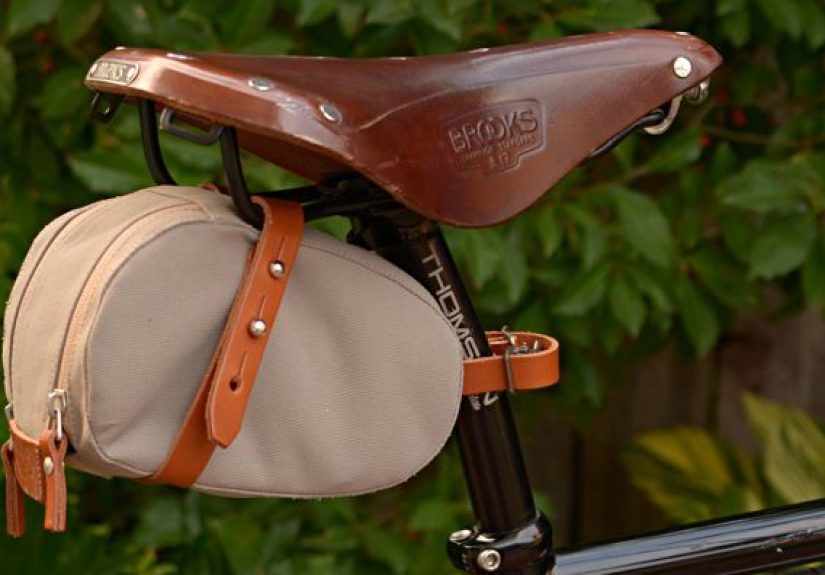
Saddle bag (under-saddle bag): Small pouch under your seat for essentialsthink flat kit, multi-tool,
CO₂, tire levers, maybe a snack if you’re brave and it’s not July. -
Seat pack (bikepacking saddle bag): Larger, often roll-top bag that straps to your saddle rails and
seatpost, usually measured in liters (8L–20L-ish). It’s the “no rack required” way to carry overnight gear. -
Saddle roll / tool roll: A wrap-style organizer that keeps tools neat and quiet. Less “pouch,” more
“tiny mechanic’s burrito.”
How to Choose the Right Bike Saddle Bag or Seat Pack
1) Capacity: Don’t Buy a Closet When You Need a Coin Purse
Capacity is the main difference between “barely fits a tube” and “accidentally packed a whole picnic.”
For typical rides, many cyclists only need room for:
- 1 tube (or plugs for tubeless)
- 2 tire levers
- Multi-tool
- CO₂ + inflator head or a mini pump
- Patch kit + quick link (optional but smart)
A small-to-medium under-saddle bag usually nails this. Seat packs are for bulkier itemssleeping kit, spare layers,
food, and the “I might need this” items you absolutely will not need until you don’t have them.
2) Mounting Style: Straps vs. Quick-Release vs. Bolt-On
Strap-mounted bags are simple and universal, but they can sway if overloaded or if the straps loosen over time.
Quick-release systems make it easier to swap bags between bikes and remove them quickly for café stops.
Bolt-on or saddle-specific mounts keep things super tidygreat if you hate strap spaghetti and love clean aesthetics.
3) Stability and Clearance: The “Heel Rub” and “Tire Buzz” Tests
A saddle bag should sit far enough back to avoid rubbing your thighs, and high enough to avoid brushing your rear
tireespecially on rough terrain or with full-suspension bikes. For big seat packs, tire clearance is everything.
A tapered shape and stiffened structure help reduce sway, which is bikepacking’s way of saying “please stop wagging.”
4) Dropper Posts: The Secret Boss Level
If you ride a mountain bike with a dropper post, many seat packs become annoying fast because they strap to the post
and limit how far it can drop. Look for designs that rely more on the saddle rails or have clever interfaces that
work with droppers (or pick a smaller saddle bag).
5) Weather Resistance: “Water-Resistant” Is Not “Dry Bag”
Many saddle bags handle spray and light rain. For bikepacking seat packs carrying clothing or a sleeping bag, true
waterproof construction (often welded seams and roll-top closures) matters a lot more. If the forecast is moody,
prioritize waterproofingor pack critical items in an internal dry sack.
Standout Picks: The Best Bike Saddle Bags and Seat Packs
“Best” depends on how you ride, what you carry, and how much you value quick access vs. tight security. Here are
reliable, widely recommended styles and models that cover the big use cases.
Best All-Around Everyday Saddle Bag: A Rugged, No-Fuss Classic
If you want one bag that works for commuting, road rides, and casual gravel without drama, a structured, medium-size
saddle bag is the sweet spot. Options like the Blackburn Grid line are popular because they’re built
tough, tend to keep their shape, and add visibility features like reflective coatings. This style is practical: it
won’t win a fashion award, but it will keep your essentials in place and stop them from rattling like a maraca band
behind you.
- Great for: commuters, weekend riders, mixed-terrain riders
- Look for: padded structure, coated zipper, reflective details, stable rail straps
Best Quick-Swap Saddle Bag: Clip It, Rip It, Move It
If you rotate between bikesor you’re the household’s unofficial “flat kit librarian”a quick-release saddle bag is a
quality-of-life upgrade. The Topeak Aero Wedge family is known for offering multiple sizes and a
quick-release style mounting system on certain versions, making it easier to pop the bag off for storage or swap it
between bikes with compatible hardware.
- Great for: riders with multiple bikes, commuters who remove bags daily
- Look for: a stable clip system + a secondary stabilizer strap
Best Minimalist “Barely There” Setup: Clean, Tidy, and Fast
If you want your bike to look sleeklike it was photographed for a catalog instead of used by a human who experiences
mechanical issuesbolt-on or saddle-integrated storage is your lane. The Specialized Road Bandit
approach is a good example of minimalist design: dedicated compartments for a tube, CO₂, and small essentials, using
compatible saddle mounts to keep everything compact and secure.
- Great for: road riders, fast group rides, “no flapping straps” perfectionists
- Trade-off: compatibility can be more specific than strap bags
Best Premium Saddle Bag: Locked-In Fit With “Nice Things” Energy
Premium saddle bags earn their price by solving the annoying stuff: shifting loads, sloppy closures, and awkward
access. A standout example is the Silca Mattone, known for a very secure closure system and thoughtful
internal organization that keeps a tube from rubbing against sharp tools. If you’ve ever found a hole worn into a tube
from a multi-tool edge, you already understand the appeal.
- Great for: riders who want maximum stability and smart organization
- Look for: stiff closure, wide opening, internal divider, quality materials
Best Organized Saddle Bag: When You Want a “Place” for Everything
Some saddle bags are just one big pocket where tools fight each other in the dark. Others build in organization so
you can grab exactly what you need, quickly. The SpeedSleev Ranger style is known for dedicated
pockets that hold common repair itemstubes, CO₂ cartridges, levers, inflatorso you’re not dumping everything onto
the roadside like a yard sale.
- Great for: road/gravel riders who want fast access without clutter
- Look for: external sleeves for CO₂, secure tool pockets, stable main strap
Best Tool Roll Style: Quiet, Compact, and Surprisingly Satisfying
Tool rolls are underrated: they keep tools quiet, prevent wear, and make packing feel oddly professionallike you’re a
pit crew member who also happens to love espresso. The Road Runner Tool Saddle Roll style is a great
example of a simple, durable roll that’s easy to mount and remove, and it can also be tossed into a larger bag when
you switch setups.
- Great for: minimalists, gravel riders, anyone who hates rattles
- Tip: keep a small patch kit in the roll so your flat kit stays “complete”
Best Waterproof Bikepacking Seat Pack: Roll-Top Reliability
For bikepacking, a waterproof seat pack is a game changerespecially for storing clothing or sleep gear.
The Ortlieb Seat-Pack is widely known in this category for waterproof construction and a roll-top
closure that lets you adjust volume depending on how much you’re carrying. Many riders love this style because it’s
simple: fewer zippers, fewer leak points, more confidence when the sky turns dramatic.
- Great for: overnighters, touring, riders who deal with real weather
- Look for: roll-top compression, stable rail straps, reinforced contact points
Best Quick-Release Bikepacking Seat Pack: Stable and Easy to Remove
Seat packs are awesome until you need to take one off quickly at camp or at a store. That’s where a quick-release
bikepacking seat pack shines. Designs like the Ortlieb Seat-Pack QR aim to combine stability with fast
removal, and some riders prefer them because they can be more dropper-friendly and less fiddly than long strap
systems.
- Great for: bikepackers who remove the seat pack frequently, dropper-post riders
- Tip: still pack heavy items forward to reduce sway
Best Harness System for Big Loads: Less Sway, More Control
If you’re carrying a bigger load, harness-style systems can feel more stable than a single, floppy bag. A classic
example is the Revelate Terrapin approach: a harness that holds a removable dry bag, using compression
to shape the load and reduce side-to-side movement. It’s a smart setup if you’re doing longer trips and want better
handling on rough surfaces.
- Great for: multi-day bikepacking, rough roads, riders who hate wagging loads
- Bonus: removable dry bag simplifies packing/unpacking at camp
Best “Light Tour” Seat Pack: Big Enough for Fun, Not So Big It Gets Weird
Not every trip needs a massive pack. Many riders prefer a mid-capacity seat pack for shorter toursenough for a layer,
food, a compact sleep setup, or extra water without going full expedition. Reviews and roundups often highlight
lighter-duty seat packs (including designs from brands like Topeak and Blackburn) for this “weekend adventure” zone.
- Great for: gravel weekends, credit-card touring, minimal overnights
- Watch out for: tire clearance and sway if you overstuff it
What to Pack: A Practical Saddle Bag Checklist
Here’s a smart baseline kit that fits in many medium saddle bags. Adjust for tubeless, route remoteness, and your
personal relationship with bad luck.
- Tube or tubeless plugs: one spare tube for road; consider two for long remote rides
- Tire levers: two is usually plenty
- Inflation: CO₂ + inflator head or a mini pump
- Multi-tool: include the hex sizes you actually have on your bike
- Quick link: tiny, cheap, and heroic when needed
- Patch kit: backup for a second flat or tube pinch
- Small cash/card: for snacks, emergencies, or bribing friends with pastries
Packing Tips That Prevent Sway, Rattle, and Regret
Put heavy items forward and low
In seat packs, heavy items should sit closest to the saddle rails and seatpost. This improves stability and reduces
that pendulum effect when you stand up and mash the pedals.
Use compression like you mean it
Roll-top seat packs only work well when they’re actually compressed. Squish out extra air, tighten straps evenly, and
re-check after a few milesmaterials settle once you start moving.
Protect your tube from your tools
If your bag doesn’t have dividers, wrap your tube in a small cloth or keep your multi-tool in a mini sleeve. This
prevents wear and keeps things quieter.
Keep the “most needed” items easiest to access
For saddle bags, make sure your tire levers and inflator are easy to grab. Roadside repairs are already a vibe; they
don’t need to become a scavenger hunt.
Installation: The 60-Second Fit Check Before You Ride
- Strap it to the rails first: secure the bag firmly under the saddle so it doesn’t sag.
-
Then stabilize at the post (if applicable): snug, but not so tight it damages the post or blocks a
dropper. -
Check tire clearance: press down on the saddle (or compress suspension) and make sure the bag won’t
hit the tire. - Do a heel/thigh rub test: pedal a minute and notice contact points. Adjust position if it rubs.
- Re-tighten after the first ride: straps can loosen slightly once the material “seats.”
Care and Maintenance: Keep Your Bag From Becoming a Sad, Soggy Pouch
Saddle bags live in a brutal zone: road spray, grit, vibration, and the occasional surprise puddle. A little care goes
a long way:
- Wipe off grit so zippers don’t grind themselves into early retirement.
- Let the bag dry after wet rides to prevent funk and fabric breakdown.
- Inspect straps and bucklesespecially before longer trips.
- Don’t overload a small saddle bag; bulging bags sway and wear faster.
FAQ: Quick Answers Before You Buy
What size saddle bag do most riders need?
For typical rides, a small-to-medium bag that fits a tube, levers, inflation, and a multi-tool is ideal. Go larger if
you want to carry a second tube, a compact jacket, or extra repair items.
Are saddle bags safe for carbon rails and fancy saddles?
Generally yes, but avoid overtightening rail straps and make sure no abrasive grit is trapped between straps and
saddle rails. A quick wipe before installation helps.
Do bikepacking seat packs sway no matter what?
Some sway is normal, especially with big loads. You can reduce it by packing heavy items forward, compressing tightly,
and choosing stiffer, better-supported designs (harness systems often help).
Should I use a backpack instead?
For short rides, backpacks are fine, but many cyclists prefer bike-mounted storage for comfort and reduced sweat.
Bike-mounted bags also keep weight off your shoulders and lower your center of gravity.
Real-World Experiences: 5 Lessons Riders Learn the Hard Way (So You Don’t Have To)
Let’s talk about what actually happens when you start living the saddle-bag lifebecause the best gear choices aren’t
made in a vacuum; they’re made on the side of the road while you try to look calm in front of passing pedestrians.
Lesson 1: The “tiny bag” dream dies the first time you need gloves.
Many riders start with the smallest under-saddle bag they can find because it looks clean and feels fast. Then the
weather shifts, and suddenly you’re stuffing thin gloves, a gel, and a folded receipt from a coffee stop into a bag
that was barely designed to carry a tube. The result is either a zipper that protests loudly or a bag that hangs
crooked like it gave up halfway through the ride. The fix is simple: size your bag for your real habits, not your
fantasy self.
Lesson 2: A quiet bag is a happy bag.
Rattling tools turn a peaceful ride into a percussion concert. Riders often discover that a tool roll (or at least a
divider system) is the difference between “I brought everything I need” and “I brought a small tambourine.” Wrapping
a tube around metal tools, using a small sleeve, or choosing a bag with structured pockets can instantly improve the
ride experienceespecially on gravel where vibration finds every loose object and auditions it for noise.
Lesson 3: Bikepacking seat packs are amazing… until you pack them like a pantry.
On overnighters, it’s tempting to jam everything into the seat pack because it’s the biggest space on the bike.
That’s when sway shows up. Riders learn quickly that seat packs behave best when compressed tightly and packed with
lighter, squishier items (like a sleeping bag or spare layers), while dense items (tools, chargers, food bricks) ride
better in a frame bag or closer to the bike’s center. Pack like you’re balancing a tray: stable weight near the core,
fluffy stuff out back.
Lesson 4: Quick-removal matters more than you think.
On a normal ride, you might not care if a bag takes 30 seconds to unthread. On a rainy day, at dusk, with cold hands,
it suddenly matters a lot. Riders who commute daily often appreciate quick-release systems because they can remove the
bag easily to prevent theft or to avoid leaving tools on the bike overnight. Bikepackers appreciate fast removal at
camp because it speeds up setup, keeps gear organized, and reduces the chance of losing small items in the grass.
Lesson 5: The best bag is the one you’ll keep stocked.
A saddle bag only saves the day if it consistently contains the essentials. Riders who treat the saddle bag like a
permanent “flat kit home” tend to have fewer inconvenient surprises. A great strategy is to build a dedicated kit that
lives in the bagtools that stay there, a tube that stays there, and a checklist you refresh every few months.
Otherwise, you’ll eventually do the classic move: borrow your own CO₂ for a friend, forget to replace it, and then
discover your mistake at the exact moment you needed it most.
If you’ve ever wondered why experienced cyclists can look so unbothered when something goes wrong, it’s not because
they’re magical. It’s because their storage system is boringly reliable. A good saddle bag or seat pack doesn’t make
you faster, but it makes you un-strandedand that’s a pretty elite feeling.
Final Take
The best bike saddle bag is the one that matches your ride style, carries your real-world essentials, and stays stable
without rubbing, rattling, or soaking your gear. Start small if you mostly ride locally, go structured and durable if
you commute, and step up to waterproof seat packs or harness systems if you bikepack. Then do the one thing every
smart rider does: keep it stocked. Your future self will thank youprobably from the side of the road, but still.