Table of Contents >> Show >> Hide
- How “Tested and Approved” Works Here (Without Pretending We Have a Toilet Lab)
- Quick Cheat Sheet: Which Toilet Bowl Cleaner Type Should You Buy?
- The Best Toilet Bowl Cleaners (Top Picks)
- Best Overall Disinfecting Gel: Clorox Toilet Bowl Cleaner with Bleach
- Best Value + Cling Power: Lysol Power Toilet Bowl Cleaner (Power Cling Gel)
- Best for Rust + Mineral Deposits: Lysol Lime & Rust Toilet Bowl Cleaner
- Best Toilet System for “No Thanks, Brush”: Clorox ToiletWand Disposable Cleaning Kit
- Best Long-Lasting Between Cleans: Scrubbing Bubbles Toilet Cleaning Stamps
- Best Budget Heavy-Duty Option: The Works Toilet Bowl Cleaner
- Best Eco-Friendly Tablet Style: Blueland Toilet Cleaner Tablets (Fizzy Drop-In)
- Best “Gentler” Routine Choice: Seventh Generation Toilet Bowl Cleaner
- How to Choose the Right Toilet Bowl Cleaner for Your Bathroom
- How to Use Toilet Bowl Cleaner for Maximum Results
- Safety Rules That Should Be Printed on a Billboard
- Troubleshooting: When a Toilet Bowl Cleaner Isn’t Enough
- of Real-Life “Toilet Cleaner Experience” (Because Bathrooms Are Where Humility Lives)
- Conclusion
If toilets had a publicist, their PR pitch would be: “I’m a hardworking porcelain throne with a strong work ethic.”
If toilets had a diary, it would be: “Please stop pretending I clean myself.”
The good news: modern toilet bowl cleaners are ridiculously effectiveespecially the ones that have been put through
real-world testing by cleaning labs, editors, and consumer product testers. The bad news: picking the right one can
feel like choosing a Netflix show at 11:47 p.m. (Too many options, and suddenly you’re reading labels like they’re
plot summaries.)
This guide cuts through the foam. We synthesized results and recommendations from multiple U.S. testing outlets and
cleaning experts to highlight toilet bowl cleaners that repeatedly perform well for everyday grime, stubborn rings,
hard-water deposits, and “how did that happen?” stainsplus a few safer, greener options that still pull their weight.
How “Tested and Approved” Works Here (Without Pretending We Have a Toilet Lab)
“Tested” doesn’t mean we strapped goggles on and ran double-blind trials in a secret bathroom bunker. It means we
compared and cross-referenced products that have been evaluated by reputable sources using hands-on methods, scoring
rubrics, lab protocols, and editor testing. When multiple independent testers keep landing on the same winners, that’s
a strong signallike hearing three friends recommend the same taco spot.
Our scoring lens
- Stain removal: Hard-water rings, mineral scale, rust, and organic grime.
- Cling + dwell time: A cleaner that stays put under the rim has a real advantage.
- Disinfection claims (when relevant): What it’s designed to kill and how long it must sit.
- Ease of use: Bottle design, nozzle reach, mess factor, and whether it requires elbow grease.
- Odor experience: “Fresh” is nice; “chemical fog” is not.
- Safety + compatibility: Septic considerations, ventilation needs, and where strong acids are a no-go.
- Value: Price per use and whether it replaces multiple products.
Quick Cheat Sheet: Which Toilet Bowl Cleaner Type Should You Buy?
1) Thick gel toilet bowl cleaners
The everyday MVP. Thick gels cling to the bowl walls and under the rim, giving surfactants and acids time to break down
stains. Best for routine cleaning, mild-to-moderate hard water buildup, and most households.
2) Acidic “heavy-duty” cleaners (lime, rust, mineral scale)
The specialist. Some formulas are designed for tough mineral deposits and rust stains. They can be highly effective,
but they demand respect: ventilation, gloves, and strict “never mix chemicals” behavior.
3) Drop-ins, tablets, stamps, and automatic fresheners
The maintenance crew. Great for keeping things fresher between deeper cleans, but most aren’t a full replacement for
a scrub-and-rinse session when rings show up.
4) “Natural-ish” cleaners (vinegar-based, peroxide-based, plant-based surfactants)
The gentler lane. Often better for routine upkeep and odor control. Some can remove light stains very well, but heavy
mineral scale may still require an occasional stronger product (or patience and repeat applications).
The Best Toilet Bowl Cleaners (Top Picks)
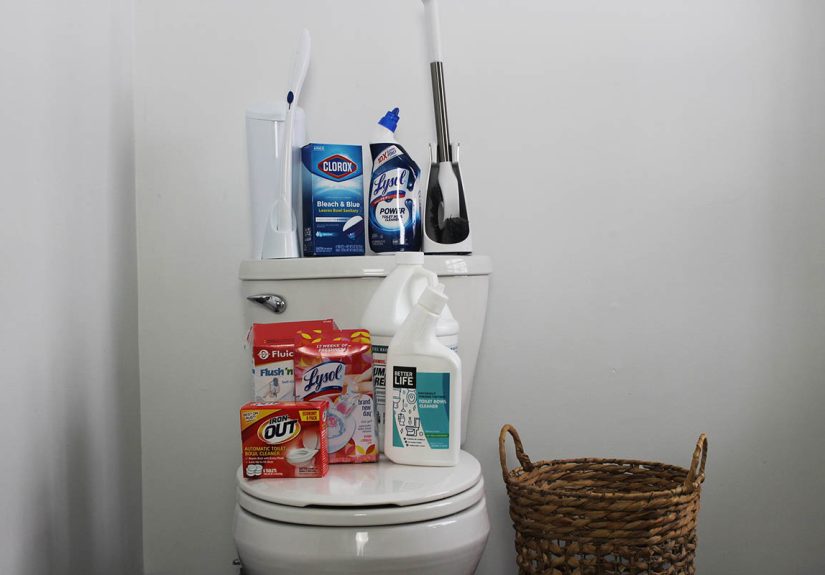
Below are the standout performers that show up again and again in testing roundups and cleaning editor recommendations.
Think of these as the “starting lineup” for a cleaner bowl.
Best Overall Disinfecting Gel: Clorox Toilet Bowl Cleaner with Bleach
If you want the classic “white porcelain reset,” bleach-based gels are still popular because they tackle stains and
help with odor. Reviewers consistently praise Clorox’s thick, clinging gel and angled neck that targets the under-rim zone.
It’s a strong choice for households that want a disinfecting option and don’t mind a more powerful smell.
Best for: Routine deep cleans, visible staining, “I want it to look brand-new” moments.
Skip if: You’re sensitive to bleach fumes or want a lower-odor routine.
Best Value + Cling Power: Lysol Power Toilet Bowl Cleaner (Power Cling Gel)
When editors and testers talk about “gel that actually sticks,” this one comes up a lot. The thick formula is designed
to cling longer, which helps with stubborn ringsespecially in hard-water areas. It’s also widely available and often
inexpensive, making it a go-to recommendation for “buy it anywhere, it works” reliability.
Best for: Hard-water rings, weekly cleaning, great performance without a premium price tag.
Pro move: Let it dwell the full label-recommended time before scrubbing.
Best for Rust + Mineral Deposits: Lysol Lime & Rust Toilet Bowl Cleaner
If your toilet bowl has orange streaks, crusty scale, or that stubborn mineral “collar,” a lime-and-rust formula can be
the difference between scrubbing forever and scrubbing for… a normal amount of time. This category is specifically built
for mineral problems rather than general grime.
Best for: Rust stains, mineral scale, hard-water build-up.
Safety note: Ventilate well and follow label directions closely.
Best Toilet System for “No Thanks, Brush”: Clorox ToiletWand Disposable Cleaning Kit
If the phrase “toilet brush storage” gives you the ick, you’re not alone. Disposable pad systems reduce the “wet brush”
factor and can make quick cleanups feel less miserable. Multiple testers and editors rate ToiletWand-style systems highly
for convenience and easeespecially for frequent cleaning.
Best for: Fast cleanups, guest bathrooms, anyone who hates brush maintenance.
Tradeoff: Ongoing pad refills add cost and waste compared to a reusable brush.
Best Long-Lasting Between Cleans: Scrubbing Bubbles Toilet Cleaning Stamps
Stamps aren’t a miracle for heavy stains, but they’re excellent at reducing that “why does it already smell like Monday?”
situation. Reviewers like that each stamp lasts around a couple weeks and helps maintain freshness with every flushideal
for busy households.
Best for: Maintenance, freshness, extending the time between scrubs.
Best Budget Heavy-Duty Option: The Works Toilet Bowl Cleaner
The Works is often cited as a budget-friendly heavy hitter for people dealing with tough stains. It’s typically used when
regular gels aren’t cutting it. Strong formulas can be very effectivebut use them thoughtfully, and don’t “improvise”
by mixing products.
Best for: Stubborn discoloration and tough bowls that laugh at mild cleaners.
Safety note: Gloves + ventilation are non-negotiable.
Best Eco-Friendly Tablet Style: Blueland Toilet Cleaner Tablets (Fizzy Drop-In)
If you like the idea of fewer single-use plastic bottles, tablet-based cleaners can be a smart option. They’re typically
best for routine cleaning and light-to-moderate stains, and they pair well with a consistent weekly schedule.
Best for: Lower-waste routines, light stains, regular maintenance.
Best “Gentler” Routine Choice: Seventh Generation Toilet Bowl Cleaner
Plant-based and bleach-free options are popular for routine cleaning, especially for households prioritizing a milder
smell or a “less harsh” ingredient profile. Many testers note these work best with consistency: a little often beats a lot rarely.
Best for: Weekly upkeep, lighter stains, households that want bleach-free routines.
How to Choose the Right Toilet Bowl Cleaner for Your Bathroom
If you have hard water
Hard water leaves minerals behindcalcium, lime, and sometimes rustso your cleaner needs either (1) enough acidity to
dissolve mineral deposits, or (2) enough cling time to soften them so brushing works. In many homes, that means a thick
gel weekly plus an occasional lime/rust specialist as needed.
If you’re on a septic system
Many households prefer avoiding frequent bleach use in septic systems, leaning toward peroxide-based or plant-based
cleaners for routine maintenance. If you do use bleach-based products, consider reserving them for occasional deep cleans
rather than daily or constant dosing.
If smell is your dealbreaker
Look for “fresh” or “light” scent profiles, or try peroxide-based formulas. Also: ventilation is underrated. A running
bathroom fan can turn “chemical overwhelm” into “totally manageable.”
If you want the lowest-effort routine
Pair a strong weekly gel with a maintenance product (stamps or drop-ins) to reduce buildup. Think of it as brushing your
teeth and using mouthwash. Both help; one does the heavy lifting.
How to Use Toilet Bowl Cleaner for Maximum Results
Step 1: Get the cleaner where it counts
Aim under the rim first, then spiral downward so the product coats the whole bowl. The under-rim area is a grime magnet.
Step 2: Let it dwell (the part everyone skips)
Dwell time is where the magic happens. Many formulas are designed to work after several minutessometimes longerso don’t
rush straight into scrubbing like you’re speedrunning a chore.
Step 3: Scrub strategically
Use a brush to work under the rim and around the waterline. If you have a persistent ring, focus on that band and give
it a second dwell-and-scrub cycle before escalating to harsher chemicals.
Step 4: Flush and rinse the brush
Flush while holding the brush in the flow to rinse. Then let it drip-dry as much as possible before returning it to its holder.
Safety Rules That Should Be Printed on a Billboard
- Never mix cleaners. Especially bleach with ammonia, acids, or “mystery products.” Use one product at a time, rinse, and ventilate.
- Ventilation matters. Run the fan, crack a window, and don’t hover over the bowl like it’s a campfire.
- Protect your skin. Gloves are cheap. Chemical irritation is not a fun hobby.
- Follow label instructions. The directions exist because chemistry is both helpful and dramatic.
- Store safely. Keep products out of reach of kids and pets, and never decant into food containers.
Troubleshooting: When a Toilet Bowl Cleaner Isn’t Enough
Problem: The ring comes back fast
That’s often hard water plus inconsistent cleaning. Try a weekly gel routine and add stamps or drop-ins between deep cleans.
Also consider checking your tank componentssome buildup is driven by water quality and slow leaks.
Problem: Rust stains won’t budge
Rust usually needs a lime/rust specialist. If rust is persistent, you might also be dealing with old pipes or high iron in water.
A cleaner can treat the symptom, but addressing the water source helps long-term.
Problem: Mineral scale is crusty and thick
This is where stronger acidic products can help, but use them carefully. If you’re repeatedly battling severe scale, it may be
worth investigating a water softener or filtration solution to reduce buildup.
of Real-Life “Toilet Cleaner Experience” (Because Bathrooms Are Where Humility Lives)
If you’ve ever hosted guests and suddenly noticed a toilet ring you could swear wasn’t there yesterday, welcome to the
universal club of “Why is my bathroom betraying me?” Cleaning writers and editors routinely describe the same phenomenon:
the toilet looks fineuntil the lighting hits it at the wrong angle, and suddenly the waterline is showcasing a gray halo
like it’s auditioning for a ghost movie.
The most consistent lesson from hands-on reviews is that cling and dwell time beat panic-scrubbing. Multiple
editor tests describe thick gels (especially “power cling” styles) softening hard-water rings enough that the stain lifts with a
normal scrub instead of an arm workout. The bottle nozzle design matters more than people expect, too: angled necks help you
reach the under-rim zone without doing yoga over the bowl.
Another common experience: the “I’ll just use a little of everything” mistake. When frustration hits, people are
tempted to combine productsbleach plus something “extra,” vinegar plus something “strong,” or “whatever is under the sink.”
Cleaning pros keep repeating the same warning for a reason: mixing chemicals can create toxic fumes and turn a simple chore
into a dangerous situation. The better move is boring-but-effective: use one cleaner, let it sit, scrub, flush, and only then
consider a different product later (after rinsing and airing out).
For households that hate the brush situation, disposable systems often feel like a life upgradenot because they clean
better in every scenario, but because they remove the gross “wet brush” storage problem. That psychological factor matters.
If your tools make you avoid the job, the toilet wins. Convenience can be the difference between “I clean weekly” and “I clean
when I can’t ignore it anymore.”
Meanwhile, eco-focused testers often mention a different kind of satisfaction: tablets or low-waste options make routines
easier to maintain, especially for light stains and regular upkeep. The tradeoff is that stubborn mineral buildup may still
require a more targeted product occasionally. Many reviewers frame it like skincare: gentle daily habits plus a stronger
treatment when the situation calls for it.
Finally, the most relatable experience of all: you clean the toilet, step back, and feel like you’ve achieved something
disproportionately meaningful. Is it glamorous? No. Is it oddly empowering? Absolutely. Few things say “I have my life
together” like a sparkling bowl that doesn’t smell like it has opinions.
Conclusion
The best toilet bowl cleaners aren’t necessarily the fanciestthey’re the ones that match your problem. Thick gels are the
reliable everyday choice. Lime-and-rust formulas are the specialists for hard-water headaches. Stamps and tablets help you
maintain freshness between scrubs. Choose the right tool, give it dwell time, and follow safety basics (no mixing, good ventilation),
and you’ll spend less time fighting the bowl and more time enjoying the fact that you’re an adult who can conquer household chaos.