Table of Contents >> Show >> Hide
- A Rose With a Story Bigger Than the Garden Gate
- Why Jane Goodall Was the Perfect Inspiration for a Rose
- The Hopeful Message at the Heart of the Jane Goodall Rose
- How the Rose Reflects Jane Goodall’s Legacy
- What Makes the Jane Goodall Rose Special for Gardeners
- More Than a Memorial: A Living Invitation to Act
- Why This Rose Matters Right Now
- Experience and Reflection: What It Feels Like to Grow a Rose With a Mission
- Conclusion
Some flowers are beautiful. Some are symbolic. And once in a while, a flower manages to be both without becoming unbearably self-important about it. The Jane Goodall Rose falls into that rare category. At first glance, it is simply a gorgeous hybrid tea rose, the kind of bloom that makes gardeners pause mid-watering and say, “Well, hello there.” But the deeper story is what makes it unforgettable. This rose was created in honor of Dr. Jane Goodall, the pioneering primatologist, conservationist, and global messenger of hope whose life’s work changed science and inspired millions of people to care more deeply about animals, people, and the planet.
That matters because Jane Goodall was never just a scientist in the narrow sense. She was a bridge-builder. She made research feel personal, conservation feel urgent, and hope feel practical. The Jane Goodall Rose carries that same energy into the garden. It is lovely, yes, but it also asks something of the people who grow it. It invites reflection. It encourages action. It reminds us that beauty can still serve a purpose beyond looking fabulous in the morning sun.
In a time when environmental headlines can feel relentlessly bleak, the Jane Goodall Rose offers something almost radical: a hopeful message that does not ignore reality. Instead, it responds to reality with grace, resilience, and quiet persistence. That, in many ways, is the essence of Jane Goodall’s legacy.
A Rose With a Story Bigger Than the Garden Gate
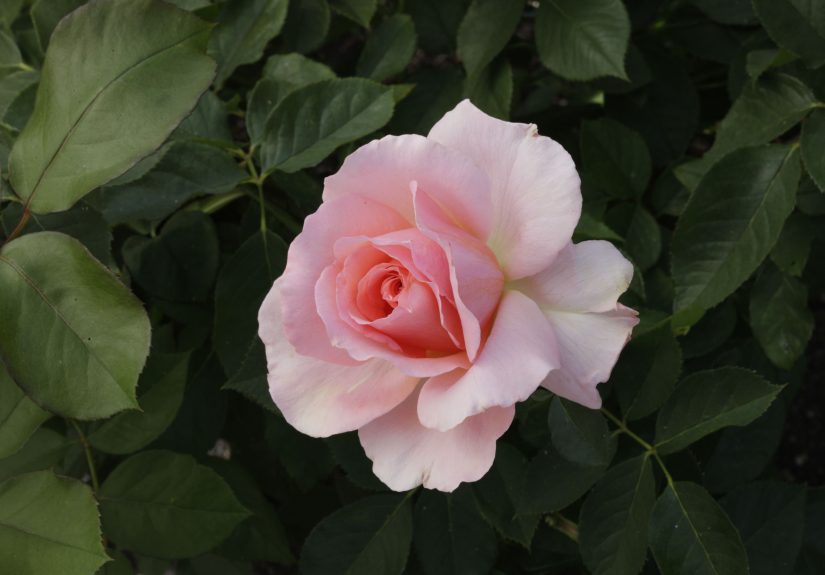
The Jane Goodall Rose is not just a marketing flourish with a famous name attached. It was developed as a living tribute to a woman whose impact extended far beyond the field of primatology. Introduced by Jackson & Perkins in 2017 and bred by Dr. Keith Zary, the variety has the classic elegance of a hybrid tea rose while carrying a story that feels especially meaningful. The flowers open in soft blush-pink tones with warm yellow near the base, creating a color combination that feels gentle rather than flashy. It is the floral equivalent of wisdom delivered with excellent manners.
From a gardener’s perspective, the plant has real appeal. It grows to a manageable height of about three to four feet, features dark glossy foliage, produces repeat blooms, and is known for being disease-resistant for its class. The flowers are around four inches wide, with a light spicy fragrance that is noticeable without barging into the room like an overenthusiastic candle. It thrives in full sun with moist, well-drained soil, and it is hardy across a broad range of climates, making it accessible to many American gardeners.
That practicality matters. A tribute rose should not behave like a diva that only performs under impossible conditions. The Jane Goodall Rose succeeds because it combines symbolic depth with garden usefulness. It can live in a border, brighten a bed, serve as a cut flower, or stand as a focal point in a small landscape. In other words, it is not only meaningful; it is plantable. That may sound like faint praise, but any gardener who has loved a dramatic underperformer knows this is actually a compliment of the highest order.
Why Jane Goodall Was the Perfect Inspiration for a Rose
To understand why this tribute feels so fitting, it helps to revisit what made Jane Goodall such an extraordinary figure. Beginning in 1960 at Gombe in Tanzania, Goodall transformed the study of chimpanzees through patient, immersive observation. She documented tool use, tool making, meat eating, and highly complex social behavior, helping overturn the old assumption that humans alone possessed certain kinds of intelligence and culture. Her work did more than add detail to science; it changed the framework of the conversation.
Goodall also challenged scientific habits in subtler but equally powerful ways. She named the chimpanzees she studied instead of assigning them numbers, a choice that reflected her recognition of individuality and emotional life in animals. To some early critics, that seemed too personal. To history, it looked remarkably ahead of its time. Her approach helped broaden the public’s understanding of animals as sentient beings with relationships, temperaments, and social complexity.
Later, her influence expanded far beyond research. The Jane Goodall Institute, founded in 1977, extended her work into conservation, environmental education, and community-centered action. She went on to become a United Nations Messenger of Peace, and her decades of impact were recognized by honors including the Kyoto Prize. Yet even with those accolades, Goodall remained notable for something more human than prestigious: her steady insistence that every individual can make a difference.
That message is what makes a rose feel like the right tribute. A rose is not a statue. It is alive. It changes with the seasons. It needs care. It responds to its environment. It can be admired from afar, but it becomes more meaningful when someone actually tends it. That is wonderfully aligned with Goodall’s worldview. She did not spend her life asking people merely to admire nature. She wanted them to notice it, respect it, and take responsibility for it.
The Hopeful Message at the Heart of the Jane Goodall Rose
The phrase most closely associated with Jane Goodall’s legacy is not despair, outrage, or even warning. It is hope. But hers was never the fluffy kind of hope that floats around saying everything will somehow work out if we think pleasant thoughts near a butterfly. Jane Goodall’s idea of hope has always been tied to action. It is hope with dirt under its fingernails. Hope that plants, restores, teaches, protects, and persists.
The Jane Goodall Institute continues to frame her legacy through that lens. Its language around her work emphasizes interconnectedness, compassion, and the belief that people can improve the lives of animals, communities, and the environment. Campaigns linked to her birthday, such as #GoodAllDay, have encouraged supporters to honor her not with performative fanfare, but with tangible good deeds. That is a deeply revealing detail. If you asked Jane Goodall how to celebrate her, the answer was never “Buy more stuff with my name on it.” It was closer to “Do something kind, useful, and life-giving.”
Seen in that context, the Jane Goodall Rose becomes more than a commemorative flower. It becomes a symbol of active hope. Planting it can be a gesture of remembrance, but it can also be a small declaration of values. It says beauty matters, stewardship matters, and ordinary people still have the power to create something positive where they are.
There is something wonderfully appropriate about expressing hope through a rose. A rose does not bloom instantly. It asks for patience, pruning, seasons of rest, and trust in what is happening beneath the surface. That mirrors conservation work more closely than people sometimes realize. Lasting change is rarely dramatic in the beginning. It starts with habits, commitments, and small repeated actions. Over time, those actions become visible. Over time, they flower.
How the Rose Reflects Jane Goodall’s Legacy
It joins beauty with purpose
Jane Goodall’s career is a reminder that wonder and seriousness do not have to be enemies. She brought emotional intelligence into scientific work without sacrificing rigor. Likewise, the rose is beautiful without being superficial. It does not honor her legacy by being merely decorative; it honors her by pointing beyond itself. Even at its prettiest, it is still saying something larger about conservation, compassion, and the human capacity for care.
It is approachable, not exclusive
One of the strengths of Goodall’s public legacy is that it speaks to children, educators, scientists, gardeners, and ordinary people who may never publish a paper or work in a sanctuary. Her Roots & Shoots program was built on that inclusive spirit, empowering young people to address local problems affecting people, animals, and the environment. The Jane Goodall Rose carries a similar accessibility. It is not an elite symbol meant only for rarefied spaces. It belongs in real gardens, near sidewalks, porches, schools, and backyards where people live their actual lives.
It makes remembrance active
There is a profound difference between remembering someone and continuing what they stood for. A memorial plaque asks to be read. A rose asks to be tended. That distinction is important. The Jane Goodall Rose turns memory into participation. Watering it, pruning it, cutting a bloom for the kitchen table, or planting it for someone else are all small acts that make remembrance tangible. In that sense, it keeps her legacy moving rather than freezing it in place.
What Makes the Jane Goodall Rose Special for Gardeners
Even without the backstory, this rose would still earn attention. The medium habit makes it versatile in modest spaces, which is useful in an era when not everyone has an estate garden or a suspiciously perfect cottage border. Its upright form works well in mixed beds, and the bloom color has enough softness to blend with many palettes while still standing out. Pair it with lavender, salvia, catmint, or silvery foliage, and it can look effortlessly elegant.
The light spicy fragrance adds another layer of charm. Strongly perfumed roses can be glorious, but they can also overwhelm nearby seating areas in the wrong setting. A lighter fragrance allows the flower to feel refined and fresh. For people who enjoy cutting blooms for indoor arrangements, that is especially appealing. The rose offers presence without becoming the floral equivalent of a marching band in the dining room.
Its disease resistance and relatively low-maintenance nature are equally significant. Roses have a reputation for being demanding, and sometimes that reputation is deserved. But gardeners increasingly want plants that reward care without requiring a full-time emotional support schedule. The Jane Goodall Rose answers that modern desire well. It feels classic, not fussy; graceful, not fragile. That balance makes it appealing to longtime rose lovers and newer gardeners alike.
There is also a fitting metaphor in its resilience. Jane Goodall’s work was never built on speed or spectacle. It was built on endurance, discipline, and the willingness to keep showing up. A rose that blooms repeatedly and holds its own in the garden feels like a quietly appropriate tribute to that kind of life.
More Than a Memorial: A Living Invitation to Act
Perhaps the most compelling thing about the Jane Goodall Rose is that it points outward. It does not encourage passive admiration of a great life from a comfortable distance. It gently asks, “Now what will you do?” That question sits at the center of Goodall’s public message. Through the Jane Goodall Institute and Roots & Shoots, her legacy has long emphasized local action, youth engagement, habitat protection, and practical compassion.
That means the rose can function as a starting point. A gardener might plant it and then decide to add native flowers nearby, reduce pesticide use, support wildlife-friendly practices, or donate to conservation work. A teacher might use the rose as a way to introduce students to Goodall’s life and then connect that lesson to service projects. A family might gift the rose to mark a birthday, a memorial, or a shared commitment to environmental stewardship. In each case, the flower becomes part of a wider chain of action.
This is where the hopeful message becomes most powerful. Hope does not always arrive as a grand speech or a global summit. Sometimes it arrives as a decision to plant one meaningful thing and let that action lead to another. Goodall understood that scale begins with individuals. The rose reflects that wisdom perfectly. It is modest in form, but expansive in implication.
Why This Rose Matters Right Now
The modern audience is not short on information about ecological loss, climate anxiety, and the pressures facing wildlife and natural systems. What people often lack is a symbol that feels both honest and energizing. The Jane Goodall Rose fills that space beautifully. It does not deny the seriousness of environmental problems. Instead, it offers a visual reminder that care is still possible, that action still matters, and that one person’s legacy can keep influencing countless lives in small daily ways.
That may be why the rose resonates beyond typical gardening circles. It speaks to admirers of Jane Goodall, certainly, but it also appeals to anyone hungry for a more grounded version of optimism. Not optimism as denial, but optimism as discipline. Not “everything is fine,” but “something good can still be done.” The rose is hopeful without being naive, which is a rather difficult trick these days.
In that way, the Jane Goodall Rose feels timely as well as timeless. It honors a legendary life while quietly recruiting new people into the work that life represented. It is a bloom, yes, but it is also a message. And unlike many messages in public life, this one improves when placed in soil.
Experience and Reflection: What It Feels Like to Grow a Rose With a Mission
Growing a rose named for Jane Goodall is a different experience from growing a rose chosen only for color or fragrance. It changes the emotional texture of gardening in small but noticeable ways. When the first buds appear, the excitement is not just aesthetic. There is a sense that the plant is carrying a story. The flower becomes a conversation piece, but more than that, it becomes a reminder of what patient, compassionate attention can do over time.
Imagine stepping outside early in the morning, coffee in hand, and seeing the petals catch the light just as they begin to open. That ordinary moment feels a little richer when the bloom is connected to a person who spent her life teaching the world to observe more carefully. Jane Goodall built her legacy through attention. She watched, listened, waited, and noticed details others had overlooked. A rose named in her honor naturally encourages a similar pace. It makes you slow down. It rewards you for paying attention.
There is also something powerful about the act of care itself. Pruning away damaged growth, checking the soil, making sure the plant has enough light, watering during dry spells, and celebrating new blooms all create a rhythm of responsibility. That rhythm mirrors the values Goodall championed: respect for life, consistency in action, and faith in long-term results. Gardening has always been a practical form of hope, but this particular rose makes that truth feel especially visible.
For many people, the experience is also relational. A rose named for Jane Goodall invites stories. Parents can use it to talk with children about animals, kindness, and the environment. Grandparents can gift it as a meaningful plant rather than another quickly forgotten object. Friends can plant it in memory of someone who loved nature, or use it to mark a new chapter that calls for courage and renewal. Unlike cut flowers that fade in a week, this rose keeps returning to the conversation season after season.
There is a quiet emotional lift that comes from seeing a living tribute thrive. In difficult times, that matters. A healthy rose bush does not solve global problems, of course, and Jane Goodall herself would probably be the first to point that out. But it can renew the inner posture needed to face those problems. It can remind a person that beauty and responsibility do not compete with each other. They can deepen each other.
The rose also changes how a garden feels symbolically. Instead of being just a collection of attractive plants, the space becomes a little more intentional. One corner of the yard begins to stand for something larger: a commitment to compassion, a respect for science, a love of wildlife, or a belief that small actions still count. That is no small thing. People need physical reminders of their values, and gardens are especially good at holding those reminders because they ask us to keep returning.
Even the imperfections become part of the experience. Some blooms will be better than others. A storm may knock petals loose. A heat wave may test the plant. The bush may have a spectacular flush one month and a quieter one the next. That does not diminish the symbolism. If anything, it strengthens it. Goodall’s legacy was never about untouched perfection. It was about resilience, adaptation, and the refusal to give up on the living world. A rose that keeps growing, blooming, and responding to care through changing conditions feels profoundly aligned with that message.
In the end, the experience of growing the Jane Goodall Rose is less about owning a tribute and more about participating in one. It is a way of making admiration visible. It is a way of turning memory into habit, habit into care, and care into something that can be seen by anyone who walks past and stops, even briefly, to look. That is a beautiful thing for any plant to do. It is an especially fitting thing for this one.
Conclusion
The Jane Goodall Rose honors her legacy by doing exactly what the best tributes do: it reflects the spirit of the person it celebrates while inviting others to carry that spirit forward. It is elegant but not showy, meaningful but not sentimental, and hopeful without drifting into fantasy. It reminds us that Jane Goodall’s greatest gift was not only what she discovered about chimpanzees or how she changed science. It was the way she persuaded millions of people that compassion, curiosity, and action belong together.
That is why this rose matters. It is not just a flower with a famous name. It is a living emblem of a worldview that still feels urgently needed. Plant it for the bloom, certainly. Plant it for the fragrance, the color, and the pleasure of seeing it open. But plant it, too, for the message it carries: that one person can inspire change, that hope grows when it is practiced, and that a garden can be a place where legacy keeps blooming.