Table of Contents >> Show >> Hide
- What Sparked the Backlash
- Why the Wardrobe Debate Hit a Nerve
- Is There Actually a Dress Code for the White House Briefing Room?
- The Legal and Ethical Side of “Dress the Part”
- Why This Story Spread So Fast: Social Media, Identity, and the New Media Era
- So What Counts as “Appropriate” in a Place Like This?
- How Journalists and Public-Facing Professionals Can Handle Outfit Controversies
- Conclusion: The Outfit Isn’t the Assignment
- On-the-Ground Experiences: Dressing for a High-Stakes Beat (Plus What People Don’t Tell You)
Washington has no shortage of drama, but every once in a while the plot twist is… a pair of sneakers.
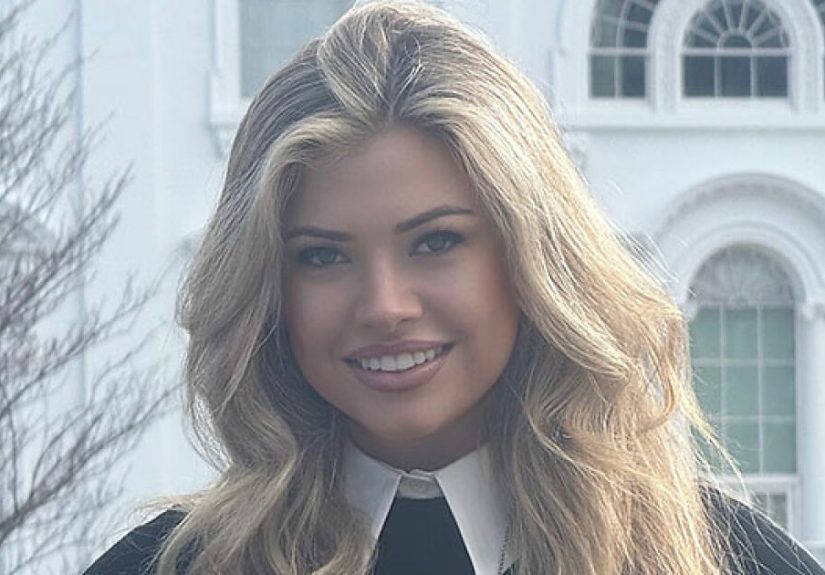
In early 2025, a young, outspoken White House correspondent posted photos tied to her new role covering the administration.
The images went viral fastless because of her reporting and more because commenters decided her outfit looked “too casual” for the most famous driveway in America.
And just like that, the internet tried to turn the White House beat into a dress-code detention hall.
The phrase that lit up comment sections“This isn’t high school”wasn’t really about hemlines or footwear.
It was about what people think a “real journalist” should look like, who gets to define “professional,” and why women in public-facing jobs still get graded on wardrobe before work.
This wasn’t just a fashion argument; it was a culture argument wearing a blazer.
In this article, we’ll break down what happened, why it became such a lightning rod, and what it reveals about modern political mediawhere “new media” credentials, social platforms,
and visual-first storytelling have made appearance part of the conversation whether anyone asked for it or not.
What Sparked the Backlash
The controversy centered on Natalie Winters, a conservative-leaning media figure associated with Steve Bannon’s “War Room” ecosystem and a growing class of politically aligned,
platform-native personalities now occupying space around traditional institutions.
After sharing photos connected to her White House coverage, critics flooded her comments with complaints that her lookoften described online as a mix of fitted pieces and casual footwearwas “inappropriate” or “unprofessional.”
Supporters fired back that the outrage was overblown, gendered, and conveniently ignored the reality that plenty of men in politics and media skate by in “wrinkled suit and heroic coffee stain.”
Winters didn’t exactly respond with a whisper. She publicly pushed back, framing the outrage as a distraction tactic and an attempt to delegitimize her presence in the briefing-room ecosystem.
In the attention economy, the fight itself became contentscreenshots, reaction posts, commentary segments, and the inevitable “Is this the downfall of civilization?” takes.
If this feels familiar, it’s because it is. Viral outrage loves a simple hook, and “outfit drama” is frictionless:
no policy background required, no context needed, just vibes and a comment section with too much free time.
Why the Wardrobe Debate Hit a Nerve
The White House Is a Visual Workplace (Even When the Job Is Words)
The White House briefing room is not a typical office. It’s a stage where clips travel farther than transcripts.
Even if your main job is asking questions and filing stories, you’re still working in a highly photographed, heavily televised environment.
That doesn’t mean “looks matter more than facts,” but it does mean appearance becomes part of how audiences read credibilityfairly or not.
Add social media to the mix and everything becomes more visual, more immediate, and more judgmental.
A single still image can outrun a week of careful reporting. It’s like trying to compete with a meme using a spreadsheet.
“Professional” Is a Moving Target, Not a Universal Law of Nature
Here’s the problem with “professional attire”: everyone thinks it’s obvious until you ask them to define it.
Some people mean “formal.” Others mean “boring.” Some mean “dress like the last person who had this job.”
And a few mean “dress in a way that makes me personally comfortable,” which is… not actually a workplace standard.
Workplace norms have shifted dramatically in the past decade, with many industries adopting more flexible rulesespecially post-2020.
The same outfit that would have been “too casual” in a 2005 newsroom might be normal in a 2025 digital bureau.
Political reporting, though, tends to hold onto old signals: suits, muted colors, conservative silhouettes.
Not because they’re morally superior, but because institutions love uniforms that whisper “don’t look at me, look at the message.”
Gendered Scrutiny: Why Women Still Get the “Fashion Police” Assignment
The loudest subtext in controversies like this is often gender.
Women in media are routinely judged on youthfulness, attractiveness, and styling in ways that men simply aren’tsomething journalists and researchers have been pointing out for years.
When a man shows up slightly rumpled, it can read as “serious” or “too busy chasing the story.”
When a woman shows up stylish, it can be framed as “not serious enough,” even when she’s doing the exact same job.
Journalism industry discussions about workplace double standards have long noted that women are pressured to thread an impossible needle:
look polished, but not “too” anythingtoo trendy, too glamorous, too feminine, too visible.
It’s professionalism as a tightrope act, and the wind is always stronger online.
Is There Actually a Dress Code for the White House Briefing Room?
Despite what the comment section might believe, the White House is not handing out demerits for “insufficient blazer energy.”
The White House Correspondents’ Association (WHCA) emphasizes decorum and respect among colleagues, but it does not function as a fashion tribunal.
In practice, the briefing room has strong normsmost reporters lean business attire because it’s a conservative, high-visibility environmentbut norms are not always formal rules.
Also, the landscape has been shifting. The administration publicly signaled interest in welcoming “new media” voicesindependent journalists, podcasters, and content creators
alongside traditional outlets. That expansion inevitably brings a wider range of styles and presentations, because “news” no longer arrives wearing only one type of suit.
The result? A collision of expectations:
the old-school belief that blending into the wallpaper is the safest route to credibility,
and the new-school reality that audiences reward distinct identity, strong branding, and visuals that pop on a feed.
One side calls it “unprofessional.” The other calls it “modern.”
Both sides, frankly, should call it “not the point,” but here we are.
The Legal and Ethical Side of “Dress the Part”
In most workplaces, dress codes are allowedbut they can become legally risky when they’re applied unevenly or reinforce discrimination.
Federal guidance and resources around workplace policies make clear that appearance rules can’t treat certain employees less favorably because of protected characteristics
and may require accommodations for religion or disability in many circumstances.
(And while a White House correspondent is not a White House employee, the broader conversation about how “dress standards” can encode bias is still relevant.)
Ethically, journalism’s core values aren’t “wear beige.” They’re accuracy, independence, transparency, and accountability.
The Society of Professional Journalists’ ethics framework focuses on what reporters doverify, provide context, avoid conflictsnot what they wear.
The danger of outfit fixation is that it swaps a substantive audit (Is the reporting fair? Is it accurate?) for a superficial one (Do I like the shoes?).
There’s also a fairness issue: if “professional” becomes shorthand for “conforming,” it can exclude people who don’t match legacy norms
younger reporters, people from different cultural backgrounds, people with different body types, or anyone who simply doesn’t have the budget for a rotating closet of Beltway basics.
That doesn’t mean “anything goes,” but it does mean “professionalism” should be about conduct and competence first.
Why This Story Spread So Fast: Social Media, Identity, and the New Media Era
A wardrobe controversy travels fast because it activates three high-octane internet fuels:
(1) identity signaling (“people like us dress like this”),
(2) moral language (“respect the institution!”),
and (3) easy participation (everyone can have an opinion on a picture).
It also creates a ready-made narrative: “serious place” versus “casual outfit,” with a side of generational conflict.
But the deeper media shift matters here. The press ecosystem around the White House has been under intense stress and scrutiny,
including ongoing fights about access, credentials, and who gets to be in the room.
As traditional outlets compete with podcasts, livestreams, and social-first commentary, the boundary between “reporter” and “performer” gets blurrier
and audiences increasingly evaluate credibility using cues that have nothing to do with sourcing.
Winters’ presence and her critics’ reaction also sit inside a bigger debate about political media polarization:
when people dislike the outlet or the viewpoint, they may attack the packaging (clothes, tone, style) instead of the substance (questions, facts, claims).
The outfit becomes a proxy war for legitimacy.
So What Counts as “Appropriate” in a Place Like This?
If you strip away the outrage, a reasonable standard existsand it’s less exciting than the internet wants.
In high-stakes institutional settings like the White House, “appropriate” usually means:
clean, intentional, functional, and not distracting in ways that undermine the work you’re trying to do.
That might be a suit. It might be a dress with a structured jacket. It might even be polished sneakers if your job requires constant movement
though you should expect people to notice, because humans notice differences like they notice a typo in a headline.
The key is that appropriateness is contextual. A correspondent sprinting between stakeouts, camera hits, and security lines has different practical needs
than someone sitting at a desk editing scripts. Comfort and mobility aren’t signs of disrespect; they’re sometimes signs of competence.
But in political reporting, signals matterso people make tradeoffs between function and convention.
How Journalists and Public-Facing Professionals Can Handle Outfit Controversies
1) Decide your “uniform,” then free your brain for the actual job
Many experienced reporters quietly build a repeatable formula: a few neutral pieces, a consistent silhouette, and shoes that won’t betray them mid-sprint.
Not because they lack creativity, but because they’d rather spend mental energy on questions, sources, and deadlines than on whether today’s jacket reads “too weekend.”
2) Don’t let the audience write your job description
Critics will always exist, and some are acting in bad faith. If your outfit becomes the story, you can acknowledge the noise without feeding it.
A short clarification, a boundary, and then a hard pivot back to reporting can be more powerful than an all-day quote-tweet war.
3) Know when the critique is really harassment
There’s a difference between “this seems too casual for the setting” and sexualized comments, insults, or threats.
The second category isn’t feedback; it’s harassment with punctuation.
Newsrooms and platforms should treat it accordingly, and individuals should protect their peace, their privacy, and their safety.
4) Keep the focus on substance
The cleanest way to outrun a shallow narrative is to publish strong work.
Ask sharp questions. Break real stories. Correct mistakes fast. Be transparent about what you know and what you don’t.
Over time, credibility builds a gravity that outfits can’t override.
Conclusion: The Outfit Isn’t the Assignment
The “This isn’t high school” pile-on wasn’t really a lesson about skirts, sneakers, or whether a blazer should be mandatory in the year 2025.
It was a reminder that public-facing workespecially political mediastill comes with a visual double standard,
and that “professionalism” often gets used as a polite mask for bias, gatekeeping, or plain old discomfort with change.
If you care about the health of political journalism, the better questions aren’t “Is that outfit modest enough?”
They’re “Is the reporting accurate?” “Are the questions fair?” “Is access being granted evenly?” and “Are we judging people on competence rather than aesthetics?”
The White House has enough real problems. We don’t need to add “shoe discourse” to the national security agenda.
On-the-Ground Experiences: Dressing for a High-Stakes Beat (Plus What People Don’t Tell You)
To understand why outfit debates can feel both ridiculous and oddly intense, it helps to picture the real rhythm of a high-profile reporting day.
The “White House correspondent” title sounds glamorous until you realize it often involves speed-walking, weather-whiplash, and trying not to spill coffee on a credential
that costs more emotional energy than your phone.
One of the most common experiences reporters describeespecially newcomersis how quickly the day stops being theoretical.
You can plan the perfect “professional look” at 7 a.m., and by 9 a.m. you’re outside for an unplanned stakeout,
sweating through a heat wave or shivering in wind that treats your hair like a political opponent.
The practical reality pushes people toward outfits that can survive a sprint, a long standing wait, bright lights, and sudden schedule changes.
There’s also the “camera math” problem. A briefing room isn’t a runway; it’s harsh lighting, sharp angles, and constant photos.
Colors can wash out. Patterns can moiré. Fabrics wrinkle if you sit for long stretches.
Some journalists learn quickly to avoid anything that becomes the visual headline, because once an outfit is “the thing,”
it can hijack the entire segmenteven if the questions asked were strong.
Meanwhile, the environment itself amplifies tradition. Institutional spaces come with unspoken rules:
neutral tones, conservative silhouettes, and the classic Washington aesthetic of “I’m here to talk policy, not to be perceived.”
Newer media personalities, however, often come from a world where being perceived is part of the business model.
Their audiences may expect a sharper personal brandmore distinct style, more identity cues, more “this is me” in the presentation.
When those worlds collide in the same room, you get friction: legacy norms interpret distinct style as “not serious,”
while social-first audiences interpret conformity as “boring” or “fake.”
Another common experience: the first week on a prestigious beat is a sensory overload.
New correspondents worry about everythingwhere to stand, when to speak, how to get a question in, whether they’re accidentally blocking someone’s shot.
In that anxious mental state, appearance becomes a magnet for commentary because it’s the easiest thing for outsiders to critique.
The result can feel unfair: the newest person is trying to learn the craft, but the internet grades the outfit like it’s the final exam.
Veteran reporters often pass down practical “survival tips” that have nothing to do with fashion and everything to do with stamina:
pick shoes you can run in; carry a compact umbrella; bring a layer for freezing press rooms; keep a lint roller in your bag; and always assume you’ll end up outside
even if the schedule says “inside.”
People laugh about it, but those details protect your performance.
When you’re comfortable and prepared, you can focus on the real job: listening, analyzing, asking, verifying.
And here’s the quiet truth behind many “improper outfit” controversies:
sometimes the choice is less about rebellion and more about logistics.
If you’re doing live hits, recording quick social clips, and bouncing between locations, you may choose mobility over tradition.
That doesn’t automatically make the look “right” for every audience, but it does make it understandable.
Context turns a “why would you wear that?” into “oh, that’s why.”
The best takeaway from these experiences isn’t “dress like everyone else” or “ignore norms completely.”
It’s “be intentional.” Dress in a way that supports the work, respects the setting, and doesn’t hand critics an easy distraction
while also refusing to let shallow judgments define your competence.
If your questions are strong and your reporting is solid, the outfit fades.
If your reporting is weak, no suit on Earth will save you. (Even a really expensive one.)