Table of Contents >> Show >> Hide
- The Joke That Escaped the Club and Landed in a Campaign
- “Apologizes to Absolutely Nobody” Is a Persona, Not an Accident
- Who Tony Hinchcliffe Is (and Why This Keeps Happening)
- The Business Side: Controversy Can Be a Career Engine
- Apology Culture vs. Accountability: What People Are Actually Arguing About
- What This Means for Comics, Fans, and Platforms
- Conclusion: The Non-Apology as the Point
- Experiences Related to “Tony Hinchcliffe Apologizes to Absolutely Nobody” (500+ Words)
There are two types of public statements in America: the apology, and the thing that happens when someone
refuses to apologize so hard it becomes the entire headline. Tony Hinchcliffe’s “apologizes to absolutely nobody”
moment belongs squarely in the second categoryless a press release, more a planted flag that says,
“If you came here for remorse, the exit is that way.”
This isn’t just celebrity stubbornness. It’s a case study in modern comedy, modern politics, and modern internet physics:
once something goes viral, context collapses faster than a folding chair at a backyard barbecue.
And when the comedian involved is known for roast comedyan art form built on saying the quiet part loudly
the collision gets even louder.
The Joke That Escaped the Club and Landed in a Campaign
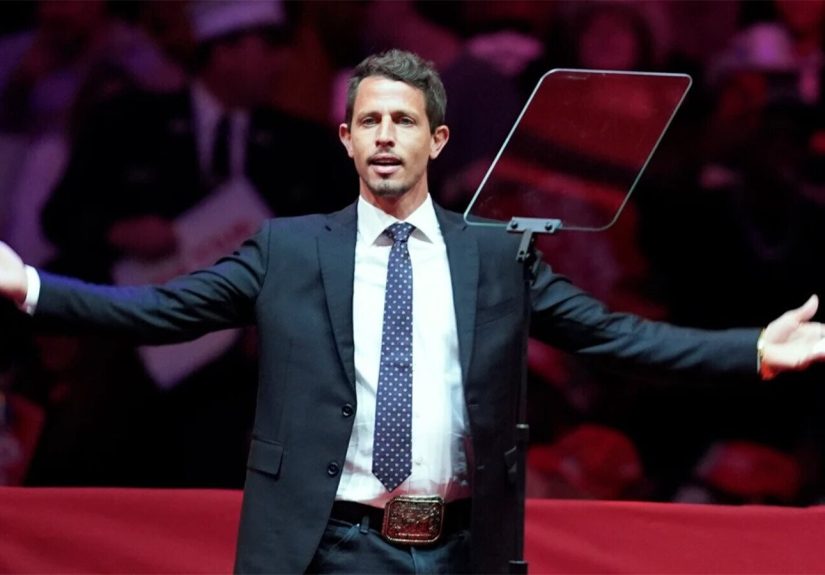
The flashpoint arrived at a Donald Trump rally at Madison Square Garden on October 27, 2024, where Hinchcliffe delivered
a warm-up set that included a line comparing Puerto Rico to a “floating island of garbage.” That phraseshort, punchy,
and instantly screenshot-friendlybecame the quote that traveled while the rest of the set stayed behind.
Why That Line Hit Like a Brick Through a Window
Comedy doesn’t live in a vacuum; it lives in a room. In a comedy club, audiences buy a ticket knowing the deal:
it’s late, it’s edgy, and it might get uncomfortable. At a political rally, the crowd is there for a cause,
a candidate, and a vibe. The room’s “contract” changes. A roast-style insult that might read as a risky joke
in a club can read as a statement of values in a campaign arenaespecially when it targets a real place and
real people with a long history of being talked about like an afterthought.
Even the simplest version of the backlash makes sense: Puerto Rico isn’t a fictional planet in a sci-fi bit.
It’s home to millions of people, and the broader Puerto Rican community is deeply woven into U.S. citiesNew York included.
So a punchline that treats Puerto Rico as disposable can feel less like “comedy” and more like permission for contempt.
The Blowback Was Fast, Bipartisan, and Very Online
The reaction wasn’t limited to one party or one corner of the internet. Public figures criticized the line,
celebrities weighed in, and the Trump campaign took the notable step of distancing itself from the joke.
That’s a rare move in politics, where “no comment” is often considered a love language.
Hinchcliffe, for his part, didn’t take the traditional route of “I’m sorry if you were offended.”
Instead, he defended the bit, argued it was taken out of context, and projected the posture that would soon be
boiled down into a single meme-able sentence: apologizing to absolutely nobody.
“Apologizes to Absolutely Nobody” Is a Persona, Not an Accident
To understand why Hinchcliffe didn’t pivot into remorse, you have to understand the type of comedian he is.
He’s a roast comican insult specialistsomeone whose brand is built on saying what most people would edit out.
In roast culture, the joke is the job, the sting is the feature, and the applause is the performance review.
Roast Comedy Runs on Risk (and a High Tolerance for Anger)
Roast comedy is a weird sport. It’s half writing, half intimidation, and fully dependent on the audience believing
they’re watching a performance rather than a personal philosophy. The best roast comics can thread a needle:
they go hard without sounding hollow, they punch with precision instead of laziness, and they land the laugh
before the room turns into a lecture.
Hinchcliffe has long positioned himself on the “no apologies” side of comedy’s culture war. In interviews and public remarks,
he’s defended the idea that comedians shouldn’t apologize for jokesbecause apologizing, in that worldview, signals that
the audience gets to rewrite the act after the fact.
But Context Still Wins (Even When You Don’t Want It To)
Here’s the part that frustrates both fans and critics: context isn’t optional. A joke at a roast is understood as an
agreed-upon fight night. A joke at a political rally is closer to an endorsement, even if the comic insists it’s “just jokes.”
The audience isn’t only laughing; they’re signaling membership.
Hinchcliffe later acknowledged, in essence, that the venue and timing weren’t idealwithout conceding that the material
itself was wrong. That distinction matters: it’s not “I shouldn’t have said it,” but “maybe that wasn’t the best place
to do that set.” It’s a stage-management critique, not a moral reversal.
Who Tony Hinchcliffe Is (and Why This Keeps Happening)
Hinchcliffe is a stand-up comedian from Youngstown, Ohio, who became widely known through roast writing and performance,
and through hosting Kill Tony, a long-running live comedy show/podcast where aspiring comedians do one minute
of stand-up, then get critiquedoften brutallyby Hinchcliffe and a rotating panel.
The “Kill Tony” Format: A Bucket, a Mic, and Public Judgment
The premise of Kill Tony is simple and ruthless: names get pulled from a bucket, unknown comics get 60 seconds,
and then they get evaluated in front of a live crowd. For fans, it’s electrifyinga comedy talent show with teeth.
For critics, it can look like a pipeline for punching down disguised as “free speech.”
Either way, it’s undeniably influential in the current stand-up ecosystem.
This format matters because it explains the tone Hinchcliffe practices weekly: rapid judgment, sharp language,
and a high comfort level with discomfort. If your artistic home is a show where bombing is part of the entertainment,
you may be less motivated to apologize when the wider world boos.
Earlier Controversy: The 2021 Incident and the “Never Apologize” Philosophy
The 2024 rally wasn’t Hinchcliffe’s first major controversy. In 2021, he faced significant backlash after a set in Austin
in which he insulted fellow comedian Peng Dang with racist language and a mocking accent. The clip spread widely,
and the fallout included professional consequences. Importantly for this story, Hinchcliffe did not offer a clean,
conventional apology then eitherreinforcing the idea that “no apology” isn’t a spontaneous reaction, but a consistent stance.
That history is why “apologizes to absolutely nobody” resonated the way it did. People weren’t just reacting to a single line.
They were reacting to a pattern: a performer whose brand is built on refusing to bend, even when the room is on fire.
The Business Side: Controversy Can Be a Career Engine
In a healthier universe, the attention economy would reward nuance, restraint, and comedic craftsmanship.
In this universe, outrage is a rocket boosterand it doesn’t care whether the payload is praise or condemnation.
When controversy hits, the internet hands you three things at once: visibility, enemies, and free marketing.
Netflix, Streaming, and the Mainstreaming of “No Filter” Comedy
In 2025, Hinchcliffe’s comedy expanded further into the streaming mainstream. Netflix released
Kill Tony: Kill or Be Killed, presenting the show’s unforgiving “one minute to win the room” concept to a much wider audience.
Netflix also has his earlier special Tony Hinchcliffe: One Shot, filmed as a single continuous performance.
For supporters, this is proof that the industry still has room for edgy comics who won’t sanitize their work.
For critics, it’s proof that controversy doesn’t necessarily cost you opportunitiesit can sometimes widen them.
The uncomfortable takeaway is that refusing to apologize can function as both a personal principle and a business strategy.
Madison Square Garden Again: The Arena Era and the “Device-Free” Twist
Hinchcliffe’s relationship with Madison Square Garden didn’t end with the rally controversy.
In August 2025, he returned to the venue for a comedy event listed as device-freemeaning no phones, no recording,
and no instant clips flying into the algorithmic sun.
That’s not just a logistical detail; it’s a commentary on the era. Device-free shows are one way comedians try to protect
context. If a joke can’t be clipped into a seven-second outrage grenade, it has a better chance of being understood as a joke
and not as a slogan.
Apology Culture vs. Accountability: What People Are Actually Arguing About
Public arguments about comedy often pretend to be about “free speech,” but they’re usually about something more practical:
who gets to set the terms of the room. Comedians want the freedom to take risks. Audiences want the freedom to say,
“That wasn’t clever, it was lazy,” or “That wasn’t a punchline, it was a cheap shot.”
The Case for Hinchcliffe (As His Fans See It)
- Comedy requires risk. If every controversial line triggers a forced apology tour, comedy becomes a safe brochure.
- Roast style is equal-opportunity. The ethos is “everyone is fair game,” not “pick a target and bully them.”
- Context matters. Fans argue that isolated clips remove the setup and the rhythm of the act.
- Apologies can be performative. A public apology might satisfy the internet without reflecting real growth.
The Case Against Hinchcliffe (As Critics See It)
- Not all targets are equal. “Everyone gets roasted” sounds fair until you notice who absorbs the real-world harm.
- Politics changes the meaning. At a rally, a joke can function like messaging, especially when it lands on identity.
- Intent doesn’t erase impact. A comic can intend satire while still amplifying uglier sentiments in the crowd.
- Repeat patterns matter. A history of racially charged controversy affects how new material is interpreted.
A Middle Path: The “Better Joke” Standard
There’s a version of this debate that doesn’t require anyone to pretend comedy should be polite.
It simply asks: was the joke good? Did it reveal something human, or did it just hit a group with a blunt object?
The harsh truth for comics is that the public isn’t grading on effort. If a line feels like it trades originality for shock,
people won’t treat it like artthey’ll treat it like a headline. And once it becomes a headline, the comedian becomes a symbol,
whether they want to or not.
What This Means for Comics, Fans, and Platforms
If You’re a Comic: Protect the Room, Then Earn It
If you’re going to do material that relies on context, you have to protect context. That can mean club sets before big stages,
clearer framing, and understanding that a political venue is not the same contract as a comedy venue.
It can also mean being honest about what you’re doing: are you satirizing a prejudice, or are you renting one?
If You’re a Fan: Choose Your “No Filter” Intentionally
Fans don’t have to become moral referees to have standards. You can love roast comedy and still say,
“That one didn’t work,” or “That one crossed my line.” The audience vote isn’t only applause.
It’s attention, sharing, ticket buys, and who you defend when the room gets complicated.
If You’re a Platform: Stop Pretending It’s Just Content
Platforms aren’t neutral pipes. When a streamer amplifies a comic known for controversy, it’s making a bet:
that the audience either wants the provocation, or will watch because they’re mad. Either way, it’s a business decision.
The least a platform can do is be transparent about what kind of show it’s sellingso viewers aren’t shocked when “no filter”
turns out to mean exactly what it says on the label.
Conclusion: The Non-Apology as the Point
“Tony Hinchcliffe apologizes to absolutely nobody” works as a headline because it describes a real stance:
a comic who treats apology as surrender, and who has built a career on testing where the line is drawn.
The 2024 rally controversy magnified that stance by placing roast comedy inside a political arena,
where jokes don’t just landthey signal.
Whether you see Hinchcliffe as a free-speech comedian, a provocateur, or a symptom of the attention economy,
the bigger story is the same: in 2025, the apology is optional, the clip is forever, and context is the one thing
everyone claims to care aboutright up until it’s inconvenient.
Experiences Related to “Tony Hinchcliffe Apologizes to Absolutely Nobody” (500+ Words)
If you want to understand why this phrase sticks, don’t start with a think piecestart with the experience of how it travels.
First, you see the quote in a clip. Not the whole set. Not the room temperature. Just the line, a reaction, and the internet’s
favorite sport: deciding what a person is forever based on ten seconds.
The next experience is emotional whiplash. Some people feel immediate angerbecause the joke doesn’t land as absurdity;
it lands as disrespect toward a real community. Others laugh reflexively, not because they endorse the sentiment,
but because roast comedy trains audiences to react to audacity the way you react to fireworks: loud, sudden, and hard to ignore.
In both cases, the moment becomes less about comedy structure and more about identity and allegiance. People aren’t just reacting
to a punchline; they’re reacting to what they believe the punchline gives permission to say out loud.
Then there’s the experience of being a Kill Tony viewerespecially if you’ve watched enough episodes to understand the ecosystem.
The show’s vibe is part talent showcase, part gladiator pit. When a name gets pulled, you can practically feel the performer’s heartbeat
through the screen. One minute sounds short until it’s your minute. In that world, “no apologies” isn’t only a philosophyit’s a survival tool.
You bomb, you get roasted, you stand there anyway. The audience learns to enjoy discomfort as entertainment, and the comedians learn to weaponize
discomfort as craft.
If you imagine attending a live recording, the experience is even sharper. The room has a competitive buzz: regulars, bucket pulls, guests,
and an audience that wants volatility. When jokes hit, the laughter is explosive. When jokes miss, the silence is brutal. That dynamic helps explain
why a comedian might double down publicly: in roast culture, hesitation reads as weakness, and weakness gets eaten alive. “Apologizes to absolutely nobody”
is, in a strange way, the emotional equivalent of standing tall after a bad roundexcept the round is happening on the national internet.
Another common experience is what happens in friend groups afterward. The debate starts as comedy“Was it funny?”and quickly becomes values“What does it mean
to joke about that here?” Someone brings up intent. Someone else brings up impact. Someone says, “It’s just a joke,” and someone else says,
“Okay, but why that joke?” This is where the phrase really earns its power: it functions like a conversation ender. If the comedian apologizes to nobody,
the audience is left to argue with each other instead of receiving a neat resolution from the person at the center.
Finally, there’s the experience of being a casual viewer who encounters Hinchcliffe through Netflix rather than through stand-up subculture.
To that viewer, the style can feel like a different dialect of comedyfaster, harsher, more combative. Without the long relationship that fans have built
with the format, “no filter” can feel less like edgy fun and more like hostility wearing a microphone. That gap in audience expectationssuper-fans on one side,
newcomers on the otheris exactly where controversies ignite.
Taken together, these experiences explain why “apologizes to absolutely nobody” is more than a quote. It’s a signal to fans that the persona remains intact,
and a signal to critics that the fight isn’t going to end with a tidy statement. Love it or hate it, the phrase is built for the era we live in:
short, stubborn, and impossible to ignore.