Table of Contents >> Show >> Hide
- First: Yes, Men Have Breast Tissue
- Common Causes of Male Breast Lumps (And What They Often Feel Like)
- Gynecomastia (Glandular Breast Tissue Growth)
- Pseudogynecomastia (Fatty Tissue, Not Gland Growth)
- Cysts or Blocked Glands (Less Common in Men, Still Possible)
- Lipoma (Benign Fatty Lump)
- Infection or Abscess
- Trauma: Bruise, Hematoma, or Fat Necrosis
- Medication- or Substance-Related Breast Changes
- Male Breast Cancer (Rare, But Important to Recognize)
- Symptoms and Characteristics: How to “Read” a Lump (Without Over-Interpreting)
- Warning Signs: When to See a Clinician Soon
- What to Expect at the Doctor: The Usual Workup
- What You Can Do Right Now (Before You Spiral)
- Myths That Make This Scarier Than It Needs to Be
- Bottom Line
- Experiences Men Commonly Share (And What They Learned)
Found a lump on your chest and your brain instantly opened 47 tabs labeled “uh-oh”? You’re not alone. Male breast lumps are surprisingly common, and most causes are not cancer. Still, any new breast lump deserves a calm, practical check-inbecause the goal is confidence, not guesswork.
This guide breaks down what male breast lumps can feel like, which symptoms matter most, and what doctors typically do to sort “no big deal” from “please don’t ignore this.” (Spoiler: they don’t use a crystal ball. They use questions, an exam, and sometimes imaging.)
Important: This article is for education, not diagnosis. If you’re worried, or if you notice any warning signs listed below, it’s smart to get checked by a healthcare professional.
First: Yes, Men Have Breast Tissue
Men have breast tissue toojust usually less of it. That means you can develop many of the same issues that cause lumps in anyone: gland growth, cysts, infections, benign fatty lumps, or (rarely) cancer. A lump under or near the nipple is especially common because that’s where most breast tissue sits.
Common Causes of Male Breast Lumps (And What They Often Feel Like)
Below are common explanations doctors consider. The “feel” descriptions are typical patternsnot guarantees.
Gynecomastia (Glandular Breast Tissue Growth)
What it is: A benign increase in glandular breast tissue, often related to hormone shifts. It can happen during puberty, with aging, or due to certain medications or health conditions.
Common feel/traits:
- Location: Often right under the nipple/areola
- Texture: Rubbery or firm “button-like” disk
- Tenderness: Can be tender or sore, especially early on
- Sides: One side or both; may be uneven
Reality check: Gynecomastia is one of the most common reasons men notice a lump-like change. It can be alarming, but it’s usually treatableor it may improve over time depending on the cause.
Pseudogynecomastia (Fatty Tissue, Not Gland Growth)
What it is: Increased chest fat that can mimic breast enlargement.
Common feel/traits:
- Texture: Softer, more diffuse fullness (less like a distinct “button”)
- Edges: Not sharply defined
- Usually: More noticeable with weight gain
Cysts or Blocked Glands (Less Common in Men, Still Possible)
What it is: A fluid-filled sac or blocked duct near the skin or breast tissue.
Common feel/traits:
- Texture: Smooth, round, may feel “squishy” or firm
- Mobility: Often moves slightly under the skin
- Skin: Sometimes near a pore or hair follicle
Lipoma (Benign Fatty Lump)
What it is: A slow-growing benign lump made of fat cells.
Common feel/traits:
- Texture: Soft or doughy
- Mobility: Often easily movable under the skin
- Pain: Usually painless
Infection or Abscess
What it is: Infection in skin or tissue (sometimes starting from an irritated hair follicle or a small skin break).
Common feel/traits:
- Pain: Often tender or painful
- Skin changes: Redness, warmth, swelling
- Timing: Can develop over days
- Other symptoms: Sometimes fever or feeling unwell
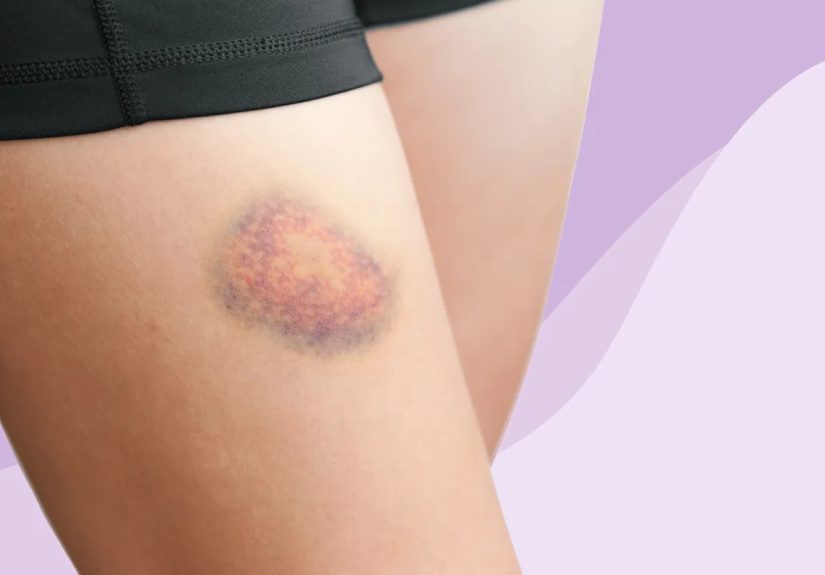
Trauma: Bruise, Hematoma, or Fat Necrosis
What it is: After a hit to the chest (sports, fall, seatbelt injury), bleeding or tissue changes can create a lump.
Common feel/traits:
- Timing: Often appears after a clear injury (but not always remembered)
- Color/pain: Bruising or soreness may be present
- Course: Often improves gradually over weeks
Medication- or Substance-Related Breast Changes
Some medications and substances can shift hormone balance and contribute to gynecomastia or breast tenderness. Examples often discussed in medical references include certain heart medications, hormone-related therapies, and some psychiatric medications. The key takeaway: don’t stop a prescribed medication on your own. If you suspect a link, bring it up with your clinician so you can weigh safer alternatives.
Male Breast Cancer (Rare, But Important to Recognize)
What it is: Cancer arising from breast tissue in men. It’s uncommon, but early evaluation matters.
Common feel/traits:
- Lump: Often firm and painless
- Location: Frequently near or under the nipple
- Mobility: May feel fixed to surrounding tissue
- Skin/nipple changes: Can occur (see red flags below)
Note: Pain does not rule cancer in or out. And a painless lump does not automatically mean cancer. Pattern recognition helps, but diagnosis requires evaluation.
Symptoms and Characteristics: How to “Read” a Lump (Without Over-Interpreting)
If you’re trying to describe a lump accurately, think like a detectiveminus the dramatic soundtrack.
1) Location
- Directly under the nipple: Often gynecomastia, but also where many male breast cancers occurso persistent changes should be evaluated.
- More to the side of the chest: Could be a lipoma, cyst, lymph node, or skin-related issue.
- In the armpit: Sometimes a reactive lymph node or other causesworth checking, especially if persistent.
2) Texture and shape
- Rubbery “disk”: Commonly described with gynecomastia
- Soft and squishy: Often fatty tissue or lipoma
- Hard, irregular edges: Concerning feature that should be evaluated
- Round and smooth: More typical of benign cyst-like lesions
3) Mobility
- Moves easily: More often benign (like lipoma or cyst)
- Feels stuck/fixed: A reason to get checked
4) Pain and tenderness
- Tender/sore: Common in gynecomastia (especially early), infection, trauma
- Painless: Can be benign or seriouscontext matters
5) Skin and nipple changes
These are often more meaningful than the lump alone. Watch for dimpling, puckering, redness that doesn’t improve, scaling, nipple inversion (turning inward), or discharge.
Warning Signs: When to See a Clinician Soon
If you notice any of the following, don’t “wait it out” indefinitelyschedule an appointment:
- A firm or hard lump, especially if it’s new or growing
- Lump that feels fixed (not movable)
- Skin dimpling, puckering, thickening, or persistent redness/scaling
- Nipple changes: inversion, crusting/scaling that doesn’t heal
- Nipple discharge (especially clear or bloody)
- Swollen lymph nodes in the armpit or near the collarbone
- Fever, warmth, significant tenderness (possible infectionneeds prompt care)
What to Expect at the Doctor: The Usual Workup
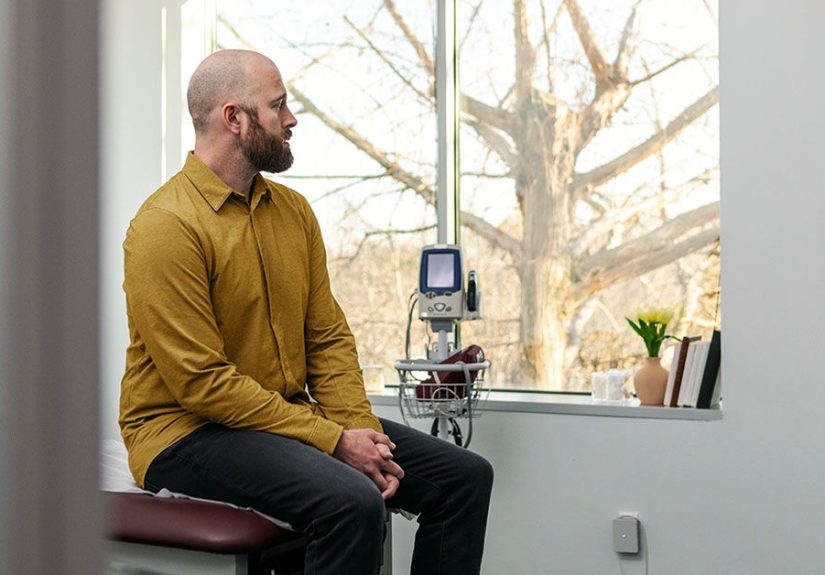
Medical visits for breast lumps are often more straightforward than people imagine. The clinician’s job is to confirm what tissue they’re feeling and decide whether it looks benign or needs further testing.
Step 1: History (The “Tell Me the Story” Part)
- When you first noticed the lump and whether it’s changing
- Pain, tenderness, discharge, skin changes
- Recent trauma or infection
- Medications and supplements
- Family history (especially breast/ovarian cancer)
- Symptoms suggesting hormone changes (varies by person)
Step 2: Physical Exam
The clinician will feel the lump, check the nipple/skin, and examine underarms and collarbone areas for lymph node changes.
Step 3: Imaging (If Needed)
Yes, men can get breast imaging. Depending on your age and what’s found:
- Ultrasound can help distinguish solid vs. fluid-filled masses.
- Mammogram may be used to assess breast tissue patterns and suspicious features.
- MRI is less common but used in certain situations.
Step 4: Labs or Biopsy (Sometimes)
If gynecomastia is suspected, clinicians may consider labs to look for underlying causes (hormonal, liver/kidney, and other factors depending on the case). If imaging or exam suggests uncertainty or risk, a biopsy (sampling tissue) may be recommendedthe most definitive way to determine what’s going on.
What You Can Do Right Now (Before You Spiral)
- Don’t “test” it 30 times a day. Frequent poking irritates tissue and makes tenderness worse. Check occasionally, not obsessively.
- Write down details: size (rough estimate), location, tenderness, and when you noticed it. Tracking beats guessing.
- Scan for skin/nipple changes in good lighting.
- Think back 4–6 weeks: new meds, supplements, chest injury, intense workouts, illness.
- Make the appointment if it’s new, persistent (e.g., more than a couple weeks), or has warning signs.
Myths That Make This Scarier Than It Needs to Be
Myth: “Men can’t get breast cancer.”
Men canand that’s exactly why awareness matters. It’s uncommon, but not impossible.
Myth: “If it hurts, it can’t be serious.”
Pain often points toward benign causes (like gynecomastia or infection), but it isn’t a perfect safety label. Your best move is to evaluate the whole picture.
Myth: “If it’s painless, it must be cancer.”
Nope. Many benign lumps are painless. The goal is not to self-diagnoseit’s to know when to get checked.
Bottom Line
Male breast lumps are common and usually benign, with gynecomastia being a frequent culpritespecially for lumps directly under the nipple. But certain features (hard/fixed lumps, skin or nipple changes, discharge, swollen nodes) deserve prompt medical evaluation. Think of it like checking the smoke detector: most of the time it’s toast, but you still want to be sure.
Experiences Men Commonly Share (And What They Learned)
To make this topic feel less abstract, here are real-world-style scenarios that reflect what many men report experiencing. These are examples, not diagnoses, but they show how symptoms and lump characteristics can point the next step in the right direction.
1) “It’s a small, tender button under my nipple.”
A lot of guys describe discovering a rubbery, coin-like lump directly under one nipplesometimes during a shower, sometimes while changing shirts, and sometimes while doing the classic “I swear this shirt shrank in the wash” tug. The lump can feel sore when pressed, and the tenderness makes it hard to ignore. This pattern is frequently consistent with gynecomastia, especially when it happens during puberty or later adulthood. What many people learn from a clinic visit is that the exam focuses on whether the tissue feels like gland growth vs. something else, and whether there are any nipple or skin changes that raise concern. The reassurance often comes from two things: (1) the location and feel are typical for benign gland tissue growth, and (2) the plan is clearmonitoring, addressing triggers (like medication review), or testing when appropriate.
2) “My chest looks fuller, but I can’t find one specific lump.”
Some men don’t feel a distinct mass at alljust a general increase in chest fullness, often on both sides. They might notice it in fitted T-shirts or when they’re doing push-ups and thinking, “Is this progress… or just gravity?” This pattern can align with pseudogynecomastia (fatty tissue) or mild gynecomastia. Many men say the most helpful part of evaluation is having someone experienced confirm whether there’s a firm glandular “disk” under the nipple. If it’s mostly fatty tissue, the conversation often turns to overall health goals and what changes are realistic and safewithout shame and without a crash diet plan that lasts exactly three days.
3) “A painless hard lump showed up, and it’s not moving.”
This is the scenario where doctors typically lean in a little closer. Men sometimes notice a firm lump near the nipple that doesn’t hurt and feels less movable than expected. Even if the lump turns out to be benign, this combination (firm, painless, fixed or persistent) is exactly why clinicians may recommend imagingoften an ultrasound and sometimes a mammogramto get a clearer look. Men who go through this workup often say the biggest takeaway is that early evaluation replaces fear with facts. If something suspicious is found, acting early matters. If it’s benign, you get your life back (and your internet search history can finally calm down).
4) “It started after I hit my chest, and now there’s a lump.”
Sports collisions, a fall, or even a seatbelt injury can lead to a bruise or localized swelling that feels like a lump. Sometimes there’s obvious bruising; sometimes the bruise fades but a small firmness remains. Many men learn that trauma can cause a temporary lump from bleeding (a hematoma) or tissue changes that take time to settle. The usual advice is not to ignore it if it’s enlarging, not improving, or accompanied by skin/nipple changesbecause “it was probably the crash” is not the same as “we’ve confirmed it’s harmless.”
5) “It’s red, warm, and painfulthis can’t be good.”
Painful lumps with warmth and redness can signal infection. Men often describe it as a sore spot that escalates quickly, sometimes near a hair follicle or irritated skin. In these cases, what people learn fast is that waiting rarely helps. Evaluation may involve checking for an abscess and treating with appropriate care. The lesson here is simple: rapid changes plus inflammation signs deserve prompt attention.
If any of these experiences sound familiar, the best next step is the same: describe what you feel and see, watch for warning signs, and get a professional exam when needed. You don’t need to panicbut you also don’t need to gamble with your health.