Table of Contents >> Show >> Hide
- The Big Brown Truck Has an Unexpected Fan Club
- Why These Photos Work So Ridiculously Well Online
- Jason Hardesty and the Selfie Era of Route Fame
- These Aren’t Just Cute Pictures. They’re Relationship Photos.
- The Secret Ingredient Is Consistency
- Why “30 Pics” Feels Like Catnip for Readers
- Not Every Route Is a Puppy Parade, and That Matters Too
- What This Trend Says About Work, Community, and the Internet
- The Real Reason People Can’t Get Enough
- More Everyday Route Experiences That Make This Story Even Better
- Conclusion
There are two kinds of delivery updates in life. The first is the standard one: Out for delivery. Helpful, practical, emotionally neutral. The second is far better: a photo of a UPS driver grinning next to a Labrador who looks like he just signed for the package himself. That one does something special to the human brain. Suddenly, your to-do list softens, the world feels less annoying, and you begin to suspect that maybe civilization can still be saved by golden retrievers and a guy in brown shorts.
That is exactly why stories like “UPS Driver Captures The Cutest ‘Clients’ He Meets On Routes” spread so fast online. They are not just cute. They are a perfect collision of everyday work, animal charm, and genuine human connection. And unlike a lot of internet sweetness, this kind has receipts. For years, UPS drivers across the United States have been sharing photos of dogs, cats, and other surprise route greeters they meet while dropping off packages. Some of those animals jump into trucks for treats. Some wait at the curb like they are personally monitoring supply chain performance. Some simply sit there looking proud, as if they own the house, the neighborhood, and perhaps the delivery company too.
This article takes that viral premise and digs into why people cannot stop clicking, smiling, and sending these pictures to everyone they know with the message, “You need this today.” Because they do. We all do.
The Big Brown Truck Has an Unexpected Fan Club
For decades, pop culture pushed the same tired image: dog sees delivery person, dog loses its mind, mail carrier flees for dear life. Funny in cartoons, sure. Not always true in real life. In fact, one reason these route photos land so well is because they flip that stereotype on its furry head.
The internet’s fascination with friendly delivery-route animals did not come out of nowhere. It grew from real routines. A longtime UPS driver named Sean McCarren helped turn those moments into a full-blown online phenomenon by creating UPS Dogs, a page where drivers share snapshots of the animals they meet on their routes. The appeal is immediate: giant smiles, muddy paws, truck-step cameos, and the unmistakable look of a dog who has decided this driver is one of his people.
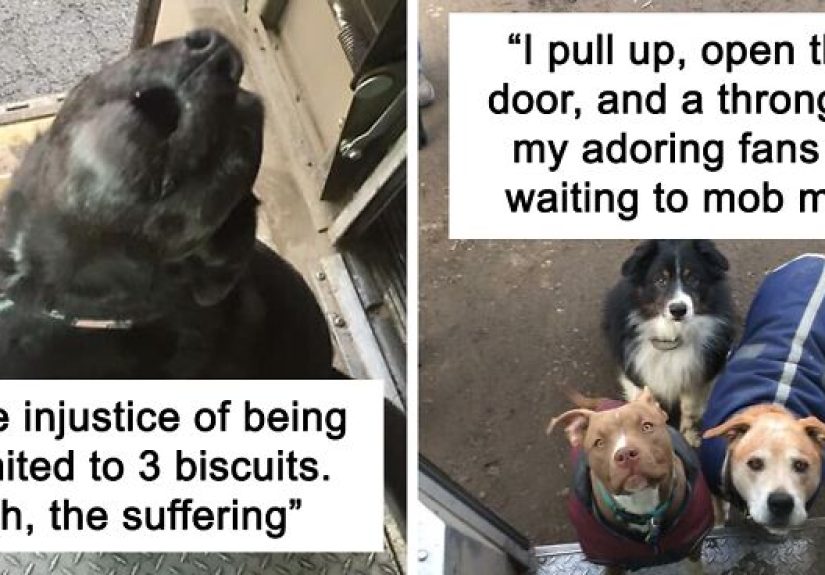
And once you know that many drivers keep treats on hand, the whole relationship makes even more sense. In one of the least shocking developments in modern history, dogs have figured out that the brown truck sometimes arrives with snacks. In parts of the country, the UPS vehicle is affectionately treated less like a parcel van and more like a mobile happiness machine. One UPS driver even described his truck as the “treat wagon,” which honestly sounds like a title that deserves to be embroidered on a uniform.
Why These Photos Work So Ridiculously Well Online
A gallery of 30 route photos sounds simple, but the emotional math behind it is sneakily brilliant. First, you get animals. That is already powerful internet currency. Then you add a working person in a very recognizable job. Then you add routine, trust, and repetition. Now it is not just a random cute picture. It is a micro-story.
Every image suggests history. That bulldog leaning into the driver’s leg? Not their first meeting. That shepherd sitting by the truck like a tiny security consultant? Definitely a regular. That cat staring from the porch like it is evaluating service quality? An unpaid supervisor, no question.
These moments resonate because they make a huge, busy, commercial system feel personal. Package delivery is usually thought of in terms of logistics, deadlines, and tracking numbers. But these photos remind people that behind all of that are repeated neighborhood relationships. Drivers learn gates, porches, weather patterns, and, apparently, the names and snack preferences of half the local pet population.
That human-animal angle matters more than it may seem. Research and public health guidance in the United States have consistently pointed to the emotional benefits of our relationships with animals. Pets can ease stress, encourage social interaction, and make ordinary routines feel warmer. So when people see a UPS driver and a dog clearly delighted to see each other, the reaction is not only “aww.” It is recognition. That image taps into something familiar and deeply comforting.
Jason Hardesty and the Selfie Era of Route Fame
One of the most memorable examples came from UPS driver Jason Hardesty in New Orleans, who went viral for taking selfies with dogs he met on his route. The premise was wonderfully uncomplicated: he liked dogs, the dogs liked him back, and the camera was there to preserve the evidence.
What made Hardesty’s photos stand out was how unforced they felt. These were not polished, over-produced portraits trying too hard to become content. They looked like slices of a real workday that happened to include very photogenic coworkers with paws. That authenticity is a big reason stories like this catch fire. People can tell when warmth is real.
In a digital environment crowded with outrage, doomscrolling, and suspiciously aggressive productivity advice, a UPS driver crouching down for a selfie with a neighborhood dog feels like a tiny rebellion. It says, “Actually, there is still joy in daily life, and sometimes it has floppy ears.”
These Aren’t Just Cute Pictures. They’re Relationship Photos.
The best part of the UPS route-animal phenomenon is that the pictures are only the visible layer. Underneath them are stories that are much richer.
Some drivers know the dogs before they know the owners
That detail sounds like a joke, but it is often true. On regular routes, drivers can end up seeing the same animals almost every day. Over time, the dog at the fence stops being “that black Lab on Cedar Street” and becomes a real part of the rhythm of the job. One UPS driver, Ryan Arens in Montana, described seeing about a dozen dogs in a typical day and knowing them by name before he knew their humans. That says everything about how steady these route connections can become.
Sometimes the driver becomes part of the family story
Consider the case of Doniel Kidd, another UPS driver whose bond with dogs on his route became so strong that one family’s Australian shepherd, Reba, trusted him enough to jump right into his truck when he found her miles from home. He knew where she belonged and drove her back. That is not just a cute anecdote. That is neighborhood-level trust in action.
Some bonds get so sweet they become legendary
Then there is Lucy, the pit bull whose family admitted they ordered packages partly so she could see her favorite UPS driver, Paul. According to her family, Lucy could hear the truck coming and sprint to the door for cookies and kisses. That story became wildly popular because it captured something people immediately understand: friendship does not have to be complicated to be profound. Sometimes it is just regular visits, a familiar voice, and a treat delivered with excellent timing.
And yes, sometimes drivers become straight-up heroes
The wholesome photos are fun, but they also point to something more substantial. UPS drivers are out in neighborhoods all day, noticing what others miss. That awareness has led to genuinely life-saving moments. Ryan Arens became known for rescuing dogs. Another driver, Colin Mitchell, saw two dogs struggling in an above-ground pool while making a delivery and pulled them to safety after getting no response from the owners. When people say these route stories restore faith in humanity, this is the sort of thing they mean.
The Secret Ingredient Is Consistency
One reason readers and viewers stay obsessed with these stories is because they are built on repetition. This is not a one-off zoo visit or a random pet-store stop. These animals are part of a recurring route. The driver shows up again and again. The dog starts waiting. The truck becomes familiar. Eventually, the meeting is less an encounter and more an appointment.
That consistency transforms a simple delivery into a ritual. It is the same reason neighborhood baristas, crossing guards, and school bus drivers become beloved local figures. Repetition creates trust, and trust creates affection. Add dogs, and you get internet gold.
It also makes the photos narratively satisfying. A single picture can imply a whole season of prior visits. That is why viewers feel like they are not just looking at an image. They are peeking into an ongoing friendship.
Why “30 Pics” Feels Like Catnip for Readers
There is a reason list-driven headlines like this perform so well in search and on social platforms. They promise fast delight. You know what you are getting: a collection of adorable moments, each one easy to consume and easier to share. But in this case, the format works because the material actually deserves it.
Thirty route photos means thirty tiny stories. Thirty porch ambassadors. Thirty greeters, supervisors, sidekicks, and self-appointed package inspectors. Some will be giant smiling dogs. Others will be suspicious cats, curious farm animals, or the occasional unexpected celebrity chicken. That variety keeps readers clicking because every image offers a new punchline, a new expression, and a new emotional payoff.
It also helps that the “clients” framing is funny. Calling pets clients turns the whole delivery experience into a charming workplace comedy. Suddenly, the corgi at the front gate is not just a dog. He is a loyal account holder with strong opinions about biscuit-based compensation and absolutely no respect for personal space.
Not Every Route Is a Puppy Parade, and That Matters Too
Part of what makes these wholesome stories credible is that they exist alongside the real challenges of the job. UPS itself has publicly discussed dog-bite prevention in worker safety training and even referenced a database that maps potentially dangerous dogs. In other words, this company knows animal encounters are not all cuddles and tail wags.
That context is important. It keeps these viral photos from turning into fantasy. Drivers who connect well with animals are not clueless. They are observant. They learn which houses have friendly greeters, which gates need extra care, and when to keep a respectful distance. The sweetest route photos feel earned precisely because they happen in the real world, not in a Disney remake where every mailbox has a golden retriever attached to it.
That balance between caution and kindness makes the story better, not worse. It shows that trust with animals is built, not assumed. The result is more meaningful because it comes from repeated, respectful interaction.
What This Trend Says About Work, Community, and the Internet
At first glance, this topic looks like pure fluff. Cute dogs, smiling driver, everybody clap. But that sells it short. The lasting popularity of these posts says something real about what people want from both content and community.
People are tired of faceless systems. They are tired of everything feeling optimized, automated, and emotionally flat. A UPS route photo interrupts that numbness. It shows a human being doing a demanding job while still making space for a moment of warmth. It shows neighborhoods as places where recognition still exists. It shows that routine does not have to be soulless.
It also reveals something about internet culture at its best. Not every viral story has to be shocking or angry to work. Sometimes a wholesome image succeeds because it offers relief without feeling fake. Sometimes the best-performing content is simply proof that decency, humor, and a well-timed dog selfie remain undefeated.
The Real Reason People Can’t Get Enough
So why do readers keep clicking on stories like “UPS Driver Captures The Cutest ‘Clients’ He Meets On Routes, And People Can’t Get Enough”? Because they are funny, yes. Because the animals are adorable, absolutely. But mostly because these photos make daily life look richer than we usually give it credit for.
They remind us that even highly structured jobs leave room for personality. That neighborhoods are stitched together by tiny familiar interactions. That work can still carry gentleness. And that dogs, without any formal training in public relations, remain among the most effective goodwill ambassadors in modern society.
Also, to be fair, a beagle in a front-yard security stance while a UPS driver laughs nearby is basically impossible to resist. Science may have many explanations for human-animal bonding. But sometimes the most accurate one is this: look at that face.
More Everyday Route Experiences That Make This Story Even Better
What makes this topic stick with people is that almost everyone has some version of it in their own life. Maybe not with a UPS driver specifically, but with some familiar local face who becomes part of the emotional furniture of the week. The mail carrier who knows which dog needs a calm voice. The grocery clerk who asks about the family pug. The school crossing guard who gets a tail wag every morning from the same overexcited doodle. These are small interactions, but they stack up into something meaningful.
Imagine being on the same route month after month. You start out delivering boxes. Then, without really planning it, you begin memorizing the unofficial landmarks of the neighborhood. The husky who sings before you even park. The old Lab who takes his greeting duties very seriously and walks out like a retired mayor. The terrier who barks first, then remembers it knows you, then immediately switches to delighted wiggles. None of that appears in a tracking update, but it is the kind of detail that turns a route into a relationship map.
Those experiences also explain why the photos feel so natural. A dog that has seen the same driver for years does not pose out of nowhere. It reacts like it is greeting a regular friend. That is why so many of the best pictures look less like staged snapshots and more like reunions. The body language gives everything away. A dog leaning into a leg. A head poking into the truck. A goofy smile that says, “Ah yes, the treat-bearing human has arrived exactly on schedule.”
There is humor in these moments too, and plenty of it. Every neighborhood seems to have one pet that acts like middle management. You can practically hear the internal monologue: You are late, the package placement is acceptable, and I will require one biscuit before approving this transaction. Then there are the extroverts, the dogs who greet delivery drivers with the energy of someone welcoming a celebrity to a red carpet event. No branding campaign on earth can compete with that kind of enthusiasm.
But beneath the jokes is something softer. These repeated interactions matter because they make the day feel less anonymous for everyone involved. For the driver, a familiar pet can be a bright spot in a long shift. For the owner, seeing that bond can be reassuring and oddly moving. For the rest of us watching online, it is a reminder that friendliness is still happening all around us in tiny, unglamorous places: at gates, on porches, near hedges, next to a truck stopped for just a few minutes.
That is probably the real magic behind the “30 pics” idea. It is not just a gallery of cute animals. It is a gallery of repeated kindness, neighborhood memory, and ordinary joy wearing a fur coat. And honestly, the internet could use more of that.
Conclusion
In the end, this viral UPS driver story works because it delivers more than cuteness. It gives readers a better picture of what community can look like in ordinary American neighborhoods: familiar routes, familiar faces, and animals who somehow know exactly which humans belong in their little circle of trust. That mix of humor, heart, and real-life routine is why people keep coming back for one more photo, one more smile, and one more reminder that not every daily errand has to feel mechanical. Sometimes it comes with a tail wag and a face that says, “You brought the package. Excellent. Now hand over the treat.”