Table of Contents >> Show >> Hide
- Why the 2015 Professional Kitchen Category Still Matters
- Meet the Five Finalists in the Professional Category
- How to Judge the Best Kitchen Like a Design Editor
- Why General Assembly Was a Worthy Winner
- Design Lessons We Can Still Borrow From the 2015 Finalists
- The Experience of Following and Voting on a Design Award Like This
- Conclusion
Some kitchens are built for cooking. Some are built for showing off. And then there are the rare overachievers that manage to sauté, seduce, and stay sensible all at once. That is exactly what made the Remodelista Considered Design Awards 2015: Professional Category such a treat for design lovers. This was not a parade of flashy appliances and islands the size of Rhode Island. It was a lineup of professional kitchens that proved thoughtful design can be practical, restrained, beautiful, and deeply livable.
In the 2015 competition, readers were invited to vote for the best professional kitchen from a group of five finalists. Each project had its own personality, but all of them shared the kind of design intelligence that makes a room work hard without looking like it is trying too hard. That balance is what Remodelista has always celebrated: kitchens that feel considered rather than chaotic, curated rather than crowded, and polished without losing their pulse.
If you are wondering what deserves your vote in a category like this, the answer is not simply the prettiest backsplash or the most photogenic pendant light. The strongest professional kitchen is the one that solves real problems, respects the home around it, and turns everyday routines into a better experience. In other words, it should make boiling pasta feel slightly more glamorous than it has any right to.
Why the 2015 Professional Kitchen Category Still Matters
The Remodelista Considered Design Awards 2015 hit a sweet spot in kitchen design. By then, homeowners and designers were moving beyond the era of overbuilt, overly ornate kitchens that looked ready for a cooking show but awkward for a Tuesday-night grilled cheese. The finalists in this category reflected a different mood: smarter layouts, natural light, custom storage, tactile materials, and a stronger relationship between kitchen design and real life.
That is why this category still feels relevant. Today’s best kitchen design advice still emphasizes the same fundamentals: get the layout right, create work zones, build in storage, layer the lighting, and choose materials that age with grace instead of chasing every passing trend. The 2015 finalists were already doing that. They were not just decorating kitchens; they were shaping how kitchens function, how they connect to adjacent rooms, and how they support both cooking and gathering.
So yes, this award may have been voted on in 2015, but the design lessons have aged much better than most reality TV competition winners.
Meet the Five Finalists in the Professional Category
1. Harriet Anstruther Studio Ltd Clapham Loft Conversion
This finalist modernized a one-bedroom flat while keeping the kitchen at the heart of the home. What made the project stand out was its discipline. Instead of turning the kitchen into a visual circus, the design leaned into an airy palette, honored the building’s older character, and used carefully selected accents to create surprise. The result was a room that felt bright, calm, and architectural without becoming cold.
That is one hallmark of a great professional kitchen: it knows when to whisper. A restrained palette can make a narrow kitchen feel larger, cleaner, and more deliberate. In a world where some kitchens seem to scream for attention with six finishes before breakfast, this one showed real confidence.
2. Merry Albright Orchard Cottage
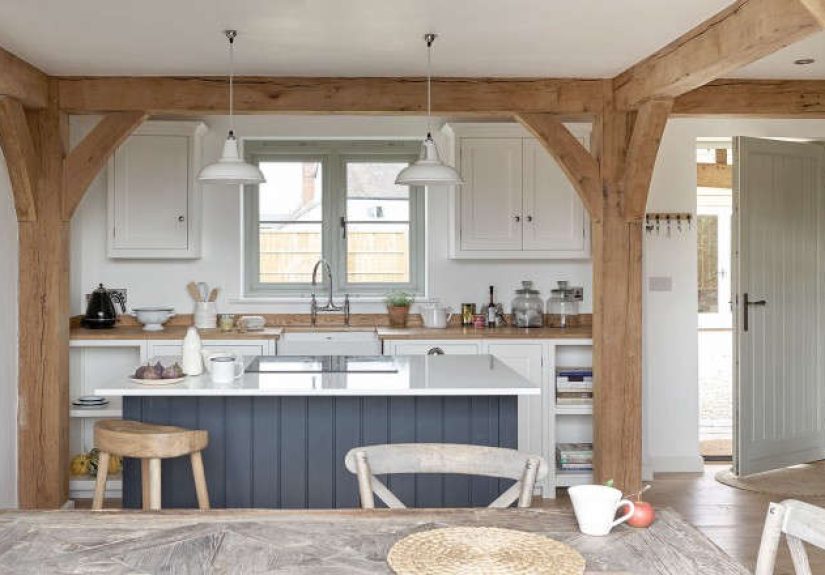
Merry Albright’s project blended the soul of an English cottage kitchen with brighter, more open influences tied to the homeowners’ Los Angeles roots. The design mixed handmade oak timbers, painted cabinetry, industrial lighting, and an eye-catching dark blue island. It managed to feel traditional without becoming heavy and contemporary without losing warmth.
This kitchen deserves praise for something many remodels struggle with: preserving a sense of familiarity while improving flow and daylight. Open-plan cooking, dining, and living areas can easily become visually mushy, but this project kept the zones connected without making them blur into one another. The muted palette, oak flooring, and careful use of texture gave it cohesion. It feels like the kind of kitchen where you could bake, host, read, or stand around pretending to help while actually stealing cheese.
3. Office of Architecture Brooklyn Row House
If design awards handed out medals for smart budgeting, this one would have been on the podium. Office of Architecture paired economical cabinet boxes with custom cabinet fronts, then layered in quartzite countertops and a classic subway tile backsplash. That combination created a kitchen that felt elegant and tailored without drifting into “hello, this sink costs more than my car” territory.
This finalist is especially compelling because it represents what many homeowners actually want: a kitchen that looks custom, works beautifully, and uses the budget strategically. Professional design is not about spending more for the sake of spending more. It is about knowing where precision matters, where savings are possible, and how to make practical decisions look effortlessly chic.
4. Bates Masi + Architects Elizabeth II
Bates Masi + Architects took a more conceptual route, designing a kitchen shaped by acoustics as much as appearance. Located in Sag Harbor, the project used materials, form, and detailing to influence how the space feels and sounds. A long skylight brought daylight down the length of the island, sliding doors opened the room to a covered deck, and cedar boards introduced texture while helping modulate sound.
This kitchen had a spiritual calm to it. Not in an incense-and-flutes sort of way, but in the sense that the space felt tuned. Every element worked together: light, wood, openness, rhythm, proportion. It proved that a professional kitchen design can go beyond storage and appliances to shape atmosphere itself. That is high-level design thinking, and it is exactly why awards like this matter.
5. General Assembly Micro Kitchen, Maximum Space
General Assembly’s Brooklyn project eventually won the category, and it is not hard to see why. The kitchen kept its original footprint yet dramatically improved function through custom millwork, built-in appliances, and clever use of architectural oddities such as beams, columns, and leftover niches. Instead of fighting the constraints, the design turned them into advantages.
Small kitchens often fail in one of two ways: they either become clutter magnets or they become so stripped down that daily life feels inconvenient. General Assembly avoided both traps. This was a tiny kitchen with actual ambition. It squeezed performance from every inch while staying visually composed. It was simple, chic, and deeply practical. That combination is catnip for thoughtful voters.
How to Judge the Best Kitchen Like a Design Editor
Voting for the best kitchen in the Remodelista Considered Design Awards 2015 professional category should be about more than surface beauty. A gorgeous kitchen that hides bad circulation, awkward storage, or weak lighting is basically a very expensive mood swing. The strongest voters look for a complete package.
Layout Comes First
Professional designers know a successful kitchen starts with layout, not hardware. The best finalists create clear work zones, place appliances intelligently, and allow comfortable movement through the room. If a kitchen looks good in photos but would make two cooks crash into each other like shopping carts, that is not award-winning design.
Storage Should Be Smart, Not Just Abundant
More cabinets do not automatically equal better storage. What matters is whether the storage is useful. Hidden pantry zones, integrated appliances, built-in inserts, and millwork tailored to the room often outperform oversized cabinets that become black holes for mismatched lids and emotional support colanders.
Lighting Makes or Breaks the Mood
Great kitchens use layered lighting. Ambient light sets the tone, task lighting supports prep work, and accent lighting creates warmth and depth. Several of the finalists leaned heavily on natural light, which remains one of the strongest indicators of quality kitchen design. A kitchen should be bright when you are chopping onions and flattering when you are dramatically leaning against the island with a coffee.
Materials Need Restraint
The most memorable kitchens in this category used materials carefully: oak, quartzite, subway tile, custom millwork, glass, and metal accents. Nothing felt random. The kitchens that endure are usually the ones with fewer but better material choices, arranged in a way that feels coherent and calm.
The Kitchen Should Belong to the House
A standout professional kitchen does not feel imported from another zip code. It respects the architecture around it. Merry Albright’s cottage kitchen, Bates Masi’s serene wood-rich design, and Harriet Anstruther Studio’s treatment of Edwardian features all succeeded because the kitchens felt rooted in their homes rather than pasted on top of them.
Why General Assembly Was a Worthy Winner
In many design competitions, the winner is the boldest room in the bunch. In this case, the winning kitchen was arguably the smartest. General Assembly’s project showed how deeply good design can improve daily use without resorting to showy excess. It treated constraint as a design engine.
That matters because small kitchens are where design theory either proves itself or falls apart. In a giant room, even mediocre planning can survive on square footage alone. In a compact footprint, every decision is exposed. Appliance placement matters more. Cabinet depth matters more. Millwork matters more. Visual calm matters more. General Assembly succeeded because it handled all of those things with precision.
The project also captured a broader truth about timeless kitchen remodels: people do not merely want a kitchen that looks expensive. They want one that works beautifully, ages well, and still feels welcoming after the novelty of the renovation wears off. That Brooklyn kitchen did not just win a vote; it won the long game.
Design Lessons We Can Still Borrow From the 2015 Finalists
The best part of revisiting the 2015 awards is realizing how many of the finalists’ ideas still shape excellent kitchens today.
- Use every inch wisely: custom millwork, appliance integration, and thoughtful inserts can transform a small footprint.
- Let natural light do heavy lifting: skylights, larger openings, and unobstructed sight lines make kitchens feel alive.
- Choose a quiet palette: a restrained mix of wood, white, stone, and metal generally ages better than trend-heavy color storms.
- Make islands earn their keep: the best islands provide prep space, storage, seating, or visual structure, not just bragging rights.
- Balance budget and beauty: mixing standard components with custom detailing can produce impressive, polished results.
- Design for experience, not just appearance: how the kitchen sounds, flows, and feels matters just as much as how it photographs.
Those lessons are why the 2015 professional finalists still feel fresh. They were not trying to be trendy. They were trying to be excellent.
The Experience of Following and Voting on a Design Award Like This
There is something unusually satisfying about following a competition like the Remodelista Considered Design Awards 2015, especially in the kitchen category. Unlike awards that celebrate celebrity or spectacle, this one invites readers into a slower, more thoughtful kind of excitement. You are not just picking your favorite pretty room. You are learning how design works by comparing one good solution against another, and then another, and then another. It is basically a master class disguised as a vote button.
First comes the delight of first impressions. One kitchen looks serene, another looks textural, another looks impossibly efficient, and another has that dangerous quality of making you consider a full remodel after only two cups of coffee. Then comes the deeper look. You begin noticing why one room feels more successful than another. Maybe one kitchen has cleaner circulation. Maybe another uses light in a smarter way. Maybe one project has a knockout island, but another has a better relationship to the house as a whole.
That is the sneaky brilliance of this category: it trains the eye. By the time you finish reviewing the finalists, you start thinking like an editor, a designer, and a homeowner all at once. You stop asking, “Which one would look best on my phone screen?” and start asking, “Which one would still impress me after six months of grocery bags, homework, dishes, guests, and Wednesday night exhaustion?” That is a much tougher question, and a far more useful one.
There is also a special pleasure in seeing how different designers solve similar problems. Space, light, storage, budget, and mood are always in the mix, but no two finalists solve them in the same way. One kitchen leans into history. Another leans into openness. Another turns economy into elegance. Another turns acoustics into atmosphere. Another squeezes a heroic amount of function into a tiny footprint. The experience is a reminder that there is no single formula for the perfect kitchen, only better and worse responses to real needs.
For homeowners, that is empowering. You do not come away thinking you must copy one exact look. You come away with sharper instincts. You understand that a good kitchen is not a pile of expensive finishes. It is a sequence of smart choices. You realize that a skylight can matter more than a fancy faucet, that custom millwork can be more transformative than oversized appliances, and that visual calm is often the difference between a kitchen that feels luxurious and one that just feels loud.
And then there is the fun of having an opinion. Design awards invite a kind of low-stakes, high-enjoyment debate. You can champion the moody cottage kitchen, the ultra-efficient small-space winner, the acoustically tuned wood sanctuary, or the row house that proves budget-savvy decisions can still look refined. There are no burned soufflés here, only spirited preferences.
In the end, the experience of voting becomes part inspiration, part education, and part fantasy renovation. You may not hire an architect the next day, but you will absolutely look at your own kitchen with new eyes. You might notice dead space above the cabinets, harsh overhead lighting, or an island that has been coasting on looks alone. More importantly, you may begin to imagine what your kitchen could become if every inch were considered with the same care shown by these finalists. That is what makes a good design award memorable. It does not just crown a winner. It leaves readers seeing their own homes more intelligently.
Conclusion
If you had to choose the best professional kitchen in the Remodelista Considered Design Awards 2015, the smartest vote would go to the kitchen that combines beauty, clarity, and usefulness in equal measure. All five finalists offered something worth admiring, from historical sensitivity and cottage warmth to conceptual depth and budget-savvy refinement. But General Assembly’s winning project captured the category’s spirit most completely: compact, elegant, highly functional, and refreshingly free of unnecessary drama.
That is the real lesson of this award. Great kitchen design is not about excess. It is about intention. When layout, light, storage, materials, and personality all line up, the result is a kitchen that feels effortless even though a tremendous amount of thought went into it. And that, dear reader, is always worth voting for.
Note: This HTML includes only the <body> content in standard American English and is cleaned for web publishing.