Table of Contents >> Show >> Hide
Few World War II weapons have enjoyed a postwar glow-up quite like the German Tiger tank. Mention the Tiger I and people picture a steel monster: huge gun, thick armor, terrified Allied crews, and dramatic battlefield heroics. In movies, documentaries, games, and internet arguments, it often appears less like a tank and more like a mechanical final boss. That reputation did not come out of nowhere. The Tiger really was one of the most dangerous armored vehicles of its time.
But “dangerous” and “great” are not always the same thing. A tank can win duels and still lose the bigger argument. The Tiger I was outstanding in several ways: its 88mm gun was deadly, its frontal armor was formidable, and in the right conditions it could dominate a battlefield. Yet it was also expensive, mechanically demanding, fuel-hungry, and built in numbers far too small to transform Germany’s fortunes. In other words, the Tiger was brilliant at making an impression and much less brilliant at solving Germany’s war problems.
So, was the famous German Tiger tank really that great? The honest answer is yesup to a point. Tactically, it was a beast. Strategically, it was a luxury item Germany could barely afford. That tension between battlefield excellence and wartime impracticality is exactly why the Tiger remains so fascinating.
Why the Tiger Became a Legend So Fast
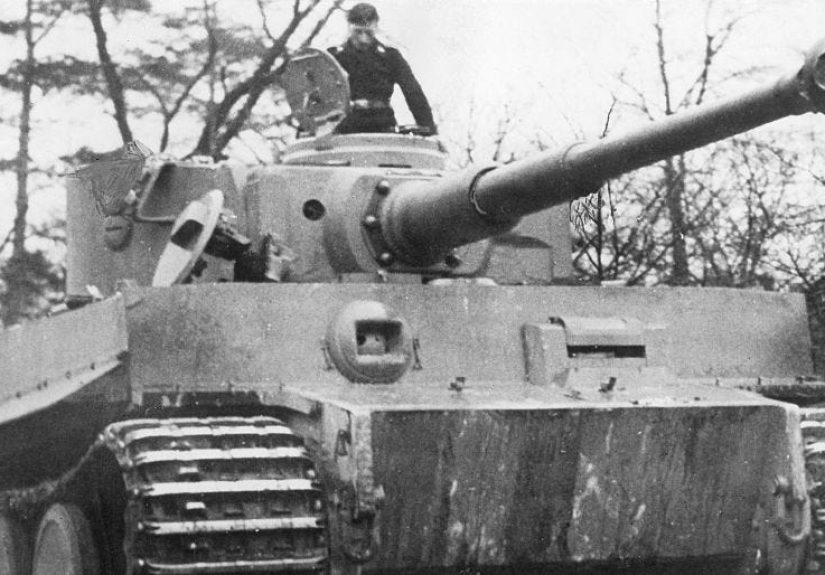
The Tiger I arrived at a moment when Germany wanted a shock weapon. Developed in response to the unpleasant surprise of Soviet armor, the Tiger went into production in 1942 and brought a heavy package to the battlefield: roughly 100mm of frontal armor, a powerful 88mm KwK 36 main gun, a five-man crew, and a combat weight well above 50 tons. For Allied crews used to fighting more modest German tanks, it was the armored equivalent of finding out the boss has brought a lawyer, a bodyguard, and a flamethrower to the meeting.
What made the Tiger especially memorable was not just its hardware, but how it was used. Germany typically assigned Tigers to independent heavy tank battalions and rushed them to difficult sectors. That gave them an outsized reputation. Tigers did not usually appear in boring places where nothing happened. They showed up when the fighting was already serious or about to become serious. From Tunisia to the Eastern Front to Normandy, their arrival often signaled that Germany was trying to slam the brakes on an Allied advance or hammer its way through a contested line.
The result was psychological as much as physical. Once troops believe a weapon is nearly unbeatable, every sighting feels bigger, every rumor spreads faster, and every battlefield story grows sharper edges. The Tiger did not just destroy vehicles. It damaged confidence. That kind of fear is hard to measure, but it is part of why the tank’s legend expanded so quickly.
Where the Tiger Was Actually Excellent
Firepower That Could End an Argument Quickly
The Tiger’s greatest strength was simple: the 88mm gun hit hard and reached far. In open terrain, a trained crew could knock out enemy armor at distances that felt deeply unfair to the other side. This mattered because tank combat is often decided before one side realizes just how bad its morning is about to become. If the Tiger saw you first, there was a decent chance the rest of your day would involve smoke, panic, and some very urgent radio traffic.
That long-range lethality gave the Tiger real tactical value. It was especially effective in defensive fighting, ambush positions, and terrain where it could exploit clear fields of fire. Battles in Normandy, including famous clashes around Villers-Bocage and the brutal struggle near Hill 112, helped cement the Tiger’s fearsome reputation. In those settings, the Tiger was not myth. It was a very real and very dangerous machine.
Armor That Punished Head-On Attacks
For much of 1943 and into 1944, frontal engagements with a Tiger were usually bad business for Allied tanks. Its armor could shrug off many attacks that would have crippled lighter vehicles. That forced Allied crews to think creatively: flank shots, concentrated anti-tank fire, artillery, air support, or simply avoiding a clean duel whenever possible. British experience in Tunisia showed that Tigers could be defeated, but preferably from the side and with planning rather than heroic optimism.
This mattered because battlefield success is often about forcing the enemy into awkward choices. The Tiger did that very well. It made direct approaches costly, which bought time, disrupted attacks, and allowed German commanders to stabilize dangerous situations. If your definition of “great” is “can this tank make life miserable for whoever is in front of it?” then yes, the Tiger absolutely qualifies.
A Weapon That Scared People Before It Fired
There is also the matter of presence. The Tiger was big, boxy, loud, and impossible to ignore. It looked intimidating because it was intimidating. The combination of its size, gun, and armor created a battlefield identity that was almost theatrical. Even before a Tiger opened fire, its reputation often shaped enemy decisions. A weapon that forces caution, slows attacks, and makes crews second-guess themselves is doing useful work before the ammunition starts flying.
That psychological impact is one reason the Tiger continues to loom so large in military history. Plenty of weapons were effective. Far fewer managed to become symbols.
So Why Wasn’t It a War-Winning Wonder?
It Was Too Expensive and Too Scarce
Here is the central problem: Germany built only about 1,350 Tiger Is. Depending on the source, the figure lands in the low 1,340s to 1,350s, but either way the total was tiny by the standards of an industrial world war. Meanwhile, the United States turned out tens of thousands of Shermans. That mismatch does not just matter. It is the whole strategic story in miniature.
A great tank built in limited numbers can influence battles, terrify opponents, and create legends. It cannot easily carry a multi-front war against enemies with larger economies, deeper fuel supplies, better transport networks, and greater manufacturing capacity. Germany needed armored strength at scale. The Tiger offered elite performance in boutique quantities. That is a fine recipe for admiration and a lousy recipe for long-term survival.
Reliability Was Not a Side Issue
The Tiger’s heavy armor and powerful gun came with a bill, and the maintenance crews were the ones stuck opening the envelope. The tank was prone to breakdowns, difficult to maintain, and not especially forgiving in harsh conditions. Its operational range was limited, and it consumed fuel at a time when Germany could least afford waste. In North Africa, German reporting complained that Tiger engines were too weak and too sensitive. That is not the sort of sentence you want written about your showcase weapon.
This is where Tiger mythology often trips over reality. People remember the armor thickness. They do not always remember the transmission strain, the spare-parts burden, the recovery headache, and the sheer frustration of keeping a giant heavy tank in working order during a modern industrial war. A tank that spends too much time being repaired is not helping on the battlefield, no matter how impressive its brochure looked.
Recovery and Mobility Were Miserable Problems
A damaged medium tank is a hassle. A damaged Tiger is a public works project. Moving a 55-plus-ton vehicle under combat conditions was difficult even before mud, shellfire, blown bridges, and enemy aircraft joined the conversation. The Tiger’s size and weight complicated transport, recovery, and route planning. Bridges, roads, and rail movement all became more annoying. The tank’s battlefield power was real, but so was the logistical drama trailing behind it like a very expensive cloud.
And that cloud got darker as the war went on. Allied air superiority made recovery operations more dangerous, while Germany’s fuel and transport situation worsened. A broken Tiger in the wrong place could become less a weapon than a monument to poor timing.
The Battlefield Kept Evolving
The Tiger’s best period came before Allied adaptation fully caught up. By 1944, the answer to “How do we deal with this thing?” was no longer “panic.” Better anti-tank guns, improved ammunition, the British Sherman Firefly, tank destroyers, artillery coordination, and combined-arms tactics all made Tigers more manageable. The Tiger could still destroy a careless opponent. What it increasingly could not do was dominate a battlefield system built around numbers, mobility, artillery, airpower, and constant adaptation.
In other words, the Tiger did not become harmless. It became less magical. There is a difference.
Tiger vs. Sherman: The Comparison That Never Dies
The internet loves a clean showdown, so the Tiger is constantly compared with the American Sherman. In a simple head-on duel on favorable ground, the Tiger usually had the edge. That is not a shocking conclusion. It had thicker armor and a more powerful gun. If you judge tanks the way children judge toy robotsby asking which one looks like it would win in a parking lotthen the Tiger has a great case.
But armies do not fight wars in parking lots. They fight campaigns. And campaigns are won by a brutal combination of production, maintenance, transport, crew training, recovery, fuel, artillery support, and replacement rates. On those terms, the Sherman makes much more sense. It was easier to build, easier to move, easier to repair, and easier to keep in service. The Sherman was not glamorous, but glamour has a poor record against supply chains.
This does not mean the Sherman was “better” at every tactical task, or that the Tiger was overrated nonsense. It means they were built for different realities. The Tiger was a heavyweight puncher. The Sherman was a practical war machine. One terrified opponents in a duel. The other helped win a global industrial conflict. If that sounds unfair to the Tiger, blame the war, not the math.
Myth vs. Reality
Myth: The Tiger was unstoppable.
Reality: It was terrifying, but not invincible. British forces knocked Tigers out in Tunisia, and by Normandy Allied armies had learned to combine anti-tank guns, artillery, aircraft, and flank attacks to defeat them.
Myth: The Tiger proved Germany had the best tank design of the war.
Reality: It proved Germany could build a fearsome battlefield predator. It did not prove Germany could build a sustainable armored force around that predator.
Myth: Bigger always means better.
Reality: Bigger usually means heavier, thirstier, pricier, and harder to keep running. The Tiger’s strengths were real, but so were the invoices.
Myth: The Tiger was the tank that should have changed the war.
Reality: Germany’s war problem was never just “we need a scarier tank.” It was a collapsing strategic position, limited resources, overstretched logistics, growing Allied air power, and enemies capable of replacing losses faster than Germany could inflict them.
The Verdict
So, was the famous German Tiger tank really that great? Tactically, yes. In the right hands and the right terrain, the Tiger I was one of the most formidable tanks of World War II. Its gun was lethal, its armor was strong, and its battlefield presence was frighteningly effective. Crews facing it had every reason to respect it and, occasionally, to say a few words unfit for print.
Strategically, however, the Tiger was much less impressive. It was too expensive, too maintenance-heavy, too fuel-hungry, and too scarce to alter the fundamental direction of the war. Germany needed vehicles that could be built and sustained in large numbers while fighting powerful enemies across multiple fronts. The Tiger was a superb answer to the wrong exam question.
The best one-line summary is this: the Tiger was not fake greatness, but it was incomplete greatness. It was a masterpiece of battlefield intimidation and tactical firepower attached to a logistical problem the size of a garage. That is why it remains so compelling. The Tiger was genuinely excellent, undeniably flawed, and permanently memorable. History loves that combination almost as much as the internet does.
Experiences That Made the Tiger Tank Legendary
Part of the Tiger’s staying power comes from experience. People who faced it, rode in it, repaired it, recovered it, or studied it afterward tended to remember it vividly. For Allied crews in 1943, the first encounters could feel deeply unfair. A tank that seemed to absorb punishment and answer with an 88mm shell from long range left a strong impression. British and American troops in Tunisia learned quickly that bravery alone was not a firing solution. Position, angle, timing, and teamwork mattered. If you attacked a Tiger carelessly from the front, you were volunteering for a terrible lesson in applied physics.
German experience was more complicated than the legend usually admits. A Tiger crew could feel close to invincible in the right conditions: hull-down position, broad field of fire, decent visibility, and enough fuel to move where needed. In those moments, the Tiger was exactly what propaganda promised. But the same crews also lived with breakdown anxiety, spare-parts shortages, and the knowledge that a disabled tank might become impossible to recover. That is a very different emotional reality. The Tiger offered confidence, but it also demanded constant mechanical faith. Owning one was a little like owning a beautiful racehorse that occasionally decided it disliked roads, bridges, distance, weather, and existence itself.
Mechanics and recovery crews probably had the most honest relationship with the Tiger. They knew battlefield reputation was only half the story. Every heavy vehicle places stress on engines, transmissions, suspensions, bridges, transport plans, and repair schedules. The Tiger asked all of those questions loudly. In desert conditions, German reports complained that the engine was weak and sensitive. In later campaigns, recovery became even harder because Allied air power and artillery made movement behind the lines more dangerous. A broken Tiger in the wrong place could stop being a weapon and start becoming a very expensive problem with tracks.
Then there was the intelligence experience. Captured Tigers, especially Tiger 131, became prized objects for Allied analysis. Once specialists could inspect armor, weapons, ammunition stowage, optics, and layout in detail, the tank became less mysteriouseven if it did not become less formidable. That shift mattered. Fear grows well in uncertainty. Study drains some of the magic out of a weapon. Allied officers learned what the Tiger could do, but also what it could not do efficiently, and that knowledge filtered back into tactics, training, and expectations.
Modern experience keeps the Tiger’s legend alive as well. Museum visitors still stop when they see one because the machine looks like pure intimidation on tracks. It is angular, heavy, severe, and impossible to mistake for anything gentle. Popular culture has done the rest, turning the Tiger into the boss-level tank of World War II. Yet the most useful experience remains the historical one: once you look past the silhouette, you find a weapon that was genuinely powerful, often brilliant in combat, and still deeply flawed. That tension is what makes the Tiger so fascinating. It was real greatness, just billed at a ruinous wartime price.