Table of Contents >> Show >> Hide
- 1) He reinvented Dracula (and helped modern horror level up)
- 2) He was the MVP of the Hammer Horror era
- 3) He mastered the art of the “villain with manners”
- 4) He didn’t just survive pop culture shiftshe surfed them
- 5) He turned his height and voice into storytelling superpowers
- 6) He made “genre” acting look prestigious
- 7) He had real-world discipline and a bigger-than-film life story
- 8) He was a bookish, brainy artistwithout being smug about it
- 9) He became a heavy metal legendbecause of course he did
- 10) His legacy is built on longevity, professionalism, and pure output
- Conclusion: Christopher Lee was the blueprint for “cool, capable, timeless”
- The Christopher Lee Experience: of Fan-Style “Been There” Moments
Some people have “a career.” Christopher Lee had a legendthe kind with plot twists, genre changes,
surprise musical numbers (metal ones, no less), and a résumé so stacked it needs its own zip code.
If you know him as Saruman, Count Dooku, Dracula, or that impeccably polite Bond villain who could probably
critique your posture while plotting your downfall, you already get the vibe: the man didn’t just act.
He loomedgracefully.
This article breaks down 10 reasons Sir Christopher Lee is truly amazing, with specific examples
from his films, his public work, and the kind of real-world versatility that makes most of us feel like we’ve
accomplished a lot when we successfully fold a fitted sheet.
1) He reinvented Dracula (and helped modern horror level up)
Christopher Lee didn’t play Dracula like a dusty museum exhibit. He played him like a force of naturetall,
elegant, terrifying, and weirdly magnetic. His performance in Horror of Dracula (1958) wasn’t just a hit;
it became a reference point for what a “modern” vampire could look like on screen: less creaky cape-and-candelabra,
more predatory charisma.
And here’s the sneaky part: Lee’s Dracula helped shape pop culture beyond the cinema. As vampire imagery spread
through Halloween costumes and mass-market monster masks, the “fangs front and center” look became increasingly
commonan aesthetic shift that lines up with the era when Lee was appearing in a long run of vampire films.
In other words, if you’ve ever seen plastic fangs at a party, you’ve probably felt a tiny ripple of the Lee effect.
Why it matters
Horror survives by evolving. Lee made classic monsters feel immediate, not antiquewhich is exactly how icons
stay iconic.
2) He was the MVP of the Hammer Horror era
Hammer Films took gothic horror, cranked up the color, and made it feel bold again. Christopher Lee was one of
the studio’s defining facesstarring in major Hammer titles and embodying everything Hammer did best:
atmosphere, intensity, and a touch of theatrical flair that still plays today.
He wasn’t just “the monster guy,” either. He brought polish to the grotesque and dignity to the dangerous.
Whether he was Dracula, the Frankenstein creature, or another larger-than-life figure, he made even outlandish
material feel committed and credible. That’s not easy. It’s basically the acting equivalent of making a
haunted-house fog machine look classy.
Bonus: he knew when to pivot
Lee eventually grew tired of being boxed into horror, and he actively moved into broader rolesshowing real
agency over his career instead of letting the industry file him under “spooky tall man” forever.
3) He mastered the art of the “villain with manners”
Some actors play villains like they’re trying to win a shouting contest. Lee played villains like he was hosting
an elegant dinnerright before revealing that the main course is your downfall.
This is why his antagonists are so memorable: they’re controlled, intelligent, and quietly intimidating.
His performance style suggests a person who doesn’t need to prove power; he already has it.
That’s a huge reason audiences still quote, imitate, and rewatch him decades later.
4) He didn’t just survive pop culture shiftshe surfed them
Many performers peak in one era. Lee stayed relevant across several. He moved from mid-century gothic horror into
swashbucklers, thrillers, mainstream studio films, and thenwhen franchise cinema became the dominant language of
Hollywoodhe showed up in the biggest fantasy and sci-fi worlds on the planet.
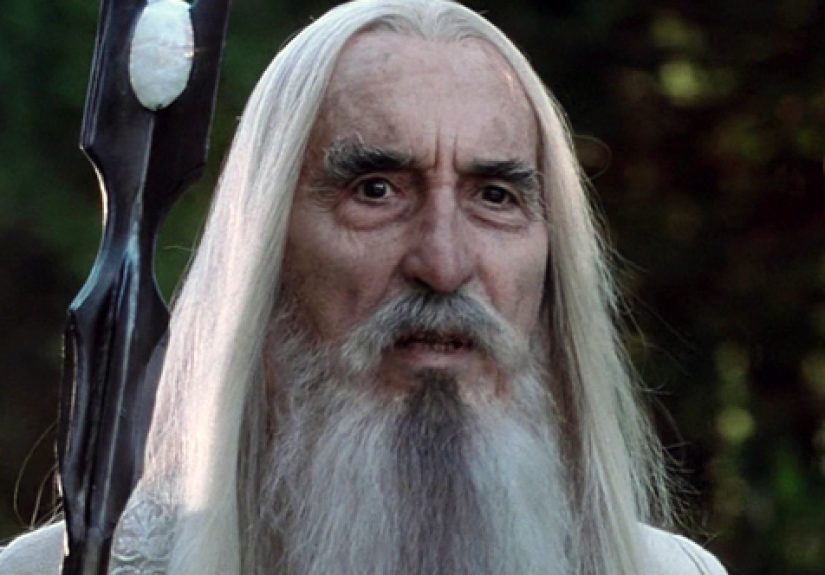
He played Saruman in The Lord of the Rings films and returned to the role in the
Hobbit series. He also became Count Dooku in Star Wars, delivering menace with
restraint and making “polite betrayal” look like an Olympic sport.
Why it matters
Staying relevant is hard. Staying relevant without becoming a parody of yourself is harder. Lee managed it by
choosing roles that used his strengthspresence, voice, intelligencewithout repeating the same performance.
5) He turned his height and voice into storytelling superpowers
Christopher Lee was famously tall6’5″and he knew exactly how to use that physical reality as part of a scene.
He could loom without lunging, dominate without rushing, and make a simple pause feel like a warning label.
Then there’s the voice. “Commanding” gets thrown around a lot, but with Lee it’s accurate. He had a tone that
could sound regal, cold, amused, wounded, or lethalsometimes in the same sentence. That vocal control is why
he worked so well not only on screen, but also in voice performance and narration, where the voice alone has to
carry the character’s weight.
Example that proves the point
In a remembrance by author Peter S. Beagle, Lee is praised as a gifted singer and exceptionally literate performer,
with stories that highlight how seriously he took language and deliveryright down to wanting to redo lines if a
writer felt strongly about them.
6) He made “genre” acting look prestigious
For a long time, genre workhorror, fantasy, pulp adventurewas treated like a second-class track.
Lee basically refused that idea with his whole existence.
He performed genre material with the same seriousness you’d expect in a period drama. He didn’t wink at it.
He didn’t apologize for it. He treated it like storytellingand the audience noticed.
That’s part of why today’s genre giants (superhero films, fantasy epics, prestige horror) can attract top talent:
the groundwork was laid by performers who insisted the work deserved respect.
7) He had real-world discipline and a bigger-than-film life story
Lee’s life wasn’t limited to sets and scripts. He served in the Royal Air Force during World War II and attained
the rank of flight lieutenant. That kind of experience tends to shape a person’s presencehow they carry
themselves, how they listen, how they react under pressure.
You can’t draw a straight line from military service to acting greatness (plenty of people are brave and still
can’t hit a mark), but with Lee you can feel the discipline: the calm, the control, the sense that he’s never
flustered even when the scene is chaos. That steadiness became part of his signature.
8) He was a bookish, brainy artistwithout being smug about it
One of the most endearing things about Christopher Lee is that he comes across as a serious reader who never
turned reading into a performance. He cared about writers, lines, and languagebecause he respected the craft.
In Beagle’s remembrance, Lee is described as extraordinarily literate, and the anecdotes show him treating
authors’ words as something worth protecting. That attitude is rare in any industry, and it’s especially rare in
an industry that sometimes acts like the script is merely a suggestion.
Proof he loved fantasy for real
Lee’s connection to Tolkien isn’t just fan triviait’s a reminder that he wasn’t “acting above” the material.
He understood why these stories mattered to people, which is exactly why he made them matter on screen.
9) He became a heavy metal legendbecause of course he did
If someone pitched “Dracula/Saruman guy releases symphonic metal albums about Charlemagne,” you’d assume it was
a joke. Then you’d learn Christopher Lee actually did it, and you’d realize the joke is on us for underestimating
his range.
His album Charlemagne: By the Sword and the Cross (released in 2010) leans into symphonic metal grandeur,
and Charlemagne: The Omens of Death followed in 2013. He didn’t treat music as a novelty. He treated it
like a real artistic laneand he had the voice and theatrical instincts to make it work.
He also made pop headlines for pushing metal into unexpected places. Billboard even covered his metal Christmas
work in the context of chart history. That’s not “celebrity dabbling.” That’s cultural impact with a double-kick
drum.
10) His legacy is built on longevity, professionalism, and pure output
A lot of people are famous. Fewer people are consistently good over decades. Lee’s career spanned
generations, with a massive number of credits across film and television.
Guinness World Records highlighted his record-style career statistics and the sheer scale of his screen work,
underscoring what fans already suspected: Christopher Lee wasn’t just prolifiche was historically prolific.
And he kept showing up, delivering, and elevating whatever project he was in, whether it was a mega-franchise
or a smaller genre film.
Why it matters
Longevity without quality is just time. Longevity with quality becomes legacy. Lee earned his the hard
way: by doing the work, again and again, at a remarkably high level.
Conclusion: Christopher Lee was the blueprint for “cool, capable, timeless”
Christopher Lee remains amazing because his greatness wasn’t one thingit was a stack of things. He modernized
horror, dominated fantasy franchises, delivered iconic villain performances, respected writers, and somehow
found time to become a metal music headline. He was proof that being “typecast” doesn’t have to mean “trapped,”
and that genre storytelling can be rich, intelligent, and genuinely artistic.
If you’re revisiting his work now, you’ll notice something that makes him rare: he makes every scene feel a little
more intentional. The camera may be pointed at him, but the craft is pointed at youinviting you to lean in,
listen closely, and enjoy the fact that a true professional is driving.
The Christopher Lee Experience: of Fan-Style “Been There” Moments
There’s a very specific experience that happens when you “discover” Christopher Leeeven if you technically met
him years ago on-screen. It usually starts with one role, the gateway Lee. For some people it’s Saruman: the
white-robed wizard who doesn’t raise his voice much, because he doesn’t need to. For others it’s Count Dooku:
elegant, composed, and somehow scarier precisely because he’s calm. And for plenty of horror fans, it’s Dracula:
the performance that feels like a handshake from classic cinemafirm, confident, and slightly chilling.
Then the backtracking begins. You watch one film, and suddenly you notice him everywhere. It feels like a movie
scavenger hunt: “Wait… is that Christopher Lee in this too?” And the answer is frequently yes. That’s
part of the funhis career is big enough to turn casual viewing into a mini-adventure. You don’t just watch
Christopher Lee; you collect Christopher Lee.
Another common fan experience is the voice realization. At some point you stop focusing on what he’s doing and
start focusing on how he’s doing it. The pauses. The precision. The way a simple line becomes memorable because
he treats it like it matters. Even if the script is pulpy, he delivers it like it’s worth your attentionand
the weird thing is, that confidence makes you give him your attention. It’s like watching someone assemble a
complicated piece of furniture without the instructions: it shouldn’t be possible, yet somehow it is.
Fans also tend to have a “Lee whiplash” moment: you go from a dark, gothic role to something unexpectedly playful
or mainstream, and it’s the same actor. That jump is part of why he feels timeless. He’s not locked into one
mood. He can be frightening without being messy, funny without being goofy, and commanding without being loud.
Watching him teaches you that intensity isn’t volumeit’s control.
And yes, then you stumble into the music. Someone mentions, casually, “He made symphonic metal albums,” and you
think they’re teasing you. But it’s real. You listen and realize it’s not a meme; it’s a committed artistic swing.
That discovery feels like finding a bonus level in a video game you thought you’d already finished. It expands
the legend in a way that’s almost unfair to other legends.
Finally, there’s the rewatch effect. Once you’ve seen enough of his work, you start noticing how he improves
other actors’ performances simply by sharing the scene. People stand a little straighter. They react more
thoughtfully. They look like they’re listening. That’s the Christopher Lee Experience in its purest form:
a reminder that professionalism is contagiousand that greatness, when it’s real, raises the temperature of
everything around it.