Table of Contents >> Show >> Hide
- What “No Contact” Actually Means (and What It’s Not)
- Why No Contact Can Work (Even When It Feels Like You’re Doing Nothing)
- 11+ Signs the No-Contact Rule Is Working After Your Breakup
- 1) You’re not checking their social media like it’s a paid internship
- 2) The “I should text them” urge shows up lessand leaves faster
- 3) You can concentrate again (a.k.a. your brain is returning from war)
- 4) You’re sleeping a little better (or at least not doom-scrolling at 2 a.m.)
- 5) You feel your feelings without needing to “fix” them by contacting your ex
- 6) You’re seeing the relationship more realisticallynot as a myth
- 7) Your self-respect is getting louder than your loneliness
- 8) You’re rebuilding your routine (and it doesn’t revolve around them)
- 9) You’re laughing againand it doesn’t come with guilt
- 10) You’ve stopped trying to “win” the breakup
- 11) Mutual-friend updates don’t send you into a spiral
- 12) You can imagine a future that doesn’t include themand it doesn’t feel like doom
- 13) If they reach out, you don’t panicyou pause
- 14) You’re learning the lesson without needing a “closure conversation”
- Signs It’s Working on the Dynamic (Without Turning It Into a Game)
- How Long Does the No-Contact Rule Take to “Work”?
- Common Mistakes That Make No Contact Harder (and How to Avoid Them)
- What If You Share Kids, Classes, Work, or a Lease?
- Mini Tool Kit: What to Do Instead of Contacting Your Ex
- Real-Life No-Contact Experiences (What It Looks Like in the Wild)
- Experience #1: “I stopped checking… and my anxiety dropped like a rock.”
- Experience #2: “We share a friend group, so I went ‘low contact’ and got my life back.”
- Experience #3: “They texted ‘hey’ and I didn’t melt into a puddle.”
- Experience #4: “I realized I missed the routine more than the person.”
- Experience #5: “I ‘glowed up,’ but not to make them jealous.”
- Conclusion: The Real “Win” of No Contact
If you’re doing the no-contact thing after a breakup, you’ve probably had at least one moment where you stared at your phone like it was going to
whisper the meaning of life. (It won’t. It’ll just show you a 2% battery warning and a notification from an app you forgot you downloaded.)
The no-contact rule can feel dramatic at firstlike you’re making a bold move in a rom-com. But in real life, no contact is less “plot twist”
and more “emotional detox.” It’s not a magic spell to summon your ex. It’s a boundary that protects your brain, your nervous system, and your
dignity while you heal.
So how do you know it’s actually working? Not in the “they’ll come crawling back” fantasy way, but in the real, grounded way: you’re stabilizing,
you’re thinking clearly again, and your life is starting to feel like yours.
What “No Contact” Actually Means (and What It’s Not)
“No contact” means you stop the direct pipeline between you and your excalls, texts, DMs, snapping, “accidental” likes, watching their stories,
checking their playlists, asking mutual friends for updates, and lurking like a detective who got promoted to the FBI of Feelings.
What it is
- A clear boundary that gives you space to grieve and reset.
- A way to reduce triggers so you’re not re-opening the wound every day.
- A chance to rebuild your identity outside the relationship.
What it’s not
- A punishment designed to “teach them a lesson.”
- A manipulation tactic to force someone back into your life.
- A vow of silence forever (especially if you share responsibilities).
Important note: if you share school, work, a lease, kids, pets, or other real-world ties, you can still follow “no contact” by switching to
low contactcommunication that’s brief, practical, and only about what truly needs to be handled.
Why No Contact Can Work (Even When It Feels Like You’re Doing Nothing)
Breakups don’t just hurt emotionallyyour brain treats them like a major stressor. If you keep interacting with your ex (or monitoring them online),
you keep re-triggering the same cycle: hope, anxiety, disappointment, rumination, repeat.
No contact works because it reduces the “inputs” that feed obsession and emotional spirals. It helps you interrupt rumination (the mental replay
highlight reel nobody asked for) and gives your nervous system fewer reasons to go into red-alert mode.
Think of it like recovering from a sprained ankle: you don’t heal faster by jogging on it “just to see if it still hurts.” You rest, you stabilize,
and you rebuild strength over time.
11+ Signs the No-Contact Rule Is Working After Your Breakup
These signs fall into two categories: (1) it’s working on you (healing, clarity, confidence), and (2) it’s working on the
dynamic (less chaos, more respect). The first category is the real win. The second is just… bonus content.
1) You’re not checking their social media like it’s a paid internship
At first, it’s tempting to “just look” because you think it will give you peace. (It won’t.) When no contact is working, the urge to check starts
fading. You might still get curiosity spikes, but you don’t obey them like they’re royal commands.
2) The “I should text them” urge shows up lessand leaves faster
Healing isn’t never wanting to text them. Healing is wanting to text them and then thinking, “Nope. That’s my anxiety talking,” and going back to
your life. If the craving hits but doesn’t hijack your whole day, that’s progress.
3) You can concentrate again (a.k.a. your brain is returning from war)
Early breakup brain can feel foggy: you read the same sentence four times and still don’t know what it says. When no contact is working, you regain
focuson school, work, hobbies, conversationswithout constantly drifting back to “What are they doing right now?”
4) You’re sleeping a little better (or at least not doom-scrolling at 2 a.m.)
Sleep is often the first thing breakups wreck and one of the first things boundaries help restore. If your nights are less chaoticeven slightlythat’s
a strong sign your system is settling.
5) You feel your feelings without needing to “fix” them by contacting your ex
A big reason people break no contact is emotional discomfort: sadness, guilt, loneliness, regret. When it’s working, you learn to sit with those
emotions and let them pass without trying to plug the hole with a text message.
6) You’re seeing the relationship more realisticallynot as a myth
No contact can turn down the volume on idealization. Instead of remembering only the sweet moments (or only the terrible ones), you start seeing the
full picture. That clarity helps you make better decisions moving forward.
7) Your self-respect is getting louder than your loneliness
Loneliness can be persuasive. It can convince you to settle for crumbs. When no contact is working, your inner voice shifts from
“Please pick me” to “I deserve consistency.” That’s not arrogance. That’s recovery.
8) You’re rebuilding your routine (and it doesn’t revolve around them)
You’re eating, moving, showering, showing up. Not perfectly, not magicallybut you’re building structure again. Breakups can create a weird “empty
time” where everything reminds you of them. A routine gives your day a backbone.
9) You’re laughing againand it doesn’t come with guilt
This one surprises people. When no contact is working, you’ll have a moment where you laugh at a meme or enjoy a song and realize:
“Oh. I’m still a person.” If you can feel joy without immediately feeling guilty, you’re healing.
10) You’ve stopped trying to “win” the breakup
When you’re in the thick of it, everything can feel like a competition: who moves on first, who looks happier, who posts less. When no contact is
working, you stop auditioning for the role of “Most Unbothered.” You start living instead of performing.
11) Mutual-friend updates don’t send you into a spiral
Early on, even a tiny update can ruin your whole day. When no contact is working, you might still feel a sting, but it doesn’t become a three-hour
mental movie with bonus commentary and a director’s cut.
12) You can imagine a future that doesn’t include themand it doesn’t feel like doom
This is a major milestone. At first, the future feels like a blank page you didn’t ask for. But then you start picturing new possibilitiesnew goals,
new friendships, new experiences. The future stops feeling like punishment and starts looking like potential.
13) If they reach out, you don’t panicyou pause
Whether they text “hey” or send a random meme, you don’t have to respond instantly. When no contact is working, you can breathe, think, and choose
what aligns with your values. That pause is power.
14) You’re learning the lesson without needing a “closure conversation”
Closure is often something we create, not something we receive. When no contact is working, you stop waiting for the perfect explanation. You start
reflecting: what did this relationship teach you, what do you want next time, and what are your non-negotiables?
Signs It’s Working on the Dynamic (Without Turning It Into a Game)
Let’s be honest: a lot of people Google this topic because they want to know what their ex is thinking. That’s normalbut try not to turn no contact
into a scoreboard. If you focus only on “Did it work on them?” you hand your healing back to someone who’s no longer responsible for your well-being.
That said, healthier dynamics often show up as:
- They respect the boundary (no repeated calls, no guilt-tripping, no “accidental” drama).
- They communicate more clearly if they do reach out (not vague breadcrumbs that keep you hooked).
- The chaos decreasesless on-and-off contact, fewer emotional whiplash moments.
How Long Does the No-Contact Rule Take to “Work”?
There’s no universal timer, but here’s a realistic framework: the first couple weeks are often the hardest because your habits are still wired to
reach for them. After that, many people notice more emotional stability in wavesgood days, then rough days, then better days again.
Instead of asking “How long until I’m over it?” try asking: “What does progress look like this week?” Progress might be:
not checking their socials, eating two real meals, going for a walk, finishing an assignment, or talking to a trusted person.
Common Mistakes That Make No Contact Harder (and How to Avoid Them)
Mistake 1: “Just checking in” texts
“Hope you’re doing well” often means “Please relieve my anxiety.” If you truly need to communicate (shared responsibilities), keep it brief and
practical. Otherwise, let the discomfort pass without outsourcing it to your ex.
Mistake 2: Staying “friends” too soon
Friendship can be possible sometimes, but right after a breakup it often keeps emotional wounds openespecially if one person is secretly hoping
it will turn back into a relationship. If being “friends” feels like emotional limbo, it’s not friendship yet. It’s pain with better PR.
Mistake 3: Using social media as a loophole
Muting, unfollowing, or blocking isn’t childishit’s a boundary tool. If your feed keeps reopening the story, your brain can’t close the chapter.
Mistake 4: Turning no contact into a performance
If you’re posting “I’m thriving!” content mainly so your ex will see it, you’re still in contactjust through the Wi-Fi of insecurity.
Do things for your life, not for their reaction.
What If You Share Kids, Classes, Work, or a Lease?
Sometimes full no contact isn’t possible. In that case, aim for low contact:
- Keep communication logistical (time, money, schedules, necessary decisions).
- Use neutral language (no emotional processing over text).
- Set response windows (you don’t have to reply instantly).
- Limit channels (one method of communication is easier to manage than five).
If you’re in a situation that feels unsafe or controlling, prioritize safety and support. Talk to a trusted adult, counselor, or professional who can
help you set boundaries that protect you in real lifenot just on your phone.
Mini Tool Kit: What to Do Instead of Contacting Your Ex
1) Use the “delay and do” method
Tell yourself: “If I still want to text them in 20 minutes, I’ll reconsider.” Then do something physical: drink water, walk, shower, stretch.
The urge often peaks and passes.
2) Write the text… and don’t send it
Open a notes app and write exactly what you want to say. Get it out of your head. Then save it. You’re allowed to have feelings without turning them
into messages.
3) Journal for clarity (the kind that actually helps)
Try prompts like: “What do I missthem, or the routine?” “What was I consistently not getting?” “What boundaries do I want in the future?”
This shifts you from obsession to insight.
4) Create a “reality list”
Not a hate list. A reality list. Write down what didn’t work, how you felt, and what patterns you don’t want to repeat. Read it when nostalgia gets
loud and selective.
Real-Life No-Contact Experiences (What It Looks Like in the Wild)
The internet loves dramatic “no contact success stories,” but real experiences are usually messier, quieter, and way more relatable. Here are some
common patterns people describe when no contact starts doing its job.
Experience #1: “I stopped checking… and my anxiety dropped like a rock.”
One person described the first week as a constant reflex: wake up, check socials, feel sick, repeat. They finally muted their ex and realized the
urge was like a habit loopnot a love prophecy. By week two, their mornings felt calmer because they weren’t starting the day with an emotional
jump-scare. The biggest surprise? They didn’t gain “closure,” but they gained peace, which turned out to be the better deal.
Experience #2: “We share a friend group, so I went ‘low contact’ and got my life back.”
When you share friends, no contact can feel impossible. This person stopped one-on-one texting, avoided late-night “deep talks,” and kept group
hangouts short at first. They had a simple rule: if an event would leave them emotionally wrecked afterward, they skipped it. Within a month,
they could show up without scanning the room for their ex’s reactions. That’s a huge sign no contact (or low contact) is working: you stop living
for the emotional weather forecast.
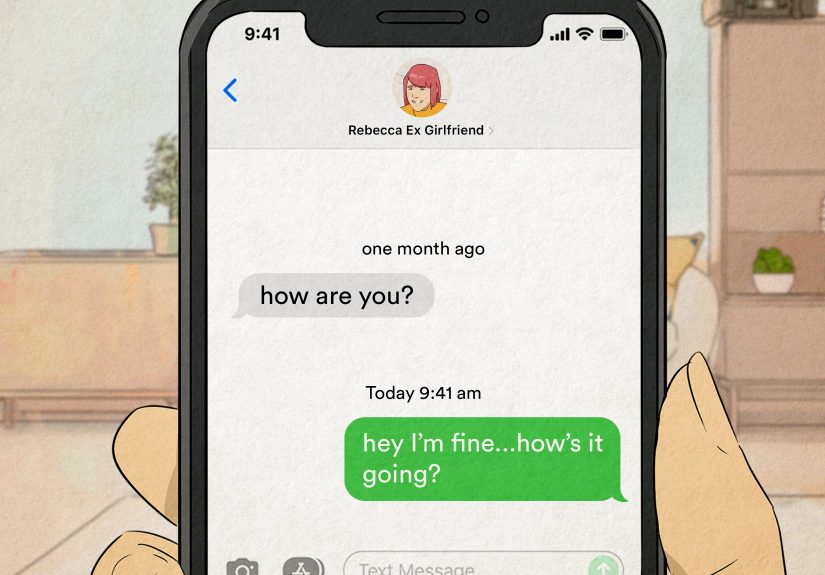
Experience #3: “They texted ‘hey’ and I didn’t melt into a puddle.”
A classic moment: your ex appears with a vague “hey” like nothing happened. Early on, that single word can trigger adrenaline, hope, and panic.
But after a few weeks of no contact, this person noticed something different: they paused. They asked, “What do I want from responding?” and
“Does this message show real effort or just curiosity?” They didn’t respond immediately. They responded intentionallyor not at all. No contact
working looks like choice, not compulsion.
Experience #4: “I realized I missed the routine more than the person.”
Another person said the hardest part wasn’t missing their exit was missing the daily rhythm: the good-morning texts, the inside jokes, the feeling
of being someone’s default. During no contact, they rebuilt their routine with friends, hobbies, and small self-care rituals. They still felt sad
sometimes, but the sadness stopped feeling like proof they should go back. It became evidence they were humanand healing.
Experience #5: “I ‘glowed up,’ but not to make them jealous.”
You’ll hear “glow up” and assume it’s about revenge. But many people describe something quieter: they started sleeping better, eating more regularly,
moving their body, and returning to interests they dropped during the relationship. The confidence that came back wasn’t performativeit was internal.
The funniest part? They stopped caring whether their ex noticed. That’s the glow-up that actually matters: when your life becomes your own again.
If your experience isn’t dramaticif it’s just tiny moments of relief, more stable days, fewer spiralsthat still counts. Healing is often boring.
Boring is underrated. Boring is safe. Boring is where you rebuild.
Conclusion: The Real “Win” of No Contact
The no-contact rule is working when you stop measuring your progress by your ex’s behavior and start measuring it by your own stability. You’re
sleeping better. Thinking clearer. Spiraling less. Respecting yourself more. You’re building a life that doesn’t require someone else’s attention
to feel meaningful.
And if you slip and contact them? It doesn’t mean you “ruined everything.” It means you’re human. Reset the boundary, learn what triggered you,
and keep going. No contact isn’t a perfection contestit’s a healing practice.