Table of Contents >> Show >> Hide
- Why Flower Boxes Are a Curb Appeal Superpower
- Design Basics: Thriller, Filler, Spiller (In Box Form)
- 16 Fabulous Flower Box Ideas to Copy (or Remix)
- 1. Classic Cottage Geranium Box
- 2. Sunny Marigold & Calibrachoa Mix
- 3. Shade-Loving Begonias & Ferns
- 4. Herb Garden You Can Snip From Inside
- 5. Modern Black Box with White Blooms
- 6. All-Trailer “Waterfall” Flower Box
- 7. Evergreen Year-Round Box
- 8. Cottagecore Pastel Box
- 9. Rustic Cedar Box with Mixed Annuals
- 10. Pollinator-Friendly Flower Box
- 11. Patriotic Red, White, and Blue Box
- 12. All-White Moonlight Box
- 13. Edible Flowers & Salad Box
- 14. Narrow Rail Flower Box for Balconies
- 15. Vertical Stacked Flower Boxes
- 16. Seasonal Switch-Up Box
- Choosing the Right Plants for Your Flower Boxes
- DIY vs. Buy: Building Your Own Flower Box
- How to Keep Flower Boxes Healthy All Season
- 500-Word Real-Life Experiences & Tips with Flower Boxes
- Conclusion: Your Windows, But Make Them Fabulous
If you’ve ever walked past a house and thought, “Wow, that place just looks happy,” there’s a good chance flower boxes had something to do with it. These little ledges of color can transform a plain façade into the kind of home that looks like it belongs on a postcard. The best part? You don’t need a mansion, a wraparound porch, or a professional landscaper. With a few smart ideas and the right plants, you can create fabulous flower boxes on almost any window, balcony, or railing.
In this guide, we’ll walk through 16 creative flower box ideas inspired by real-life DIY projects, plus expert tips on choosing plants, building (or buying) the right box, and keeping everything thriving from spring to frost. Consider this your mini masterclass in window box magic.
Why Flower Boxes Are a Curb Appeal Superpower
Flower boxes are basically instant curb appeal in a rectangle. They add color at eye level, frame your windows, and soften hard lines on brick, siding, or stucco. They also let renters or small-space dwellers enjoy “garden vibes” without tearing up a single square inch of soil.
- They’re budget-friendly: A few boards, some brackets, and annuals can make a huge visual impact for a relatively low cost.
- They’re flexible: Swap plants by seasonspring bulbs, summer annuals, fall mums, and winter evergreens.
- They’re space-savvy: Perfect for apartments, townhomes, and tight urban lots.
Whether you’re all about DIY cedar boxes or you prefer ready-made planters, the real magic comes from how you combine colors, textures, and trailing plants to get that overflowing, “can’t-help-but-smile” look.
Design Basics: Thriller, Filler, Spiller (In Box Form)
If you’ve ever heard container gardeners talk about “thrillers, fillers, and spillers,” the same rule applies to flower boxes:
- Thrillers: Taller showpiece plants (like geraniums, coleus, or upright grasses) that create height and drama.
- Fillers: Medium-height plants that round out the box (like marigolds, begonias, or herbs).
- Spillers: Trailing plants (like ivy, calibrachoa, creeping Jenny, or trailing verbena) that cascade over the edges and soften everything.
When you mix all threeplus a good color palette and plants that match your sun conditionsyou get those lush boxes that look like they belong on a magazine cover.
16 Fabulous Flower Box Ideas to Copy (or Remix)
Ready to get inspired? Here are 16 flower box ideas that range from classic to bold. You can recreate them as-is or use them as a starting point for your own mix-and-match creations.
1. Classic Cottage Geranium Box
Think white trim, red geraniums, and trailing ivy. This timeless combination screams “storybook cottage.” Use zonal geraniums in red or hot pink as the thriller, white allyssum or dusty miller as the filler, and ivy cascading over the edge as the spiller. It’s a low-fuss combo that loves sun and practically poses for photos.
2. Sunny Marigold & Calibrachoa Mix
For maximum sunshine vibes, try a mix of marigolds and calibrachoa (“million bells”). Marigolds bring those cheerful, bold blooms, while calibrachoa spills over the front in a stream of tiny flowers. Choose shades of orange, yellow, and gold for a warm, sunset-inspired look that works beautifully on south- or west-facing windows.
3. Shade-Loving Begonias & Ferns
Got a window that barely sees the sun? You’re not cursedyou’re just a shade gardener. Fill your flower box with wax begonias or tuberous begonias in white or pink, then tuck in some small ferns for texture. Add trailing ivy or creeping Jenny to hang over the edge. The result is lush, woodland energy with zero squinting required.
4. Herb Garden You Can Snip From Inside
Turn your kitchen window into a living spice rack. Plant a mix of basil, thyme, oregano, parsley, and chives in a deep flower box. Keep taller herbs in the back and low-growing ones in front. It’s both practical and prettyand you’ll feel like a TV chef every time you open the window and grab a handful of fresh herbs.
5. Modern Black Box with White Blooms
If you like a more modern aesthetic, go with a sleek black metal or painted wood box and keep the palette tight: think white petunias, white geraniums, or white impatiens (for shade), with trailing silver dichondra or dusty miller. The monochrome look is chic, simple, and stunning against dark or light siding.
6. All-Trailer “Waterfall” Flower Box
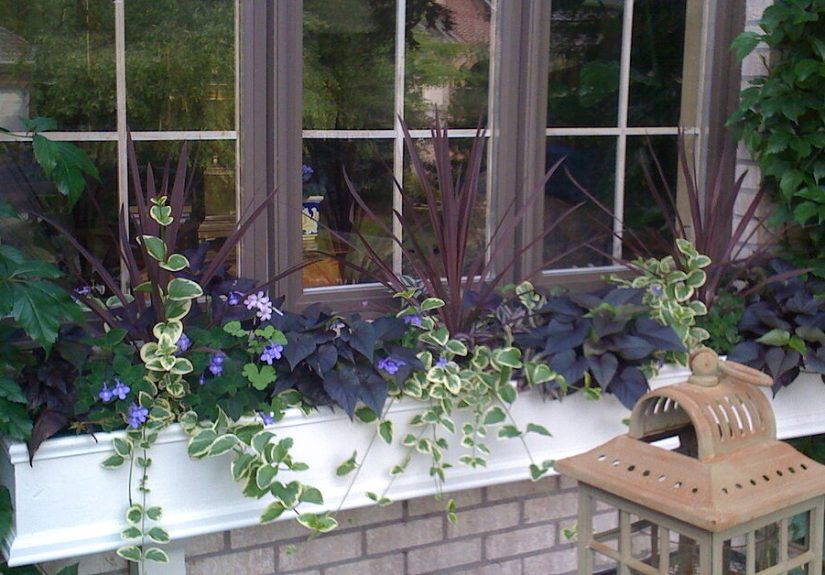
Who says you need upright plants? Fill your box entirely with spillers: trailing verbena, sweet potato vine, lobelia, creeping Jenny, calibrachoa, or ivy. Choose complementary colors or go wild with a rainbow mix. The box will look like it’s overflowing with flowers and foliage pouring down the wall.
7. Evergreen Year-Round Box
If you want something that looks good in January and July, build an evergreen box. Use dwarf boxwood, small conifers, or lavender as the base, then tuck in seasonal colorspring pansies, summer petunias, fall ornamental cabbage, and winter berries or pinecones. With a bit of planning, the box never has to look bare.
8. Cottagecore Pastel Box
Lean into soft, romantic vibes with pastel blooms: pale pink petunias, lavender calibrachoa, baby blue lobelia, and white allyssum. Add a distressed or whitewashed wooden box to complete the cottagecore look. Bonus points for lace curtains in the window behind it.
9. Rustic Cedar Box with Mixed Annuals
Cedar is a classic material for flower boxes because it resists rot and looks naturally beautiful as it ages. Fill a cedar box with mixed annuals: geraniums, zinnias, verbena, or lantana for a wild, garden-party feel. Let the wood show off its warm tones instead of painting it.
10. Pollinator-Friendly Flower Box
Invite bees and butterflies by planting pollinator favorites like lantana, salvia, zinnias, and alyssum. Choose varieties that bloom all season and avoid heavy pesticide use. It’s like turning your window into a mini pollinator pit-stop.
11. Patriotic Red, White, and Blue Box
Perfect for summer holidays: red geraniums, white petunias or verbena, and blue lobelia or salvia. Arrange them in clusters rather than strict stripes for a more natural look. Add a small flag or two for July 4th, then remove it afterward and keep enjoying the color combo all season.
12. All-White Moonlight Box
If you tend to be outside more in the evening, try an all-white box that glows at dusk. Use white impatiens, petunias, or begonias, plus trailing white bacopa or sweet alyssum. White flowers catch and reflect low light, making your façade look especially dreamy at night.
13. Edible Flowers & Salad Box
Mix beauty and utility by combining edible flowers and greens in one box. Think nasturtiums, pansies, and violas paired with leaf lettuce and baby kale. Just be sure to use food-safe soil and skip any treatments you wouldn’t want in your salad bowl.
14. Narrow Rail Flower Box for Balconies
No window ledge? No problem. A rail-hung flower box on a balcony or deck can still deliver that “European café” feel. Choose compact plantslike dwarf marigolds, calibrachoa, or compact zinniasso they don’t get too top-heavy and tip the box.
15. Vertical Stacked Flower Boxes
If you’re short on horizontal space, stack multiple shallow flower boxes vertically on a wall or railing. Use lighter-weight materials and compact plants like sedums, small herbs, and low-growing annuals. This creates a living wall effect without a fancy system.
16. Seasonal Switch-Up Box
Design one box, swap the plants by season. For example:
- Spring: Pansies, violas, and bulbs like mini daffodils.
- Summer: Petunias, geraniums, and trailing verbena.
- Fall: Mums, ornamental cabbage, and trailing ivy.
- Winter: Evergreen branches, pinecones, and weatherproof décor.
The box itself becomes permanent; the plants rotate through like a seasonal wardrobe.
Choosing the Right Plants for Your Flower Boxes
Before you fall in love with a plant at the garden center, check two things: how much sun your window gets and how deep your box is.
Match Plants to Your Sun Conditions
- Full sun (6+ hours): Petunias, marigolds, zinnias, lantana, calibrachoa, verbena, and many herbs do great in bright light.
- Part sun / part shade: Geraniums, begonias, coleus, lobelia, and fuchsias enjoy morning sun and afternoon shade or dappled light.
- Full shade: Impatiens, some begonias, ferns, and foliage plants like coleus can still put on a show without direct sun.
If your boxes are in blazing afternoon sun, look for heat-tolerant varieties and make sure you’re watering consistently. If they’re under an overhang or on a north-facing wall, focus on shade-tolerant plants and go big on foliage texture.
Think About Root Space and Drainage
Most annuals are happy with a box that’s at least 8–10 inches deep. Deeper boxes hold more soil, which means more moisture and nutrientsand a bit more forgiveness if you forget to water one day. Always ensure your box has drainage holes so roots aren’t sitting in water.
DIY vs. Buy: Building Your Own Flower Box
You can absolutely buy ready-made window boxes from home improvement stores or online, but building your own is often cheaper and lets you customize the size and style.
Basic Steps to Build a Simple Wooden Flower Box
- Measure your window: Decide how wide you want the boxtypically the width of the window or slightly wider.
- Cut your boards: Use rot-resistant wood like cedar or pressure-treated lumber. You’ll need a front, back, bottom, and two end pieces.
- Assemble the box: Attach the sides with exterior wood screws and wood glue. Pre-drill holes to prevent splitting.
- Add drainage holes: Drill several holes in the bottom to allow excess water to escape.
- Finish and seal: Paint or stain the exterior with an exterior-grade finish. You can leave the inside unfinished or line it.
- Mount securely: Install brackets or lag bolts into studs or masonry anchors, making sure the box is level and can support wet soil weight.
If woodworking isn’t your thing, you can hack premade planters by adding sturdy brackets and using them as window boxes.
How to Keep Flower Boxes Healthy All Season
Use High-Quality Potting Mix
Skip garden soil, which can be compacted and heavy. Use a lightweight potting mix designed for containers. Many mixes include slow-release fertilizer to give your plants a strong start.
Fertilize Regularly
Flower boxes are like all-you-can-eat buffets for roots; plants use nutrients quickly. Feed with a slow-release fertilizer at planting time, then supplement with a water-soluble fertilizer every couple of weeks during peak growth, according to product directions.
Water Smart
Window boxes dry out faster than in-ground beds, especially in full sun or on windy balconies. Check soil daily by sticking your finger about an inch downif it feels dry, it’s time to water. Water until you see it draining from the bottom; that means moisture reached the whole root zone.
Mind the Drainage and Lining
Good drainage is non-negotiable. If your box doesn’t have holes, drill some. You can line the interior with landscape fabric or a perforated plastic liner to protect the wood while still allowing water to escape. Avoid sealing the box so tightly that water has nowhere to goroot rot is not a good look.
Prune, Deadhead, and Refresh
Snip spent blooms to encourage more flowers (unless you’re growing self-cleaning plants like some calibrachoa or petunias). Trim back leggy stems mid-season so plants stay full instead of stringy. If one plant completely gives up, don’t be sentimentalpop it out and replace it.
500-Word Real-Life Experiences & Tips with Flower Boxes
Flower boxes look simple from the street, but anyone who has actually maintained them knows there’s a little learning curveand a few “well, that didn’t go as planned” moments along the way. Here are some experience-based tips and mini-lessons that make a big difference.
1. Sunlight surprises are real. On paper, you might think your window gets “full sun,” but then you install a box and realize your neighbor’s tree throws shade on it all afternoon. One of the smartest things you can do is observe your window for a full day before you plant. Take note of when the sun actually hits that wall. If you misjudge, your sun-loving zinnias might sulk in the shade or your impatiens might fry. If you already planted and got it wrongdon’t panic. Swap a few plants for better-suited varieties rather than forcing the originals to soldier on.
2. Flower boxes are heavy. Like, sneakily heavy. A box full of damp potting mix and plants weighs more than most people expect. If you’re mounting boxes on siding or masonry, use proper brackets and anchors rated for the weight. Many DIYers have had the “heart-stopping moment” when a box starts to pull away from the wall after a heavy rain. It’s not fun, and it’s not safe. Overbuild your support the first time so you’re not redoing it mid-season.
3. Top watering vs. hidden watering tricks. In the beginning, you’ll probably water with a hose or watering can from the top. That’s fine, but it can get tedious in hot weather. Some seasoned flower-box fans install simple drip irrigation or soaker tubing connected to a timer. Others use self-watering inserts or reservoirs inside the box. Even if you stick to hand-watering, try watering thoroughly but less frequently, rather than shallow sprinkles. The goal is deep roots, not just moist surface soil.
4. Overstuffing is temptingbut spacing pays off. On planting day, those tiny starter plants look lonely, so people tend to cram too many into the box. A few weeks later, you’ve got a traffic jam of stems competing for space, water, and light. It’s better to trust the label and give each plant the space it needs. If you absolutely must have instant fullness, choose more compact varieties designed for containers instead of doubling the plant count.
5. Color schemes are easier if you pick a “hero color.” Instead of overthinking combinations, pick one main color you lovesay, fuchsia, deep purple, or sunny yellow. Then choose one or two neutral partners like white or soft green foliage. This simple trick keeps your box looking intentional instead of chaotic. It also makes it easier to replace a problem plant mid-season without wrecking the whole vibe.
6. Wind and weather will test your design. Windows on upper stories or coastal areas can get serious wind. Taller, top-heavy plants may flop over or snap in a summer storm. After a season or two, you’ll learn which spots can handle a big upright thriller and which ones do better with low, mounding plants and sturdy trailers. Don’t be afraid to adjust the plant list year to year based on what actually survived.
7. Maintenance is easier when you build it into your routine. The happiest flower boxes usually belong to people who give them a tiny bit of attention often, rather than a heroic rescue every two weeks. Add a quick “flower box check” into your daily routinemaybe when you make coffee, when you come home from work, or when you walk the dog. A few minutes to snip dead blooms, water, or tuck a stray stem back in can keep things looking polished without turning into a chore.
8. Expect to experiment. Part of the fun is that flower boxes are small, contained experiments. One year you try red geraniums and white verbena; the next year you go full tropical with bright calibrachoa and chartreuse sweet potato vine. Some combos will be instant hits, others will be…learning experiences. Either way, you’ll get better every seasonand your house will look more charming while you do it.
When you put all of these lessons togetherobserving your sun patterns, mounting boxes securely, choosing plants wisely, and building maintenance into your routineyou end up with flower boxes that don’t just look fabulous in May, but keep blooming strong well into late summer and even fall. That’s when they stop being just “pretty décor” and start feeling like a satisfying little gardening success story every time you pull into the driveway.
Conclusion: Your Windows, But Make Them Fabulous
Flower boxes aren’t just about flowersthey’re about how your home feels every time you see it. With a bit of planning, the right plants, and regular care, those boxes can become a signature part of your curb appeal. Whether you lean classic cottage, sleek modern, herb garden, or pollinator paradise, there’s a flower box style that fits your home and your personality.
Start with one box, test a combination you like, and refine from there. By the time your plants are trailing over the edges in full bloom, you’ll wonder how your windows ever lived without them.