Table of Contents >> Show >> Hide
- Jump to Ideas
- A Quick Small-Space Strategy First (So You Don’t Just Buy 37 Bins)
- The 18 Creative Storage Ideas for Small Spaces
- 1) Go vertical with floating shelves (and stack them with intention)
- 2) Install a pegboard “command wall” for tools, accessories, or supplies
- 3) Put storage behind doors (yes, even the “random” door)
- 4) Add tension rods under sinks and inside cabinets
- 5) Use under-bed storage like it’s a bonus closet
- 6) Swap bulky nightstands for wall shelves (or a micro-ledge)
- 7) Choose a storage bench (entryway hero + secret clutter bouncer)
- 8) Add hooks everywhere you’re allowed to add hooks
- 9) Turn “dead corners” into corner shelving or a corner cabinet
- 10) Use a slim rolling cart to claim the weird gap beside the fridge or toilet
- 11) Create “drawer zones” with modular dividers (even in junk drawers)
- 12) Store vertically inside cabinets (file folders aren’t just for paper)
- 13) Use clear bins for “see-it-to-use-it” storage
- 14) Add shelf risers to double cabinet space without remodeling
- 15) Make your furniture work overtime: ottomans, lift-tops, and nesting tables
- 16) Hang a “high shelf” above doors (aka the sneaky storage zone)
- 17) Use the inside of closet walls for a mini “accessory station”
- 18) Build a labeled “drop zone” system (so clutter doesn’t migrate)
- of Real-World Experience: What Actually Works in Small Spaces
- Wrap-Up: Your Small Space Can Feel Bigger (Without Moving)
Small spaces have big personalities. They’re cozy, efficient, andwhen clutter shows upmysteriously capable of making one sock, three chargers, and a week’s worth of mail look like an avalanche.
The good news: you don’t need a bigger home to feel more organized. You need smarter storage.
This guide rounds up 18 creative storage ideas for small spaces that work in real life (not just in showroom photos where nobody owns scissors). You’ll find renter-friendly options, budget hacks, and a few “why didn’t I do this sooner” upgradesplus a 500-word reality check at the end with practical, lived-through lessons that help these ideas stick.
A Quick Small-Space Strategy First (So You Don’t Just Buy 37 Bins)
Before you install shelves or fall in love with matching containers, do a fast “small-space scan.” In tight homes, the goal isn’t storing more stuffit’s storing the right stuff in the right places so your daily life feels smoother.
1) Edit first, then store
Decluttering is the unglamorous superhero of small space organization. If you store items you don’t use, you’re basically paying rent to keep clutter comfortable. Set a timer for 20 minutes and pull anything that’s broken, expired, duplicated, or “I’m keeping this for a future version of me who sews costumes.”
2) Measure like you mean it
Small storage wins are often about inches: the gap beside the fridge, the height under your bed, the awkward corner in a closet. Measure those zones so you choose space-saving storage that fitsno “close enough” containers that waste prime real estate.
3) Use zones, not vibes
Give categories a home: “keys and sunglasses,” “work cables,” “pet stuff,” “medicine,” “charging,” “cleaning.” When everything has a zone, you spend less time hunting for things and more time… not doing that.
The 18 Creative Storage Ideas for Small Spaces
These ideas are designed to maximize vertical storage, take advantage of hidden space, and make furniture do double duty. Mix and match based on your layoutbecause not every small home has the same quirks (or the same number of throw blankets).
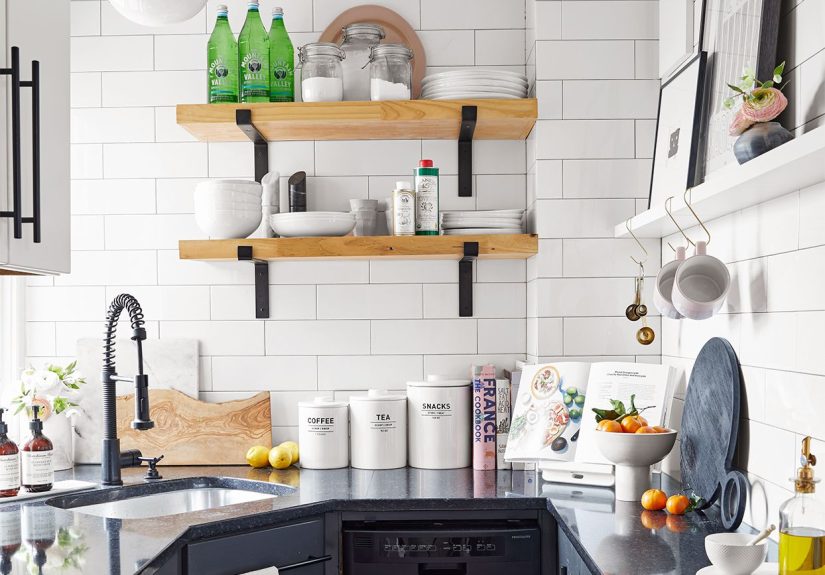
1) Go vertical with floating shelves (and stack them with intention)
Walls are storage gold. Floating shelves above desks, beds, or door frames turn “air space” into a functional zone for books, baskets, and daily items. The trick is to reserve the lowest shelf for frequently used things, and push rarely used items higher so you’re not playing step-stool roulette every day.
- Best for: studios, bedrooms, and living rooms with limited floor space
- Pro move: add matching bins or baskets so shelves look calm, not chaotic
2) Install a pegboard “command wall” for tools, accessories, or supplies
Pegboards aren’t just for garages. A pegboard system can organize kitchen tools, craft supplies, office gear, jewelry, or even toiletriesespecially when paired with hooks, cups, mini shelves, and baskets. It’s customizable, scalable, and oddly satisfying.
- Best for: people who hate digging through drawers
- Renter note: use appropriate anchors and patch later, or choose removable systems when possible
3) Put storage behind doors (yes, even the “random” door)
Door backs are often ignored because they’re “not a room.” But an over-the-door organizer can hold shoes, cleaning supplies, pantry snacks, hair tools, small toiletries, or kid items. If you’re tight on cabinet space, this is one of the fastest wins.
- Best for: bathrooms, closets, pantries, laundry areas
- Tip: choose organizers with stiff pockets so they don’t sag over time
4) Add tension rods under sinks and inside cabinets
Tension rods are like tiny, polite assistants: they stand there quietly and hold things up. Use them under the sink to hang spray bottles, or inside cabinets to create sections for cutting boards, lids, foil, or wraps.
- Best for: kitchens and bathrooms
- Budget-friendly: usually cheaper than installing full pull-out systems
5) Use under-bed storage like it’s a bonus closet
Under-bed storage is prime territory for off-season clothing, extra linens, shoes, or keepsakes. Clear bins help you see what you have, while fabric bags can flex around bulky items like comforters. If your bed sits low, consider bed risers or slimmer containers.
- Best for: seasonal rotation and “not daily” essentials
- Tip: label the short edge of bins so you can read it without pulling everything out
6) Swap bulky nightstands for wall shelves (or a micro-ledge)
Traditional nightstands eat floor space. A narrow wall shelf, corner shelf, or even a simple picture ledge can hold the basics: phone, glasses, a book, and your water cup. Bonus: easier vacuuming, fewer dust bunnies, less regret.
7) Choose a storage bench (entryway hero + secret clutter bouncer)
A flip-top bench or cubby bench near the entry creates a “drop zone” for shoes, bags, hats, and dog leasheswhile giving you a place to sit. In small homes, entry clutter spreads fast; this contains it at the source.
- Best for: apartments without a true mudroom
- Style tip: add a cushion and two hooks above for a built-in look
8) Add hooks everywhere you’re allowed to add hooks
Hooks are the MVP of vertical storage. Use them for coats, bags, measuring cups, mugs, headphones, cleaning tools, or jewelry. A row of hooks can replace a bulky coat rack, and adhesive versions can work in rentals when used correctly.
- Best for: entryways, bathrooms, closets, kitchens
- Keep it tidy: assign one hook per category so it doesn’t become “the hook of doom”
9) Turn “dead corners” into corner shelving or a corner cabinet
Corners are often wasted because standard furniture doesn’t fit well. Corner shelves (floating or freestanding) can store books, plants, baskets, or pantry overflow. In bathrooms, a corner shelf can hold towels and toiletries without hogging walking space.
10) Use a slim rolling cart to claim the weird gap beside the fridge or toilet
That narrow gap in your kitchen or bathroom isn’t uselessit’s just waiting for the right tool. A slim rolling cart can store pantry items, spices, cleaning supplies, toiletries, or hair products. Wheels make it easy to pull out and access, then tuck away again like it was never there.
- Best for: small kitchens, bathrooms, laundry nooks
- Tip: keep heavier items on the bottom so it doesn’t wobble when rolling
11) Create “drawer zones” with modular dividers (even in junk drawers)
Drawers get messy because they’re wide open and emotionally permissive. Dividers give every item a boundary. Use them for utensils, makeup, office supplies, batteries, and all the tiny things that multiply when no one is looking.
- Best for: kitchens, bathrooms, desks
- Fast win: start with one drawer you touch daily
12) Store vertically inside cabinets (file folders aren’t just for paper)
Vertical storage inside cabinets keeps items visible and reachable. Try tray dividers for baking sheets, cutting boards, and pans. For food storage containers, nest them upright in bins so you’re not excavating lids like an archaeologist.
13) Use clear bins for “see-it-to-use-it” storage
In small spaces, hidden storage is greatuntil you forget what you own and buy duplicates. Clear bins help you see contents quickly, protect items from dust, and make closets and shelves feel visually neat. They’re especially useful for seasonal items and categories you don’t access daily.
- Best for: closets, linen storage, pantry overflow
- Tip: label anywayfuture you will be tired
14) Add shelf risers to double cabinet space without remodeling
Shelf risers create a second level inside cabinets so you can stack plates, mugs, pantry items, or toiletries without turning everything into a leaning tower. It’s a small upgrade with a big payoff in cabinet efficiency.
15) Make your furniture work overtime: ottomans, lift-tops, and nesting tables
Multifunctional furniture is a small-space superpower. Storage ottomans hide blankets, lift-top coffee tables hold remotes and chargers, and nesting tables flex when you need extra surfaces. You’re not buying furnitureyou’re hiring it for multiple jobs.
- Best for: living rooms that also act as offices or guest rooms
- Style tip: choose closed storage if visual clutter stresses you out
16) Hang a “high shelf” above doors (aka the sneaky storage zone)
The wall space above doors can hold a long shelf for bins, baskets, or rarely used items. This is a smart way to store seasonal décor, backup paper goods, or hobby supplies without sacrificing floor space.
- Best for: bedrooms, hallways, laundry rooms
- Safety tip: keep heavy items lower; store lighter items up high
17) Use the inside of closet walls for a mini “accessory station”
Closets often have slivers of unused wall space. Add hooks for belts, scarves, bags, or jewelry. A narrow shelf can hold sunglasses, wallets, or daily grab-and-go items. This keeps accessories visible and prevents the “pile on the chair” situation.
18) Build a labeled “drop zone” system (so clutter doesn’t migrate)
Clutter spreads when items don’t have a default landing spot. Create a drop zone near the entrance or in the main living area: a tray for keys, a bin for mail, a hook for bags, and a small container for “return to another room.” Labels make it easier for everyone in the home to follow the systemespecially the version of you that’s rushing out the door.
- Best for: busy households, tiny apartments, shared spaces
- Tip: add one “backlog” basketthen empty it weekly so it doesn’t become a fossil record
of Real-World Experience: What Actually Works in Small Spaces
Here’s the part most organizing posts skip: small-space organization is less like “one big makeover” and more like brushing your teeth. You don’t do it once and announce, “Great news, everyone, I’m finished forever.” You build a system that survives regular lifelaundry days, busy weeks, random purchases, and the occasional “why do I own seven water bottles?” moment.
The biggest lesson is that storage should match your habits, not your Pinterest aspirations. If you naturally drop your keys on the nearest flat surface, fight that urge in a smart way: put a tray exactly where you’re already dropping them. If you tend to shove things into drawers, make that behavior work for you by adding dividers so shoving becomes “sorting.” If you’re a visual person who forgets items that are hidden, lean into clear bins and open shelvingbut keep open shelves contained with baskets so they look intentional instead of chaotic.
Another reality: the “wrong container” can create more mess than no container at all. Oversized bins encourage you to toss unrelated items together. Tiny bins can become annoying if you constantly overfill them. In practice, you’ll do best by grouping items by use (charging station, cleaning, daily grooming, cooking tools) and choosing containers that fit those categories snugly. This is why measuring mattersespecially under beds, in cabinet gaps, and inside closets. One inch too tall is the difference between smooth access and the kind of daily frustration that makes you abandon the system.
Small spaces also reward “vertical thinking.” Once you start using wallshooks, shelves, pegboards, behind-the-door organizersyou stop fighting the floor. This is especially noticeable in bathrooms and kitchens, where surfaces disappear quickly. A couple of hooks for hair tools or cleaning tools can free a whole drawer. A slim rolling cart in that awkward gap can turn “dead space” into a pantry extension. Even the inside of closet walls can become a mini accessory station that reduces morning stress because everything is visible and grab-and-go.
Finally, the best systems include a maintenance plan that isn’t dramatic. Try a 10-minute weekly reset: toss trash, return wandering items to their zones, and empty the “backlog” basket. In small homes, tiny messes look bigger fasterso small resets have a big impact. If you want your space-saving storage ideas to last, make them easy to use when you’re tired, busy, and not in the mood to “organize.” That’s the real secret: the system that survives normal life wins.
Wrap-Up: Your Small Space Can Feel Bigger (Without Moving)
The best creative storage ideas for small spaces aren’t about cramming more into your homethey’re about making your home work better for you. Use vertical storage, claim hidden zones (like under the bed and behind doors), and choose multifunctional furniture that earns its keep. Start with one problem area, build a simple zone system, and give your space a weekly reset so clutter doesn’t stage a comeback tour.