Table of Contents >> Show >> Hide
- Why a Classic English Kitchen Works So Well in Copenhagen
- The Copenhagen Case Study: Big Space, Proper British Accent
- Classic English Kitchen DNA: What Defines the Look
- Layout: Old Rules, New Reality
- Details That Make It Feel Authentic (Not Costume-y)
- Common Mistakes (AKA How to Avoid a Kitchen That Feels Like a Movie Set)
- How to Steal the Look at Any Budget
- of Real-World Experiences and Lessons From This Style
- Conclusion
Somewhere between a British country-house kitchen and a bright Scandinavian home, there’s a sweet spot where
everything feels timeless, comfortable, and suspiciously ready for a cup of tea. This is that spot.
And yes, the title says “Engish.” Consider it a design detail: slightly imperfect, oddly charming, and impossible
not to noticelike vintage brass pulls that don’t perfectly match (because perfection is overrated and also kind of
boring).
In this deep dive, we’ll unpack what “classic English kitchen design” really means, why it lands so well in a grand
Copenhagen remodel, and how Kvänum-style craftsmanship can deliver that furniture-like, old-world feel without
turning your kitchen into a museum where nobody is allowed to touch anything.
Why a Classic English Kitchen Works So Well in Copenhagen
English kitchens are beloved for one simple reason: they’re designed to be used. They assume real life will
happenkids will snack, friends will linger, sauce will splatter, and someone will inevitably leave a mug in the wrong
place. That “lived-in” DNA pairs beautifully with Copenhagen’s tradition of practical beauty, where even the prettiest rooms
tend to be functional, bright, and grounded in everyday routines.
In a grand homeespecially one with historic bonesan English-inspired kitchen can feel more “native” than a super-sleek
modern build-out. Painted cabinetry, inset doors, visible hardware, and pantry-style storage all echo the idea that a kitchen
is not just a cooking station. It’s furniture. It’s architecture. It’s where the day starts, ends, and gets negotiated over
leftovers.
The Copenhagen Case Study: Big Space, Proper British Accent
In one standout Copenhagen remodel, the kitchen was reimagined inside a grand early-20th-century villa. The strategy was
boldly simple: stop treating the kitchen like a back-of-house utility room and let it become the home’s social center.
Walls and old boundaries gave way to a larger open space that combined kitchen, dining, and circulationso cooking and
living could happen in the same conversation.
Cabinetry That Behaves Like Furniture
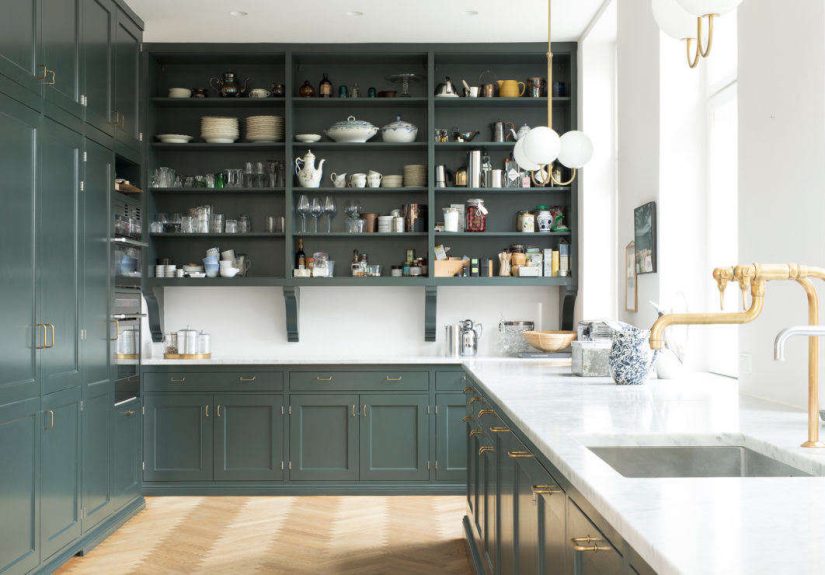
The backbone of the look is classic millwork: recessed/inset cabinet doors, a hand-painted finish, and the kind of
detail you’d expect in built-in furniture rather than “kitchen units.” This is where the English influence shows up most
clearlybecause English kitchens often rely on cabinetry that looks like it was always part of the house, not dropped in
from a catalog.
Pro tip: furniture-like cabinetry looks best when you let it do what furniture doescarry the room. That means letting
the cabinets be the star, and keeping everything else (tile, counters, decor) supportive rather than competitive.
Moody Color That’s Practical, Not Precious
A classic English kitchen doesn’t have to be white. In fact, part of its modern revival is a willingness to go richer:
deep greens, inky blues, warm creams, and “heritage” colors that feel like they’ve been there for decades.
A moody green cabinet color does two jobs at once: it adds instant gravitas, and it’s forgiving. Life happens. Fingerprints
happen. “Someone touched the cabinet with peanut butter hands” happens. Darker paint tones can hide the evidence better than
bright, pristine finishes.
Materials That Feel Old-World, Not Old-Fashioned
Classic English design tends to favor materials with historymarble, wood, aged metaland Copenhagen’s best interiors are
equally comfortable with natural textures. Put them together and you get a space that feels both refined and approachable.
Marble counters read “timeless,” wood floors read “warm,” and brass reads “I have opinions about tea.”
Open Shelving That Keeps the Room Human
English kitchens often balance closed storage with moments of display: plates, cookbooks, jars, the good butter dish you
swear you’ll hand-wash forever. Open shelving can do thatespecially in a large remodel where you don’t want every wall to
feel like a solid block of cabinetry.
The trick is to make open shelves look intentional, not like you ran out of doors. Use repetition (matching jars, a few
consistent materials), leave negative space, and embrace “a bit messy” as a design feature.
Classic English Kitchen DNA: What Defines the Look
1) Shaker-Style Doors: Simple, Strong, and Always in Season
If classic English kitchens had a mascot, it would be the Shaker door: a recessed center panel framed by clean rails and
stiles. Shaker cabinetry works because it’s visually calm. It doesn’t scream “trend,” which is exactly why it survives every
trend cycle.
In a Copenhagen remodel, Shaker-style doors also create a bridge between old and new: traditional enough to respect the
architecture, minimal enough to feel fresh in a Nordic context.
2) Inset Cabinetry and Visible Hardware: The Craft Signal
Inset cabinetrywhere the doors sit flush inside the cabinet framefeels precise and tailored. It’s the design equivalent
of a perfectly altered blazer: subtle, but you know it’s expensive. Many English-inspired kitchens lean into inset doors and
classic hinges because they read as cabinetry made by craftspeople, not machines.
Visible hinges and detailed pulls also add the “collected over time” character that makes English kitchens feel personal.
In an otherwise polished remodel, those small variations keep the room from feeling too staged.
3) Pantries, Larders, Sculleries: The British Gift for Hiding Chaos
English kitchen culture loves secondary spaces: larders for dry goods, pantries for storage, and scullery-style zones for
messy tasks. The modern American version is often a butler’s pantrypart storage, part prep, part “please don’t look at my
blender collection.”
In a large remodel, adding a pantry wall, appliance garage, or secondary prep zone is the fastest way to get that English
“calm on the surface” feeling. Your main kitchen stays beautiful; the behind-the-scenes area does the heavy lifting.
4) A Worktable Island, Not a Spacecraft
Many English kitchens treat the island like a big tableoften wood, often simple, often welcoming. It’s less “monumental
slab” and more “gather here.” In a grand Copenhagen space, a worktable island helps the room feel grounded and social.
Want the look? Choose legs or furniture-style panels, consider wood details, and avoid making the island so massive it
becomes an emotional obstacle.
Layout: Old Rules, New Reality
The Work Triangle Still Matters (Sometimes)
The classic kitchen work trianglesink, stove, fridgeremains a useful baseline for efficiency. Even in a showpiece kitchen,
you don’t want to jog a marathon just to make pasta.
But Modern Kitchens Run on Zones
Today’s kitchens do more than cook. They host homework, happy hour, and “let’s just stand here and talk while someone chops
onions.” That’s why many designers now think in zones: prep zone, cooking zone, cleanup zone, coffee zone, entertaining zone.
In a Copenhagen remodel where the kitchen becomes the home’s center, zoning is the difference between “beautiful” and
“beautiful and functional.”
Hidden Appliances, Visible Calm
English-inspired kitchens often integrate appliances behind cabinet fronts or inside tall pantry walls. The effect is a room
that reads more like a library or dining space than an appliance showroom. If you love the “proper British accent” vibe,
plan for concealed refrigeration, built-in ovens, and storage that swallows countertop clutter.
Details That Make It Feel Authentic (Not Costume-y)
-
Hand-painted or paint-grade cabinetry: Slight texture and depth beat ultra-flat perfection. Bonus: touch-ups
are easier, and the finish ages with grace. -
Warm whites on the walls: In Scandinavian light, warm whites can shift beautifully throughout the daycreamy
in the morning, softly pink at night, and never harsh. -
Natural wood underfoot: A herringbone or plank floor adds quiet structure and a sense of heritage without
looking themed. - Brass and opal-glass lighting: Treat lighting like jewelry. Classic shapes, warm metal, soft glow.
-
Collected hardware: Matching is optional; charm is mandatory. A slightly varied set of pulls can feel more
“found” than “ordered.”
Common Mistakes (AKA How to Avoid a Kitchen That Feels Like a Movie Set)
-
Overdoing the “country” part: Too many rustic props can tip into theme-park territory. Let craftsmanship,
proportion, and paint do the storytelling. -
Making everything open: Open shelving is charming until you realize cereal boxes are not decorative objects.
Balance open display with serious closed storage. -
Ignoring workflow: A gorgeous kitchen that fights you every time you cook is basically an expensive argument
waiting to happen. -
Picking trendy finishes everywhere: English kitchens are about longevity. Choose one or two “fun” moments
(color, tile, hardware), then keep the rest classic.
How to Steal the Look at Any Budget
Budget-Friendly
If custom millwork isn’t in the cards, focus on the signals: paint your cabinets a moody heritage color, switch to classic
hardware, add a warm light fixture, and introduce a furniture-style island (even a sturdy worktable can do the job).
Mid-Range
Consider semi-custom Shaker fronts, upgrade to inset-style detailing where possible, and invest in one statement material
(like a marble-look surface or real wood counters on an island). Add a pantry cabinet wall to reduce counter clutterinstant
English calm.
High-End
Go for inset cabinetry with visible hinges, fully integrated appliances, a dedicated pantry or scullery zone, and layered
lighting. The goal is not “fancy”it’s “inevitably right,” like it’s always belonged in the house.
of Real-World Experiences and Lessons From This Style
People who choose a classic English kitchen look often say they’re chasing a feeling more than a feature. It’s the sense
that a kitchen can be both elegant and forgivinglike it’s okay to leave a cutting board out because the room still looks
good. In remodels inspired by English design, homeowners tend to fall in love with how the space supports everyday rituals:
toast in the morning, tea in the afternoon, and the nightly “what’s for dinner?” debate that somehow never gets resolved in
under 12 minutes.
One of the biggest practical wins is storage psychology. When you add pantry-style cabinets, appliance garages, or a
scullery/butler’s pantry zone, your main kitchen stays visually calm. That calm changes how the room is used. People linger
longer. Guests are more likely to sit at the island because it doesn’t feel like they’re sitting in the middle of a worksite.
Families tend to treat the kitchen as a shared room againnot a place where one person cooks while everyone else awkwardly
hovers.
There’s also a surprisingly emotional relationship with paint color. Deep greens and inky blues aren’t just trendy; many
homeowners report they feel “softer” to live with than bright white, especially in homes with shifting natural light.
The room feels cozy at night, grounded in winter, and dramatic in a way that makes even a Tuesday pasta dinner feel vaguely
cinematic. And because darker paint can be more forgiving of smudges and fingerprints, the kitchen can handle real family
life without looking worn out by lunchtime.
Another consistent lesson: perfection is not the point. English kitchens look best when they feel slightly collectedhardware
that has character, shelves that show a bit of personality, and materials that will patina. Many people discover that once
they stop trying to keep the kitchen “photo-ready,” they actually enjoy it more. The space becomes a partner, not a project.
Instead of worrying about every scratch, they start appreciating the way natural materials record daily lifelike a wooden
worktable that looks better after a year of use than it did on day one.
Finally, the most repeated experience is simple: this style makes hosting easier. Not because it’s flashy, but because it’s
organized. When the layout supports zonesprep here, cook there, clean up over theremultiple people can move through the
kitchen without tripping over each other. The room becomes an easy stage for gatherings. And that may be the real magic of a
classic English kitchen in a grand Copenhagen remodel: it’s not trying to impress strangers. It’s trying to serve the people
who live there, every day, beautifully.