Table of Contents >> Show >> Hide
- Research Snapshot (U.S. Parenting & Child Development Sources Used)
- Why Kids’ Tantrums Feel Like a Sitcom (Until It’s Your Episode)
- 30 Hilariously Accurate Posts About Children’s Temper Tantrums
- What These Posts Reveal (Besides the Fact That Parents Deserve Medals)
- Tantrum Survival Toolkit (SEO-Friendly, Real-Life Friendly)
- Extra : The Parts No One Posts (But Everyone Lives)
- Conclusion
If you’ve ever watched a tiny human collapse like a Shakespearean actor because you handed them the wrong blue cup (the one they asked for),
congratulations: you’ve attended live theater. The tickets were expensive, the concessions were sticky, and the lead performer demanded an encore in the cereal aisle.
Children’s temper tantrums are exhausting, loud, and somehow timed to start the exact moment you realize your phone battery is at 2%.
But they’re alsowhen you’re not actively negotiating with a barefoot dictatorridiculously funny. The internet proves this daily.
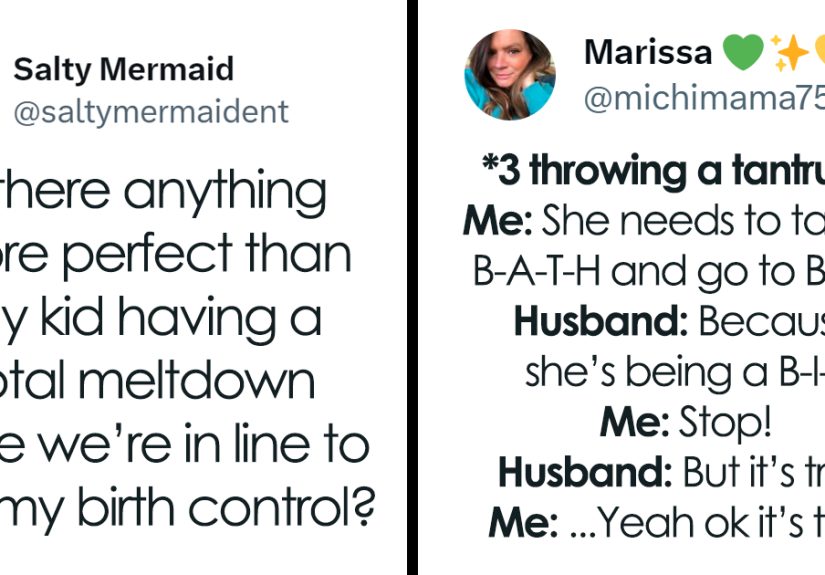
Below are 30 hilariously accurate “posts” (inspired by the kinds of stories parents share online) that capture the comedy, chaos, and strangely specific logic of toddler tantrums.
Research Snapshot (U.S. Parenting & Child Development Sources Used)
This article is informed by guidance and reporting commonly published by U.S. child health and parenting organizations and outlets such as:
American Academy of Pediatrics/HealthyChildren, CDC, APA, Parents.com, Zero to Three, Mayo Clinic, Cleveland Clinic, Child Mind Institute, Psychology Today,
NIH/PMC (peer-reviewed research summaries), The Bump, Verywell Family, and Scary Mommy-style parenting humor roundups (for the culture, not the quotes).
Why Kids’ Tantrums Feel Like a Sitcom (Until It’s Your Episode)
Tantrums often hit when kids want something intensely but don’t yet have the language, patience, or brain wiring to handle frustration.
Translation: they’re living big feelings in a small body with a developing “brakes” system. Add hunger, tiredness, overstimulation, or a sock seam that feels “mean,”
and you’ve got a full production.
And while no parent is laughing in the moment (you’re busy pretending you’ve never met this child), humor can be a pressure valve.
Laugh later, breathe nowideally into a paper bag you stole from the checkout lane.
30 Hilariously Accurate Posts About Children’s Temper Tantrums
-
Post: “My toddler asked for a banana. I gave them a banana. They screamed because it was ‘too banana.’”
Parent Translation: The request was symbolic. The banana is a metaphor. You failed the metaphor.
-
Post: “He cried because I opened the granola bar he handed me to open.”
Parent Translation: You touched the sacred wrapper. You have been judged by the council.
-
Post: “She wants to wear sandals. It’s snowing. She is furious at weather. Specifically at me for the weather.”
Parent Translation: You are apparently in charge of seasons now. Congrats on your promotion.
-
Post: “My kid sobbed because I won’t let him take the couch cushion to preschool ‘for comfort.’”
Parent Translation: Emotional support furniture is a valid need in this household.
-
Post: “She demanded ‘juice’ while holding juice, drinking juice, and being… juice-adjacent.”
Parent Translation: The cup is wrong. The vibe is wrong. The universe is wrong.
-
Post: “He yelled ‘NO!’ when I asked if he wanted a snack. Then he yelled ‘SNACK!’ when I did nothing.”
Parent Translation: The correct answer was: yes, but in reverse, and telepathically.
-
Post: “My child is mad I can’t put the toothpaste back inside the tube the way it was.”
Parent Translation: You have failed to reverse time. Again.
-
Post: “He cried because his sandwich was ‘cut in triangles’ and he wanted ‘triangles’… so I rotated it.”
Parent Translation: You are now a short-order chef and a geometry professor.
-
Post: “She yelled at me for blinking too loudly.”
Parent Translation: Your face is a sensory experience and currently a personal attack.
-
Post: “My toddler said ‘carry me’ while I was already carrying him. He meant carry him emotionally.”
Parent Translation: Physical arms are insufficient. He needs spiritual arms.
-
Post: “He threw a fit because I won’t let him eat the dog’s food ‘for crunchy vitamins.’”
Parent Translation: The dog is living the life he deserves. He will be the dog now.
-
Post: “She sobbed because the moon followed our car and it was ‘being creepy.’”
Parent Translation: Your family is in a celestial thriller and she is the final girl.
-
Post: “My kid is furious I can’t make his shadow ‘stop copying him.’”
Parent Translation: You are expected to negotiate with physics.
-
Post: “He cried because I wouldn’t let him bring a full-size pumpkin into the bathtub.”
Parent Translation: Bath time is a lifestyle, not a location.
-
Post: “She melted down because her socks ‘feel like feelings.’”
Parent Translation: Textures are emotional now. Socks are therapy.
-
Post: “My toddler asked me to sing. I sang. He screamed ‘NOT LIKE THAT’ but refused to demonstrate.”
Parent Translation: You are auditioning for a role you didn’t know existed.
-
Post: “He cried because the waffle was ‘broken’ (it had squares).”
Parent Translation: The waffle has wronged him personally.
-
Post: “My child demanded I ‘fix’ the wind.”
Parent Translation: You are now responsible for air.
-
Post: “He screamed because he put his toy in the trash and now it’s ‘gone forever.’”
Parent Translation: Actions have consequences and he would like a refund.
-
Post: “She cried because I wouldn’t let her brush her teeth with the toilet brush. ‘It’s bigger.’”
Parent Translation: Innovation is alive, and it’s horrifying.
-
Post: “He is angry that his birthday is not today. He is also angry that time exists.”
Parent Translation: You have raised a tiny philosopher who hates calendars.
-
Post: “She yelled because I parked in a parking spot. She wanted me to park in ‘the best one.’”
Parent Translation: You are failing at competitive parking, as a concept.
-
Post: “My child cried because the cheese ‘is touching’ the crackers. Like… as designed.”
Parent Translation: Food must remain socially distanced.
-
Post: “He screamed when I said we had to leave the playground. Then screamed because we didn’t leave fast enough.”
Parent Translation: The tantrum is not about logic. It’s about momentum.
-
Post: “She cried because her ‘hug’ wasn’t hugged back with the correct intensity.”
Parent Translation: You are a calibration device for affection.
-
Post: “My toddler yelled ‘I WANT TO DO IT MYSELF’ while actively asking me to do it.”
Parent Translation: Independence, but make it collaborative.
-
Post: “He cried because the TV character can’t hear him yelling advice.”
Parent Translation: Your living room is an interactive theater. You are the villain for denying it.
-
Post: “She screamed because I can’t un-mix the bath bubbles. ‘I wanted the bubbles separate.’”
Parent Translation: You are expected to perform bubble surgery.
-
Post: “He cried because I gave him exactly what he asked for… but now he wants the idea of it, not the thing.”
Parent Translation: Welcome to modern desire. Your toddler is an art critic.
-
Post: “She is furious that I won’t let her take a raw onion to bed ‘to keep the monsters away.’”
Parent Translation: Listen, the monsters might leave, but so will your will to live.
What These Posts Reveal (Besides the Fact That Parents Deserve Medals)
The humor lands because it’s true: tantrums usually aren’t “bad kids.” They’re overwhelmed kids.
A lot of child-development guidance describes tantrums as common in the toddler-to-preschool windowoften peaking around ages 2–3because kids are building language,
self-control, and emotional regulation at the same time their independence is exploding.
Common Triggers Hiding Under the Drama
- Body stuff: hunger, fatigue, overstimulation, illness, “my sock seam betrayed me.”
- Control stuff: wanting autonomy, hating transitions, needing choices that feel real.
- Communication stuff: they have big feelings and limited words, so the feelings do the talking.
- Connection stuff: sometimes they’re not after the cookie; they’re after you (and maybe also the cookie).
Tantrum vs. Meltdown (Why It Matters)
Parents often use “tantrum” for everything, but many experts draw a practical difference:
a tantrum can be fueled by frustration or wanting something; a meltdown can be more like a system overload (sensory, exhaustion, stress) where the kid can’t “choose” their way out.
Either way, your goal isn’t to win. It’s to help everyone get safely to the other side.
Tantrum Survival Toolkit (SEO-Friendly, Real-Life Friendly)
Here’s the stuff that shows up again and again in reputable pediatric and psychology guidanceplus the parts parents actually use in public without combusting.
Think of this as your “children’s temper tantrums” playbook: calm, consistent, and only mildly sticky.
Before the Tantrum: Prevention Without Perfection
- Feed and rest early: tiny bodies run on snacks and sleep like your phone runs on a charger.
- Offer two good choices: “Red shoes or blue shoes?” (Both are acceptable. This is key.)
- Practice calm skills when they’re calm: belly breaths, “calm body,” squeezing handsanything they can remember later.
- Predict transitions: give a short heads-up: “Two more slides, then we leave.” Repeat once. No TED Talk.
- Schedule your hard errands wisely: if you can avoid grocery shopping at the hour your child becomes a gremlin, do it.
During the Tantrum: The Three Jobs
Job #1: Safety. Move sharp stuff. Block hitting. If it’s public and chaotic, relocate to a quieter spot if you can.
Job #2: Calm presence. Your nervous system sets the room temperature. If you escalate, they escalate. If you anchor, they eventually find shore.
Job #3: Boundaries without bargaining. Keep it short: “I won’t let you hit. I’m here.” Repeat like a broken, loving record.
What Usually Makes It Worse (Even When You Mean Well)
- Long explanations mid-scream: their brain isn’t available for reasoning right then.
- Accidental rewards: if screaming reliably produces the candy, the screaming becomes a strategy.
- Big reactions: sometimes the “fuel” is attentionpositive or negative.
- Threats you can’t/won’t do: toddlers are surprisingly good at detecting bluffing.
After the Tantrum: Repair, Teach, Reset
- Reconnect first: a hug, a sip of water, sitting closewhatever helps them land.
- Name the feeling simply: “You were mad. You wanted the blue cup.” (No sarcasm. Save it for your group chat.)
- Teach the next step: “Next time you can say ‘help’ or stomp feet on the rug.”
- Move on: don’t make the rest of the day a courtroom drama. Kids learn through repetition, not one postgame speech.
When to Check In With a Pro
Most toddler tantrums are a normal part of development. Still, many pediatric sources suggest talking with a pediatrician if tantrums are
extremely frequent, very long, include serious self-injury/aggression, or persist/worsen well past the typical preschool window.
You’re not “failing.” You’re gathering support.
Extra : The Parts No One Posts (But Everyone Lives)
The funniest tantrum stories almost always skip the behind-the-scenes: the part where you’re holding a small, sobbing person who smells faintly of applesauce,
while your brain runs a rapid inventory of unmet needs. Not the toddler’s needsyours. Water? No. Lunch? Also no. A single uninterrupted thought? Absolutely not.
Here’s what a lot of parents quietly learn through repetition (and through whispering “please don’t lick that” in public):
tantrums are rarely about the stated topic. The stated topic is often a decoy. The real issue might be that your child’s day has been
a nonstop parade of transitions: wake up, get dressed, get buckled, get unbuckled, don’t touch that, share, wait, use inside voice, sit still,
and also somehow be delightful. Adults would melt down tooexcept we’ve learned to do it in the car with the windows up.
A shift that helps (and shows up in a lot of evidence-based parenting guidance) is treating tantrums as information, not insubordination.
Information like: “My kid can’t handle this transition yet,” or “My kid needs more autonomy,” or “My kid is hungry and doesn’t have the words to say
‘I am becoming a tiny werewolf.’” When you see the pattern, you stop taking the volume personally. That doesn’t make it pleasant, but it makes it solvable.
Another real-life lesson: your calm is contagious, but so is your panic. When a tantrum hits, it’s normal to feel your own nervous system
sparkespecially in public. This is where micro-strategies matter. Loosen your jaw. Drop your shoulders. Breathe out longer than you breathe in.
Say one sentence, not twelve. If you need to narrate something, narrate yourself: “I can handle this. This is loud, not dangerous.”
Parents often describe this as the difference between “we’re in a storm” and “we’re being attacked by a storm.”
And then there’s the part nobody glamorizes: holding boundaries when you’re tired. It’s tempting to bargain because bargaining feels like action.
But if you’ve ever bought the toy “just this once” to stop the screaming, you know the sequel is always greenlit. Consistency is boring, which is why it works.
If the rule is “we don’t hit,” that’s true whether you’re well-rested or running on iced coffee and hope. You can be empathetic without being flexible on safety.
Finally, the best post-tantrum repair sometimes isn’t a lectureit’s a do-over. Later, when everyone is calm, you can say:
“That was hard. Want to practice asking for help?” Then you act it out for 30 seconds like it’s a skit. Kids love skits.
They also love feeling powerful in a safe way. A do-over turns a meltdown memory into a skill rehearsal, which is basically parenting alchemy.
If none of that works on a given day, you still didn’t fail. Some days the win is simply: nobody got hurt, everybody got home,
and you didn’t mail your child to a monastery. That’s a solid Tuesday.
Conclusion
Children’s temper tantrums can feel like chaos, but they’re also a normalif dramaticpart of learning self-control, communication, and emotional regulation.
The funniest posts resonate because they capture the weird, specific logic of early childhood: a world where the moon is suspicious,
the banana is “too banana,” and you are personally responsible for wind.
If you take one thing from these 30 hilariously accurate posts, let it be this:
you don’t have to “win” tantrums. You just have to guide themcalmly, consistently, and with the confidence of someone who has survived the cereal aisle.