Table of Contents >> Show >> Hide
- Why This Tiny Winter Moment Feels So Big
- The Sensory Magic: Sound, Texture, and That Iconic “Crunch”
- The Unwritten Etiquette of the First Footprint
- How to Make Your First Footprint Moment Even Better
- The Mental Wellness Angle: Nature, Attention, and Awe
- Stay Safe While You Chase the Magic
- Leave No Trace, Even When Everything Looks Like a Blank Page
- So… What Are You Really Doing When You Make the First Footprint?
- Experience Add-On: of Fresh-Snow Footprint Moments
There are moments so small they barely qualify as “plans,” but they still feel like you won the day.
Making the first footprint in fresh snow is one of those moments. It’s quiet. It’s clean.
It’s the rare chance to be first at something without refreshing a ticketing website at 9:59 a.m.
In the 1000 Awesome Things universe, this is officially #589a reminder that joy doesn’t always arrive
with a fireworks budget. Sometimes it arrives overnight, on a weather app you ignored, and it’s just sitting
there on the sidewalk like, “Go ahead. Leave your mark.”
Why This Tiny Winter Moment Feels So Big
On paper, it’s just a step. In real life, it’s a whole experience: crisp air, the hush of a neighborhood
still half-asleep, and a blank white surface that looks like it’s been freshly unboxed.
The first footprint feels “awesome” because it hits a rare combo of human needs all at once:
novelty, control, meaning, and a dash of playful mischief.
1) Novelty: Your brain loves “new”
Fresh snow is a reset button you can see. The usual clutterleaves, cracks, tire marks, yesterday’s everythinggets
tucked away under a clean layer. Psychologically, novel environments can snap us out of autopilot. Even if you’re
taking the same route to your car, the world looks different, and your attention wakes up.
2) Agency: You get to be the “first” without competing
Most “firsts” in adult life come with pressure, paperwork, or at least a group chat. This one doesn’t.
Nobody’s ranking your stride. There’s no trophy. Yet it still delivers that satisfying click of
I did ita tiny, harmless claim on the day.
3) Meaning: A footprint is a story in one frame
A single print tells a whole micro-narrative: someone was here, headed that way, at this moment in time.
It’s the simplest form of journalingno app required. And because snow changes quickly, the story feels precious.
You’re not carving initials into a tree; you’re making a temporary mark that will disappear on its own.
It’s significance without the guilt.
The Sensory Magic: Sound, Texture, and That Iconic “Crunch”
If you’ve ever walked outside after a snowfall and thought, “Why does the whole world sound… turned down?”
you’re not imagining it. Fresh snow can absorb sound in a way hard surfaces don’t, which helps create that
library-level quiet. The result is a neighborhood that feels softer, even if the temperature is trying to
convince your nose hairs to retire early.
Why fresh snow can make everything quieter
Freshly fallen snow tends to be fluffy and porous, with lots of air pockets. Those tiny spaces can trap and
dissipate sound energy, so less noise bounces back to your ears. Over time, snow can melt, refreeze, or compact,
turning the surface harder and more reflectivemeaning the hush can fade as conditions change.
Why snow “crunches” under your boots
That crunch is part compression, part crystal breakup. Snow is made of ice crystals, and when you step,
you collapse the delicate structure and force out air. In colder conditions, crystals can be more brittle,
making the crunch sharperlike stepping on tiny, polite potato chips.
The Unwritten Etiquette of the First Footprint
Before you sprint outside like a golden retriever who just heard the word “park,” there’s one important truth:
not every blank patch of snow is a blank canvas. Sometimes it’s a carefully groomed trail,
a cross-country ski track, or a surface someone is trying to keep smooth for a reason.
Respect the track (especially on groomed trails)
Groomed winter trails often have designated lanes for different activities (skiing, snowshoeing, walking).
Stepping in ski tracks can ruin the set grooves that skis rely on, and walking where you’re not supposed to can
create hazards or conflicts. If you’re on shared trails, follow posted signs and stay in the lane for your activity.
Neighborhood “first print” manners
-
Sidewalks first, yards second: Some people love the look of untouched snow on a lawn. If it’s not yours,
assume they might be Team Pristine. -
Don’t block accessibility: Avoid leaving prints that make a walkway uneven for someone using a cane,
walker, or wheelchair. (A “first footprint” shouldn’t become someone else’s obstacle course.) -
Mind the plow zones: The snowbank by the curb is not a sculpture garden. It’s the future home of ice,
slush, and your lost mitten.
How to Make Your First Footprint Moment Even Better
This is the fun part: you can upgrade the experience without turning it into a high-maintenance production.
The goal is not “become an elite snow footprint influencer.” The goal is “feel delight like a person who isn’t
staring at email yet.”
Choose your scene
- Early morning: Best odds for untouched snow, plus the quiet factor is at its peak.
- Soft light: Sunrise and sunset make footprints look dramaticshadows add depth and texture.
- Fresh layer: A thin dusting makes crisp prints; a deeper layer makes satisfying, plush impressions.
Try a “footprint signature” (without being That Person)
You don’t need to write your name in snow like you’re branding the planet. But you can play:
make a neat line of prints, try a gentle zigzag, or do the classic “one step, pause, listen” mindfulness move.
The moment gets better when you slow down enough to notice it.
Bring a kid, a friend, or your inner kid
First footprints are naturally social. Kids treat fresh snow like it’s a permission slip. Adults pretend they’re
“just checking the driveway,” then mysteriously end up making snow angels with the enthusiasm of a Labrador.
Sharing the moment turns it into a memory instead of a blink-and-it’s-gone detail.
The Mental Wellness Angle: Nature, Attention, and Awe
It’s easy to dismiss small pleasures as “fluff,” but research and clinical psychology have been steadily pointing
in the opposite direction: contact with nature is associated with real mental and emotional benefits.
That doesn’t mean snow fixes everything. It means tiny outdoor moments can be part of a bigger well-being toolkit.
Nature exposure and stress
Studies and reviews have linked time in natural environments with improved mood, lower stress, and better attention.
Even short doses can help people feel more grounded. In winter, that can be especially valuablecold seasons can
shrink our routines indoors, which sometimes shrinks our moods along with them.
Awe: the “wow” emotion that makes you feel bigger inside
Awe is what you feel when something is vast, beautiful, or surprising enough to knock you out of your usual mental loop.
A fresh snowfall can do thatespecially the first one of the year. Research on awe suggests it’s associated with
better well-being and can reduce self-focused rumination. Translation: for a moment, your brain stops doom-scrolling
your own thoughts and looks outward instead.
Stay Safe While You Chase the Magic
Fresh snow is charming, but winter is still winter. If you’re going outside to enjoy the “first footprint” moment,
take basic cold-weather precautionsespecially if it’s windy, wet, or colder than your spirit animal can handle.
Dress for the weather you might get, not the weather you hope you get
- Layer up: A base layer to manage sweat, an insulating middle, and a protective outer layer for wind/wet.
- Stay dry: Wet clothes chill the body fast. If you start sweating, vent or remove a layer.
- Cover extremities: Hands, feet, ears, and nose are common frostbite targets.
- Wear traction when needed: Fresh snow can hide ice, and ice loves surprise auditions.
Know the warning signs: frostbite and hypothermia
Frostbite can show up as numbness, pale or waxy-looking skin, and pain or tingling in exposed areas.
Hypothermia can involve intense shivering, confusion, slurred speech, and unusual fatigue.
If you suspect serious cold injury, get to warmth and seek medical help promptly.
Wind chill changes the game
Wind pulls heat away from your body faster, making it feel colder than the thermometer suggests. If wind chill is
severe, shorten your outdoor time, cover all exposed skin, and keep your “first footprint” adventure truly short
and truly sweet.
Leave No Trace, Even When Everything Looks Like a Blank Page
One reason the first footprint feels special is that snow looks untouched. Keeping winter spaces beautiful means
treating them gentlyespecially in parks and backcountry areas where impacts can last longer than you’d expect.
Winter-friendly Leave No Trace basics
- Plan ahead: Check conditions before you go, including weather and avalanche risk where relevant.
- Use durable surfaces: In many winter areas, traveling on deep snow helps protect plants and soil beneath.
- Pack it out: Trash (including food scraps) doesn’t disappear just because it’s white outside.
- Be considerate of others: Share the trail politely and protect the experience for the next person.
So… What Are You Really Doing When You Make the First Footprint?
You’re doing a lot more than walking.
- You’re practicing attention in a world designed to fracture it.
- You’re taking a tiny, harmless “first” that doesn’t require permission.
- You’re turning an ordinary commute into a moment with texture and meaning.
- You’re participating in a seasonal ritual that humans have quietly loved forever.
And when the next person comes along and adds a second set of prints beside yours, the moment shifts from
“I was first” to “We’re all here.” Which is, honestly, even better.
Experience Add-On: of Fresh-Snow Footprint Moments
Picture this: it’s early morning, the kind where the sky is still deciding what color it wants to be. You open
the door and the air does that cold, clean thing that makes you inhale like you’re tasting the weather. The street
looks quieter than usualcars tucked under a soft layer, rooftops smoothed out, and every sound slightly muffled,
like the neighborhood put on headphones overnight. You step off the porch and there it is: untouched snow.
Not “we’ll see what happens,” not “someone’s dog already signed the guestbook.” Untouched.
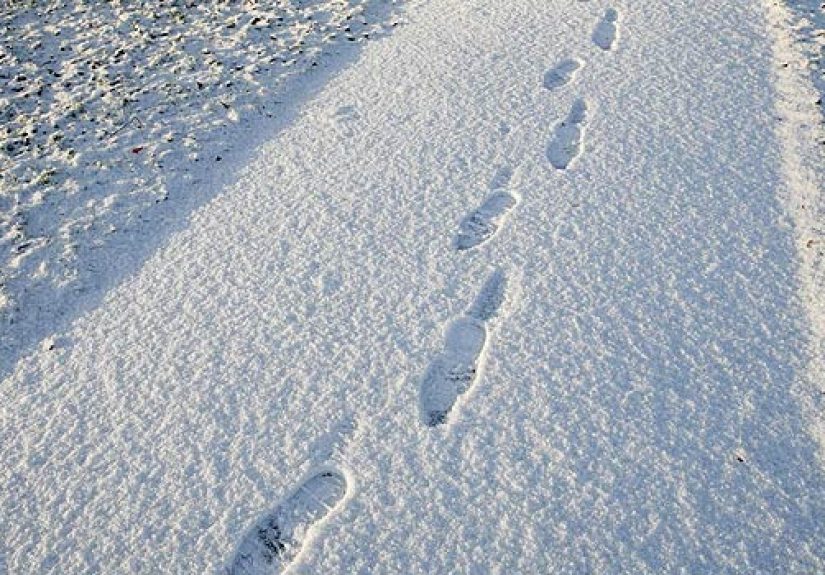
Your first step lands with a satisfying compress-and-crunch. The print is sharper than you expectedheel, tread,
the little pattern you never notice in normal life suddenly visible like a brand-new stamp. You take a second step
and realize you’re walking slower, not because you’re cautious (okay, partly), but because it feels ceremonial.
Like you should be wearing a sash that says: Official Ambassador of Winter’s First Five Minutes.
In a city, the experience has a sprint-to-it energy. Someone will shovel. Someone will salt. Someone will turn the
intersection into gray slush soup by noon. So the first footprint feels like catching a limited-edition drop:
a quick, quiet delight before reality reboots. You might see a neighbor across the street doing the same thing,
pretending they’re “just grabbing the paper,” while both of you silently agree that yes, this is the good part.
In a suburban driveway, it’s a different vibe. The first footprint is often followed by the first shovel scrape,
the first “where did I put the gloves,” and the first internal negotiation: Could I claim I already exercised
because I walked to the mailbox in snow? (Answer: absolutely. Winter math is generous.)
With kids, it becomes instant joy science. They test the depth, then the speed, then the absolute limit of your
patience by attempting a running leap into the deepest drift. The first footprint turns into a constellation of
prints: tiny boots, big boots, the random knee imprint from a dramatic fall that was “totally on purpose.”
If a dog is involved, the timeline accelerates. You’ll get exactly 2.7 seconds of pristine snow before it becomes
a zoom-track masterpiece.
The best part is how fleeting it all is. Sunlight softens edges. A breeze dusts over details. Another person’s
footsteps overlap yours, and suddenly the snow is no longer a blank pageit’s a shared record of a morning that
existed for real humans, in a real place, at a real time. Your first footprint doesn’t need to last forever to
matter. It mattered because you noticed it.