Table of Contents >> Show >> Hide
- Step 1: Define Your Cottagecore (Because There Isn’t One “Correct” Meadow)
- Step 2: Build a Cottagecore Color Palette That Feels Like a Deep Breath
- Step 3: Prioritize Natural Materials (Your Shortcut to Instant Warmth)
- Step 4: Layer Patterns Like You Mean It (Florals, Gingham, Stripes, RepeatTastefully)
- Step 5: Embrace Vintage and Thrifted Finds (Because Cottagecore Is a “Collected” Story)
- Step 6: Make Textiles Your Cozy Superpower
- Step 7: Bring the Outdoors In (Even If You Live in a High-Rise)
- Step 8: Create a Cottagecore Kitchen and Table (Where the Magic Usually Happens)
- Step 9: Live the AestheticSlow, Sustainable, and Actually You
- Common Mistakes (So You Can Avoid the “Gift Shop Explosion” Look)
- Conclusion: Your Home, but Make It Softer
- Bonus: Real-World Experiences When You Start Living Cottagecore (About )
Cottagecore is what happens when your phone battery dies, you light a taper candle “for ambiance,” and suddenly you’re emotionally invested in a gingham tablecloth and the idea of fresh bread cooling on a windowsill. It’s a decorating style, yesbut it’s also a vibe: slower, softer, nature-adjacent, and intentionally cozy. You don’t need a thatched-roof cottage, a flock of chickens, or a hydrangea budget. You just need a plan, a little restraint (we’ll talk about ruffles), and a willingness to romanticize everyday lifewithout pretending the past was perfect.
The cottagecore aesthetic blends vintage charm, natural materials, layered patterns, and “collected over time” personality. It borrows from English cottage style, traditional country homes, and handcraft culture, and it became wildly popular online when people craved comfort and escapism. The good news: it’s flexible. Cottagecore can look like a floral wallpaper wonderland, a calm neutral cottage palette with warm woods, or a modern apartment with a few thrifted treasures and a windowsill herb garden. Let’s build your versionstep by step.
Step 1: Define Your Cottagecore (Because There Isn’t One “Correct” Meadow)
Before you buy anything, decide what you mean by “cottagecore.” This style has sub-flavors, and choosing one keeps your space from turning into a costume shop for imaginary librarians.
Pick a lane (or at least a scenic country road)
- Classic cottagecore: florals, vintage frames, soft colors, patchwork quilts, lace details.
- Modern cottage: cozy and nostalgic, but with cleaner lines, fewer frills, and more breathing room.
- Garden cottagecore: botanical prints, terracotta, fresh blooms, herbs, and “I definitely know what deadheading is.”
- Moody / dark cottagecore: deeper greens and browns, antique brass, old books, candlelight energy.
A quick way to define your direction: choose three words you want your home to feel likesun-warmed, collected, calm (or whimsical, romantic, but still functional). Write them down. Those become your shopping filter and your editing tool when you’re tempted by a 47th floral pillow.
Step 2: Build a Cottagecore Color Palette That Feels Like a Deep Breath
Cottagecore colors usually come from nature: creamy whites, soft browns, sage greens, dusty blues, butter yellow, muted blush, and “I found this paint color in an old storybook” tones. Neutrals often act as the base, with color layered in through textiles, art, and accessories.
Two easy palette formulas
- Soft & airy: warm white + sage + dusty blue + small touches of brass.
- Cozy & grounded: cream + warm wood + olive + rust + floral accents.
If you’re nervous about color, start with a neutral foundation (walls, big furniture) and “season” the room with cottagecore accents you can swap out: throws, pillow covers, curtains, and a rug. That way your living room doesn’t become a commitment ceremony with wallpaper on day one.
Step 3: Prioritize Natural Materials (Your Shortcut to Instant Warmth)
Cottagecore spaces feel tactile. They look like they have textures you can actually feelwood grain, woven baskets, linen, cotton, ceramic glaze, and the occasional charmingly imperfect handmade piece.
Materials that do the heavy lifting
- Wood: warm-toned furniture, cutting boards on display, open shelving (even one shelf counts).
- Wicker & rattan: baskets, hampers, trays, and one statement chairbalanced with other textures so it doesn’t go full porch-set.
- Linen & cotton: curtains, napkins, bedding, slipcovers, and airy tablecloths.
- Ceramics & stoneware: mugs, bowls, pitchers, and plates that look like they could star in a still-life painting.
The goal isn’t “rustic for rustic’s sake.” It’s a home that feels grounded and lived-in. If something looks pretty but feels plasticky and sad, cottagecore politely declines.
Step 4: Layer Patterns Like You Mean It (Florals, Gingham, Stripes, RepeatTastefully)
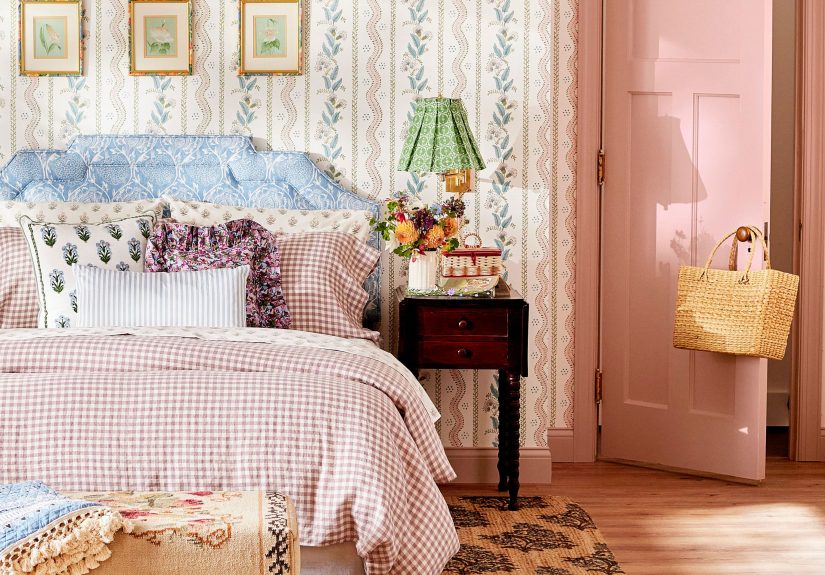
Cottagecore loves patternsometimes a lot of it. But the trick is intentional layering, not chaos. Think of patterns like a group chat: everyone can talk, but not everyone needs to shout.
How to mix patterns without losing your mind
- Choose a hero pattern: maybe a floral curtain or a vintage rug.
- Add a supporting pattern: gingham, checks, or stripes in a similar color family.
- Sprinkle tiny prints: ditsy florals, small botanicals, or subtle motifs.
- Use solids as “rest stops”: plain linen pillows or a simple throw keeps things balanced.
If you love the look of “pattern drenching” (wallpaper + textiles + layered prints), keep at least one element calmlike solid upholstered seating or neutral floorsso the room still feels cozy, not dizzy.
Step 5: Embrace Vintage and Thrifted Finds (Because Cottagecore Is a “Collected” Story)
Cottagecore thrives on pieces with historyor at least pieces that look like they might have history, like they survived a few decades and several family arguments about where the buffet table should go.
Thrift targets that almost always work
- Small wooden side tables, stools, and cabinets
- Vintage frames and landscape art (bonus points for pastoral scenes)
- Brass candlesticks, picture lights, and classic hardware
- Old books, baskets, ceramic pitchers, and embroidered linens
Pro tip: don’t try to buy “a whole cottagecore home” in one weekend. The charm comes from finding pieces over time. Your house should look curated, not like you speed-ran a farmhouse aisle while drinking cold brew.
Step 6: Make Textiles Your Cozy Superpower
If cottagecore had a love language, it would be “soft furnishings.” Quilts, throws, curtains, and pillows are how you add warmth fastespecially in a modern home with sleek surfaces.
Easy textile upgrades
- Bedding: a patchwork quilt or floral duvet cover instantly sets the tone.
- Window treatments: linen curtains or café curtains give that cottage kitchen feel.
- Rugs: vintage-style or braided rugs add softness and “collected” character.
- Table linens: fabric napkins, simple runners, and a lived-in tablecloth bring charm to daily meals.
Keep it practical: washable fabrics are your friend. Cottagecore is supposed to make life easier and sweeternot make you fear spaghetti night.
Step 7: Bring the Outdoors In (Even If You Live in a High-Rise)
Nature is the heartbeat of cottagecore. That can mean houseplants, fresh flowers, branches in a vase, botanical art, or natural light that you don’t block with heavy curtains you can’t open because they’re “for the aesthetic.”
Low-effort ways to add cottage-garden energy
- A simple bouquet from the grocery store in a ceramic pitcher
- Herbs on the windowsill (basil counts, even if you forget to water it once)
- Botanical prints, pressed flowers, or landscape photography
- Wooden bowls filled with fruit, or a little seasonal centerpiece
If you’re able to garden outside, lean into cottage-garden principles: layered plant heights, lots of blooms, and pollinator-friendly choices. But indoors works toocottagecore is more about the feeling than your zip code.
Step 8: Create a Cottagecore Kitchen and Table (Where the Magic Usually Happens)
Cottagecore doesn’t just decorate the kitchenit celebrates it. This is where the style becomes a lifestyle: homey rituals, practical beauty, and a space that invites you to cook, bake, and linger.
Kitchen touches that feel instantly cottagecore
- Open shelves with stoneware, mugs, and wooden boards
- Vintage-inspired tea towels, aprons, and a cute cookie jar
- Glass jars for pantry staples (bonus: you’ll actually see when you’re out of oats)
- Warm lighting: shaded lamps, small sconces, or candlelight for evenings
Cottagecore at the table is simple: a cloth napkin, a bowl of lemons, a mismatched set of plates that somehow looks intentional, and food that feels comforting. You don’t need to bake sourdough daily. You just need the kitchen to feel welcominglike it’s okay to sit down for five minutes and drink tea without multitasking.
Step 9: Live the AestheticSlow, Sustainable, and Actually You
The most convincing cottagecore homes aren’t just styled; they’re lived in with intention. The lifestyle side is about slowing down, choosing quality over quantity, and finding joy in small rituals. It also means being thoughtful: cottagecore can romanticize rural life, so it’s worth staying grounded in realityappreciate the beauty without pretending the past was universally idyllic.
Small habits that make cottagecore feel real
- Try a craft: mending, knitting, embroidery, flower arranging, or a beginner’s baking project.
- Buy less, choose better: thrift when you can, repair what you own, and avoid “aesthetic shopping spirals.”
- Build a seasonal rhythm: spring blooms, summer picnics, fall candles, winter quiltssimple changes make home feel alive.
- Create analog moments: reading, journaling, or a screen-free hour with music in the background.
Cottagecore is at its best when it supports your real life. If you’re busy, make it “ten-minute cottagecore”: fresh flowers, warm lighting, and a cozy throw. If you love maximal pattern, go for itjust keep one calm anchor so your brain can relax. The aesthetic is a tool, not a test.
Common Mistakes (So You Can Avoid the “Gift Shop Explosion” Look)
- Buying everything at once: cottagecore looks best when it evolves slowly.
- Too many themes: choose a directionclassic, modern, garden, or moodyand let that guide you.
- Overdoing ruffles and lace: charming in small doses; overwhelming when every surface is soft.
- Ignoring function: if your home is pretty but inconvenient, it won’t feel cozy for long.
Conclusion: Your Home, but Make It Softer
Embracing the cottagecore aesthetic isn’t about pretending you live in a fairy tale. It’s about building a home that feels warm, nostalgic, grounded, and humanfull of natural textures, layered patterns, vintage charm, and small rituals that make everyday life feel a little more meaningful. Start with one step: a softer color palette, a thrifted lamp, a linen curtain, a bouquet in a pitcher. Let it grow slowly. Real cottagecore isn’t rushedbecause nothing says “peaceful countryside” like panic-buying twelve floral cushions at 2 a.m.
Bonus: Real-World Experiences When You Start Living Cottagecore (About )
When people first try cottagecore, the most surprising “experience” isn’t the decorit’s the mood shift. A room with warmer light, softer textiles, and a few nature-inspired touches tends to change how you move through your day. You might notice you’re more likely to sit down for your coffee instead of carrying it from room to room like a stressed-out hummingbird. A simple tablecloth and a real mug (not the one with the mystery stain) can make breakfast feel like an event instead of an obligation.
One common early win is the “thrifted treasure high.” You’ll find something smallmaybe a brass candlestick or a floral frameand suddenly your space feels less generic. People often describe this as their home starting to look like them, not a showroom. And because cottagecore favors secondhand and handmade, the story behind the object becomes part of the charm. You don’t just have a bowlyou have the bowl you found on a rainy Saturday that made you feel like the main character in a cozy indie movie.
Another experience: your senses wake up. Cottagecore leans into texture and scentlinen, wood, baked goods, herbs, flowers. Even if you don’t bake, you might start doing small “kitchen rituals” because the space invites it. People often try one signature cozy habit: Sunday muffins, evening tea, or keeping fruit in a bowl on the counter because it looks pretty and (plot twist) encourages actual snacking on fruit.
You may also realize cottagecore is not a personality transplantand that’s a good thing. If you’re not into ruffles, you can still do cottagecore with warm woods, muted colors, and botanical art. If you’re more minimalist, cottagecore can be “quiet cottage”: one quilt, one vase of flowers, one vintage lamp, and a calm palette. The experience becomes less about copying an aesthetic online and more about designing comfort on purpose.
There’s also a practical lesson many people learn quickly: cottagecore is easiest when it’s functional. You’ll probably become more selective about what enters your home. A room packed with delicate decor might photograph well, but living in it is a different story. Many cottagecore beginners end up editing their choiceskeeping what feels warm and useful (baskets, quilts, good lighting) and skipping what feels like clutter disguised as “whimsy.” In the long run, the best cottagecore experience is the simplest one: a home that feels safe, soft, and yourslike you can exhale the moment you walk in.