Table of Contents >> Show >> Hide
- What “Stealth” Really Means (Spoiler: Not a Cloaking Device)
- The Stealth Toolkit: How Engineers Make a Jet Hard to Spot
- The Headliners: America’s Stealth Icons (and Why They’re Famous)
- So… Which Jet Is Actually the “Stealthiest”?
- Stealth vs. the World: How Defenders Try to Hunt Low-Observable Jets
- Stealth Is Also Maintenance (Yes, Even the Cool Part Has Homework)
- Why Stealth Jets Matter (Even When Everyone Has Sensors Now)
- Conclusion
Stealth jets are the aviation world’s best magic trick: a 40,000+ pound machine (sometimes a whole flying wing) shows up to the party… and the radar bouncer doesn’t recognize it until it’s already inside ordering snacks. Not “invisible,” not “untouchable,” but absolutely harder to find, track, and target than conventional aircraft.
In this guide, we’ll break down what makes a jet “stealthy,” why the stealthiest aircraft depends on the mission, and which modern U.S. platforms set the gold standardplus the very human side of living and working around these low-observable legends.
What “Stealth” Really Means (Spoiler: Not a Cloaking Device)
“Stealth” is shorthand for low observability: reducing how easily sensors can detect you and how reliably they can keep you tracked. The big win isn’t “radar can’t see you.” The win is “radar sees something too late, too inconsistently, or too ambiguously to set up a clean engagement.”
And it isn’t only radar. A truly stealthy aircraft tries to be quietly unimpressive across several “signatures”: radar, infrared (heat), visual, acoustic, and even electromagnetic emissions. That’s why the stealth conversation always turns into a messy dinner table debatebecause the “stealthiest jet” can change with altitude, angle, weather, radar frequency, mission profile, and how disciplined the crew is about giving off electronic “I AM HERE” vibes.
The Stealth Toolkit: How Engineers Make a Jet Hard to Spot
1) Shaping: Make Radar Waves Go Somewhere Else
The most important stealth trick is geometry. Flat panels, careful angles, blended curves, and edge alignment are used to redirect radar energy away from the radar receiver. If radar energy doesn’t boomerang back, the return looks smaller, fuzzier, or easier to confuse with background clutter.
Early stealth aircraft leaned into faceted shapes because computing limitations made it easier to predict reflections from flat surfaces. Modern design tools allow smoother curves and cleaner blending, which can be both stealthier and more aerodynamic.
2) Materials and Coatings: Turn “Ping!” Into “Meh.”
Radar-absorbent materials (RAM) and specialized coatings reduce reflected energy and tame edge effects. You’ll sometimes see a different tone along leading edges or access panelsthose areas are stealth “stress points” where tiny gaps and sharp transitions can become radar megaphones if left untreated.
3) Hide the Sparkly Bits: Weapons, Fans, and Other Reflective Stuff
A stealth jet tries to avoid carrying weapons externally when stealth is required, using internal weapons bays instead. It also works hard to keep radar from “seeing” reflective engine components like fan blades. That’s where inlet design (including serpentine ducting and blockers) earns its paycheck.
4) Manage Heat and Emissions: Don’t Glow, Don’t Shout
Infrared signature reduction is part design, part tactics. Exhaust shaping, temperature management, and operational choices matter. Meanwhile, stealth aircraft also depend on electronic warfare and disciplined emissions controlbecause being radar-sneaky while broadcasting a loud electronic signature is like wearing camouflage with a neon “FOLLOW ME” sign.
The Headliners: America’s Stealth Icons (and Why They’re Famous)
F-22 Raptor: Air Superiority in “Hard Mode”
The F-22 Raptor is the classic “stealth plus everything” fighter: low observability paired with supercruise (sustained supersonic flight without afterburner), extreme maneuverability, and highly integrated avionics. Its whole vibe is: arrive early, see first, shoot first, leave before anyone agrees on what happened.
The Raptor’s design emphasizes air dominance. Stealth helps it approach threats with reduced risk, while sensor fusion and situational awareness aim to turn information into first-shot opportunities. It also carries weapons internally to preserve its low-observable profile when it matters most.
- Why it’s stealthy: shaping + materials + internal weapons + careful inlet and edge treatments.
- Why it’s feared: stealth isn’t the whole storyspeed, agility, and awareness are the rest of the punch.
F-35 Lightning II: Stealth as a Team Sport
The F-35 family (A, B, and C variants) approaches stealth with a different personality: it’s not just a fighterit’s a sensor-and-network node that happens to fly fast. The F-35 blends stealth shaping, internal carriage, and coatings with a heavy emphasis on sensor fusion, data sharing, and electronic warfare.
Think of it like this: the F-22 is the world’s best soloist; the F-35 is the bandleader who also plays lead guitar. It’s designed to gather, fuse, and distribute information while operating in contested environments.
F-35A: Conventional Takeoff, Big Multirole Appetite
The F-35A is the conventional runway version, built for agile multirole operationsair-to-air, strike, and morewhile maintaining low observability and advanced mission systems.
F-35B: Short Takeoff/Vertical Landing, Same Stealth DNA
The F-35B adds STOVL capability for expeditionary operations and ship-based flexibility, bringing stealth and advanced sensors to places that don’t come with a “nice long runway” guarantee.
F-35C: Carrier VariantStealth Goes to Sea
The F-35C is tuned for carrier operations with a design that supports naval missions while still emphasizing low observability, integrated sensors, and survivability. In practical terms: stealth now shows up on the flight deck, wearing a flotation device and pretending it doesn’t get seasick.
B-2 Spirit: The Flying Wing That Redefined “Sneaky”
The B-2 Spirit is what happens when stealth, aerodynamics, and “we’d like to carry a serious payload a very long way” all shake hands and agree to keep secrets. Its flying-wing design minimizes vertical surfaces and helps reduce multiple signatures. Public information emphasizes that its low observability comes from blending signature reduction across radar, infrared, acoustic, visual, and electromagnetic domains.
The B-2’s silhouette is iconic because it’s functional: a stealthy shape that supports penetration of sophisticated defenses while delivering conventional or nuclear payloads. If the F-22 is a fencer, the B-2 is a chess grandmaster who shows up with a moving van of precision.
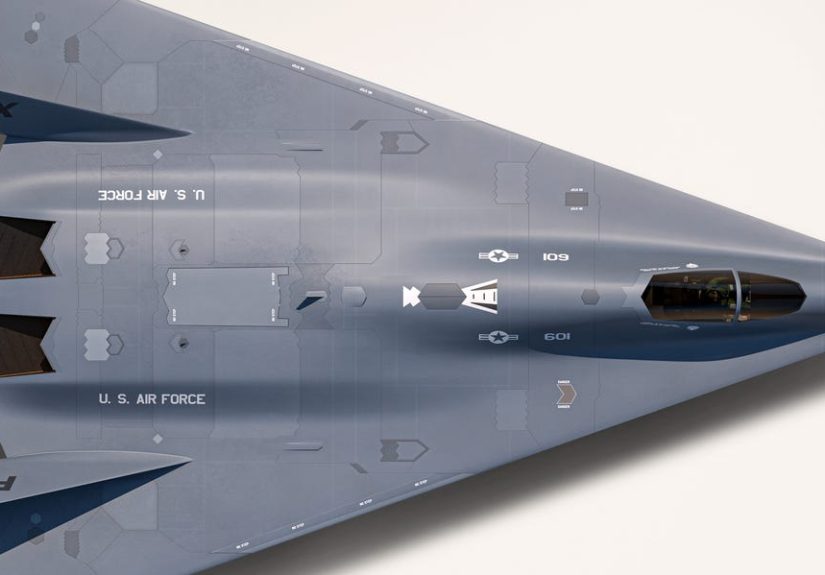
B-21 Raider: Next-Gen Stealth Built to Upgrade
The B-21 Raider is widely described as the next chapter in long-range, penetrating stealth. Public details emphasize open systems architecture and upgradabilitybuilding a bomber that can evolve as threats change, rather than freezing it in time like a museum exhibit (no offense, museums).
Another recurring theme: maintainability and affordability compared with earlier stealth platforms. Stealth is powerful, but it’s also famously pickyso designing for easier sustainment is a big deal for real-world readiness.
F-117 Nighthawk: The Angular Grandparent of Modern Stealth
The F-117A Nighthawk was the world’s first operational aircraft designed to exploit low-observable stealth technology for precision strike. Its faceted shape looks like a jet drawn by a low-polygon video game engine, and that’s not an insultit’s history. Those angles were a solution to the math and computing constraints of the era.
The Nighthawk proved stealth’s combat value and helped set the stage for later platforms. It also reminds us of a key lesson: stealth is a system, not a paint job. It works best with planning, tactics, timing, and mission discipline.
So… Which Jet Is Actually the “Stealthiest”?
If you’re looking for a single-number winner, stealth engineering would like to politely escort you out of the lab. “Stealthiest” depends on what sensor, which frequency, what angle, what environment, and what the jet is doing.
A stealth bomber optimized for penetration and payload (like the B-2 and B-21) has different design priorities than a stealth fighter optimized for air dominance (F-22) or multirole sensor fusion and networking (F-35). Each is “stealthiest” in its own job descriptionlike arguing whether a chef’s knife is “better” than a screwdriver. They’re both great until you try to change a tire with béarnaise sauce.
A Practical Ranking Mindset (Without Pretending We Know Classified Details)
- Deep penetration + payload: bombers like the B-2 and the newer B-21 dominate the stealth conversation.
- Air-to-air dominance: the F-22’s blend of stealth and supercruise is built for first-look/first-shot advantages.
- Multirole and networked warfare: the F-35’s stealth pairs with sensors, fusion, and electronic warfare for contested operations.
- Historical milestone: the F-117 remains a stealth legend and a proof-of-concept that changed doctrine.
Stealth vs. the World: How Defenders Try to Hunt Low-Observable Jets
Modern air defense isn’t one radar dish spinning dramatically on a hill while ominous music plays. It’s often a network: multiple sensors, multiple bands, passive detection, infrared search-and-track, and data fusion. Stealth doesn’t erase the jet; it complicates the defender’s timeline and confidence.
That’s why stealth aircraft also lean on electronic warfare, tactics, and coordination with other assets. Sometimes stealth is the spear tip. Sometimes it’s the scout. Sometimes it’s the quarterback calling plays for a whole team of platforms that never cross the border but still influence the fight.
Stealth Is Also Maintenance (Yes, Even the Cool Part Has Homework)
One of the less glamorous truths about stealth is that it’s meticulous. Gaps, seams, and surface wear can matter. Maintaining low-observable coatings and edge treatments can be time-intensive, and some platforms have historically required careful attention to keep their stealth performance consistent.
That’s why newer design philosophies talk openly about making stealth easier and less costly to maintain. Because “most stealthy on paper” doesn’t help if you can’t generate sorties on schedule. In the real world, readiness is a stealth feature, too.
Why Stealth Jets Matter (Even When Everyone Has Sensors Now)
If you hear “stealth is obsolete,” it’s usually followed by a sales pitch for something elseor a social media thread where everyone suddenly becomes a radar engineer. In reality, stealth remains a core advantage because it changes how far away and how reliably defenders can detect and engage.
Stealth is not a guarantee. It’s an advantageone that compounds when combined with training, planning, electronic warfare, standoff weapons, and smart teamwork across domains.
Conclusion
The stealthiest jets in the skies aren’t defined by hypethey’re defined by engineering tradeoffs and mission reality. The F-22 is the air-superiority specialist built to dominate with stealth, speed, and agility. The F-35 turns stealth into a connected, sensor-fused advantage across multiple variants and basing options. The B-2 remains the iconic penetrating stealth bomber, while the B-21 aims to bring next-gen stealth with modern upgradeability and sustainment priorities. And the F-117the angular originalstill earns respect as the aircraft that proved stealth could change warfare.
Bottom line: stealth isn’t invisibility. It’s leverage. And when leveraged well, it lets aircraft do the hardest job in modern air combatenter contested airspace, survive, and finish the mission.
Bonus: Real-World Experiences Around the Stealthiest Jets (About )
The funny thing about stealth jets is that the “stealth” part is often most impressive when you’re not looking at a radar screen. Ask people who’ve been near these aircraftpilots, maintainers, deck crews, and airshow regularsand you get a consistent theme: stealth feels like a combination of “this is unbelievably advanced” and “this is unbelievably picky.”
At an airshow, a stealth fighter can feel like a prank with afterburners. You spot the jet, blink, and suddenly it’s somewhere else, doing physics with a smug grin. Spectators talk about the sound firstthe way an engine note builds, then the aircraft seems to “jump” to a new part of the sky. The stealth is invisible to your eyes, but the performance isn’t: tight turns, high energy, and a sense that the pilot is painting geometry on the air.
On a flight line, the stories get more tactile. Maintainability is where stealth stops being mythology and turns into a checklist. People describe low-observable work as a blend of craftsmanship and patience: surfaces that need to stay smooth; edges that need careful attention; coatings that demand the right conditions and the right technique. It’s the aviation equivalent of keeping a sports car spotlessexcept the sports car is also a national asset and the dirt you missed might matter.
Carrier aviation adds its own flavor. A stealth jet on a deck is still living in the same world as salt spray, cramped spaces, fast turnarounds, and “hurry up, but don’t break anything.” The experience is part precision ballet, part controlled chaos. When people talk about the F-35C joining the carrier air wing, they often describe a shift in mindset: stealth isn’t just a shape, it’s a capability the whole team supportsmaintenance, mission planning, deck choreography, and how the air wing thinks about operating in heavily defended airspace.
Museums and static displays bring a different kind of awe. Standing next to an F-117, many visitors have the same reaction: “It looks like it shouldn’t fly.” And then you read the history and realize it flew into the teeth of defenses and helped rewrite what airpower could do. With a B-2, the scale hits youhow a flying wing can be both enormous and strangely minimalist, like it was designed by someone who hates unnecessary lines.
Even in simulators and flight games, stealth has a “feel.” Players notice how the tactics change: more planning, fewer heroics, more emphasis on positioning and timing. You start thinking about routes, threats, and when to stay quietbecause stealth is a promise you have to protect. The experience teaches the stealth lesson in a very human way: technology buys you options, but discipline cashes the check.