Table of Contents >> Show >> Hide
- How We Judged Solar Lights (Without Falling for “1,000,000 Lumens!!!”)
- Winners at a Glance
- 1) Best Overall Motion/Security: Aootek Solar Motion Sensor Lights
- 2) Best Pathway Upgrade: ALEPOD Solar Pathway Lights
- 3) Best Value Path Lights: Gigalumi Solar Pathway Lights
- 4) Best Spot/Uplight (Landscape + Security Hybrid): AloftSun Motion Sensor Solar Spotlights
- 5) Best Classic String Lights: Brightech Ambience Pro Solar String Lights
- 6) Best Globe String Lights: WYZM G40 Solar Lights
- 7) Best Fence-Post Cap Multi-Pack: GIGALUMI Solar Deck Post Lights
- 8) Best Smart “Mood + Color” Option: Linkind Smart Solar Lights
- 9) Best Decorative Statement: Smart Solar Charleston Solar Lights
- How to Choose the Right Solar Lights for Your Yard
- Pro Tips: Make Your Solar Lights Brighter and More Reliable
- FAQs People Actually Ask (Usually While Standing in the Dark)
- Real-World Experiences: What “Test Winners” Teach You After the First Week (500+ Words)
Solar lights are supposed to be the “easy button” for outdoor lighting: stab ’em in the ground, let the sun do the math,
and enjoy a cozy glow at night. Yet somehow, a lot of solar lights still pull the same stuntshine brightly for exactly
12 minutes, then fade into a sad little “is that… on?” dot.
So we built a no-drama list of solar lights that actually earn their keep. Instead of trusting hype (or the suspiciously
poetic reviews that start with “I’m not usually a light person…”), we synthesized results from major U.S. home-and-gear
outlets that publish hands-on testing notes, plus real-world performance guidance (charging time, durability, brightness,
and weather resistance). The “winners” below are the modelsand model typesthat keep rising to the top when experts
measure what matters: reliable dusk-to-dawn performance, useful brightness, sturdy construction, and pain-free setup.
How We Judged Solar Lights (Without Falling for “1,000,000 Lumens!!!”)
Solar lights don’t fail because the idea is bad. They fail because of small, boring details: undersized panels, weak
batteries, flimsy stakes, cloudy-day charging that never quite catches up, and water resistance that’s more “light mist”
than “summer thunderstorm.” Our scoring rubric focused on the parts that make solar lighting dependable year-round.
Our test checklist
- Brightness that fits the job: Path lighting should guide feet, not blind neighbors. Security lights should actually deter.
- Runtime consistency: A good light doesn’t quit halfway through dinner.
- Charging efficiency: Strong performance after normal daily sunlightnot just perfect beach-day conditions.
- Weather resistance: Look for real ingress protection (IP) ratings when possible, and solid housing materials.
- Ease of installation: Stakes that don’t snap, mounts that don’t require an engineering degree.
- Design + beam pattern: The best lights disappear in daylight and look intentional at night.
One important reality check: solar lighting is a systempanel + battery + LED + placement. Even the best model can underperform
if it’s tucked under a shady eave like a houseplant you forgot about. We’ll show you how to place and maintain them so your
“winners” stay winners.
Winners at a Glance
- Best Overall Motion/Security: Aootek Solar Motion Sensor Lights
- Best Pathway Upgrade: ALEPOD Solar Pathway Lights
- Best Value Path Lights: Gigalumi Solar Pathway Lights
- Best Spot/Uplight (Landscape + Security Hybrid): AloftSun Motion Sensor Solar Spotlights
- Best Classic String Lights: Brightech Ambience Pro Solar String Lights
- Best Globe String Lights: WYZM G40 Solar Lights
- Best Fence-Post Cap Multi-Pack: GIGALUMI Solar Deck Post Lights
- Best Smart “Mood + Color” Option: Linkind Smart Solar Lights
- Best Decorative Statement: Smart Solar Charleston Solar Lights
1) Best Overall Motion/Security: Aootek Solar Motion Sensor Lights
If your goal is “make the dark corner less murder-mystery,” motion-sensor solar lights are the most practical categoryand
Aootek shows up as a repeat winner. Multiple test roundups praise its sensor reliability, wide coverage, and strong weather
resistance for the price. Translation: it actually turns on when someone walks up, and it doesn’t panic-die during bad weather.
Why it wins
- Motion performance: Fast activation with a sensor range designed for real entryways and garages.
- Useful lighting modes: Options like dim-to-bright or motion-only help balance brightness with battery life.
- Weather readiness: Look for versions listed around IP65great for rain, dust, and general outdoor chaos.
Best for: Front doors, side gates, garages, sheds, driveway edges, and anywhere you want light only when it’s needed.
Skip it if: You want “decorative.” This is more “helpful robot” than “storybook garden.”
2) Best Pathway Upgrade: ALEPOD Solar Pathway Lights
Path lights are the outdoor equivalent of good manners: subtle, helpful, and noticed most when they’re missing.
ALEPOD’s pathway lights earned top marks in recent home testing for looking polished in daylight and delivering consistent,
attractive illumination at nightexactly what most walkways need.
Why it wins
- Design-forward: A more “intentional fixture” look than many budget stakes.
- Balanced brightness: Enough to guide steps without turning your yard into a runway.
- Solid durability: Better build quality than the flimsy-stake crowd.
Best for: Front walks, garden borders, and driveway edges where you want a clean, upgraded look.
3) Best Value Path Lights: Gigalumi Solar Pathway Lights
If you want the walkway clearly markedand you want it on a reasonable budgetGigalumi is the dependable crowd-pleaser.
Testing notes often highlight reliable dusk timing, a pleasing pattern on the ground, and a “buy more of these and line
the whole path” kind of value.
Why it wins
- Consistent on/off behavior: Turns on when it should, night after night.
- Better in groups: Individually they’re modest; together they look great and feel safer.
- Style-per-dollar: A classic pathway look that doesn’t scream “temporary.”
Pro tip: Plan spacing first. For most paths, closer placement beats chasing “higher lumens” every time.
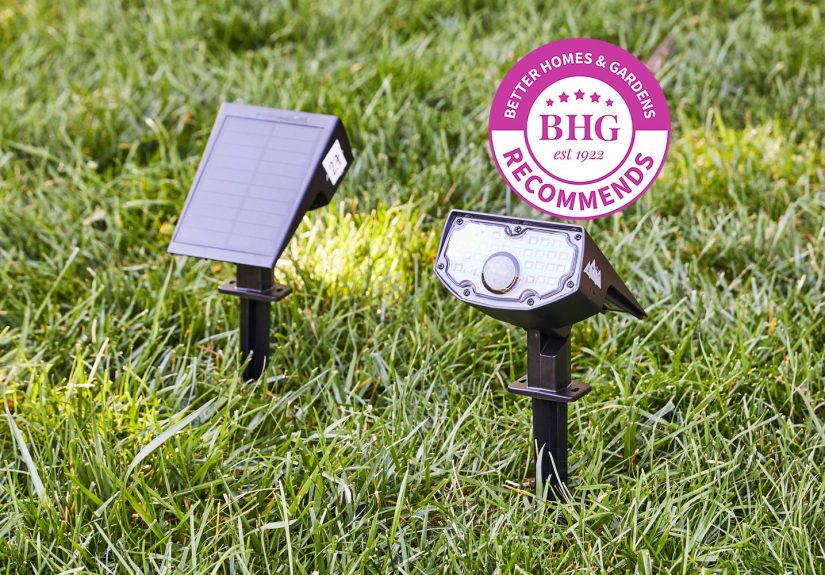
4) Best Spot/Uplight (Landscape + Security Hybrid): AloftSun Motion Sensor Solar Spotlights
This category is the multitool of solar lighting: stake it to uplight a tree, mount it near steps, aim it at a dark side yard,
and let motion sensing add a security boost. AloftSun’s motion-sensor spotlights are repeatedly praised for strong brightness,
flexible placement, and rugged weather resistance.
Why it wins
- Two mounting styles: Stake in soil or mount to a wallhelpful for weird yards (all yards are weird).
- Motion + steady modes: Great for both “highlight landscaping” and “hello, stranger.”
- Durability in real weather: Testing notes mention stormy conditions without performance drama.
Best for: Steps, side yards, feature trees, house numbers, driveway corners, and “please stop tripping there” zones.
5) Best Classic String Lights: Brightech Ambience Pro Solar String Lights
Outdoor string lights are less about brightness and more about vibe. Brightech’s solar string lights keep winning because they’re
built for real outdoor usedurable construction, shatter-resistant bulbs (depending on the set), and that warm café glow that
makes your patio feel like a place where good snacks happen.
Why it wins
- Ambience-first design: Warm, inviting light that doesn’t feel clinical.
- Outdoor-friendly durability: Better longevity than bargain strands that crack the first time the weather changes its mind.
- Solar convenience: No outlet requiredideal for pergolas, fences, and patios far from power.
Best for: Patios, pergolas, decks, balconies, and “I want my backyard to feel like a movie scene” goals.
6) Best Globe String Lights: WYZM G40 Solar Lights
Globe lights are the extroverts of outdoor lightingcute, visible, and immediately festive. WYZM’s G40 solar set stands out in
recent testing for delivering that classic bistro look with solar practicality, making it easier to light gathering areas without
running extension cords like you’re preparing for an outdoor concert tour.
Why it wins
- Classic G40 aesthetic: The “backyard party” bulb shape people actually recognize.
- Easy install: Hang, aim the panel, and you’re basically done.
- Great for entertaining zones: Perfect above seating, not meant to light a whole yard for navigation.
7) Best Fence-Post Cap Multi-Pack: GIGALUMI Solar Deck Post Lights
Post-cap lights are the underrated move for decks and fences because they define your space without glare. This GIGALUMI set
is a standout choice when you have multiple posts to cover and want a consistent, finished look along a perimeter.
Why it wins
- Multi-pack practicality: Uniform lighting across a fence line looks more “planned,” less “random.”
- Low-glare perimeter definition: Great for decks, patios, and stairs where you want boundaries visible.
- Upgrade effect: Makes basic fencing look more expensive at night (without actually being expensive).
8) Best Smart “Mood + Color” Option: Linkind Smart Solar Lights
If you want your yard lighting to have a personalitycolor themes, modes, grouped controlLinkind’s smart solar lights are the
most “fun gadget” pick that still behaves like a functional outdoor light. It’s a smart choice for patios, party setups, and
anyone who has ever thought, “What if my walkway lights matched my playlist?”
Why it wins
- App control + presets: Adjust colors and modes without wandering outside in slippers.
- Group control: Set a whole row to the same scene for a cleaner look.
- Weather resistance: Commonly listed around IP65 for outdoor use.
Best for: Patios, parties, holiday scenes, and “I like options” households.
Skip it if: You want truly zero-tech simplicity.
9) Best Decorative Statement: Smart Solar Charleston Solar Lights
Decorative solar lights usually fall into two camps: “cute in the box, sad in the yard” or “shockingly elegant for solar.”
The Smart Solar Charleston lights lean into that second camp. Testing notes highlight sturdy materials and a distinctive
starburst pattern that turns a plain walkway into something guests notice.
Why it wins
- More premium materials: Glass and metal details that age better than cloudy plastic.
- Patterned light effect: A deliberate design choice, not just “a light point on the ground.”
- Great curb appeal: Perfect near steps or entry landscaping where you want a little drama (the good kind).
How to Choose the Right Solar Lights for Your Yard
Start with lighting “layers”
Great outdoor lighting is rarely one type of fixture. Think in layers:
ambient (general glow), task (help people move safely), and accent (highlight landscaping or architecture).
When you pick winners by category, your yard looks cohesive instead of randomly dotted with lights like a constellation you didn’t ask for.
Pick brightness based on the job, not bragging rights
A few practical guidelines:
- Path + steps: Choose enough light to outline edges and avoid trips. More lights at moderate brightness usually looks better than fewer “mini-floodlights.”
- Accent uplighting: Go brighter and more directionalspotlights exist for a reason.
- Security lighting: Motion-sensor lights should be clearly bright when triggered, with coverage aimed at entry points.
Check IP ratings (especially if your weather has opinions)
IP ratings tell you how well a device resists dust and water. The higher the number, the more protected it is. IP65 is a common “sweet spot”
for outdoor lights because it’s built for dust protection and strong water resistance. If a listing doesn’t provide an IP rating, assume
you’ll want to be more cautious about exposure and consider seasonal storage during extreme conditions.
Consider solar panel placement
Some lights have tiny panels built into each unit; others use a separate panel connected by a cord. Separate panels are a cheat code for shady yards:
you can place the light where you want it and move the panel where the sun actually hits.
Pro Tips: Make Your Solar Lights Brighter and More Reliable
1) Give them a “full-charge start”
Many testers recommend fully charging solar lights before final placement. Some models perform best after an initial extended charge cycle,
especially right out of the box.
2) Clean the panels (yes, really)
Dirt, dust, pollen, and bird-related crimes can block sunlight. The fix is refreshingly low-tech:
brush off debris and wipe the panel gently with a soft cloth. Avoid harsh cleaners unless the manufacturer says it’s okayscratches are the enemy of efficiency.
3) Aim matters more than you think
Tilt panels toward unobstructed sun and keep them away from night-time artificial light sources that can confuse dusk-to-dawn sensors.
If your lights look weak, try relocating one as a test before replacing the entire set.
4) Winter strategy: accept physics, then outsmart it
Shorter days mean less charging time. In winter or cloudy regions, choose lights with larger panels, efficient LEDs, and (ideally) adjustable modes.
Motion-activated security lighting is often more reliable in tough seasons because it saves battery for when it matters.
FAQs People Actually Ask (Usually While Standing in the Dark)
Do solar lights need batteries?
Yesbut they’re built in. Good solar lights store daytime energy in an internal rechargeable battery, then power the LED at night.
Higher-quality lights tend to manage charging and power draw more efficiently, which is why they stay brighter longer.
Why are my solar lights dim?
- Not enough direct sun (move the panel/light).
- Dirty panel (clean it gently).
- Short winter days or long nights (choose motion mode or a larger-panel model).
- Old battery (some models allow battery replacement; many don’t).
How many do I need?
For pathways, think in spacing: start by placing lights closer together in key areas (steps, turns, uneven ground), then fill in the straight runs.
For ambience (string lights), fewer can look betterfocus on framing seating areas rather than trying to blanket the yard.
Real-World Experiences: What “Test Winners” Teach You After the First Week (500+ Words)
Here’s the part most product lists skip: what happens after you install the lights, take a victory lap, and then life happensrain happens, leaves happen,
pets happen, and somebody inevitably kicks one stake while carrying groceries. When we compared long-form test notes and homeowner patterns, the same
real-world lessons came up again and again.
Lesson #1: The sun is not a polite coworkerit doesn’t “try its best.” Solar lights reward good placement and punish wishful thinking.
A path light installed under a dense shrub will still turn on… it’ll just do it with the enthusiasm of a phone at 3% battery. That’s why the repeat winners
tend to share two traits: reasonably efficient panels and a battery system that doesn’t collapse after one mediocre day. If your yard has mixed sun/shade,
you’ll be happier with models that either (a) charge well with larger panels or (b) offer modes that conserve power until motion triggers full brightness.
Lesson #2: “Pretty in the box” is not a performance metric. Decorative solar lights can be genuinely gorgeouswhen the materials hold up.
Testers have noted that glass elements tend to stay clearer than cheap plastic over time, and sturdier stakes matter more than you’d think. A light can have
the perfect warm glow, but if the stake flexes every time the wind sneezes, it’s going to lean like it’s auditioning for a sad indie film. The decorative
winners usually succeed because they combine style with decent construction, not because they have the fanciest marketing photos.
Lesson #3: The best pathway setup is boring… and that’s a compliment. People love to chase “brighter,” but the happiest installs tend to be
evenly spaced, moderate brightness, and consistent timing. The classic path-light winners aren’t always the brightest individual lights; they’re the ones that
reliably click on at dusk and maintain a steady glow long enough for the way you actually use your yard. If you host outdoors, that matters more than peak lumens.
You want guests to see the edges of steps at 9:30 p.m.not just admire your landscaping for ten glorious minutes at 7:45.
Lesson #4: Motion-sensor lights are the “cheat code” for reliability. This comes up constantly in testing: when solar lights only need to be
very bright for short bursts, they tend to feel more powerful and dependable across seasons. That’s why Aootek-style motion lights keep winning.
They’re built for momentssomeone walking up the path, a gate opening, you taking the trash out without performing interpretive dance to find the can.
If you live where winter nights are long, motion lights can feel like the most “worth it” money because they don’t waste battery trying to glow all night.
Lesson #5: Maintenance is tiny, but it matters. The most common “my lights got dim” fix is not “buy new lights.” It’s “clean the panel.”
Dust, pollen, and grime build up slowly, so the dimming feels mysteriousuntil you wipe the panel and the light suddenly remembers its purpose in life.
A quick clean every couple of months (or after heavy pollen/yard work) is the simplest way to keep winners performing like winners.
Bottom line: the best solar lights are the ones that match your yard’s reality. Choose the right category (path vs. security vs. ambience), place them where the
sun can do its job, and don’t underestimate the power of a gentle wipe-down. Do that, and you’ll get the best kind of outdoor lighting result:
you stop thinking about itbecause it just works.