Table of Contents >> Show >> Hide
- What Makes a Caffeine Station Work (Not Just Look Cute)
- 13 Caffeine Stations That Feel “To Stay” (But Live at Home)
- 1) The Discreet Counter Niche (a.k.a. “Hide the Clutter, Keep the Joy”)
- 2) The Appliance Garage Coffee Bay (Doors Closed, Peace Restored)
- 3) The Butler’s Pantry Beverage Station (The “Yes, I Host” Flex)
- 4) The Rolling Coffee Cart (Mobility = Freedom)
- 5) The Floating Shelf Micro-Station (Small Space, Big Personality)
- 6) The Drawer-First Brew Setup (Minimal Counter, Maximum Calm)
- 7) The Built-In Espresso Ledge (A Little Shrine to Precision)
- 8) The “Tea + Coffee” Split Station (Peace Treaty Included)
- 9) The Breakfast-Bar Caffeine Zone (Morning Traffic Control)
- 10) The Vintage Cabinet Conversion (Character + Storage)
- 11) The Under-Stairs Brew Nook (Unexpected, Smart, Very “To Stay”)
- 12) The Family Cocoa-and-Decaf Station (Everyone Gets a Mug)
- 13) The Bedroom or Home-Office Mini Station (For the Truly Committed)
- Gear That Makes a Home Coffee Bar Feel Legit (Without Going Full Café)
- Storage and Freshness: Keep Your Beans Happy
- Styling Without Clutter (Because This Still Has to Function)
- Maintenance: Keep the Station Guest-Ready (Even if You Never Host)
- Conclusion: Your Home, But Make It “To Stay”
- Experience Notes: Real-Life Lessons From Living With a Caffeine Station (Extra )
- SEO Tags
If you’ve ever checked into a great boutique hotel and thought, “Wow, they really get me,” there’s a decent chance the feeling started at the caffeine setup.
Not the lobby coffee that tastes like a polite apologybut the kind of thoughtfully staged coffee-and-tea corner that says:
“Yes, you may be half-asleep. No, you will not suffer.”
That “hotel-at-home” vibe is exactly what’s driving the rise of the caffeine station (also called a home coffee bar, beverage nook, or brew corner).
It’s a dedicated spot where your coffee maker, kettle, mugs, beans, tea, filters, and all the tiny chaos-goblins (hello, stir sticks) live happily togetherso your main counters can stop looking like a café exploded.
Below are 13 design-forward caffeine stations inspired by the “To Stay” mindsetpractical, beautiful, and ready for daily use.
I’ll also show you how to plan the layout, choose surfaces, organize supplies, and keep everything guest-ready (even if your “guest” is just Future You at 6:12 a.m.).
What Makes a Caffeine Station Work (Not Just Look Cute)
1) A simple workflow: store → prep → brew → finish
The best home coffee stations follow a tiny assembly line: beans/tea stored nearby, prep space for scooping or grinding, brewing zone for the machine or kettle,
and a finishing zone for milk, sugar, honey, cinnamon, or whatever your morning personality requires.
2) Power, water, and “mess management”
Plan for outlets and cords so you don’t play “unplug the toaster to make espresso.” If you use a kettle or espresso machine daily,
consider placing the station near a sinkor at least keep a carafe/water dispenser there.
And yes, you want a wipeable surface. Coffee drips are not a design style. (Yet.)
3) Storage that matches your habits
If you drink drip coffee every day, filters and grounds should be front-and-center. If you’re a weekend pour-over person,
put that gear higher up or in a drawer. A caffeine station should be tailored to your real routine, not your fantasy “I wake up early and journal” routine.
13 Caffeine Stations That Feel “To Stay” (But Live at Home)
1) The Discreet Counter Niche (a.k.a. “Hide the Clutter, Keep the Joy”)
A shallow niche or tucked-in counter segment keeps your brewer and mugs visible but containedso your main prep area stays calm.
Add a small tray to corral the daily essentials: beans, spoon, sweetener, and your favorite mug.
- Best for: busy kitchens where counter space is precious
- Upgrade: an under-cabinet light so the station feels intentional, not accidental
2) The Appliance Garage Coffee Bay (Doors Closed, Peace Restored)
Put your espresso machine or pod brewer inside an appliance garage (a cabinet with a roll-up or hinged door).
You get the convenience of a dedicated home coffee bar without the permanent visual noise of appliances.
- Best for: minimalists who still want caffeine
- Pro move: include a pull-out shelf so you can brew without leaning into the cabinet like a raccoon at a campsite
3) The Butler’s Pantry Beverage Station (The “Yes, I Host” Flex)
If you have a pantry or scullery, claim a zone for coffee and tea supplies.
This keeps mugs, beans, and backups out of the main kitchen while creating a self-serve spot for guests.
- Best for: households that entertain or have multiple morning schedules
- Make it hotel-like: labels, matching canisters, and a neat stack of napkins
4) The Rolling Coffee Cart (Mobility = Freedom)
A bar cart works because it’s flexible: roll it near an outlet in the morning, park it out of the way later.
Use the top for the machine/kettle, middle shelf for beans and filters, and bottom for extra mugs or a tea tin collection.
- Best for: renters, small kitchens, and people who rearrange furniture “just to see”
- Styling tip: add one plant or one framed printjust oneso it looks curated, not crowded
5) The Floating Shelf Micro-Station (Small Space, Big Personality)
A single floating shelf above a compact counter zone can hold mugs, tea, and a small canister.
Pair it with a narrow tray below for your brewer and you’ve created a tiny caffeine corner out of “nothing.”
- Best for: apartments and kitchens with limited cabinetry
- Don’t forget: leave headroom for mug handles and for your hand to actually grab the mug
6) The Drawer-First Brew Setup (Minimal Counter, Maximum Calm)
If you hate seeing stuff on counters, store nearly everything in a “coffee drawer”:
filters, scoops, pods, tea sachets, spare spoons, and even napkins. Keep only the brewer and a tray on top.
- Best for: tidy kitchens and people allergic to countertop clutter
- Organizer win: adjustable dividers so supplies don’t migrate like they’re escaping
7) The Built-In Espresso Ledge (A Little Shrine to Precision)
For espresso fans, dedicate a ledge or short run of counter with a durable, heat-tolerant surface.
Include space for a grinder, knock box, and a small scale if you’re the “grams matter” type.
It reads like a tiny café barand works like one.
8) The “Tea + Coffee” Split Station (Peace Treaty Included)
Not every household runs on coffee alone. A smart caffeine station gives tea equal respect:
a temperature-control kettle, tea tins, infusers, honey, and a mug selection that doesn’t scream “office break room.”
- Best for: mixed drinkers (coffee weekdays, tea nights, chaos always)
- Simple system: left side = coffee, right side = tea, center = mugs and spoons
9) The Breakfast-Bar Caffeine Zone (Morning Traffic Control)
If your kitchen gets crowded in the morning, move the caffeine station to the breakfast bar or a side counter.
This keeps coffee-making out of the main cooking lane and prevents the classic “I can’t make toast because someone is steaming milk” standoff.
10) The Vintage Cabinet Conversion (Character + Storage)
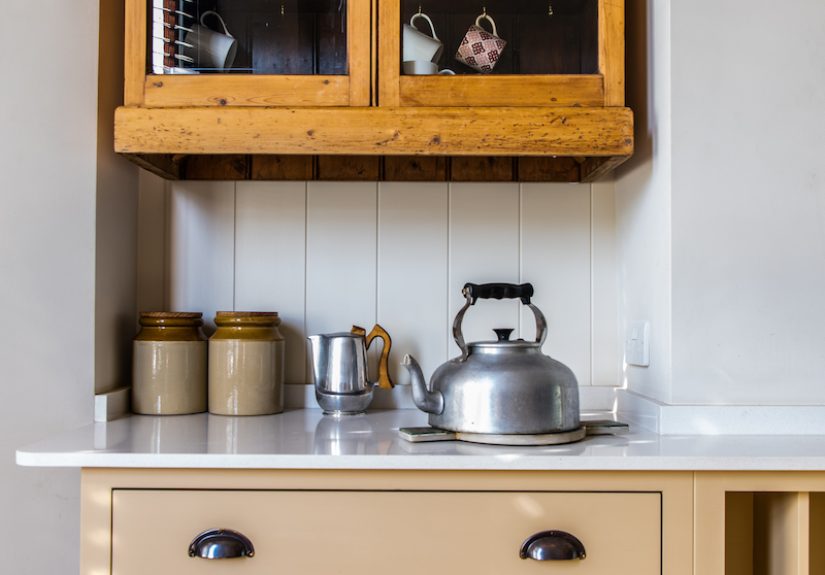
A small vintage cabinet or sideboard makes an elegant home coffee bar.
The top holds your brewer; inside you store mugs, beans, and backup supplies.
It feels “collected” rather than “bought all at once,” which is the whole considered-home vibe.
- Best for: dining rooms, open-plan spaces, and anyone who wants the station to look like furniture
- Easy upgrade: add a removable liner on the shelf where syrups and spoons live
11) The Under-Stairs Brew Nook (Unexpected, Smart, Very “To Stay”)
That awkward under-stairs area can become a stunning beverage station with shelves, a small counter, and good lighting.
It’s the kind of clever detail that feels like a boutique rentalexcept you don’t have to check out on Sunday.
12) The Family Cocoa-and-Decaf Station (Everyone Gets a Mug)
Add hot chocolate, herbal tea, and decaf to make the station welcoming for all ages and schedules.
Store cocoa packets, marshmallows, cinnamon, and decaf pods/beans in clear containers so it’s easy to self-serve.
This is also a great “guest station” during the holidays.
13) The Bedroom or Home-Office Mini Station (For the Truly Committed)
If you work from home or keep odd hours, a tiny setup in the officethink kettle, instant coffee, tea, and a mug rack
can be surprisingly life-changing. Keep it simple and low-mess: electric kettle + jarred options + a small tray.
- Best for: remote workers and students
- Important: choose sealed containers so your office doesn’t smell like “espresso spilled in a backpack”
Gear That Makes a Home Coffee Bar Feel Legit (Without Going Full Café)
Essentials
- A reliable brewer: drip machine, espresso machine, pod system, or pour-over setup
- A kettle (bonus if temperature-controlled): especially helpful for tea and pour-over
- A grinder: if you use whole beans (fresh grind, better flavor)
- A scale + timer (optional): for consistency if you like dialing in your cup
Small upgrades that feel “hotel”
- A tray: instantly makes a station look intentional and keeps drips contained
- Matching canisters: for sugar, tea bags, pods, or filters
- Good lighting: a tiny lamp or under-cabinet strip creates that warm “to stay” glow
- A water plan: a carafe, filter pitcher, or nearby sink access so brewing is easy
Storage and Freshness: Keep Your Beans Happy
Coffee tastes best when it’s fresh, and freshness is basically a four-person villain squad: air, moisture, heat, and light.
Store beans in an airtight, opaque container in a cool, dry spot. Avoid the fridge (moisture and odors are not your friends).
If you buy in bulk, portion and store smart so you’re not exposing the entire supply to air every morning.
Quick organization wins
- One shelf for daily: the beans/tea you use now
- One bin for backup: extra filters, spare pods, and “emergency caffeine”
- One drawer for tools: scoops, stirrers, frother wand, thermometer, tea infusers
Styling Without Clutter (Because This Still Has to Function)
A caffeine station should feel calm, not like a souvenir shop for mugs. Pick a simple color story (two neutrals + one accent),
limit countertop items to what you use daily, and store the rest behind doors or in drawers.
If you want it to look magazine-ready, follow one rule: leave breathing room.
Easy “considered” touches
- Hang 3–6 favorite mugs and store the rest elsewhere.
- Use one artwork or one framed menu-style print.
- Add one small plant or a tiny vasejust enough life, not a jungle.
- Choose containers that stack neatly (because chaos loves a round jar).
Maintenance: Keep the Station Guest-Ready (Even if You Never Host)
A clean coffee station tastes better and looks better. Wipe surfaces daily, empty drip trays and knock boxes regularly,
and follow your machine’s descaling schedule. If milk is involved, clean anything it touches quicklyyour future self will thank you.
Conclusion: Your Home, But Make It “To Stay”
The magic of a caffeine station isn’t fancy equipmentit’s thoughtful design.
When everything has a place (mugs, beans, filters, kettle, tea), mornings feel smoother, counters feel calmer,
and your home gets that small-but-mighty luxury: the sense that someone planned this space for comfort.
And yes, that “someone” can absolutely be you.
Experience Notes: Real-Life Lessons From Living With a Caffeine Station (Extra )
People usually set up a home coffee bar for the obvious reasoncoffeebut they keep it for the unexpected benefits.
The first surprise is how much decision fatigue disappears when the station is organized.
When your scoop is always in the same jar, your filters aren’t hiding in three different cabinets, and your mugs aren’t playing musical chairs,
your morning routine becomes almost automatic. It’s not just faster; it’s calmer. That calm is the “To Stay” feeling: your home supporting you the way a good stay would.
The second lesson is that the station will try to become a junk drawer in disguise. It starts innocently: a few extra tea bags, a random honey stick,
a spoon that “temporarily” lives there, then suddenly you’ve got three half-empty bags of beans and a mysterious lid that belongs to nothing.
The fix is simple: give yourself a tiny “overflow bin” and a once-a-week reset.
If something doesn’t fit in the bin, it doesn’t get to live at the station. (Yes, even the novelty mug shaped like a cat. Especially the cat.)
Third: cords are the silent design killer. In real homes, the prettiest setup falls apart when a grinder cord loops around a kettle
like it’s practicing for an Olympic event. People who love their stations long-term usually do one of three things:
(1) mount a power strip under a cabinet, (2) run cords through a grommet hole at the back of a shelf, or (3) pick one appliance to stay plugged in
and unplug the rest after use. It’s not glamorous, but it’s the difference between “boutique hotel corner” and “electronics aisle.”
Fourth: noise and timing matter more than you thinkespecially in households with different schedules.
A grinder can be surprisingly loud at 6 a.m., and espresso machines can have their own symphony of hums and clicks.
A practical workaround is to store beans pre-portioned (even just in small jars) so you can grind quickly,
or keep a quieter brewing option available (like a quality drip machine or kettle + instant/tea) for early mornings.
The goal isn’t perfection; it’s having a station that works across real-life mornings, not just weekend vibes.
Fifth: the “guest-ready” factor pays off even when you’re not entertaining.
When friends do visit, a self-serve beverage station makes your home feel generous without turning you into a short-order barista.
And when no one visits? You still get the pleasure of walking into your kitchen and seeing a neat, inviting setup that’s ready for you.
It’s the same reason hotels place water by the bed: it’s a small detail that makes you feel taken care of.
A well-loved caffeine station becomes a daily comfortpart routine, part ritual, part tiny luxury.