Table of Contents >> Show >> Hide
- What “20-ounce copper” means (and why it’s a big deal)
- Why electric racing pushes PCBs into “busbar territory”
- The star of the show: the massive 20-oz copper PCB in a racing DC/DC block
- Designing high-current copper like a grown-up (IPC, temperature rise, and reality)
- Layout strategies that make 20-oz copper actually work
- Manufacturing: why 20-oz copper PCBs are “special order” for a reason
- Why not just use busbars or cables?
- A practical checklist for designing a 20-oz copper PCB for high-current racing systems
- What this enables in electric racing (beyond “it carries current”)
- 500+ Words of Real-World Experiences: Living With 20-oz Copper (Without Losing Your Mind)
- Conclusion
If you’ve ever ordered a few prototype boards and felt fancy because you sprung for “2-ounce copper,”
buckle up. A 20-oz copper PCB is not “a little thicker.” It’s “did someone accidentally laminate a copper roof shingle into my circuit board?”
And in the world of electric racingwhere current spikes are big, heat is rude, and reliability is non-negotiablethis kind of extreme board can be exactly the
difference between “Podium!” and “We are now a very fast smoke machine.”
This article breaks down what a 20-oz copper PCB really means, why it shows up in high-power racing hardware,
and how engineers design (and actually build) boards that behave more like copper busbars than “normal” PCBs.
Along the way, we’ll use a well-known real-world example: a Formula E–adjacent high-current DC/DC block
built around power modules and a custom 20-oz PCBbecause nothing says “motorsport” like trying to solder onto a layer of copper thick enough to have a ZIP code.
What “20-ounce copper” means (and why it’s a big deal)
PCB copper weight is often quoted in ounces per square foot (oz/ft²). The short version:
1 oz copper is roughly 35 micrometers thick, and 20 oz copper is roughly 700 micrometers (0.7 mm).
That’s twenty times the copper thicknessand it dramatically changes how your board behaves electrically, thermally, and mechanically.
Why thickness matters in high-power electronics
Copper thickness isn’t a bragging-rights spec; it’s a physics lever. Thicker copper:
- Lowers resistance for a given trace width, reducing I²R losses (aka “free heat you didn’t order”).
- Moves heat better away from hot spots, improving thermal spreading.
- Handles higher current without turning into a space heateror delaminating in protest.
- Reduces voltage drop across power distribution paths, which matters when you’re running tight margins at high load.
This is exactly what electric racing needs: peak power demands, violent transients, and compact packaging
where every millimeter of copper has to earn its keep.
Why electric racing pushes PCBs into “busbar territory”
Electric race cars (and other high-performance EV platforms) are built around power electronics:
inverters, motor controllers, battery management, DC/DC converters, contactor systems, and protection hardware.
Even if the traction system is at hundreds of volts, you still have lower-voltage subsystemsoften 12–14 V rails
powering pumps, fans, control computers, sensors, and telemetry. Those “small” rails can still demand huge current.
In one widely discussed build, a developer used a 20-oz copper PCB to support a very high-current DC/DC block
intended for a racing application, reportedly using power modules capable of delivering on the order of
~150 A at ~14 V in a compact assembly. That kind of current can punish normal PCB copper.
The thick copper layer becomes a practical way to distribute power with low resistance and manageable heatwithout turning the assembly into a bolt-on sculpture of busbars and brackets.
Electric racing’s “three enemies”: heat, inductance, and vibration
High-current, high-switching-speed systems have three recurring villains:
- Heat: Power loss becomes temperature rise, and temperature rise becomes reliability problems.
- Inductance: Fast switching and long current loops create voltage spikes, EMI headaches, and component stress.
- Vibration/thermal cycling: Racing environments amplify mechanical and thermal fatigue.
A thick copper PCB can help fight all three: it spreads heat, shortens and stiffens power paths,
and can improve mechanical robustness compared to thinner copper that’s more prone to localized overheating and fatigue.
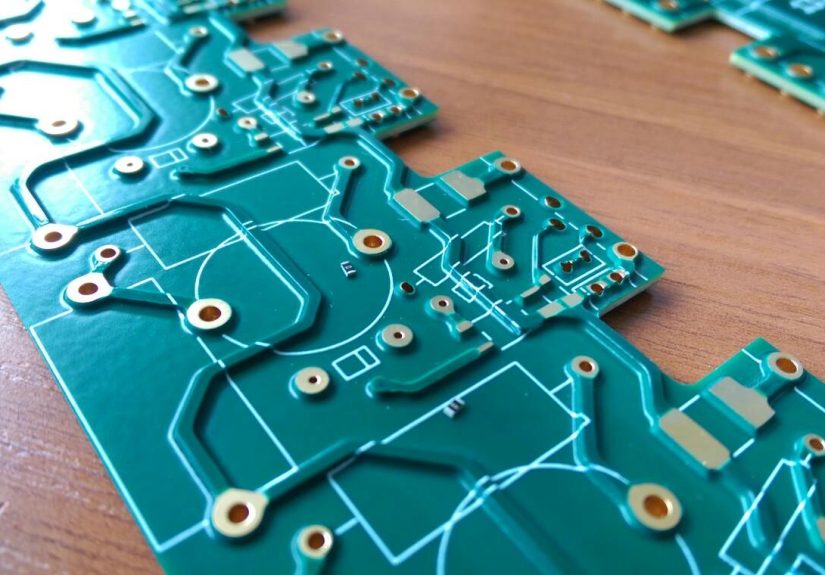
The star of the show: the massive 20-oz copper PCB in a racing DC/DC block
Let’s talk about the famous “20-oz copper PCB enables electric racing” storyline that got engineers nodding
and hobbyists whispering, “Is that even legal?” The build centered on creating a compact, high-current power block
for a racing application, using a custom PCB with extremely thick copper.
The reason is simple: when you need to move triple-digit amps cleanly,
a PCB trace stops being a “signal line” and starts being a structural power conductor.
With 20-oz copper, you can create wide, low-resistance planes that behave like integrated busbars.
That helps with:
- Current sharing across broad copper areas instead of relying on a few narrow traces.
- Lower voltage drop and less waste heat.
- Better thermal spreading under power modules and connectors.
- More compact packaging compared with external busbars and heavy wiring.
And yesthere’s a very practical “downside”: soldering and assembly can become… character-building.
Thick copper is a heat sponge. It will gleefully absorb your soldering iron’s enthusiasm like it’s a snack.
Designing high-current copper like a grown-up (IPC, temperature rise, and reality)
If you take away one thing: current capacity is not just “trace width per amp”.
It depends on copper thickness, ambient conditions, internal vs. external layers, nearby planes, airflow, and acceptable temperature rise.
That’s why industry designers lean on standards like IPC-2152, which focuses on the relationship between
current, conductor size, and temperature rise.
IPC-2152 vs. old-school assumptions
IPC-2152 exists because older charts and simplistic formulas don’t capture modern board realities well.
The standard is commonly referenced as the go-to guide for sizing conductors for current and temperature constraints.
In practice, many engineers use IPC-2152 concepts, calculators, and conservative design marginsespecially in high-current systems where “oops” is expensive.
The trick is not merely “make it wide.” It’s engineer the temperature rise:
decide what temperature increase is acceptable, then design the copper geometry (and cooling strategy) to stay within it.
Racing hardware often sets tighter thermal constraints because the entire system is trying to run at high load, repeatedly, in a hot environment, with limited space for heatsinks.
Why thick copper is helpful, but not magic
A 20-oz layer reduces resistance, but it doesn’t eliminate physics:
- Contact resistance at connectors and fasteners can still create hot spots.
- Vias still have finite resistance; high-current transitions between layers need careful via arrays or plated slots.
- Thermal bottlenecks can happen where copper connects into smaller features or component leads.
- Switching noise still cares about loop inductance, not just copper thickness.
Think of 20-oz copper as a powerful tool, not a “skip the design review” coupon.
Layout strategies that make 20-oz copper actually work
1) Treat power like a loop, not a line
High-current paths should be designed as tight, compact loopsespecially around switching converters.
Minimize loop area to reduce inductance and EMI. Many power-converter layout guides emphasize keeping high di/dt paths short and close,
and separating noisy switching nodes from sensitive control circuitry.
2) Use planes and parallel paths
Instead of one heroic trace trying to do everything, use:
- Wide copper pours on external layers.
- Parallel layers connected by large via arrays, when stackup allows.
- Plated slots or heavy connectors where appropriate.
In a racing-grade DC/DC block, it’s common to see power distributed across large copper areas,
with connection points engineered to avoid creating tiny “neck-down” regions that become thermal choke points.
3) Make mechanical decisions like an electrical engineer (and vice versa)
At 20-oz copper, the PCB becomes part conductor, part structure. That means:
- Mounting holes, standoffs, and fasteners affect current paths and heat spreading.
- Connector placement can decide where the hottest spots will form.
- Vibration and thermal cycling influence how you anchor heavy components and how you relieve strain at joints.
4) Plan for the “soldering reality”
Thick copper absorbs heat fast. Assembly planning matters:
- Preheating the board can prevent endless dwell times that damage components.
- High-thermal-mass tips and appropriate soldering power help deliver heat quickly and safely.
- Thermal relief patterns may be needed on padsthough in extreme copper, you choose carefully because too much relief can limit current.
Manufacturing: why 20-oz copper PCBs are “special order” for a reason
A standard fab process is optimized for fine features and typical copper weights.
With extreme copper thickness, you run into manufacturing constraints:
- Etching limitations: thick copper is harder to etch cleanly; it affects minimum trace/space and edge definition.
- Plating and hole reliability: plated through-holes and vias must be robust enough for both electrical and mechanical demands.
- Stackup complexity: multilayer boards with extreme outer copper require careful lamination and process control.
- Cost and yield: extreme copper boards can be expensive because they’re slower to build and harder to keep in tolerance.
This is why heavy-copper specialists publish design rules for hole sizes, spacing, and manufacturability
specifically for 20-oz and beyondbecause the “normal PCB” rulebook stops being trustworthy at that point.
Why not just use busbars or cables?
Fair question. Busbars and heavy cabling are common in EV power distribution. So why put that much copper in a PCB?
Advantages of a heavy-copper PCB in racing
- Integration: Electrical distribution, sensing, and control can live in one compact assembly.
- Repeatability: A PCB-defined conductor geometry is consistent across builds.
- Lower inductance potential: Planar copper and controlled loop shapes can reduce parasitics versus long wire runs.
- Thermal spreading: Copper planes can act as heat spreaders under modules and connectors.
When busbars still win
If you need extremely high current over distance, or you need three-dimensional routing around mechanical constraints,
busbars and cables may still be better. Also, 20-oz copper boards can add weight and may force larger spacing rules that reduce layout flexibility.
In practice, racing power systems often mix approaches: heavy copper PCBs where integration and packaging matter,
and busbars where large-scale distribution needs to be rugged and serviceable.
A practical checklist for designing a 20-oz copper PCB for high-current racing systems
Electrical
- Define peak, continuous, and transient currents (not just “nominal”).
- Choose acceptable temperature rise for copper and for nearby components.
- Use IPC-2152-informed sizing methods and validate with thermal modeling or test data.
- Minimize high di/dt loop areas; keep switching nodes compact and controlled.
- Engineer layer transitions with via arrays or plated slots to avoid bottlenecks.
Thermal
- Map where heat is created (modules, connectors, choke points).
- Use copper planes as spreaders, but ensure you have a heat “exit” path (conduction to chassis, airflow, or heatsinks).
- Avoid narrow neck-downs that concentrate current and heat.
Manufacturing & Assembly
- Confirm fab capabilities early: minimum trace/space, drill sizes, plating thickness, stackup limits.
- Plan assembly for thermal mass: preheat strategy, solder process, and pad geometry choices.
- Design mechanically: mounting, strain relief, vibration considerations, and inspection access.
What this enables in electric racing (beyond “it carries current”)
The headline isn’t just “thick copper can handle amps.” The bigger win is what that enables:
compact, reliable, high-current power blocks that can be packaged into a race car with minimal fuss.
In racing, electronics aren’t a side quest. They are the drivetrain’s nervous system and blood supply.
A heavy copper PCB can:
- Improve reliability by reducing thermal stress in current-carrying structures.
- Reduce wiring complexity, which reduces failure points and speeds serviceability.
- Support higher power density packagingcritical when every cubic inch is contested.
- Help control EMI by allowing more intentional conductor geometry and return paths.
And that’s how a “massive 20-oz copper PCB” stops sounding like a novelty and starts sounding like a practical motorsport tool.
500+ Words of Real-World Experiences: Living With 20-oz Copper (Without Losing Your Mind)
Engineers and builders who’ve worked with extreme copper boards tend to describe the experience with the same emotional arc:
confidence → surprise → respect → a new appreciation for heat transfer.
The first moment is usually the unboxing. A 20-oz board doesn’t feel like a typical PCBit feels like a component.
People often mention that it’s heavier than expected and stiffer in a way that makes “normal” boards feel like cardboard.
That stiffness can be comforting in racing environments where vibration is constant, but it also means you stop treating the PCB as a passive substrate
and start treating it as part of the structure.
Then comes assembly. The universal comment is: “This board eats heat.” With standard copper,
you can touch a pad with an iron and quickly get solder to wet. With extreme copper, the pad behaves like a tiny heatsink.
Builders report needing a hotter iron, a larger tip, more dwell time, or a different method entirelylike preheating the board or using hot air strategically.
The “surprise” isn’t just inconvenience; it’s risk management. Long dwell times can stress components and pads, so the process has to be intentional.
You learn quickly that the question isn’t “Can I solder this?” but “Can I solder this without baking everything nearby?”
Next is the routing mindset shift. On a typical board, you route power traces like they’re special, but still “traces.”
On a 20-oz board, designers describe power routing as closer to busbar design:
wide copper shapes, careful transitions, and obsessive attention to bottlenecks.
A common “lesson learned” is that the hottest point isn’t always the longest runit’s the smallest cross-section.
That might be a connector pad, a bolt-down area, or a narrow bridge between planes that looked harmless in CAD but becomes a literal hotspot under load.
The experience teaches a kind of humility: thick copper helps, but it also makes it easier to miss the one thin place that ruins your day.
Testing is where the respect sets in. Builders often talk about how satisfying it is to watch a high-current assembly behave:
low voltage drop, stable temperatures, and fewer “mystery” issues caused by sagging rails.
When the board is designed well, the result can feel almost unfairlike you’ve upgraded from garden hose to fire hydrant.
But the same people will tell you it’s not magic. If you ignore return paths, switching loop areas, or mechanical strain at connectors,
the board will still punish you, just in more dramatic ways.
Finally, there’s the service perspective. Racing teams care about swapping parts fast, diagnosing faults fast, and avoiding failures that cascade.
Builders describe heavy-copper boards as “confidence hardware” when done right:
fewer fragile wires, fewer crimp points, and more repeatable assemblies.
The punchline is that extreme copper isn’t about showing offit’s about buying reliability when the operating conditions are too intense for normal assumptions.
And yes, it’s also about having a PCB so serious it feels like it should come with a torque spec.
Conclusion
A massive 20-oz copper PCB is what happens when a circuit board stops being a “place to mount parts”
and becomes a high-current power structure. In electric racing, where current spikes are brutal,
heat is constant, and packaging is tight, extreme copper can enable compact power blocks that would otherwise require bulky busbars and complex wiring.
The takeaway: 20-oz copper isn’t a shortcut. It’s a commitment. It asks for serious layout discipline,
IPC-informed conductor sizing, manufacturing collaboration, and an assembly plan that respects thermal mass.
But when those pieces come together, you get something racing teams love: power delivery that’s boringly reliable
so the exciting part can stay where it belongs: on the track.