Table of Contents >> Show >> Hide
- Before the 16 tips: when it’s smart to talk to a fertility specialist
- 1) Start with a preconception check-in (yes, even if you feel “fine”)
- 2) Take a prenatal vitamin (and don’t skip the folic acid)
- 3) Track ovulation like a grown-up (not like a fortune teller)
- 4) Have sex at the right frequency (more “steady” than “marathon”)
- 5) Aim for a healthy weight range (for both partners)
- 6) Eat a fertility-supporting pattern (think “Mediterranean-ish,” not “miracle food”)
- 7) Prioritize protein and blood-sugar stability (especially if cycles are irregular)
- 8) Get movingmoderately and consistently
- 9) Sleep like it’s part of the plan (because it is)
- 10) Manage stress (not because stress “causes infertility,” but because you deserve peace)
- 11) Quit smoking and avoid nicotine (including secondhand smoke)
- 12) Avoid alcohol and recreational drugs while trying to conceive
- 13) Keep caffeine moderate (yes, you can keep your personality)
- 14) Protect sperm from heat (hot tubs are not a fertility spa)
- 15) Choose lubricants carefully (some are… not sperm’s best friend)
- 16) Reduce exposure to endocrine disruptors and prevent infections
- Putting it all together: a simple 2-week “fertility-friendly” routine
- Real-life experiences (about ): what people notice when they try these changes
- Conclusion
- SEO tags (JSON)
If you’ve ever Googled “how to boost fertility naturally,” you’ve probably met the internet’s two favorite hobbies:
(1) turning normal human bodies into “biohacking projects,” and (2) selling you supplements that look like they were invented by a wizard.
Let’s skip the snake oil and talk about what actually moves the needlehabits that support hormones, ovulation, egg and sperm health,
and your overall odds of conceiving.
Quick framing: fertility is a team sport. Even if only one person carries the pregnancy, lifestyle factors can affect both egg and sperm quality.
Also, “natural” doesn’t mean “magical.” Some issues (blocked tubes, severe endometriosis, low sperm count, ovulation disorders, etc.)
need medical helpand that’s not a failure. It’s just… biology doing biology things.
Medical note: This article is educational and not a substitute for personalized medical care. If you have known medical conditions,
irregular cycles, severe pain, or you’re concerned about infertility, a clinician can tailor advice to your situation.
Before the 16 tips: when it’s smart to talk to a fertility specialist
A common guideline is to seek an infertility evaluation after 12 months of regular, unprotected intercourse if the female partner is under 35,
or after 6 months if 35 or older. Earlier evaluation may be appropriate if cycles are irregular, there’s a history of pelvic inflammatory disease,
endometriosis, recurrent miscarriage, or known male-factor concerns.[3]
1) Start with a preconception check-in (yes, even if you feel “fine”)
Why it helps
“Fine” is not a medical diagnosis. A preconception visit helps you review medications and supplements, manage chronic conditions (thyroid disease, diabetes,
high blood pressure, PCOS), update vaccines, and discuss timing. It’s also where you can ask the questions you’re currently outsourcing to your group chat.
Try this
- Bring a list of all meds/supplements (including “natural” ones).
- Ask about vaccines, STI screening, and any labs relevant to your history.
- If you’ve been trying for a while, ask what “next steps” would look like.
2) Take a prenatal vitamin (and don’t skip the folic acid)
Why it helps
Prenatal vitamins aren’t a fertility “hack,” but they support nutrient status in the months leading up to conceptionespecially folic acid,
which is recommended before pregnancy because early fetal development starts before many people even know they’re pregnant.[1]
Try this
- Look for a prenatal with folic acid; many guidelines mention around 400 mcg daily for average-risk individuals planning pregnancy.[1]
- If you have specific risk factors or take certain medications, ask your clinician what dose is right for you.
- Take it with food if it upsets your stomach (your future self will thank you).
3) Track ovulation like a grown-up (not like a fortune teller)
Why it helps
Timing matters. Pregnancy is most likely when intercourse happens in the fertile windowoften described as the six days ending on ovulation day.[2]
Many couples miss that window because they aim for “ovulation day” only, which can be a little like showing up to a concert after the encore.
Try this
- Use ovulation predictor kits (OPKs) to detect the LH surge, and/or track cervical mucus (egg-white texture often signals fertility).
- Pair tools: an app + OPKs + body signs typically beats an app alone.
- If your cycles are irregular, tracking gets even more useful (and can be diagnostic info for your clinician).
4) Have sex at the right frequency (more “steady” than “marathon”)
Why it helps
You don’t need acrobatics. You need consistency. Many fertility resources suggest intercourse every 1–2 days during the fertile window
to maximize the chance that sperm is already present when the egg is released.[2]
Try this
- When OPKs turn positive, aim for intercourse that day and the next day.
- If schedules are chaotic, a practical baseline is 2–3 times per week, increasing near fertile signs.
- Keep it sustainablestress spirals are not a fertility supplement.
5) Aim for a healthy weight range (for both partners)
Why it helps
Body composition can influence hormones, ovulation regularity, and sperm parameters. Both undernutrition and excess body fat can be associated with
reduced fertility. The goal isn’t “perfect.” It’s improving metabolic and hormonal conditions so your reproductive system isn’t fighting uphill.
Try this
- If weight change is relevant, focus on small, consistent shifts (walking, strength training, smarter snacks).
- If PCOS is a factor, ask your clinician about targeted strategies (nutrition, movement, sleep, possibly medication).
- Men: improving overall health often supports testosterone balance and sperm health (without turning your life into a spreadsheet).
6) Eat a fertility-supporting pattern (think “Mediterranean-ish,” not “miracle food”)
Why it helps
No single food guarantees pregnancy, but overall dietary patterns matter. Diets rich in vegetables, fruits, whole grains, legumes, fish, and unsaturated fats
(often described as Mediterranean-style) are frequently associated with better reproductive health outcomes and may support sperm parameters and ovulatory function.
Highly processed patterns and trans fats are commonly linked with worse outcomes in observational research.
Try this
- Build plates around plants + protein + healthy fats (olive oil, nuts, avocado).
- Choose whole grains more often than refined grains.
- Limit ultra-processed snacks and sugary drinks (not because you’re “bad,” but because your hormones love stability).
7) Prioritize protein and blood-sugar stability (especially if cycles are irregular)
Why it helps
Insulin resistance can interact with reproductive hormones, particularly in conditions like PCOS. Balanced meals (protein + fiber + healthy fat)
may help support steadier blood sugar and better energyplus fewer “why am I starving again?” moments.
Try this
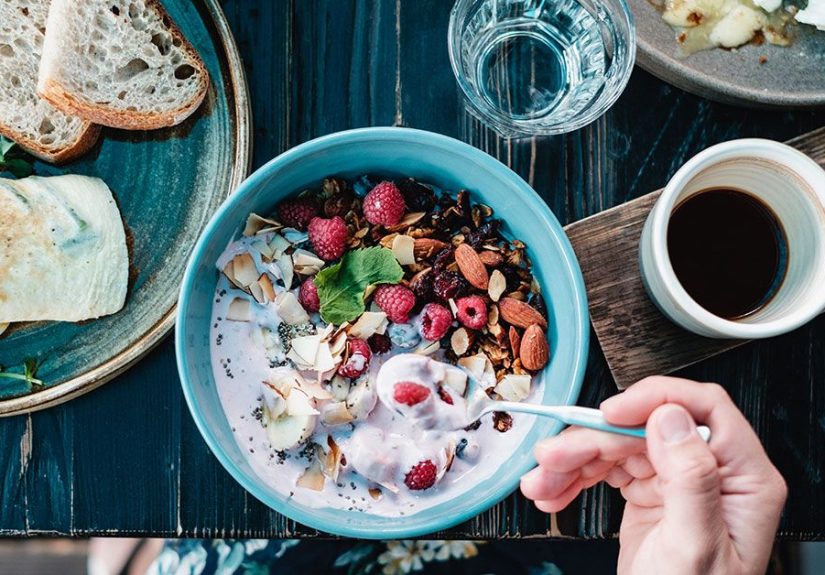
- Breakfast idea: Greek yogurt + berries + nuts, or eggs + veggies + whole-grain toast.
- Snack idea: apple + peanut butter, hummus + carrots, or trail mix (watch added sugar).
- If you suspect insulin resistance, discuss screening and personalized nutrition guidance.
8) Get movingmoderately and consistently
Why it helps
Moderate activity supports cardiovascular health, stress resilience, and weight management. Extremely intense trainingespecially with low body fatcan
interfere with ovulation for some people. The sweet spot is movement you can maintain without burning out.
Try this
- Start with 20–30 minutes of brisk walking most days.
- Add strength training 2–3 times per week (bodyweight counts).
- If you’re an endurance athlete and cycles are irregular, consider dialing intensity down and fueling more.
9) Sleep like it’s part of the plan (because it is)
Why it helps
Sleep affects hormone regulation, mood, and metabolic health. When you’re trying to conceive, “revenge bedtime procrastination” can feel tempting,
but your endocrine system would prefer you didn’t treat 1:00 a.m. like a lifestyle brand.
Try this
- Aim for a consistent schedule and enough hours to wake up without feeling like a haunted Victorian child.
- Cut bright screens 30–60 minutes before bed; try reading, stretching, or a warm shower.
- If snoring or insomnia is significant, ask about sleep evaluation.
10) Manage stress (not because stress “causes infertility,” but because you deserve peace)
Why it helps
Stress management won’t “cure” infertility, but chronic stress can worsen sleep, relationships, and health behaviorsand the TTC journey itself can be emotionally intense.
Supporting mental health helps you stay consistent with the basics and reduces the feeling that your life is on hold.
Try this
- Try 10 minutes/day: breathing, yoga, walking outdoors, journaling, or guided meditation.
- Consider counselingespecially if TTC is straining your relationship or mood.
- Create “no-TTC talk” windows (yes, you’re allowed to discuss movies and tacos again).
11) Quit smoking and avoid nicotine (including secondhand smoke)
Why it helps
Smoking is associated with reduced fertility and can affect reproductive aging and pregnancy outcomes. Quitting is one of the highest-impact
preconception changes for overall health.[1]
Try this
- Ask your clinician about evidence-based quit supports (counseling, nicotine replacement, etc.).
- Make your home and car smoke-free zones.
- Think “harm reduction”: every step toward quitting counts.
12) Avoid alcohol and recreational drugs while trying to conceive
Why it helps
Many health organizations advise avoiding alcohol when trying to conceive and during pregnancy, and avoiding recreational drugs. Alcohol can affect hormone levels,
ovulation, and overall reproductive healthand early pregnancy exposure can occur before pregnancy is recognized.[1]
Try this
- If quitting is hard, treat it like a health project, not a moral failingget support.
- Men: heavy alcohol and some substances are associated with poorer sperm quality.
- Replace rituals: mocktails, sparkling water, tea, “fancy glass = fancy brain” strategies.
13) Keep caffeine moderate (yes, you can keep your personality)
Why it helps
Moderate caffeine intake is commonly advised in preconception planning. Some guidance suggests keeping it under about 200 mg/day
(roughly 1–2 cups of coffee depending on strength).[7]
Try this
- Swap the second coffee for half-caf, tea, or decaf.
- Watch “sneaky caffeine” (energy drinks, pre-workout, giant cold brews).
- If headaches hit, taper gradually instead of going cold turkey.
14) Protect sperm from heat (hot tubs are not a fertility spa)
Why it helps
Sperm production and motility can be sensitive to heat. Frequent hot tubs, saunas, and very hot baths may temporarily reduce sperm quality in some men.[8]
Try this
- Avoid hot tubs/saunas if you’re working on sperm health for the next 2–3 months (sperm development takes time).
- Don’t park a laptop directly on the lap for long stretches.
- If you cycle intensely, consider breaks and proper bike fit to reduce prolonged heat/pressure.
15) Choose lubricants carefully (some are… not sperm’s best friend)
Why it helps
Some common lubricants can inhibit sperm motility in lab testing, and certain products may alter vaginal pH or be spermicidal.
If you need lubrication, consider products labeled “fertility-friendly” and talk with your clinician about options.[4]
Try this
- Avoid lubricants with spermicide when trying to conceive.
- If dryness is frequent, ask about underlying causes (hormonal, medications, hydration, infections).
- Use the minimum amount neededmore is not more when sperm is doing the swimming.
16) Reduce exposure to endocrine disruptors and prevent infections
Why it helps
Endocrine-disrupting chemicals can mimic or interfere with hormones, and they’re studied for potential links to reproductive health outcomes.[6]
Meanwhile, certain STIsespecially chlamydia and gonorrheaare important preventable causes of pelvic inflammatory disease (PID) and infertility,
and infections can be “silent” without obvious symptoms.[5]
Try this
- Plastics: avoid microwaving food in plastic; use glass or ceramic when possible.
- Products: reduce fragrance-heavy products if you’re sensitive; simplify where feasible.
- Work/home: follow safety guidance for pesticides/solvents; use ventilation.
- STI prevention: get screened if at risk, treat promptly, and make sure partners are treated too.[5]
- Vaccines & care: confirm you’re up to date on vaccines and address chronic conditions before pregnancy planning.
Putting it all together: a simple 2-week “fertility-friendly” routine
- Daily: prenatal vitamin, balanced meals, a walk, bedtime that doesn’t hate you.
- Most days: moderate exercise + stress downshifts (10 minutes counts).
- Fertile window: intercourse every 1–2 days, skip sperm-hostile lubricants, keep it low-pressure.
- Always: avoid smoking/nicotine; avoid alcohol/recreational drugs; keep caffeine moderate.
Real-life experiences (about ): what people notice when they try these changes
Here’s the part nobody tells you when they hand you a checklist: behavior changes are not just “health moves,” they’re relationship moves. Many couples report that
the first week of “doing all the right things” feels oddly emotionallike you’re trying to control something that can’t be controlled.
That’s normal. The goal isn’t to create a perfect fertility robot. The goal is to build a healthier baseline and reduce avoidable obstacles while staying human.
The “we thought we were healthy” surprise
A common experience is realizing how many small habits add up: a nightly glass of wine, inconsistent sleep, constant takeout, vaping “just sometimes,”
or relying on an app that guesses ovulation like it’s reading tea leaves. People often feel relieved when they switch from vague trying (“we’re trying!”)
to specific trying (tracking fertile signs, timing intercourse, and improving nutrition). It creates a sense of directionsomething you can actually do
while time does its thing.
The fertile window can feel like a performance review
Many couples say the fertile window turns intimacy into a calendar alert: “Meeting invite: intercourse, 9:00 p.m., recurring.” It helps to reframe sex as connection
rather than obligation. Some people pick one or two “just because” dates outside the fertile window so intimacy doesn’t become a monthly job interview.
Others keep it playful: a walk together, a shower together, a “phones down” rule, or simply laughing about how romantic it is to pee on a stick.
(Spoiler: it is not romantic. But it can be funny.)
Small wins feel hugebecause they are
People often notice improvements before a pregnancy test turns positive: more stable energy, fewer mood crashes, better digestion, and more predictable sleep.
Men sometimes report feeling better overall when they cut back on alcohol, prioritize exercise, and avoid heat exposurechanges that also happen to support sperm health.
For women with irregular cycles, tracking patterns and improving meal balance can make cycles easier to understand, even if it doesn’t instantly “fix” them.
Those changes are still wins: they generate useful information and create a stronger foundation for next steps with a clinician if needed.
The two-week wait is its own sport
The “two-week wait” (the time between ovulation and the next expected period) is where Google searches go to multiply. Many people report they do best when they plan
gentle distractions: workouts that aren’t punishing, social plans that don’t revolve around alcohol, and a personal rule not to symptom-spot every sensation.
Some couples create a “support script” (short phrases like “We’re doing what we can” or “We can handle whatever happens”) to avoid spiraling into blame or panic.
A lot of couples also learn to protect joy: you don’t have to delay vacations, hobbies, or birthday cake until a positive test appears.
The biggest takeaway from real experiences is surprisingly simple: consistency beats intensity. Most people don’t conceive because they found the one weird trick.
They conceive (when biology cooperates) because they showed up for the basics month after monthwhile getting support when it was time.
Conclusion
“Boosting fertility naturally” is mostly about removing friction: supporting hormones, improving egg and sperm conditions, timing intercourse effectively,
and protecting overall health. If you take one thing from this article, let it be this:
choose a few high-impact habits, do them consistently for 2–3 months, and ask for medical guidance sooner if age, history, or symptoms suggest it.
You’re not “behind.” You’re building the best possible starting line.