Table of Contents >> Show >> Hide
- What “maintenance cost” really means (and why year 6 hits different)
- How this article ranks brands (so we’re not comparing apples to… alternators)
- The cheapest car brands to maintain over 10 years (Consumer Reports survey data)
- Why some brands stay cheap: simplicity, scale, and service reality
- Electric vs. gas vs. hybrid: the maintenance plot twist
- The most expensive brands to maintain long term: luxury taxes (the unofficial kind)
- Cheapest to most expensive: a practical long-term ranking you can actually use
- How to lower long-term maintenance costs (without driving a beige toaster)
- The Financial Samurai angle: maintenance costs are opportunity costs
- Experiences: what “cheap vs. expensive to maintain” looks like in real life
- Conclusion
Buying a car is easy. Keeping it from turning your bank account into a sad trombone noise for the next decade?
That’s the sport. The sticker price is the flashy partlike a peacock strutting. Long-term maintenance and repair
costs are the part where the peacock quietly hands you the bill.
If you’re the “drive it forever” type (or at least “drive it until the cupholder breaks and I lose emotional
support”), brand choice matters. A lot. Consumer survey data shows the gap between the cheapest and most expensive
brands over 10 years can be massivebig enough to fund a family vacation, a home project, or a respectable emergency
fund that doesn’t live on your credit card.
What “maintenance cost” really means (and why year 6 hits different)
Long-term ownership costs typically include two buckets:
- Scheduled maintenance: oil and filter changes, fluids, brakes, tires, belts, plugs, and the routine stuff you can actually plan for.
- Unscheduled repairs: the “surprise!” categorysensors, leaks, suspension, cooling system issues, electronics gremlins, and anything that breaks right before a road trip.
The first few years are usually gentle because warranties and complimentary maintenance programs soften the blow.
But costs often jump after year fiveright around the time your car decides it’s “found itself” and begins
expressing that journey through warning lights.
How this article ranks brands (so we’re not comparing apples to… alternators)
To keep things grounded in real-world data, this guide leans on:
- 10-year maintenance/repair totals from widely cited consumer survey reporting (great for long-term budgeting).
- Annual repair cost and reliability metrics (helpful for what you might spend in a “normal” year).
- Total cost of ownership frameworks (because maintenance is only one slice of the money pizza).
Important caveat: a brand is not a single car. A Toyota Corolla and a Toyota performance SUV do not live the same
financial life. Same logo, different drama. Still, brand-level patterns are strong enough to guide smarter choices.
The cheapest car brands to maintain over 10 years (Consumer Reports survey data)
Here’s the headline: in Consumer Reports’ survey-based reporting of out-of-pocket maintenance and repairs over a
decade, the low end starts around four grandand the high end can approach twenty grand. That’s not pocket change;
that’s “do we remodel the bathroom or keep the SUV happy?” money.
Top 10 least expensive brands over 10 years
Below are the 10-year totals for maintenance and repairs reported in the widely cited breakdown:
| Rank | Brand | Total Maintenance & Repair Cost (10 Years) | What this tends to look like in real life |
|---|---|---|---|
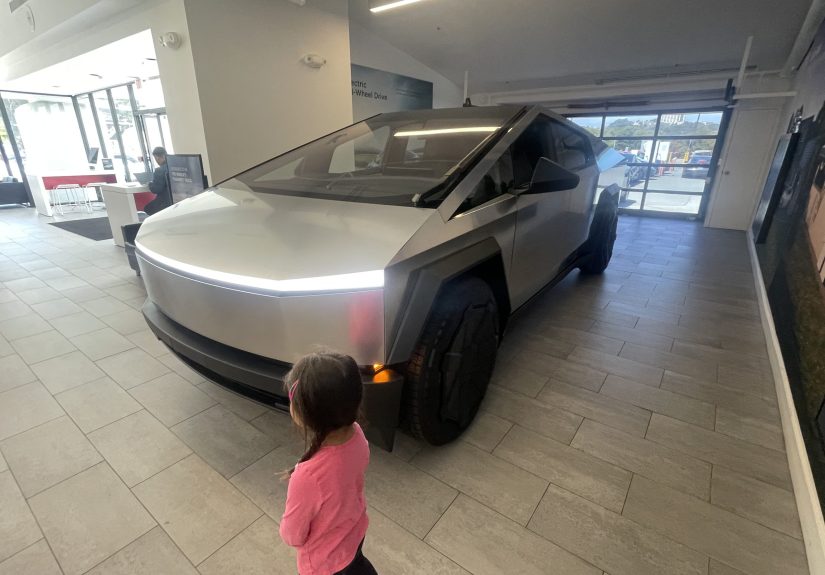
| 1 | Tesla | $4,035 | Fewer routine engine-related services; watch tires, alignment, and warranty coverage timing. |
| 2 | Buick | $4,900 | Mainstream parts and service networks can keep costs steady. |
| 3 | Toyota | $4,900 | Strong reputation for durability; parts availability helps. |
| 4 | Lincoln | $5,040 | Domestic luxury can be less punishing than European luxury in long-term upkeep. |
| 5 | Ford | $5,400 | Popular models mean more parts and more experienced independent shops. |
| 6 | Chevrolet | $5,550 | Wide service ecosystem; costs vary by model and powertrain complexity. |
| 7 | Hyundai | $5,640 | Often competitive ownership costs; pay attention to model-specific reliability trends. |
| 8 | Nissan | $5,700 | Can be reasonable long term, especially on simpler trims and common models. |
| 9 | Mazda | $5,800 | Often solid reliability signals; routine upkeep tends to be manageable. |
| 10 | Honda | $5,850 | Historically strong value-retention + manageable service costs for many models. |
Notice something funny? Four of the top ten are domestic brands. If you’re used to “Japanese equals cheap to run,”
you’re not wrongbut you may be pleasantly surprised that long-term maintenance costs don’t always follow
reputation in a straight line.
Quick budget translation
If the least expensive brand is roughly $4,035 over 10 years and the most expensive can be about $19,250 over
10 years, the gap is about $15,215 totalroughly $1,522 per year, or about $127 per month. That’s a car payment’s
little cousin. The cousin who always “forgets their wallet.”
Why some brands stay cheap: simplicity, scale, and service reality
Cheap-to-maintain brands tend to share a few traits:
- High-volume models: more parts availability and more independent shops that know the common fixes.
- Less complicated systems: fewer “special” components that require specialized tools or programming.
- Predictable maintenance schedules: fewer surprise failures, fewer “while we’re in there…” upsells.
Repair-cost datasets reinforce this idea. For example, one widely used reliability and repair-cost source estimates
the average annual repair cost across all cars at about $652, while brands like Honda and Toyota
show lower annual repair costs (e.g., Honda around $428 and Toyota around $441) in their
reporting. Lower average annual repair costs don’t guarantee perfection, but they do reduce the odds of a financial
jump-scare.
Electric vs. gas vs. hybrid: the maintenance plot twist
EVs often win on routine maintenance because there’s no oil, fewer fluids, and fewer moving parts in the drivetrain.
AAA’s cost framework even calls electric vehicles the least expensive category for maintenance, repair, and tire costs
but with a big asterisk: depreciation and insurance can be higher, and tires can wear faster because EVs are heavy
and deliver instant torque.
In other words, EV maintenance can be “cheap and chill,” while overall ownership cost can be “cheap here, expensive there.”
The smart move is comparing total cost of ownershipnot just the service schedule.
The most expensive brands to maintain long term: luxury taxes (the unofficial kind)
If you want the Financial Samurai version of the truth, it’s this: luxury can be a recurring subscription you didn’t
know you signed up for. In Consumer Reports’ widely cited 10-year comparisons, Land Rover sits at the top
of the cost mountain (around $19,250 over 10 years in the referenced survey reporting). And it’s not alone.
European luxury brands frequently land in the expensive zone once warranties expire.
Why luxury maintenance gets pricey
- Parts costs: premium components, lower aftermarket competition, and higher pricing power.
- Labor rates: more time-intensive jobs and higher shop rates, especially at dealerships.
- Complexity: turbocharging, air suspension, advanced electronics, and tightly packaged engine bays.
- Specialized diagnostics: more modules to program and calibrate after even simple repairs.
A reality check from 10-year luxury maintenance estimates
To put numbers on the “luxury tax,” CarEdge’s 10-year maintenance-cost estimates for luxury brands show a steep climb
at the top end. Examples include:
- Bentley: about $36,400 over 10 years
- Land Rover: about $18,072 over 10 years
- BMW: about $16,021 over 10 years
- Jaguar: about $15,617 over 10 years
- Mercedes-Benz: about $12,942 over 10 years
- Audi: about $10,211 over 10 years
- Volvo: about $10,082 over 10 years
That’s not “I skipped two lattes” money. That’s “my brake job could qualify for a small business loan” money.
Cheapest to most expensive: a practical long-term ranking you can actually use
Because no single dataset perfectly covers every brand in the same way, here’s the most useful way to think about it:
start with a hard list of the cheapest (10-year survey totals), then graduate into the most expensive
(luxury 10-year estimates and recurring patterns seen in ownership data).
Tier 1: Lowest long-term maintenance costs (10-year survey leaders)
- Tesla, Buick, Toyota, Lincoln, Ford, Chevrolet, Hyundai, Nissan, Mazda, Honda
Tier 2: Often reasonable if you pick the right model and keep it simple
-
Many mainstream brands can be “fine” long term when you avoid high-output engines, complicated suspensions,
and low-volume trims. This is where model choice and maintenance discipline matter as much as the badge.
Tier 3: Expensive long-term upkeep (premium/luxury estimates and common patterns)
- Mercedes-Benz, BMW, Audi, Volvo, Jaguar, Land Rover (and ultra-luxury brands like Bentley living in their own galaxy)
Think of Tier 1 as “budget-friendly adulthood.” Tier 3 is “my car has a standing appointment with my mechanic.”
How to lower long-term maintenance costs (without driving a beige toaster)
1) Choose the boring trim (and mean it as a compliment)
The most reliable car is often the one with fewer experimental features. A naturally aspirated engine can be less
complex than a turbo setup. A traditional suspension can be cheaper than air suspension. And the fancy 22-inch wheels?
They’re basically a tire replacement schedule with better cheekbones.
2) Follow the maintenance schedule like it’s a money-saving cheat code
Preventive maintenance is boring in the moment and beautiful later. Skipping fluid changes and inspections tends to
convert “$150 service” into “$1,500 repair” with impressive efficiency.
3) Compare total cost of ownership, not just “maintenance”
Tools like Edmunds’ True Cost to Own framework bundle depreciation, financing, insurance, fuel, maintenance, and repairs
into one picture. That matters because a car can be cheap to maintain but expensive to insureor depreciate like a laptop.
4) Remember: the average driver is paying meaningful money either way
Industry and finance research routinely shows maintenance and repairs are a major recurring expense. For example, one
Bankrate study put maintenance and repairs at about $1,384 per year in typical “hidden costs” budgeting.
If you can cut that with smart brand/model choices and good habits, you’re effectively giving yourself a raise.
The Financial Samurai angle: maintenance costs are opportunity costs
Long-term maintenance isn’t just a car topicit’s a wealth topic. If you save $10,000 over a decade by choosing a cheaper-to-maintain brand,
and you invest that money instead, the difference can snowball. At a hypothetical 7% annual return, $10,000 could grow to about $19,672
over 10 years. The car you pick today can quietly shape your financial freedom tomorrow.
Experiences: what “cheap vs. expensive to maintain” looks like in real life
Numbers are useful, but ownership experiences are what make the lesson stick. Below are common, realistic scenarios
that owners and shops describe again and againno fairy tales, no “my cousin’s friend drove 400,000 miles on a single
oil change” mythology.
The “Tier 1” owner experience: routine, predictable, and honestly kind of boring
Owners of low-cost-to-maintain brands often describe their upkeep like a calendar reminder: oil changes, tire rotations,
brake pads every so often, maybe a battery, maybe a set of tires sooner than they’d like. The big emotional win is
predictability. When something does break, the part is common, the fix is familiar, and multiple shops can quote the job
without needing to “consult the specialist who speaks fluent German engineering.”
The result isn’t that these cars never need repairsit’s that repairs are less likely to become a full-blown financial
event. People budget for them. They plan around them. They don’t cancel a weekend trip because the car suddenly demanded
tribute.
The “mid-tier” experience: your choices matter more than the logo
In the middle zone, owners often have two very different stories depending on how the vehicle is configured and maintained.
A simple trim with a proven engine can feel like a bargain for years. But add complexityextra turbos, complicated
all-wheel-drive systems, high-tech suspension, or rare optionsand the car can drift into “why is this sensor worth
half a rent payment?” territory.
This is also where maintenance discipline shows its power. Owners who follow fluid intervals, replace wear items early,
and fix small leaks quickly tend to report a calm ownership experience. Owners who delay service often face the classic
domino effect: a small ignored issue turns into a big expensive repair that arrives with friends. (Repairs love to travel
in groups. It’s a social activity.)
The “luxury out-of-warranty” experience: performance and comfort… with a side of invoices
Owners of high-cost luxury brands frequently describe a pattern that feels almost scripted. The first few years are
fantasticquiet cabins, confident handling, tech that feels like the future. Then the warranty ends, and the car begins
introducing itself to your savings account.
The jobs aren’t always dramatic at first. It might start with a sensor, an electronic module, or a small oil leak.
But luxury cars tend to combine expensive parts with labor-heavy packaging. A “simple” repair can require more disassembly,
more calibration, and more specialized diagnostics. That’s how you end up with a bill that feels disproportionate to the
problem, like paying concert ticket prices to replace a door handle.
The EV experience: fewer routine services, but not “zero cost”
EV owners often love the lack of oil changes and many traditional drivetrain services. But the real-world experience can
include higher tire wear (weight and torque are a spicy combo), more attention to alignment, and occasionally higher
insurance or registration costs depending on the state. Many owners describe maintenance as “less frequent,” not “nonexistent.”
It’s a different pattern of spendingoften smoother, but still real.
The takeaway from these experiences is simple: cheap-to-maintain brands reduce the odds of nasty surprises. Expensive-to-maintain
brands don’t guarantee pain, but they raise the stakes. If you’re planning a decade-long relationship with your car, it’s wise
to pick a partner that doesn’t express love through recurring $1,200 service visits.
Conclusion
If you want to spend less on maintenance long term, start with the brands that repeatedly show low 10-year totals and manageable
annual repair costs. Then zoom in: pick proven models, avoid unnecessary complexity, and follow the maintenance schedule like your
future self is paying you commission.
If you want luxury, go in with eyes wide open. Budget for the “luxury tax,” consider warranty strategies, and remember:
the best feature in any car is still reliabilitybecause reliability is the only feature that pays you back.