Table of Contents >> Show >> Hide
- What Makes Dan Dan Noodles “Dan Dan” (and Why Tuna Works)
- Recipe Snapshot
- Ingredients
- Step-by-Step: Canned Tuna Dan Dan Noodles
- Flavor “Tuning”: Make It Taste Like Your Favorite Noodle Shop
- Smart Substitutions (Because Real Life Happens)
- Variations You’ll Actually Want to Make Again
- What to Serve With Canned Tuna Dan Dan Noodles
- Storage, Leftovers, and Food Safety
- Nutrition Notes (Quick and Practical)
- FAQ
- My 500-Word Real-Life Experience With This Recipe
- Conclusion
Dan dan noodles are the kind of dish that tastes like you worked really hard… even when you absolutely did not.
They’re saucy, nutty, spicy, and just a little bit tingly, with enough umami to make you consider writing a thank-you note to soy sauce.
This version takes the classic dan dan “vibe” (sesame, chili, vinegar, Sichuan peppercorn) and swaps the usual ground meat topping for a pantry hero:
canned tuna. Yes, tuna. No, not the sad desk-lunch tuna. This is tuna with a glow-up.
The result is a fast, weeknight-friendly bowl of canned tuna dan dan noodles that feels bold and restaurant-y,
but is built from ingredients you can find in a typical U.S. grocery store (plus a couple of optional Asian pantry upgrades if you’re feeling fancy).
What Makes Dan Dan Noodles “Dan Dan” (and Why Tuna Works)
Traditional dan dan noodles (dan dan mian) are known for a punchy sauce that balances several big flavors at once:
creamy sesame, savory soy, bright vinegar, chili heat, and that signature “numbing” zing from Sichuan peppercorn.
The topping is often a sizzling, salty meat mixtureusually porkplus crunchy bits like peanuts and some greens.
Here’s the clever part: canned tuna can mimic the “meaty” role surprisingly well because it’s naturally savory,
shreds into satisfying crumbles, and happily soaks up bold seasonings. When you quickly sizzle it with aromatics,
it stops tasting like “tuna from a can” and starts tasting like “spiced protein topping you’d pay extra for.”
(Your pantry is basically a magician. A very organized magician.)
Recipe Snapshot
- Time: 20–25 minutes
- Servings: 2 big bowls (or 3 modest bowls)
- Skill level: “I can boil water and feel confident about it”
- Spice level: Adjustable (from “gentle warmth” to “I can hear colors”)
- Main keyword: canned tuna dan dan noodles recipe
Ingredients
For the noodles
- 8 oz wheat noodles (fresh Chinese noodles, ramen, udon, or even spaghetti/linguine)
- 2–3 cups baby bok choy, spinach, or broccoli rabe (optional but highly recommended)
- 1–2 tablespoons reserved noodle cooking water (you will use this like a sauce wizard)
For the dan dan–style sesame-chili sauce
- 3 tablespoons Chinese sesame paste or tahini (stir wellsesame paste separates like it’s on strike)
- 2 tablespoons soy sauce
- 1 tablespoon black vinegar (Chinkiang) or rice vinegar (see substitutions below)
- 1–2 tablespoons chili oil, chili crisp, or a mix (start small; you can always add more)
- 1 teaspoon sugar or honey (balances heat and vinegar)
- 1 small garlic clove, finely grated or minced
- 1 teaspoon toasted sesame oil
- 1/4–1/2 teaspoon ground Sichuan peppercorn (optional but very “dan dan”)
- 2–4 tablespoons hot water or reserved noodle water (to loosen into a glossy sauce)
For the tuna topping
- 1 (5 oz) can tuna (oil-packed for richness, or water-packed for lighterboth work)
- 1 tablespoon neutral oil (skip if using oil-packed tuna and you want to use that oil)
- 1 teaspoon fresh ginger, minced (or 1/4 teaspoon ground ginger in a pinch)
- 2 tablespoons scallions, chopped (white and green parts separated if you’re feeling chef-y)
- 1 teaspoon soy sauce
- 1–2 teaspoons chili crisp or chili flakes (optional, for extra punch)
Optional toppings (highly encouraged for maximum joy)
- Crushed peanuts or roasted sesame seeds
- Quick cucumber ribbons (cool crunch against spicy sauce)
- Extra scallions or cilantro
- A soft-boiled egg (not traditional, but extremely welcome)
Step-by-Step: Canned Tuna Dan Dan Noodles
-
Boil the noodles.
Cook noodles according to package directions until springy. In the last 1–2 minutes, add your greens to blanch.
Before draining, reserve at least 1/2 cup of cooking water. -
Make the sauce (the “why is this so good” part).
In a bowl, whisk sesame paste (or tahini), soy sauce, black vinegar, chili oil/crisp, sugar, garlic,
sesame oil, and Sichuan peppercorn (if using). Add 2 tablespoons hot water or noodle water and whisk until smooth.
Add more water a splash at a time until it’s pourable but still creamythink “velvety salad dressing,” not “soup.” -
Sizzle the tuna topping.
Heat a small skillet over medium heat. Add neutral oil (or a spoonful of oil from the tuna can if oil-packed).
Add ginger and the white parts of scallions; cook 30 seconds until fragrant.
Add drained tuna and break it up with a spoon. Stir-fry 1–2 minutes.
Add soy sauce and chili crisp/flakes (if using) and cook 30 seconds more.
Turn off heat and stir in the green scallion parts. -
Toss like you mean it.
Put drained noodles (and greens) in a large bowl. Spoon in most of the sauce and toss.
If it looks too thick or clingy, add reserved noodle water 1 tablespoon at a time until glossy and evenly coated.
The sauce should hug the noodles, not puddle sadly at the bottom. -
Build the bowls.
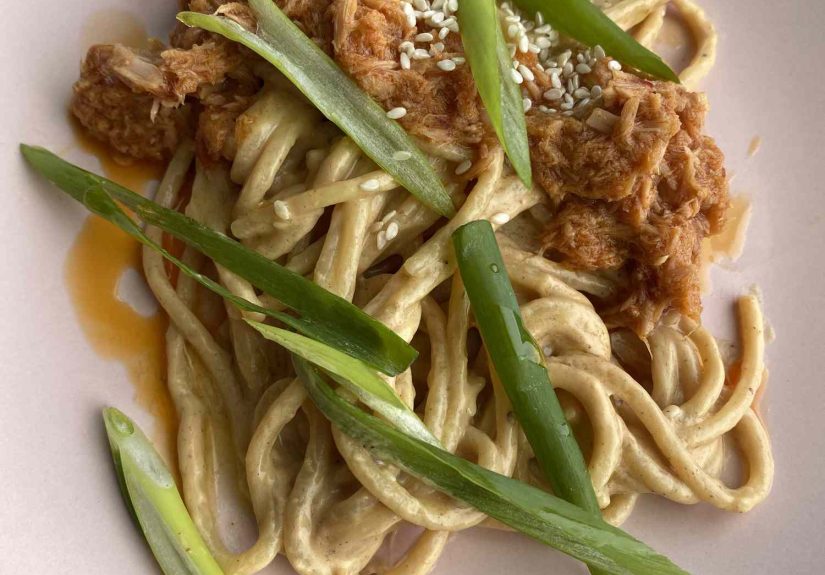
Divide noodles between bowls. Top with the warm tuna mixture, then add peanuts/sesame seeds, cucumbers,
extra chili crisp, and herbs. Taste. Adjust salt (soy sauce), brightness (vinegar), or heat (chili).
Flavor “Tuning”: Make It Taste Like Your Favorite Noodle Shop
Get the sesame right
Chinese sesame paste is darker and toastier than tahini. Tahini is more common in U.S. kitchens and still delicious.
Either way, stir your paste well before measuringsesame loves to separate like it’s practicing for a dramatic TV breakup.
Don’t skip the vinegar if you can help it
Black vinegar adds a deep, slightly sweet tang that makes the sauce taste “rounded” instead of just spicy-salty.
If you only have rice vinegar, use it, but consider adding a tiny pinch of brown sugar to mimic that mellow depth.
Sichuan peppercorn: optional, but iconic
If you’ve ever eaten noodles and thought, “Why does my tongue feel like it’s wearing a tiny electric sweater?”
that’s Sichuan peppercorn. Start with 1/4 teaspoon. It’s powerful, and you want “interesting tingle,” not “mouth static.”
Use noodle water like it’s an ingredient
That starchy water helps emulsify the sauce so it clings to noodles in a silky, restaurant-style way.
It’s basically free sauce insurance.
Smart Substitutions (Because Real Life Happens)
No black vinegar?
- Use rice vinegar, then add a pinch of brown sugar.
- If you have balsamic: use a tiny splash mixed with rice vinegar (balsamic is stronger and sweeter).
No sesame paste or tahini?
- Use smooth peanut butter for a peanut-forward dan dan vibe (still totally delicious).
- Or blend 2 tablespoons peanut butter + 1 teaspoon sesame oil for a closer flavor.
No ramen/Asian noodles?
- Spaghetti, linguine, or even angel hair works. Dan dan flavors are equal-opportunity delicious.
Want it gluten-free?
- Use rice noodles and tamari instead of soy sauce. Keep the sauce slightly thicker so it coats slick noodles.
Variations You’ll Actually Want to Make Again
Extra-crunch cucumber topping
Toss thin cucumber slices with a pinch of salt and a splash of vinegar while you cook.
The cool crunch makes the whole bowl taste brighter and less heavy.
“Creamy but not too spicy” version
Use only 1 teaspoon chili oil/crisp, add an extra tablespoon of sesame paste, and top with sesame seeds and scallions.
You’ll still get bold flavor without the “call your best friend to brag” heat.
High-protein bowl
Add a soft-boiled egg or edamame. You’ll feel like you meal-prepped on purpose.
What to Serve With Canned Tuna Dan Dan Noodles
- Quick smashed cucumbers with vinegar and sesame oil
- Simple miso soup (if you want cozy-on-cozy)
- Steamed dumplings (store-bought is totally fair)
- Something cold and bubbly to balance spice (sparkling water with lime counts)
Storage, Leftovers, and Food Safety
These noodles are best right after tossingwhen the sauce is glossy and the tuna topping is warm.
But leftovers can still be great if you store them smartly.
- Refrigerate: Store in an airtight container and eat within 3–4 days.
- Reheat: Add a splash of water and warm gently; reheat leftovers thoroughly (aim for steaming hot).
- Pro move: Store sauce separately if you’re planning aheadthen toss fresh for best texture.
Nutrition Notes (Quick and Practical)
Tuna is a budget-friendly source of protein and omega-3 fats, and canned light tuna is generally lower in mercury than albacore.
If tuna is a regular staple in your week, mixing in other “lower mercury” fish options (like canned salmon or sardines)
can help you keep variety while still staying in the pantry-friendly lane.
FAQ
Does this taste fishy?
Not if you season it boldly. The ginger, scallions, chili, and vinegar pull tuna into “savory topping” territory.
If you’re sensitive to fishiness, use water-packed tuna and add a little extra vinegar and chili crisp.
Can I make it less spicy for kids (or spice-wary adults)?
Yes. Start with 1 teaspoon chili oil and skip Sichuan peppercorn. Let spice lovers add chili crisp at the table.
Everyone wins, and nobody has to drink milk straight from the carton in defeat.
Can I meal prep this?
Absolutely. Cook noodles, make sauce, and store separately. Reheat noodles with a splash of water, then toss with sauce
and top with tuna. It’s one of those rare meal-prep situations where the “day two” version still feels legit.
My 500-Word Real-Life Experience With This Recipe
The first time I tested canned tuna dan dan noodles, it wasn’t because I was feeling innovative. It was because I was feeling lazy
and my fridge looked like it had been audited: a couple scallions, a suspiciously wilted handful of greens, and a jar of chili crisp
doing the emotional labor of “dinner planning.” I wanted dan dan noodlesspecifically the kind that hits you with creamy sesame, bright vinegar,
and enough heat to make you sit up straighterbut I did not want a grocery run, and I definitely didn’t want to brown meat.
Enter: the can of tuna that had been sitting in the pantry like a backup singer waiting for a solo.
Here’s what surprised me: tuna doesn’t need much to become convincing. The key is treating it like a topping, not a shortcut.
When you warm it in a pan with ginger and scallions, it goes from “packed lunch” to “aromatic and savory.”
Add a little soy sauce and a dab of chili crisp, and suddenly it behaves like the salty, spiced bits you’d usually get from ground pork.
The texture is differentlighter, flakierbut in a good way, especially if you add crunch (peanuts, sesame seeds, cucumbers).
It becomes a bowl with contrast: creamy noodles, spicy-slick sauce, briny-savory tuna, and crisp toppings that keep every bite interesting.
My second discovery was how much noodle water matters. The first bowl I made was tasty but a little clumpy, like the sauce was trying to stick
in one place instead of coating everything evenly. Then I remembered the classic trick: starchy pasta water.
One tablespoon at a time, the sauce loosened into this glossy, restaurant-looking finish. That’s the moment the dish went from “pretty good”
to “why am I not making this every week?” Now I treat reserved noodle water like a required ingredient, not an optional tip.
It’s the difference between noodles that are merely dressed and noodles that are fully committed.
Over time, I started customizing based on mood. If I want deeper sesame flavor, I use Chinese sesame paste. If I’m using tahini,
I add a tiny extra drizzle of toasted sesame oil for warmth. If I’m out of black vinegar, rice vinegar works fine, but I’ll add a pinch of sugar
to smooth the sharpness. And when I want that authentic, tongue-tingly edge, I add Sichuan peppercornjust enough to make the sauce feel alive,
not enough to turn dinner into a science experiment.
The best part is how forgiving the whole thing is. I’ve made it with ramen, udon, and spaghetti. I’ve swapped tuna for canned salmon.
I’ve topped it with leftover cucumbers and called it “meal planning.” Every version still tastes like a bold, spicy sesame noodle bowl
the kind of pantry dinner that feels slightly smug in the best possible way.
Conclusion
If you love bold flavors and fast dinners, this canned tuna dan dan noodles recipe is a keeper.
You get the creamy sesame-chili sauce and the tangy-vinegary bite that makes dan dan noodles unforgettable,
with a tuna topping that turns pantry protein into something genuinely craveable.
Make it once, then tweak it forevermore chili, more crunch, more greens, more “I definitely meant to do that.”