Table of Contents >> Show >> Hide
- Before You Start: What Plant Are We Talking About?
- How to Identify Rosemary: 10 Steps
- Step 1: Check the Overall Growth Habit
- Step 2: Look at the LeavesShape and Arrangement
- Step 3: Flip a Leaf and Inspect the Underside
- Step 4: Crush and Smell a Leaf
- Step 5: Examine the StemYoung vs. Mature
- Step 6: Look for Flowers in Season
- Step 7: Observe Where and How It’s Growing
- Step 8: Evaluate Texture and “Needle Density”
- Step 9: Consider Cultivar Variation Before You Reject a Match
- Step 10: Rule Out Common Lookalikes
- Quick Checklist You Can Use in 30 Seconds
- Common Identification Mistakes (and How to Avoid Them)
- U.S. Reference Base Synthesized for This Guide (No Links)
- Conclusion
- Experience Notes: from Real-World Rosemary ID Scenarios
Some plants are easy to spot from a mile away. Rosemary is not always one of themat least not at first glance.
In a mixed herb bed, it can be confused with lavender, thyme, and a handful of other narrow-leaved plants.
At a nursery, labels can be missing, half-faded, or written in handwriting that looks like ancient wizard script.
And if you’re trying to identify rosemary in a landscape rather than a tidy kitchen garden, things can get
even trickier.
The good news is that true culinary rosemary has a very specific set of traits. Once you know the pattern, you
can identify it quickly and confidently. This guide walks you through a practical, field-tested, beginner-friendly
10-step process. We’ll cover leaf shape, stem structure, scent, flower details, growth habit, and how to rule out
lookalikes. You’ll also get examples, common mistakes to avoid, and a long “experience journal” section at the end
so you can see how these clues work in real-world scenarios.
Before You Start: What Plant Are We Talking About?
In current horticulture, culinary rosemary is generally listed as Salvia rosmarinus. You may also see its older
botanical name, Rosmarinus officinalis, especially in older books, garden tags, and seed catalogs. Same plant,
different naming era. If your label says either one, you’re in rosemary territory.
One safety note: if you’re identifying plants for cooking, don’t eat any unknown plant just because it looks
“close enough.” Use multiple ID features, not one clue. “Needle-like leaves” alone is not enough to confirm a culinary herb.
How to Identify Rosemary: 10 Steps
Step 1: Check the Overall Growth Habit
Start from a few feet away. Rosemary is usually a woody, evergreen perennial shrub or subshrubnot a floppy, soft annual herb.
Depending on cultivar, it may grow upright (often 3–6 feet) or in a trailing/prostrate form close to the ground.
If the plant feels like a semi-woody shrub with year-round structure, you’re on the right track.
Quick clue: if the plant looks like it could become a hedge or be clipped into shape, that strongly supports rosemary.
Step 2: Look at the LeavesShape and Arrangement
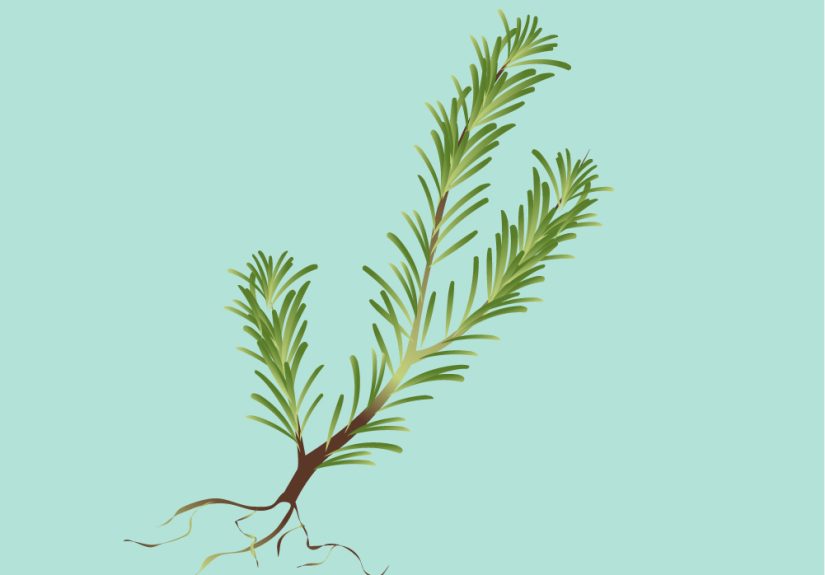
Rosemary leaves are narrow, linear, and needle-like. They are usually opposite along the stem (paired across from each other),
which is a classic mint-family pattern. The leaves are tougher and firmer than many soft herbs. Think “tiny aromatic pine needles,”
not broad basil leaves.
If you see broad, thin leaves with obvious serrated margins, that’s likely not rosemary.
Step 3: Flip a Leaf and Inspect the Underside
This is one of the best diagnostic steps. True rosemary leaves are green above and often paler, whitish, or tomentose
(fine, fuzzy appearance) underneath. That two-tone effect is a major ID giveaway.
Pro tip: use your phone flashlight to inspect the underside quickly in poor light.
Step 4: Crush and Smell a Leaf
Rosemary has a strong, resinous, pine-like aroma with a savory edge. When you rub or crush the leaf, the scent should be
immediate and unmistakable. This is often the fastest confirmation step when visual clues are close but not conclusive.
If the scent leans strongly floral and perfumey (without the resinous culinary punch), you might be dealing with lavender
or another ornamental aromatic plant.
Step 5: Examine the StemYoung vs. Mature
Young stems are greener and more flexible. Older stems become woody and bark-like. Rosemary is in the mint family, so stems
can show a somewhat square profile, especially on younger growth. Over time, the plant develops a sturdier woody framework.
If every stem is soft, watery, and herbaceous with no woody base, it may not be rosemary (or it may be very young).
Step 6: Look for Flowers in Season
Rosemary flowers are usually small, two-lipped, and appear in shades of blue, lavender, white, or sometimes pink depending
on cultivar and climate. They occur along stems rather than in giant showy clusters.
Flower color alone is not enough for identification, but paired with needle-like leaves, woody habit, and scent, it becomes
a strong confirmation package.
Step 7: Observe Where and How It’s Growing
Rosemary thrives in full sun, excellent drainage, and relatively dry conditions once established. It often performs well in
containers, raised beds, and lean soils where soggy-root plants struggle. If you find a healthy aromatic shrub in a hot,
sunny, well-drained spot, rosemary is a very plausible candidate.
If the site is consistently wet or heavy clay with poor drainage and the plant still looks pristine, be cautiousrosemary
generally dislikes wet feet.
Step 8: Evaluate Texture and “Needle Density”
Rosemary usually has dense, finely textured branching, especially when pruned. The foliage is compact and structural, giving
the plant a crisp silhouette from a distance. Upright forms look architectural; trailing forms spill gracefully over edges.
Think of it as the herb that always looks ready for a close-up in a Mediterranean garden catalog.
Step 9: Consider Cultivar Variation Before You Reject a Match
Rosemary comes in many cultivars. Some are tall and upright; others are mounding or trailing. Flower colors and growth rates vary.
So if one candidate plant doesn’t match your mental picture exactly, don’t dismiss it too quickly. Use the full checklist:
leaf shape, underside, scent, woody stems, and habitat.
Example: a prostrate rosemary in a hanging edge bed can look very different from a hedge-form rosemary by a walkway, but both are rosemary.
Step 10: Rule Out Common Lookalikes
Final confirmation comes from elimination. Compare your candidate plant against likely confusion species:
- Lavender: usually grayer overall, more floral scent, and a different flower spike structure.
- Thyme: much smaller leaves, lower habit, and finer stems.
- Florida rosemary: can look needle-like and smell similar when crushed, but it is a different shrub.
- Bog rosemary: a different genus and leaf arrangement pattern (often alternate), not culinary rosemary.
If your plant checks all rosemary traits and fails the lookalike tests, congratulationsyou’ve likely got the real thing.
Quick Checklist You Can Use in 30 Seconds
- Woody evergreen shrub or subshrub habit?
- Narrow needle-like leaves?
- Leaves opposite on stem?
- Leaf tops green, undersides paler/whitish?
- Strong resinous pine-like aroma when crushed?
- Young stems somewhat square, older stems woody?
- Small two-lipped blue/lavender/white/pink flowers (when blooming)?
- Growing in sunny, well-drained conditions?
- Could be upright or prostrate cultivar?
- Not matching lavender/thyme/other lookalikes?
If you answered “yes” to most of these, your plant is very likely rosemary.
Common Identification Mistakes (and How to Avoid Them)
Mistake 1: Trusting Only the Smell
Aromatic oils are helpful, but several plants can smell “herby.” Always pair scent with structure and leaf details.
Mistake 2: Ignoring the Leaf Underside
People often check only the top surface. The pale or whitish underside is one of rosemary’s strongest clues.
Mistake 3: Assuming All Rosemary Looks Upright
Trailing cultivars are common in landscaping. Different form does not mean different species.
Mistake 4: Using Flower Color as the Primary Test
Flower color overlaps among many herbs. Treat flowers as supporting evidence, not the main verdict.
Mistake 5: Not Considering Environment
A plant thriving in full sun and sharp drainage supports rosemary identification. Habitat context matters.
U.S. Reference Base Synthesized for This Guide (No Links)
This article was synthesized from reputable U.S. educational and botanical sources, including: North Carolina State Extension
Plant Toolbox, University of Florida IFAS Extension, Missouri Botanical Garden, University of Illinois Extension, Texas A&M
AgriLife Extension, University of Arizona Cooperative Extension, University of Maryland Extension, University of California ANR
Master Gardener resources, University of Wisconsin Horticulture, United States Botanic Garden, USDA PLANTS records, and Florida
IFAS native plant documentation on lookalikes.
Conclusion
If you remember only one thing, remember this: rosemary is a “pattern plant,” not a one-feature plant. The winning ID strategy
is to combine clueswoody evergreen habit, narrow opposite leaves, pale undersides, strong pine-like aroma, and small two-lipped
flowers. Add site context and lookalike elimination, and your accuracy jumps dramatically.
Once you can identify rosemary confidently, everything gets easier: smarter plant shopping, better herb-garden planning, safer
culinary use, and fewer “Wait…what did I just harvest?” moments in the kitchen. Your pasta, roasted potatoes, and confidence will
all thank you.
Experience Notes: from Real-World Rosemary ID Scenarios
In one community garden walkthrough, a beginner pointed to a silvery, fragrant plant and confidently called it rosemary. It smelled
wonderful, looked shrubby, and even had purple flowers. But once we slowed down and ran the 10-step method, the details said otherwise.
The leaf arrangement was not opposite in a clean rosemary pattern, and the flower spikes were more typical of lavender. The lesson was
immediate: fast guesses feel good, but multi-step verification wins. The gardener later joked that this was “a humbling but aromatic
plot twist,” and started checking leaf undersides before making any herb declaration.
At a farmer’s market, another shopper found a tray labeled only “Mixed Culinary Herbs.” No species names, no cultivar tagsjust green
ambition in plastic pots. We compared three likely rosemary candidates. Plant A had broad, soft leaves and no woody base, so it was out.
Plant B had narrow leaves and good scent, but stems were very tender and leaves lacked that pale underside contrast. Plant C matched almost
every clue: opposite needle-like foliage, strong pine-resin fragrance, slight stem squareness, and an early woody lower stem. Plant C came
home and became the star of roasted potatoes that same evening. Identification paid off in flavor.
A home landscaper once worried that her rosemary was “sick” because it had started producing knobby growths along older stems. She assumed
pest damage and nearly removed the plant. A closer look, plus extension-style reference checks, suggested normal mature stem development.
The plant also had correct leaf structure and scent. Instead of removing it, she improved drainage and pruning. Within one season, the shrub
filled out beautifully and began blooming again. The takeaway was important: identification is not only about naming a plantit also guides
good care decisions and prevents unnecessary panic.
In a coastal yard visit, we saw two “rosemary-like” shrubs growing near each other. One was culinary rosemary, and the other was a native
lookalike commonly called Florida rosemary. Both had narrow foliage and both released scent when crushed. This is where single-feature ID
fails hard. We used branching pattern, leaf arrangement details, growth form, and site clues to separate them. The property owner was glad
we did: she had been clipping both plants for cooking. That day became a permanent rule in her householdno kitchen harvest without a full
identity check first.
Indoor growers also learn interesting rosemary lessons. One apartment gardener said, “My rosemary looks like tiny pine and smells like a
holiday candle, so I figured I nailed it.” She hadbut her plant kept declining. Identification was correct; culture was not. Rosemary in
containers still needs strong light, good airflow, and careful watering. Once she switched to a better-draining mix and reduced watering
frequency, new growth improved and the plant recovered. Her story highlights a useful mindset: first identify correctly, then care correctly.
Accurate identification is the beginning, not the finish line.