Table of Contents >> Show >> Hide
- What you’ll find in this article
- The quick action plan (printable in your brain)
- What lice are (and what they are not)
- Symptoms (and why itching can be delayed)
- How lice spread (plus the myths that won’t quit)
- How to check for lice the right way
- Treatment options: OTC, combing, and prescriptions
- Step-by-step workflow: how to treat head lice effectively
- What to clean at home (and what to skip)
- How to prevent lice (and stop reinfestation)
- School and daycare: what “treat-and-return” means
- When to call a clinician
- Real-world experiences and lessons learned (to make this easier next time)
- 1) The “everything is a nit” phase (a totally normal illusion)
- 2) The “laundry mountain” mythand the relief of targeted cleaning
- 3) The combing routine that actually works in real homes
- 4) The “we treated once and it came back” moment (usually a calendar issue)
- 5) The coordination challenge (schools, relatives, sleepovers, and group texts)
- 6) The stigma hangover (and the truth that helps)
- Wrap-up: you’ve got this
Lice are the world’s tiniest, least-welcome houseguests. They don’t pay rent, they don’t bring snacks,
and they move in with the confidence of someone who “totally knows the owner.” The good news:
lice are manageable, treatable, anddespite the stressusually not dangerous.
This guide focuses mainly on head lice (the most common type), with quick notes on body
lice and pubic lice. You’ll learn how to spot lice correctly, choose an effective treatment (without
turning your home into a hazmat scene), and prevent reinfestationso you can get back to normal life
faster.
The quick action plan (printable in your brain)
- Confirm it’s lice. A live crawling louse is the clearest proof. Nits stuck close to the scalp can also matter.
- Check close contacts. Inspect household members every 2–3 days; treat those with live lice or nits very close to the scalp.
- Pick one proven treatment. Either an OTC lice medicine (used exactly as directed) + combing, or a clinician-recommended prescription.
- Comb like you mean it. Remove lice/nits every 2–3 days for 2–3 weeks (or as your chosen treatment recommends).
- Do the “two-day clean.” Wash/dry items used in the two days before treatment; skip fumigant sprays.
- Plan the follow-up date. Many OTC options need a second treatment around day 9–10 to catch newly hatched lice.
If that felt like a lot, here’s your emotional translation: Confirm, treat correctly, comb consistently, clean what matters, and don’t panic-clean your entire zip code.
What lice are (and what they are not)
Head lice are tiny insects that live on the scalp and feed on human blood. They’re about the size of a sesame seed and move by crawling.
They can’t fly, they can’t jump, and they are not a sign of poor hygiene. Lice spread mostly through
close head-to-head contact, which is why they show up so often in elementary school, sports, sleepovers, and families.
The three common types of lice
- Head lice: live on the scalp hair and are most common in children and households.
- Body lice: live in clothing seams and move to skin to feed; often linked to limited access to clean clothes and regular bathing.
- Pubic lice: typically found in coarse body hair; needs medical guidance and sometimes STI screening.
Most “lice emergencies” are actually head lice. That’s where we’ll focusbecause that’s where most families need the step-by-step help.
Symptoms (and why itching can be delayed)
The classic symptom is itching, but here’s the curveball: itching can take weeks to show up the first time someone gets head lice. That’s because the itch is often an allergic reaction to bitesnot an instant “lice alarm.”
Common signs of head lice
- Itchy scalp, especially behind the ears and at the nape of the neck
- A tickling sensation or feeling like something is moving in the hair
- Irritability or trouble sleeping (lice can be more active at night)
- Sores from scratching (which can sometimes become infected)
Not everyone itches. So if you’re waiting for itching to confirm lice, you may be waiting a whilelike waiting for a teenager to admit they borrowed your hoodie.
How lice spread (plus the myths that won’t quit)
Head lice spread primarily through direct head-to-head contact. They crawl from hair to hair. They do not jump like fleas, and they do not fly like… anything with wings.
Common ways head lice spread
- Heads touching during play, sports, hugging, selfies, or sleepovers
- Less commonly: sharing hats, hair accessories, brushes, or towels
- Even less commonly: lying on a pillow or couch that was recently used by someone with lice
Myths vs. facts
- Myth: Lice only happen with poor hygiene. Fact: Lice don’t care how clean you are. They care about access to hair.
- Myth: Pets spread head lice. Fact: Pets don’t carry or spread human head lice.
- Myth: One nit means an active infestation. Fact: Nits far from the scalp are often old/empty and may not require treatment.
- Myth: You must disinfect your entire home. Fact: Over-cleaning is common; targeted cleaning is enough.
How to check for lice the right way
Diagnosis is where many families lose time. Dandruff, lint, and hair product residue can look like nitsbut they usually slide off easily. Nits are cemented to hair shafts and resist removal.
Where to look first
- Behind the ears
- At the nape of the neck
- Near the crown (especially with longer hair)
The easiest method: wet combing under bright light
- Wet the hair (it slows lice down and improves visibility).
- Seat the person under bright light.
- Separate hair into small sections.
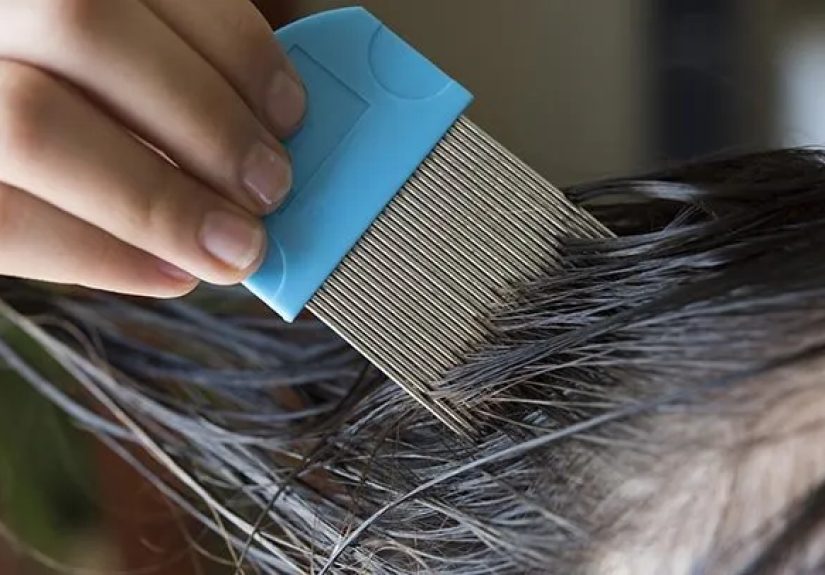
- Use a fine-toothed lice comb and comb from scalp to ends.
- Wipe the comb on a white tissue/paper towel after each pass to spot moving lice.
Pro tip: A live louse is the most reliable confirmation. If you only see nits, pay attention to
how close they are to the scalp. Nits very close to the scalp are more likely to be viable.
Treatment options: OTC, combing, and prescriptions
Successful lice treatment is less about “strongest product” and more about:
correct diagnosis + correct use + correct follow-up. Many failures happen because steps are skipped
(or because we all collectively decide rules are “suggestions”).
Option 1: Over-the-counter lice medicine (first-line for many families)
In the U.S., common OTC active ingredients include permethrin 1% and pyrethrins with piperonyl butoxide.
These products can kill live lice but may not kill all eggs, so retreatment is often needed.
- Permethrin 1%: often used for children as young as 2 months (follow label instructions).
- Pyrethrins/piperonyl butoxide: generally for ages 2 years and older; avoid if allergic to chrysanthemums/ragweed.
Key idea: Many OTC products require a second treatment around day 9–10 to kill newly hatched lice before they can mature and lay more eggs.
Option 2: Wet combing (mechanical removal)
Wet combing can be used alone (especially for very young infants when medication options are limited)
or with medication to improve results. It takes time, but it’s low-cost and avoids insecticide exposure.
A practical schedule is combing every 2–3 days for 2–3 weeks (or at least 2 weeks after the last live louse is found).
Option 3: Prescription treatments (when OTC fails or isn’t appropriate)
If you still see live, active lice after a correctly used OTC plan (including the follow-up treatment), a clinician may recommend prescription options.
Common prescription treatments include:
- Benzyl alcohol 5%: kills lice but not eggs; retreatment is typically needed (often after 7 days).
- Ivermectin lotion 0.5%: often effective as a single application; retreatment guidance should come from a clinician.
- Spinosad 0.9%: can kill lice and unhatched eggs; retreatment is often unnecessary unless live lice remain.
- Malathion 0.5%: can kill lice and some eggs; flammable and not for young childrenfollow strict safety directions.
Important safety note: Do not stack multiple lice medicines “for extra power.” Using more than directed or combining products can be harmful.
If one product fails after correct use, talk to a clinician about switchingdon’t improvise a chemical “remix.”
Step-by-step workflow: how to treat head lice effectively
Step 1: Prepare the setup
- Pick a time when you can focus (and no one is hungryhanger is the enemy of cooperation).
- Gather: lice comb, tissues/paper towels, hair clips, bright light, timer, and the chosen treatment.
- Remove clothing that could get wet or stained during application.
Step 2: Use your chosen lice medicine exactly as directed
- Follow the label for how long to leave it on and how to rinse it out.
- Avoid using a combo shampoo/conditioner before treatment, and avoid re-washing hair for 1–2 days after treatment (if the label advises).
- Rinse over a sink when possible to limit unnecessary skin exposure.
Step 3: Comb out lice and nits
Even when nit removal isn’t strictly required for every product, combing helps reduce “leftovers” and makes it easier to spot whether the treatment worked.
- Work in small sections.
- Comb from scalp to the ends with a fine-toothed lice comb.
- Wipe the comb after each pass.
- Keep going until you’ve covered the entire scalp and hair length.
Step 4: Recheck and follow the calendar
After treatment, check hair and remove lice/nits every 2–3 days for the next 2–3 weeks. This matters because
eggs can hatch days latereven after you’ve “won” emotionally.
A simple 10-day example calendar (OTC plan)
| Day | What to do | Why it matters |
|---|---|---|
| Day 0 | Confirm lice + treat with OTC medicine + thorough combing | Kills live lice; combing removes lice/nits and improves success |
| Days 2–3 | Recheck + comb | Catches survivors and reduces reinfestation risk |
| Days 5–6 | Recheck + comb | Interrupts the life cycle |
| Day 9–10 | Second OTC treatment (if your product requires it) + comb | Kills newly hatched lice before they mature and lay eggs |
| Weeks 2–3 | Comb/check every 2–3 days | Confirms you’re truly done (not just “temporarily optimistic”) |
Step 5: If it’s not working, troubleshoot before repeating
If lice seem just as active 8–12 hours after treatment, the product may not be workingor it may not have been used in a way that allowed it to work.
Common reasons for failure include misdiagnosis, not following directions, conditioner interference, resistance, or reinfestation from an untreated close contact.
If you’ve followed instructions correctly and still see live lice after completing the full course (including retreatment when recommended),
it’s time to call a clinician and discuss a different option.
What to clean at home (and what to skip)
Here’s the most reassuring truth in lice-land: head lice don’t survive long off the scalp. So cleaning should be targetednot theatrical.
Do the “two-day clean”
- Wash and dry clothing, bedding, towels, and items used in the two days before treatment using hot water and high heat drying (if fabric allows).
- Seal non-washable items in a plastic bag for two weeks.
- Soak combs/brushes in hot water for 5–10 minutes.
- Vacuum floors and furniture where the infested person sat or lay (risk from furniture is low, but vacuuming is a reasonable add-on).
Skip these (they add stress, not results)
- Fumigant sprays or fogs: not recommended and can be toxic.
- Deep-cleaning everything: you don’t need to wash every curtain, scrub every wall, or disinfect your soul.
- Random “suffocation” home remedies: things like mayonnaise or oils are not reliably effective and can delay real treatment.
How to prevent lice (and stop reinfestation)
Prevention is mostly about reducing opportunities for hair-to-hair transferespecially during known outbreaks.
The goal isn’t to wrap your child in bubble wrap; it’s to be practical.
Everyday lice prevention tips
- Avoid head-to-head contact during play, sports, and sleepovers when lice are going around.
- Don’t share hats, headbands, hair ties, brushes, combs, towels, or helmets.
- For long hair: tie it back (braids, buns, ponytails) during school and activities.
- During outbreaks: do quick weekly checks, especially behind ears and at the nape.
- Teach kids a simple rule: “Hats are not community property.”
How to prevent reinfestation after treatment
- Recheck household members every 2–3 days for a couple weeks.
- Treat only those who have live lice (or close-to-scalp nits when recommended).
- Complete the follow-up schedule (especially day 9–10 retreatment for many OTC products).
- Keep combing/checking every 2–3 days for 2–3 weeks to confirm success.
School and daycare: what “treat-and-return” means
Many families worry about school exclusion. But modern public health guidance generally supports a
treat-and-return approach: children can go home at the end of the day, begin treatment, and return to class after starting appropriate treatment.
“No-nit” policies (requiring all nits be removed before returning) are widely discouraged because nits far from the scalp often won’t hatch,
nits don’t transfer easily, and exclusions create unnecessary absences.
If your school has a strict policy, follow their rulesbut know that evidence-based guidance is moving toward minimizing missed school time
while still managing lice responsibly.
When to call a clinician
Many cases of head lice can be handled at home. But you should call a clinician (pediatrician, family doctor, or dermatologist) if:
- You’re unsure it’s lice (misdiagnosis is common).
- You’ve used an OTC product correctly and still see live lice after completing the full course and retreatment.
- The person is very young (especially infants) and you want age-appropriate guidance.
- There are signs of skin infection (oozing, increasing redness, warmth, swelling, fever).
- The person has asthma, significant allergies, or skin conditions that complicate topical treatments.
- You suspect body lice (often requires addressing clothing/bedding and underlying risk factors).
- You suspect pubic lice (medical evaluation is recommended; clinicians may also advise STI screening in appropriate situations).
If you’re feeling stuck, it’s not a failureit’s just time to switch from “DIY mode” to “expert mode.”
Real-world experiences and lessons learned (to make this easier next time)
The hardest part about lice often isn’t the liceit’s the experience. The surprise discovery, the frantic laundry,
the “Did I just feel something move on my head?” spiral, and the emotional weight of stigma. Here are common
real-life patterns families report, along with practical, sanity-saving lessons that make the process smoother.
1) The “everything is a nit” phase (a totally normal illusion)
Many parents describe the first day as a blur of flashlights, magnifying glasses, and a sudden belief that
every speck of lint is an egg with a college plan. The lesson: focus on finding live lice and use the
“does it slide off?” test. Dandruff and hair product residue usually brush away. Nits are stubbornly attached.
If you can’t confidently confirm lice, it’s okay to ask a school nurse, pharmacist, pediatrician, or dermatologist.
A correct diagnosis saves time, money, and the emotional cost of treating a problem that wasn’t actually there.
2) The “laundry mountain” mythand the relief of targeted cleaning
A very common experience is over-cleaning: washing every pillow in the house, disinfecting stuffed animals that
haven’t been touched since 2019, and contemplating whether the couch needs an exorcism. The relief comes when
families learn the “two-day clean” concept: wash/dry the items used in the two days before treatment, soak combs,
vacuum the main hangout spots, and stop there. One parent put it perfectly: “Once we stopped cleaning like we were
prepping for a biohazard movie, we had energy to do the part that matteredcombing and follow-up.”
3) The combing routine that actually works in real homes
Combing is the unglamorous hero of lice management. Families who succeed often turn combing into a predictable routine:
a towel on the shoulders, a favorite show or playlist, hair clipped into sections, and a timer. Some do it right after dinner.
Others do it in the morning when kids are calmer. The biggest lesson is consistency: comb thoroughly, wipe the comb after each
pass, and repeat every couple of days for a few weeks. People who skip combing entirely can still succeed with certain treatments,
but many families find combing reduces anxiety because it gives visible proof that things are improving.
4) The “we treated once and it came back” moment (usually a calendar issue)
A classic experience: a family treats on day one, sees fewer bugs, celebrates… and then finds lice again a week later.
Often it’s not true “resistance”it’s biology. Eggs can hatch days after the first treatment. That’s why many OTC options
recommend a second treatment around day 9–10 and ongoing checks for 2–3 weeks. Families who put the follow-up date on a calendar
(phone reminder, sticky note, whatever actually gets noticed) are far more likely to finish strong.
5) The coordination challenge (schools, relatives, sleepovers, and group texts)
Another shared experience is realizing lice management is partly a communication project. Parents often say the turning point was
calmly notifying close contacts (grandparents, babysitters, sleepover families) and checking siblings at the same time. It’s not about blame;
it’s about breaking the reinfestation loop. A simple message like “We found lice and started treatment todayplease check your household too”
can prevent weeks of back-and-forth.
6) The stigma hangover (and the truth that helps)
Many people feel embarrassedeven though lice are common and not linked to cleanliness. The most helpful mindset shift is remembering this:
lice are a logistics problem, not a character flaw. They don’t mean a home is dirty, a parent is negligent, or a child did something wrong.
They mean hair touched hair and a tiny insect took advantage. Treat it, follow the plan, and move on. If you can laugh a little (“Congrats, we’ve
been selected by nature’s least charming freeloaders”), it genuinely helps reduce stresswithout minimizing the work.
If you’re in the middle of it right now, here’s your encouragement: most lice situations resolve with
correct treatment, consistent follow-up, and targeted cleaning. The process is annoyingbut it’s temporary.
Wrap-up: you’ve got this
Treating and preventing lice is a game of small, correct stepsnot panic and not perfection. Confirm the diagnosis,
choose a proven method, follow the schedule, comb and recheck consistently, and clean what matters (the last two days of items),
while skipping hazardous “overkill” measures like fumigant sprays. Do that, and you’ll turn lice from a household crisis into
a manageable checklist.