Table of Contents >> Show >> Hide
- What Counts as “Solved” on a 3×3 Slide Puzzle?
- Before the 9 Steps: Two Quick Truths
- Step 1: Confirm the Goal Orientation (Yes, This Matters)
- Step 2: Do a 10-Second Solvability Check (Inversion Parity)
- Step 3: Learn the Two Movement Patterns That Make Everything Easier
- Step 4: Place Tile 1 (Top-Left) and Treat It Like a Protected Species
- Step 5: Place Tile 2 (Top-Middle) Without Breaking Tile 1
- Step 6: Place Tile 3 (Top-Right) and Complete the Top Row
- Step 7: Place Tile 4 (Middle-Left) and Lock the Left Edge of Row 2
- Step 8: Place Tile 5 (Middle) and Then Tile 6 (Middle-Right)
- Step 9: Solve the Last Row (Tiles 7 and 8) Without Falling for the “Swapped Pair” Trap
- Troubleshooting: Common Mistakes That Make a 3×3 Puzzle Feel Impossible
- Speed Tips (Optional): How to Get Better Without Losing Your Mind
- Conclusion
- Experiences: What Solving a 3×3 Slide Puzzle Actually Feels Like (and Why That’s the Point)
The 3×3 slide puzzle (a.k.a. the classic “8-puzzle”) is a tiny board with a big personality. It looks innocenteight tiles
and one blank spacebut it can absolutely humble a confident adult in under 30 seconds. The good news: you don’t need
luck, genius, or a deal with the puzzle gods. You need a plan.
This guide gives you a practical, human-friendly strategy to solve a 3×3 sliding tile puzzle reliablywhether it’s numbers
(1–8) or a scrambled picture. You’ll learn how to place tiles in a calm, controlled order, how to avoid the infamous
“last two tiles are swapped” heartbreak, and how to use a couple of small movement patterns that do the heavy lifting.
What Counts as “Solved” on a 3×3 Slide Puzzle?
Most 3×3 slide puzzles are solved when the tiles read left-to-right, top-to-bottom, with the blank in the bottom-right:
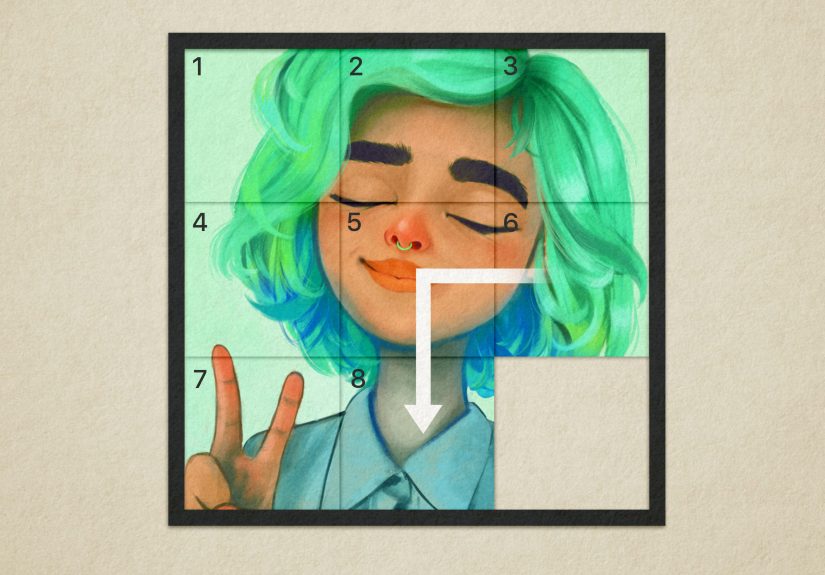
If your puzzle uses a picture instead of numbers, the goal is the same idea: the image lines up cleanly, and the blank ends
in its designated home corner (usually bottom-right).
Before the 9 Steps: Two Quick Truths
Truth #1: You move the blanknot the tiles
Mentally treat the blank square as your “parking spot.” Every move is basically “drive the parking spot next to the tile you
want to move, then slide the tile into it.” This mindset makes your moves more intentional and less “I’m just wiggling stuff
until something good happens.”
Truth #2: Some 3×3 puzzles are impossible from the start
On a standard 3×3 (8-puzzle), only half of all random scrambles are solvable. If you ever reach a state where everything looks
solved except two tiles are swapped (like 7 and 8 reversed), that’s usually not “one more clever move away.” It’s often a sign
the puzzle started in an unsolvable configuration (or you changed the goal orientation mid-game).
Step 1: Confirm the Goal Orientation (Yes, This Matters)
Before you touch anything, decide what “solved” means for your puzzle:
- Numbers: 1–8 in order with the blank in the bottom-right.
- Picture: make sure the picture is upright (not rotated), then identify the true “top-left” corner piece.
Pro tip: if it’s a picture puzzle, find a corner tile with two straight borders (top edge + left edge) and use that to lock
orientation. Many “I swear this puzzle is cursed” moments are actually “I’m solving it upside down.”
Step 2: Do a 10-Second Solvability Check (Inversion Parity)
This step saves you from spending 20 minutes trying to do the impossible. Here’s the quick check for a standard 3×3:
- Write the tiles in a single list, reading left-to-right, top-to-bottom.
- Ignore the blank.
- Count inversions: a pair of tiles (a, b) is an inversion if a appears before b but a > b.
- If the inversion count is even, the puzzle is solvable (for the usual goal state). If it’s odd, it’s not.
Example: Suppose your tiles read:
The list (ignoring blank) is: 1,2,3,4,5,6,8,7. The only inversion is (8,7) → that’s 1 inversion (odd) → unsolvable.
If you started here, the puzzle will never legally reach the standard solved state, no matter how politely you ask.
If you’re using a picture puzzle, the parity idea still applies, but “the goal” must match the manufacturer’s intended final layout.
If in doubt, solve using the box image orientation.
Step 3: Learn the Two Movement Patterns That Make Everything Easier
You don’t need memorized algorithms. You need two repeatable “mini-tools”:
A) The 2×2 Carousel (aka “spin the corner”)
If the blank is inside a 2×2 block, you can rotate those four positions by moving the blank around the square.
For example, if the blank is at bottom-right of that 2×2, doing Up → Left → Down → Right cycles tiles around.
This is how you “turn” a tile into position without bulldozing the whole board.
B) The 3×2 Double-Carousel (aka “swap neighbors without cheating”)
When two tiles need to trade places (but you’re not allowed to just swap them), you create a 3×2 working area that includes the blank.
Rotating within that 3×2 lets you reorder tiles safelyespecially useful for setting tiles 2 and 3 correctly, or fixing a tile that’s right
but facing the wrong way in a picture puzzle.
If this sounds abstract, don’t worry. The next steps show exactly where you use these patterns.
Step 4: Place Tile 1 (Top-Left) and Treat It Like a Protected Species
Your first mission is getting tile 1 into the top-left corner (or the correct top-left corner of the picture).
- Move the blank near tile 1.
- Use simple slides to guide tile 1 upward and leftward.
- When tile 1 is one move away from top-left, put the blank in the top-left spot and slide tile 1 into it.
Once tile 1 is placed, try not to move it again. The whole strategy is “solve in layers” so earlier work stays solved.
Step 5: Place Tile 2 (Top-Middle) Without Breaking Tile 1
Now you want tile 2 directly to the right of tile 1.
- Bring tile 2 into the top two rows (ideally near the top-middle).
- Keep the blank as your “steering wheel,” moving it around tile 2 to slide tile 2 into place.
- If tile 2 keeps forcing tile 1 out, back up and approach from a different sidedon’t brute-force through tile 1.
Small trick: if tile 2 is in the top row but to the right of where it belongs, you often need to temporarily move it down,
then bring it back up from below. That feels like going the wrong way, but it’s how sliding puzzles work: sometimes you take
a step back to take two steps forward.
Step 6: Place Tile 3 (Top-Right) and Complete the Top Row
Tile 3 is the finish line for Row 1. This is where people accidentally explode their progress by shoving tile 3 into place
“at all costs.” Instead:
- Get tile 3 somewhere in the top two rows.
- Position the blank so tile 3 can slide into the top-right corner as the last move for that row.
- Use the 2×2 carousel near the top-right (if available) to “turn” tile 3 into place without disturbing tiles 1 and 2.
When the top row reads 1 2 3, take a tiny victory lap. Then stop touching the top row unless you absolutely must.
Step 7: Place Tile 4 (Middle-Left) and Lock the Left Edge of Row 2
With the top row solved, your working zone is mostly the bottom two rows. Next target: tile 4 in the middle-left position.
- Bring tile 4 into the middle row (row 2) if possible.
- Use the blank to slide tile 4 left into the middle-left spot.
- If tile 4 is stuck in the bottom-left corner, you’ll often need a small loop that brings the blank around it and pulls it up.
Think “gentle steering,” not “tile wrestling.” The blank should hover near where you’re working; if the blank is far away,
you’re basically trying to cook dinner while the stove is in another zip code.
Step 8: Place Tile 5 (Middle) and Then Tile 6 (Middle-Right)
Now you’re building the second row left-to-right, just like the top row.
Place tile 5
- Bring tile 5 into the middle row or directly beneath it.
- Slide it into the center position.
- Try to avoid moving tile 4 once it’s placedtile 4 is now “part of the wall.”
Place tile 6
- Guide tile 6 into the middle-right position.
- If tile 6 is directly below its target, slide the blank into the target spot and bring tile 6 up.
At the end of this step, your board should look like this:
Step 9: Solve the Last Row (Tiles 7 and 8) Without Falling for the “Swapped Pair” Trap
With the top two rows solved, the bottom row should naturally resolveunless parity says “nope.”
Here’s how to finish cleanly:
The simple finish
Ideally, you’re one or two moves away from:
Use small, controlled movesoften a quick 2×2 carousel on the bottom-right blockto place 7 and 8 and return the blank to the corner.
If you end up with 8 and 7 swapped
If you reach:
and it seems like you “only need to swap 7 and 8,” that’s the trap. A legal slide puzzle move can’t swap just two tiles by itself.
Do this instead:
- First, suspect solvability: if your starting scramble had odd inversion parity, this end state is inevitable.
- If you didn’t check solvability earlier: count inversions now (Step 2). If it’s odd, the puzzle is unsolvable in the standard goal.
- If it’s solvable: you likely need to “unsolve” a small part of Row 2 temporarily (usually involving tile 6), cycle tiles, then restore.
That feels annoying, but it’s normalsliding puzzles require 3-cycles, not 2-swaps.
The mindset shift: you’re not swapping 7 and 8. You’re cycling a group of three tiles until 7 and 8 land correctly.
Troubleshooting: Common Mistakes That Make a 3×3 Puzzle Feel Impossible
1) “I solved it, but the picture is slightly off”
That’s usually an orientation mistake (Step 1). Picture puzzles can be rotated 90° and still “look close,” but the final layout will never line up.
2) “I keep breaking my solved row”
Try to work in a smaller zone. If the top row is solved, keep the blank in the bottom two rows as much as possible.
When you must enter the top row, do it briefly and with a purpose.
3) “I’m making moves, but nothing is improving”
That’s the “random walk” problem. Pause and pick one tile target. Move the blank next to that tile, then move the tile one step closer to home.
Repeat. If you can’t move it closer without wrecking something important, reposition and try a different approach.
Speed Tips (Optional): How to Get Better Without Losing Your Mind
- Think in mini-goals: “Move tile 5 into the middle row,” not “solve the whole puzzle right now.”
- Keep the blank close: the blank is your tool; if it’s far, you’re working with oven mitts on.
- Use a “distance instinct”: tiles generally need to move up/down/left/right toward their home. If a move increases distance, it should have a reason.
- Practice the carousel: once you can rotate a 2×2 block smoothly, a lot of “how do I get this tile in?” questions answer themselves.
Conclusion
Solving a 3×3 slide puzzle isn’t about frantic shufflingit’s about controlled placement. Lock the first row, build the second,
and finish the last row with cycles (not wishful thinking about swapping two tiles). If you also learn the quick solvability check,
you’ll save yourself from the most common frustration: trying to solve a puzzle that literally can’t be solved.
Experiences: What Solving a 3×3 Slide Puzzle Actually Feels Like (and Why That’s the Point)
The first time you try to solve a 3×3 slide puzzle, it often feels like the tiles are laughing at you. You get one tile right,
then two tiles drift into place by accident, and suddenly the board looks “almost solved”… until one innocent move turns your progress into modern art.
That emotional whiplash is normaland it’s also why people get weirdly addicted to these puzzles.
Most beginners start by chasing the “next obvious tile.” Tile 1 goes near the corner, so you push it. Then tile 2 looks close,
so you push that. Then tile 3 is right thereso you push it too. For a moment, it feels like success is simply a matter of effort.
But sliding puzzles don’t reward effort; they reward structure. The experience is less like “pushing tiles” and more like
learning to parallel park: small, deliberate adjustments that look unimpressive until the car is suddenly perfectly aligned.
Something funny happens once you use a real method (like the 9 steps above). You stop feeling like you’re fighting the puzzle and start
feeling like you’re piloting it. The blank square becomes your steering wheel. You’ll notice patterns: how a tile tends to “orbit”
around the blank, how a 2×2 rotation can flip a stubborn tile into position, how moving a tile away from its home can be the fastest route back.
That’s the moment the puzzle stops being a random mess and becomes a system you can control.
You’ll also develop a healthy respect for the dreaded “last two tiles” situation. In real life, this is where people either
(a) rage-quit, (b) pry the tiles out like a tiny crowbar-wielding raccoon, or (c) stare at the puzzle as if it owes them money.
With experience, you start spotting that endgame earlier. You’ll think, “If I lock the top two rows like this, the bottom row should fall into place
and if it can’t, I need to fix it before I’m down to two tiles.” That kind of foresight is basically the whole learning curve.
The most relatable experience, though, is the “almost there” anxiety. When you’re close, you move more carefullysometimes too carefully.
You hesitate. You undo moves. You second-guess. A helpful habit is to narrate your intent: “I’m moving the blank left so tile 7 can slide right.”
It sounds silly, but it keeps you from making accidental, mood-based moves. Over time, that narration becomes silent and automatic, like muscle memory.
And yes, the final clickthe moment the last tile slides in and everything lines upis disproportionately satisfying. It’s a tiny win,
but it feels big because you earned it through logic, not luck. The puzzle didn’t “give” you the solution; you built it. That’s why
slide puzzles show up everywhere: kid’s toys, escape rooms, mobile games, and those waiting-room tables that exist solely to humble adults.
Once you know the method, you’re no longer at the mercy of the scramble. You’re the person who calmly says, “Oh, this? Yeah. Give me a minute.”