Table of Contents >> Show >> Hide
- The Short Answer
- The First Thing to Check: How the Account Is Titled
- Does the Money Go Through Probate?
- What the Surviving Owner Should Do Next
- Can the Bank Freeze the Account?
- What About Debts and Bills?
- Who Really Owns the Money?
- Taxes and Deposit Insurance: Two Details People Forget
- Common Mistakes to Avoid
- Final Thoughts
- Experiences and Real-World Lessons Families Commonly Run Into
When a loved one dies, grief arrives first. Paperwork shows up right behind it, usually carrying a clipboard and a certified death certificate request. One of the most common questions families ask is this: what happens to a joint account when one owner dies? The answer sounds simple, but it depends on how the account was set up, what the bank or credit union agreement says, and which state’s law applies.
In many cases, a joint bank account passes directly to the surviving owner. That is the classic “right of survivorship” setup, and it is the reason so many spouses, partners, and parents add another person to an account in the first place. But not every joint account works that way. Some accounts are titled without survivorship rights, which means the deceased owner’s share may become part of the estate instead of landing automatically in the surviving owner’s lap. In other words, two names on an account do not always mean one neat outcome.
This article breaks down what usually happens, what can surprise families, what steps the survivor should take, and where the big mistakes tend to hide. Consider it a practical guide for a topic nobody wants to Google at 2:13 a.m., but many people eventually do.
This is general U.S. information for educational purposes and not legal, tax, or estate-planning advice for a specific case.
The Short Answer
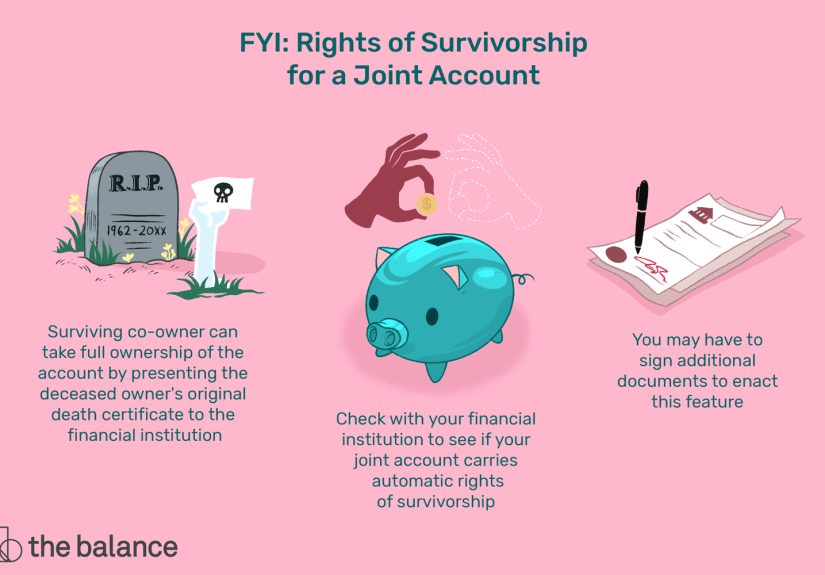
If a joint account is held with right of survivorship, the surviving owner usually becomes the sole owner when the other owner dies. That account typically does not pass through probate for that asset. The survivor still needs to notify the financial institution and provide documents, but the money usually stays available to the survivor once the account is updated.
If the account is held without survivorship, sometimes called a form similar to tenants in common, the deceased owner’s share may pass under their will, trust, or state intestacy law. In that situation, the estate may need to get involved, and the process can become slower, more formal, and much less fun than anyone ordered.
That is the big headline: the account title matters more than family assumptions. “Mom put me on the account” and “I can use the debit card” are not legal analysis. They are just the opening scene.
The First Thing to Check: How the Account Is Titled
Joint account with right of survivorship
This is the version most people picture. If one owner dies, the surviving owner usually takes ownership of the funds automatically. The account may be retitled into the survivor’s name alone, or it may continue with the surviving owners if more than two people were on the account.
Example: Maria and James share a checking account for mortgage payments, groceries, and the occasional “why is streaming so expensive now?” moment. If James dies and the account is a joint account with right of survivorship, Maria usually becomes the sole owner of that account balance.
Joint account without survivorship
This is where families get surprised. A joint account can be set up without survivorship rights. In that case, the deceased owner’s interest may pass to the estate rather than directly to the other owner. The survivor may still own part of the money, but not necessarily all of it.
Example: Two siblings share an account to manage expenses for an elderly parent, but the account is not structured with survivorship rights. If one sibling dies, that sibling’s share could become part of their estate. Now the surviving sibling, the executor, and the bank may all be staring at the same account statement with very different expectations.
Joint account with a POD or TOD beneficiary
Some accounts also name beneficiaries through a payable-on-death (POD) or transfer-on-death (TOD) designation. Here is the key twist: the beneficiary usually receives the account only after the last surviving owner dies. So if there are two joint owners and one dies, the surviving owner generally remains in control. The beneficiary does not jump the line just because one owner passed away.
That is why beneficiaries and joint owners are not interchangeable. A joint owner typically has present rights during life. A POD or TOD beneficiary usually has rights only after the death of the last owner.
Does the Money Go Through Probate?
Usually, no, if the account has survivorship rights. The account passes outside probate because ownership shifts by contract and account title, not by the will. That can be a huge relief when the survivor needs immediate access to cash for bills, rent, utilities, or funeral-related costs.
But if the account does not carry survivorship rights, the deceased owner’s share may become a probate asset. At that point, the executor or personal representative may need authority to collect, manage, and distribute that share. Translation: more forms, more waiting, and often more opinions from relatives who have suddenly become amateur estate lawyers.
Also remember this: avoiding probate does not automatically mean avoiding every legal question. If relatives argue that the account was only for convenience, or that one owner contributed nearly all the funds, disputes can still happen. Probate may not be center stage, but conflict can still buy a ticket.
What the Surviving Owner Should Do Next
1. Notify the bank or credit union promptly
Even if the survivor still has online access, debit card access, or check-writing authority, it is smart to notify the financial institution as soon as possible. The institution needs to update its records, review the ownership structure, and explain what documents are required.
2. Gather the usual documents
Most financial institutions will ask for some combination of the following:
Certified death certificate, government-issued ID, account information, and sometimes a new signature card or account update form. If the estate is involved, the institution may also require court papers showing who has authority to act for the estate.
3. Ask how the account is legally classified
Do not rely on memory, family lore, or what someone thinks happened “when we opened it 15 years ago.” Ask the bank or credit union to confirm whether the account is joint with right of survivorship, joint without survivorship, or subject to a beneficiary designation.
4. Review automatic activity
Look for direct deposits, recurring bills, subscription charges, loan payments, and transfers connected to the account. Death does not automatically cancel gym memberships, streaming services, or suspiciously enthusiastic subscription boxes. The survivor should review what should continue and what should stop.
5. Keep records
Save copies of the death certificate, bank communications, account statements around the date of death, and any documents used to retitle or close the account. Good records can prevent a headache later if the estate, a beneficiary, or a tax preparer needs answers.
Can the Bank Freeze the Account?
Sometimes the answer is yes, but not always in the dramatic movie-scene way people imagine.
If the account has a surviving joint owner with survivorship rights, many institutions will continue or restore access after they verify the death and update the records. But during that review period, there may be temporary restrictions. Certain changes, closures, or transfers may be delayed until the institution receives the required documents.
If the account structure is unclear, if there is a dispute, or if the account is not a survivorship account, the institution may hold funds or limit access while it sorts out who has authority. This is not the bank being mean for sport. It is the bank trying not to hand money to the wrong person and spend the next year explaining itself in legal correspondence.
The safest move is to contact the institution quickly, ask exactly what access remains, and avoid making assumptions based on whether the debit card still works at the grocery store.
What About Debts and Bills?
This is where people often mix up bank accounts with credit accounts, and the confusion can get expensive.
If the deceased person owed debts, those debts are generally paid from the estate, not automatically from the surviving person’s separate money. But there are important exceptions. If the survivor was also legally responsible for the debt, such as a co-signer or joint borrower, the survivor may still be on the hook. State law can also matter, especially for married couples in certain situations.
Now for the important distinction: a joint bank account is not the same thing as being an authorized user on a credit card. Those are very different legal roles. A person may still have access to a deceased person’s finances in some practical sense and yet have no ownership rights in the deposit account or no personal liability for a credit card balance.
As for bills paid from the account, the survivor should determine which payments are still appropriate. Mortgage or rent, utilities, insurance, and household essentials may still need to be covered. Random digital subscriptions to three meditation apps and a mystery cheese club can probably wait for review.
Who Really Owns the Money?
This question sounds philosophical, but it gets real fast.
In ordinary life, both joint owners may have equal withdrawal rights. But after death, disputes can arise over who actually contributed the funds and whether the deceased intended the survivor to own everything. In many families, one person added another person to an account purely for convenience, to help pay bills, not to make a full inheritance gift.
That is why courts sometimes look beyond the friendly label on the statement and examine the account agreement, state law, contribution history, and surrounding facts. If the paperwork clearly creates survivorship rights, the surviving owner often has a strong position. If the paperwork is vague, messy, or inconsistent, things can get murkier than a pond after a rainstorm.
Practical takeaway: if the account is meant to be a convenience tool rather than a transfer-on-death tool, it is usually better to structure it carefully while everyone is alive instead of leaving survivors to decode intent later.
Taxes and Deposit Insurance: Two Details People Forget
Tax reporting after death
Interest and other income connected to the account may need to be split around the date of death. Income earned up to the date of death may be handled differently from income earned after death, depending on who owns the account after the owner dies and whether an estate is involved. For large estates or complicated family situations, this is a good place to bring in a tax professional instead of relying on hopeful spreadsheet energy.
FDIC and NCUA insurance rules
Deposit insurance also matters more than most families realize. At an FDIC-insured bank, the deceased owner’s accounts are generally insured as if that owner were still alive for six months after death. Federally insured credit unions have a similar six-month rule under NCUA guidance. That grace period gives survivors time to review the account structure and make changes if needed.
If the family keeps very large balances in deposit accounts, this is not the moment to shrug and say, “I’m sure it’s fine.” It may be fine. It may also be worth checking the insurance limits right away.
Common Mistakes to Avoid
Assuming every joint account avoids probate
Many do. Not all do. Check the title and the agreement.
Using the account without notifying the institution
Access does not equal clean legal authority. Notify the bank or credit union promptly.
Confusing a joint owner with a beneficiary or helper
These roles can look similar on the surface and behave very differently after death.
Ignoring the estate entirely
Even when the survivor keeps the account, the estate may still matter for debts, taxes, or disputes.
Forgetting to update the survivor’s own plan
Once the account is retitled, the surviving owner should review beneficiaries, estate documents, and account structure. Life changed. The paperwork should catch up.
Final Thoughts
So, what happens to a joint account when one owner dies? In the typical survivorship setup, the surviving owner becomes the new sole owner and the account bypasses probate for that asset. In a no-survivorship setup, the deceased owner’s share may pass into the estate instead. The difference comes down to the account agreement, the title, and state law.
The smartest approach is simple: confirm the legal structure, notify the institution quickly, gather documents, review recurring activity, and do not assume that access means final ownership. When emotions are high, certainty is comforting. The best way to get certainty is not to guess. It is to read the account paperwork and ask the institution how the account is classified.
Because when it comes to joint accounts after death, the fine print is not decoration. It is the plot.
Experiences and Real-World Lessons Families Commonly Run Into
The examples below are composite, experience-based scenarios inspired by common situations families face with joint accounts.
A surviving spouse often expects the process to be immediate because both names were always on the account. In many cases, access does continue smoothly, but the spouse is still surprised by how much paperwork can be involved. One common experience is that online banking still works for a few days, so the survivor assumes nothing else is needed. Then the bank receives the death notice, asks for a death certificate, and temporarily limits certain actions until the account is retitled. The lesson is not that something has gone wrong. The lesson is that operational access and legal cleanup are two different things. Families who handle this best tend to move quickly, stay organized, and ask the bank for a list of exact next steps instead of trying to interpret each small change in account behavior like it is a secret code.
Adult children also run into confusion when they helped a parent with money for years. A child may have paid bills, transferred funds, or even had a debit card, so everyone assumes the child “owns” the account with the parent. Then the parent dies, and the institution explains that the child was not actually a survivorship owner on that particular account. Suddenly, the child who handled everything cannot simply distribute funds to siblings or close the account. That can feel unfair, especially when the child did the real-world work of caregiving. But institutions are looking at documents, not family effort. Families who avoid the worst outcomes are usually the ones who sort out ownership structure before a health crisis, not during the fog of grief afterward.
Siblings can have the hardest experience of all when intent was never clearly discussed. One sibling may believe a joint account was added only for convenience. Another may believe the surviving sibling was meant to inherit the money. If the account paperwork favors survivorship, the legal result may be clear even if the family is unhappy about it. That is why joint accounts can solve one problem while accidentally creating another. They can be wonderfully efficient, but they can also create inheritance drama with the speed of a microwave and the emotional heat of a bonfire. The most practical family experience is this: clarity beats kindness hints. If the real goal is convenience, say so and structure it that way. If the real goal is inheritance, say that too. Silence is not a plan. It is just delayed confusion wearing polite clothes.